Wide Reads
Literature MattersLife IndexEducators
Sign in
Where to Begin
Crime and Punishment - Luzhin's Proposal

Fyodor Dostoevsky

Crime and Punishment

Luzhin's Proposal

Home›Books›Crime and Punishment›Chapter 14
Previous
14 of 41
Next

Summary

Luzhin's Proposal

Crime and Punishment by Fyodor Dostoevsky

0:000:00
Listen to Next Chapter

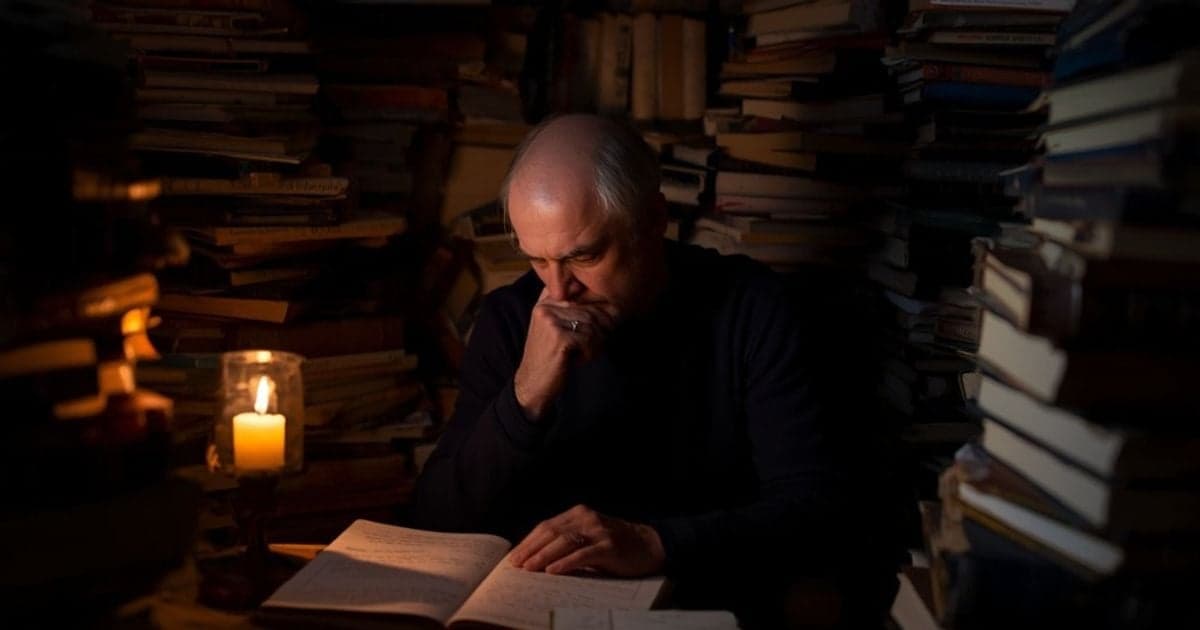
Raskolnikov sits in his cramped, coffin-like room, wrestling with a terrible idea that has been consuming him for weeks. He's broke, desperate, and fixated on an old pawnbroker who lives nearby - a woman he sees as nothing more than a parasite feeding off the poor. As he lies on his couch, he runs through his plan over and over, trying to convince himself it would be justified. The old woman has money that could help people like his sister Dunya, who's about to marry a man she doesn't love just to help the family financially. Raskolnikov tells himself that killing one 'worthless' person to save many others would be a noble act - the kind of thing great men throughout history have done. But even as he builds this mental case, part of him is horrified by his own thoughts. He's caught between his desperate circumstances and his conscience, between his intellectual theories about extraordinary people being above ordinary morality and his human revulsion at the idea of murder. This internal battle reveals how poverty and isolation can warp a person's thinking, making the unthinkable seem logical. Raskolnikov isn't naturally evil - he's a young man pushed to the breaking point, trying to rationalize a horrific solution to very real problems. The chapter shows how dangerous it can be when we start seeing other people as less than human, and how desperation can make us believe our own twisted logic.

Coming Up in Chapter 15

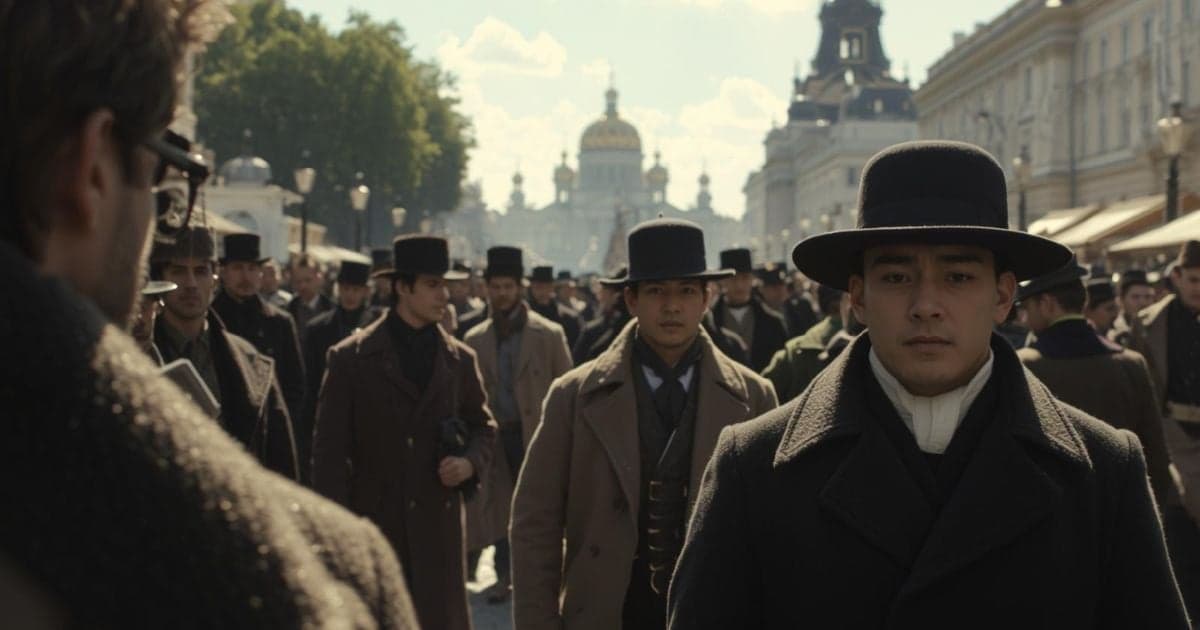
Raskolnikov ventures out into the sweltering St. Petersburg streets, where a chance encounter will push him even closer to the point of no return. The city itself seems to mirror his feverish state of mind.

Share it with friends

Previous ChapterNext Chapter
GO ADS FREE — JOIN US
Original text
complete·6,919 words
A

n elegant carriage stood in the middle of the road with a pair of spirited grey horses; there was no one in it, and the coachman had got off his box and stood by; the horses were being held by the bridle.... A mass of people had gathered round, the police standing in front. One of them held a lighted lantern which he was turning on something lying close to the wheels. Everyone was talking, shouting, exclaiming; the coachman seemed at a loss and kept repeating:

“What a misfortune! Good Lord, what a misfortune!”

Raskolnikov pushed his way in as far as he could, and succeeded at last in seeing the object of the commotion and interest. On the ground a man who had been run over lay apparently unconscious, and covered with blood; he was very badly dressed, but not like a workman. Blood was flowing from his head and face; his face was crushed, mutilated and disfigured. He was evidently badly injured.

1 / 42

Master this chapter. Complete your experience

Purchase the complete book to access all chapters and support classic literature

Read Free on GutenbergBuy at Powell'sBuy on Amazon

As an Amazon Associate, we earn a small commission from qualifying purchases at no additional cost to you.

Available in paperback, hardcover, and e-book formats

GO ADS FREE — JOIN US

Why This Matters

Connect literature to life

Skill: Detecting Self-Deception

This chapter teaches how to recognize when your own mind is building elaborate justifications for crossing moral boundaries you normally wouldn't cross.

GO ADS FREE — JOIN US

Now let's explore the literary elements.

Key Quotes & Analysis

"Am I really capable of that? Is that really what I've been thinking about?"

— Raskolnikov

Context: As he lies on his couch, horrified by his own murderous thoughts

This shows the internal battle between his rational mind and his desperate circumstances. He's shocked by his own capacity for evil, revealing that he hasn't completely lost his moral compass yet.

"Kill her and take her money, so that afterwards with its help I can devote myself to the service of all humanity and the common cause."

— Raskolnikov

Context: Trying to justify murder as a noble act

This reveals how he's twisted his thinking to make murder seem heroic. He's convinced himself that stealing from one person to help others makes him a benefactor rather than a criminal.

"A hundred, a thousand good deeds and undertakings that could be arranged and set going by the money that old woman has doomed to the monastery!"

— Raskolnikov

Context: Calculating how the pawnbroker's money could be better used

He's reducing a human life to a mathematical equation, showing how dangerous it becomes when we start viewing people as obstacles to our goals rather than as individuals with inherent worth.

Thematic Threads

Rationalization

In This Chapter

Raskolnikov transforms murder into a noble act through elaborate mental justification

Development

Introduced here

Class

In This Chapter

Poverty drives Raskolnikov to see the wealthy pawnbroker as expendable

Development

Introduced here

Identity

In This Chapter

Raskolnikov reimagines himself as an extraordinary person above ordinary morality

Development

Introduced here

Isolation

In This Chapter

His cramped room becomes a breeding ground for dangerous thoughts

Development

Introduced here

Dehumanization

In This Chapter

The pawnbroker becomes 'a louse' rather than a human being in his mind

Development

Introduced here

GO ADS FREE — JOIN US

You now have the context. Time to form your own thoughts.

Discussion Questions

  1. 1

    What specific circumstances push Raskolnikov toward his terrible plan, and how does he try to justify it to himself?

  2. 2

    Why does Raskolnikov's mind work so hard to make murder seem logical and even noble? What role does his desperation play in this twisted reasoning?

  3. 3

    Where do you see people today building elaborate justifications for behavior they know is wrong? What kinds of desperation drive these mental gymnastics?

  4. 4

    When you catch yourself rationalizing something that feels off, what steps could you take to address the real need driving that rationalization?

  5. 5

    What does Raskolnikov's internal struggle reveal about how good people can convince themselves to do terrible things when they feel cornered?

Critical Thinking Exercise

Spot Your Own Rationalization Engine

Think of a time when you found yourself building an elaborate justification for something that initially felt wrong—maybe cutting corners at work, being harsh with someone, or bending rules. Write down the story you told yourself to make it seem okay. Then identify what you were really desperate for underneath that reasoning.

Consider:

  • •Notice how logical and airtight your justification felt at the time—that's how rationalization works
  • •Look for the real need driving the behavior: security, recognition, control, fairness, or relief from pressure
  • •Consider what healthier ways you might have met that underlying need without compromising your values
GO ADS FREE — JOIN US

Coming Up Next...

Chapter 15: Porfiry's Game Begins

Raskolnikov ventures out into the sweltering St. Petersburg streets, where a chance encounter will push him even closer to the point of no return. The city itself seems to mirror his feverish state of mind.

Continue to Chapter 15
Previous
The Visitors
Contents
Next
Porfiry's Game Begins

Continue Exploring

Crime and Punishment Study GuideTeaching ResourcesEssential Life IndexBrowse by ThemeAll Books
Moral Dilemmas & EthicsIdentity & Self-Discovery

You Might Also Like

The Idiot cover

The Idiot

Fyodor Dostoevsky

Also by Fyodor Dostoevsky

The Brothers Karamazov cover

The Brothers Karamazov

Fyodor Dostoevsky

Also by Fyodor Dostoevsky

The Book of Job cover

The Book of Job

Anonymous

Explores morality & ethics

Thus Spoke Zarathustra cover

Thus Spoke Zarathustra

Friedrich Nietzsche

Explores morality & ethics

Browse all 47+ books
GO ADS FREE — JOIN US

Share This Chapter

Know someone who'd enjoy this? Spread the wisdom!

TwitterFacebookLinkedInEmail

Read ad-free with Prestige

Get rid of ads, unlock study guides and downloads, and support free access for everyone.

Subscribe to PrestigeCreate free account
Intelligence Amplifier
Intelligence Amplifier™Powering Wide Reads

Exploring human-AI collaboration through books, essays, and philosophical dialogues. Classic literature transformed into navigational maps for modern life.

2025 Books

→ The Amplified Human Spirit→ The Alarming Rise of Stupidity Amplified→ San Francisco: The AI Capital of the World
Visit intelligenceamplifier.org
hello@widereads.com

WideReads Originals

→ You Are Not Lost→ The Last Chapter First→ The Lit of Love→ Wealth and Poverty→ 10 Paradoxes in the Classics · coming soon
Arvintech
arvintechAmplify your Mind
Visit at arvintech.com

Navigate

  • Home
  • Library
  • Essential Life Index
  • How It Works
  • Subscribe
  • Account
  • About
  • Contact
  • Authors
  • Suggest a Book
  • Landings

Made For You

  • Students
  • Educators
  • Families
  • Readers
  • Literary Analysis
  • Finding Purpose
  • Letting Go
  • Recovering from a Breakup
  • Corruption
  • Gaslighting in the Classics

Newsletter

Weekly insights from the classics. Amplify Your Mind.

Legal

  • Privacy Policy
  • Terms of Service
  • Cookie Policy
  • Accessibility

Why Public Domain?

We focus on public domain classics because these timeless works belong to everyone. No paywalls, no restrictions—just wisdom that has stood the test of centuries, freely accessible to all readers.

Public domain books have shaped humanity's understanding of love, justice, ambition, and the human condition. By amplifying these works, we help preserve and share literature that truly belongs to the world.

A Pilgrimage

Powell's City of Books

Portland, Oregon

If you ever find yourself in Portland, walk to the corner of Burnside and 10th. The building takes up an entire city block. Inside is over a million books, new and used on the same shelf, organized by color-coded rooms with names like the Rose Room and the Pearl Room. You can lose an afternoon. You can lose a weekend. You will find a book you have been looking for your whole life, and three you did not know existed.

It is a pilgrimage. We cannot find a bookstore like it anywhere on earth. If you read the classics, and you ever get the chance, go. It belongs on every reader's bucket list.

Visit powells.com

We are not in any way affiliated with Powell's. We are just a very big fan.

© 2026 Wide Reads™. All Rights Reserved.

Intelligence Amplifier™ and Wide Reads™ are proprietary trademarks of Arvin Lioanag.

Copyright Protection: All original content, analyses, discussion questions, pedagogical frameworks, and methodology are protected by U.S. and international copyright law. Unauthorized reproduction, distribution, web scraping, or use for AI training is strictly prohibited. See our Copyright Notice for details.

Disclaimer: The information provided on this website is for general informational and educational purposes only and does not constitute professional, legal, financial, or technical advice. While we strive to ensure accuracy and relevance, we make no warranties regarding completeness, reliability, or suitability. Any reliance on such information is at your own risk. We are not liable for any losses or damages arising from use of this site. By using this site, you agree to these terms.