Wide Reads
Literature MattersLife IndexEducators
Sign in
Where to Begin
Crime and Punishment - Porfiry's Game Begins

Fyodor Dostoevsky

Crime and Punishment

Porfiry's Game Begins

Home›Books›Crime and Punishment›Chapter 15
Previous
15 of 41
Next

Summary

Porfiry's Game Begins

Crime and Punishment by Fyodor Dostoevsky

0:000:00
Listen to Next Chapter

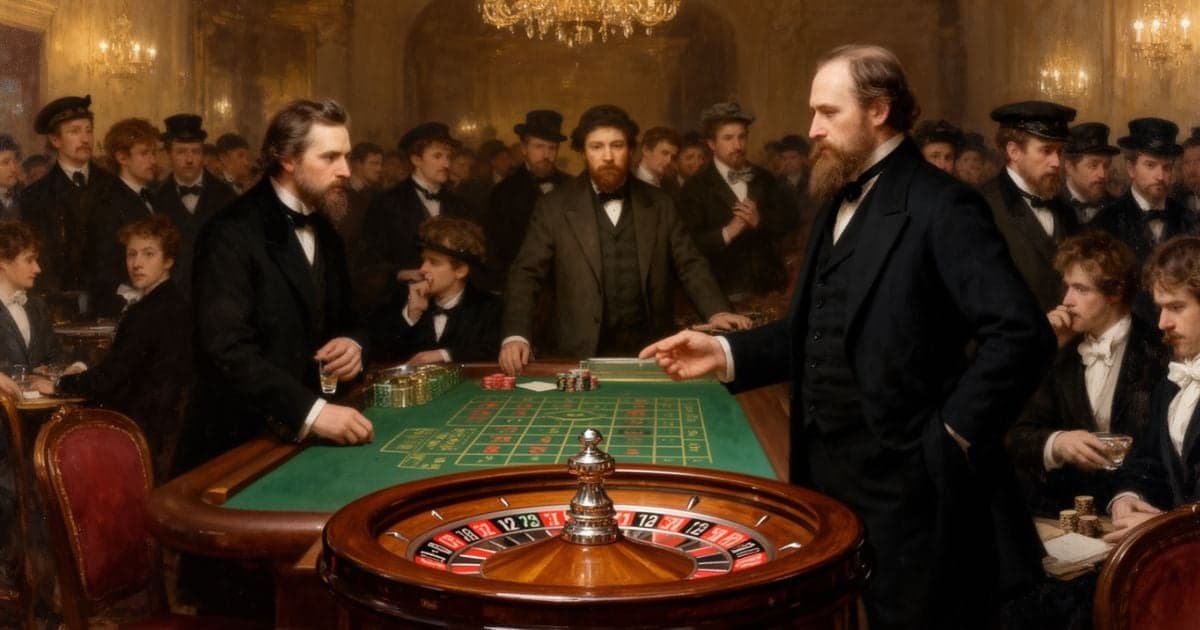
A reckless encounter in a tavern marks a dangerous turning point. While dining in a public restaurant, our tormented protagonist spots Zamyotov, the police clerk who's been watching him with suspicion. Instead of avoiding him, something compulsive drives him to approach the table. What follows is one of the novel's most psychologically intense scenes - a verbal dance where he drops increasingly obvious hints about the murders, describing the crime in vivid detail while claiming he's merely theorizing. Zamyotov grows visibly uncomfortable as the conversation becomes more pointed and bizarre. Why would an innocent man practically confess in public? The impulse is self-destructive and irrational - he's almost daring Zamyotov to accuse him. After leaving the restaurant, he wanders to the actual murder scene and nearly confesses to the painters working there. The chapter brilliantly captures the overwhelming need to confess that guilt creates. Keeping the secret has become more unbearable than facing the consequences. His psyche is rebelling against his intellect, pushing him toward revelation even as his survival instinct fights against it. The near-confession shows how criminals often engineer their own capture through seemingly inexplicable actions - it's not stupidity but the unbearable weight of guilt forcing its way out.

Coming Up in Chapter 16

Raskolnikov's dangerous behavior at the crime scene attracts unwanted attention, and his emotional state reaches a breaking point. A chance encounter will force him to confront someone from his past in an unexpected way.

Share it with friends

Previous ChapterNext Chapter
GO ADS FREE — JOIN US
Original text
complete·5,081 words

PART III

CHAPTER I

Raskolnikov got up, and sat down on the sofa. He waved his hand weakly to Razumihin to cut short the flow of warm and incoherent consolations he was addressing to his mother and sister, took them both by the hand and for a minute or two gazed from one to the other without speaking. His mother was alarmed by his expression. It revealed an emotion agonisingly poignant, and at the same time something immovable, almost insane. Pulcheria Alexandrovna began to cry.

Avdotya Romanovna was pale; her hand trembled in her brother’s.

“Go home... with him,” he said in a broken voice, pointing to Razumihin, “good-bye till to-morrow; to-morrow everything... Is it long since you arrived?”

“This evening, Rodya,” answered Pulcheria Alexandrovna, “the train was awfully late. But, Rodya, nothing would induce me to leave you now! I will spend the night here, near you...”

“Don’t torture me!” he said with a gesture of irritation.

“I will stay with him,” cried Razumihin, “I won’t leave him for a moment. Bother all my visitors! Let them rage to their hearts’ content! My uncle is presiding there.”

1 / 25

Master this chapter. Complete your experience

Purchase the complete book to access all chapters and support classic literature

Read Free on GutenbergBuy at Powell'sBuy on Amazon

As an Amazon Associate, we earn a small commission from qualifying purchases at no additional cost to you.

Available in paperback, hardcover, and e-book formats

GO ADS FREE — JOIN US

Why This Matters

Connect literature to life

Skill: Recognizing Self-Sabotage Patterns

This chapter teaches how guilt-driven behavior creates predictable patterns that endanger the very thing we're trying to protect.

GO ADS FREE — JOIN US

Now let's explore the literary elements.

Key Quotes & Analysis

"What if it was I who murdered the old woman and Lizaveta?"

— Raskolnikov

Context: He says this to Zamyotov in the tavern, pretending it's just a hypothetical question.

This moment shows Raskolnikov's desperate need to confess while still trying to maintain deniability. He's testing how close he can come to the truth without actually admitting guilt, revealing his internal torment.

"There was blood here, blood!"

— Raskolnikov

Context: He's questioning the workmen about bloodstains in the pawnbroker's apartment.

His obsession with the physical evidence of his crime shows how the murder has consumed his thoughts completely. He can't let go of any detail, even when discussing it puts him in danger.

"We'll take you to the police station!"

— One of the workmen

Context: They threaten Raskolnikov when his questions about the murder become too suspicious.

This threat represents how close Raskolnikov is coming to exposure through his own compulsive behavior. His guilt is literally driving him back toward the consequences he's trying to avoid.

Thematic Threads

Psychological Compulsion

In This Chapter

Raskolnikov's irresistible urge to revisit the crime scene and drop hints about his guilt

Development

Deepening from earlier anxiety into active self-sabotaging behavior

Class Dynamics

In This Chapter

Workers in the apartment become suspicious and threaten police involvement, showing how different social positions handle authority

Development

Continuing theme of how class affects who gets believed and who gets questioned

Self-Destruction

In This Chapter

Raskolnikov actively puts himself in danger through reckless behavior and near-confessions

Development

Escalating from internal torment to external risk-taking behaviors

Identity Crisis

In This Chapter

Raskolnikov can't maintain his ordinary self while carrying the secret of murder

Development

His fractured sense of self becoming more apparent to others through erratic behavior

GO ADS FREE — JOIN US

You now have the context. Time to form your own thoughts.

Discussion Questions

  1. 1

    What specific behaviors does Raskolnikov exhibit that make Zamyotov and the workers suspicious of him?

  2. 2

    Why does Raskolnikov keep putting himself in situations where he might be discovered, even though he fears being caught?

  3. 3

    Where have you seen people drop hints about things they've done wrong instead of staying quiet or confessing directly?

  4. 4

    If you noticed someone in your life exhibiting this pattern of guilt-driven behavior, how would you respond to help them without enabling the dangerous game?

  5. 5

    What does Raskolnikov's compulsive return to the crime scene reveal about how unresolved guilt affects our decision-making and self-control?

Critical Thinking Exercise

Trace Your Own Guilt Orbits

Think of a time when you did something wrong and felt compelled to keep talking about it, revisiting it, or putting yourself near situations that could expose you. Write down the specific behaviors you exhibited and the internal tension you felt. Then identify what finally broke the cycle - did you confess, get caught, or find another resolution?

Consider:

  • •Notice how guilt made you act against your own self-interest
  • •Identify the difference between productive accountability and destructive guilt orbiting
  • •Consider what you needed to resolve the internal tension in a healthier way
GO ADS FREE — JOIN US

Coming Up Next...

Chapter 16: Cat and Mouse

Raskolnikov's dangerous behavior at the crime scene attracts unwanted attention, and his emotional state reaches a breaking point. A chance encounter will force him to confront someone from his past in an unexpected way.

Continue to Chapter 16
Previous
Luzhin's Proposal
Contents
Next
Cat and Mouse

Continue Exploring

Crime and Punishment Study GuideTeaching ResourcesEssential Life IndexBrowse by ThemeAll Books
Moral Dilemmas & EthicsIdentity & Self-Discovery

You Might Also Like

The Idiot cover

The Idiot

Fyodor Dostoevsky

Also by Fyodor Dostoevsky

The Brothers Karamazov cover

The Brothers Karamazov

Fyodor Dostoevsky

Also by Fyodor Dostoevsky

The Book of Job cover

The Book of Job

Anonymous

Explores morality & ethics

Thus Spoke Zarathustra cover

Thus Spoke Zarathustra

Friedrich Nietzsche

Explores morality & ethics

Browse all 47+ books
GO ADS FREE — JOIN US

Share This Chapter

Know someone who'd enjoy this? Spread the wisdom!

TwitterFacebookLinkedInEmail

Read ad-free with Prestige

Get rid of ads, unlock study guides and downloads, and support free access for everyone.

Subscribe to PrestigeCreate free account
Intelligence Amplifier
Intelligence Amplifier™Powering Wide Reads

Exploring human-AI collaboration through books, essays, and philosophical dialogues. Classic literature transformed into navigational maps for modern life.

2025 Books

→ The Amplified Human Spirit→ The Alarming Rise of Stupidity Amplified→ San Francisco: The AI Capital of the World
Visit intelligenceamplifier.org
hello@widereads.com

WideReads Originals

→ You Are Not Lost→ The Last Chapter First→ The Lit of Love→ Wealth and Poverty→ 10 Paradoxes in the Classics · coming soon
Arvintech
arvintechAmplify your Mind
Visit at arvintech.com

Navigate

  • Home
  • Library
  • Essential Life Index
  • How It Works
  • Subscribe
  • Account
  • About
  • Contact
  • Authors
  • Suggest a Book
  • Landings

Made For You

  • Students
  • Educators
  • Families
  • Readers
  • Literary Analysis
  • Finding Purpose
  • Letting Go
  • Recovering from a Breakup
  • Corruption
  • Gaslighting in the Classics

Newsletter

Weekly insights from the classics. Amplify Your Mind.

Legal

  • Privacy Policy
  • Terms of Service
  • Cookie Policy
  • Accessibility

Why Public Domain?

We focus on public domain classics because these timeless works belong to everyone. No paywalls, no restrictions—just wisdom that has stood the test of centuries, freely accessible to all readers.

Public domain books have shaped humanity's understanding of love, justice, ambition, and the human condition. By amplifying these works, we help preserve and share literature that truly belongs to the world.

A Pilgrimage

Powell's City of Books

Portland, Oregon

If you ever find yourself in Portland, walk to the corner of Burnside and 10th. The building takes up an entire city block. Inside is over a million books, new and used on the same shelf, organized by color-coded rooms with names like the Rose Room and the Pearl Room. You can lose an afternoon. You can lose a weekend. You will find a book you have been looking for your whole life, and three you did not know existed.

It is a pilgrimage. We cannot find a bookstore like it anywhere on earth. If you read the classics, and you ever get the chance, go. It belongs on every reader's bucket list.

Visit powells.com

We are not in any way affiliated with Powell's. We are just a very big fan.

© 2026 Wide Reads™. All Rights Reserved.

Intelligence Amplifier™ and Wide Reads™ are proprietary trademarks of Arvin Lioanag.

Copyright Protection: All original content, analyses, discussion questions, pedagogical frameworks, and methodology are protected by U.S. and international copyright law. Unauthorized reproduction, distribution, web scraping, or use for AI training is strictly prohibited. See our Copyright Notice for details.

Disclaimer: The information provided on this website is for general informational and educational purposes only and does not constitute professional, legal, financial, or technical advice. While we strive to ensure accuracy and relevance, we make no warranties regarding completeness, reliability, or suitability. Any reliance on such information is at your own risk. We are not liable for any losses or damages arising from use of this site. By using this site, you agree to these terms.