
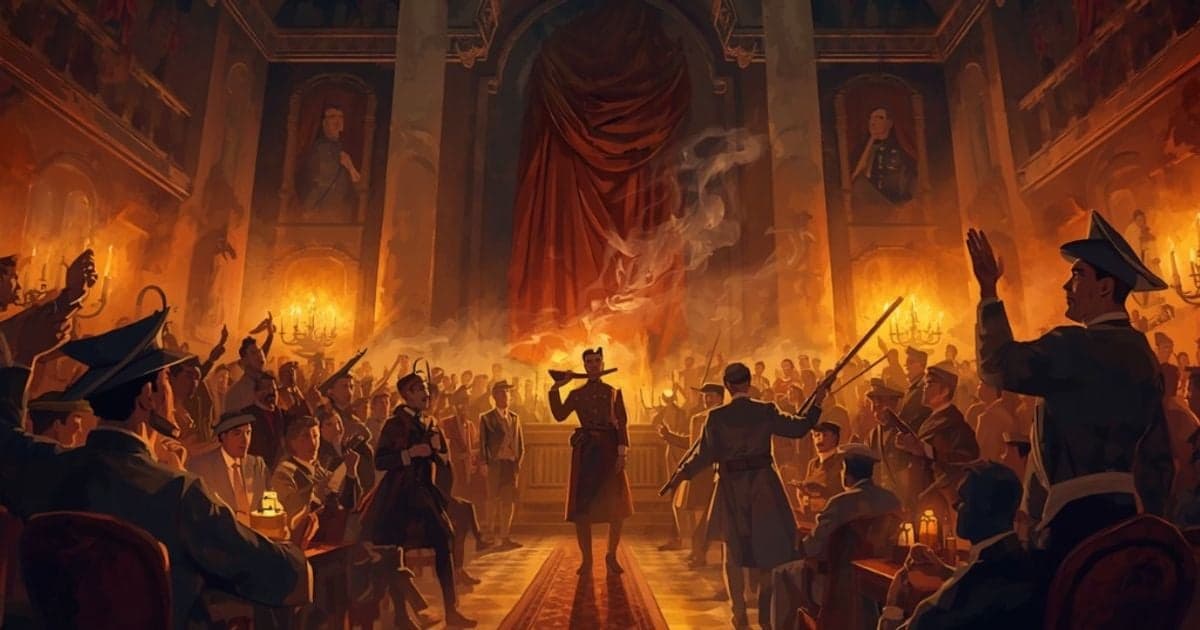
Simoun's conspiracy is the plot engine of El Filibusterismo, but it is not Rizal's prescription. The novel keeps two endings in view: the lamp that fails to finish the work, and the priest who will not call revenge liberation.
Rizal opposed the Katipunan's armed revolt in 1896 yet died for writing this book. The text holds that tension open. Simoun is accurate about greed; Florentino is accurate about what greed does to the hand that copies it, and Basilio's refusals are as important as his temptations.
Before you choose sides, ask who survives the wedding, who drowns the treasure, and who the novel asks to read both scenes. Accuracy about harm is not permission to spend it on a crowd.
The Central Lesson
Resistance names real harm; revenge spends it on a crowd. Rizal puts Simoun's fuse and Florentino's refusal in one book so readers cannot confuse accuracy with permission, and so you can honour Basilio's no as clearly as you diagnose Simoun's rage.
Applying This to Your Life
Name the target
Simoun aims at a room, not only a person. List who sits in your version of that room, including staff, family, and bystanders who never signed the plan.
Count collateral
Every shortcut revolution has a guest list. Find the people who did not consent to be there, and ask whether timing the act for a party is courage or cover.
Ask for repair
Florentino hides the jewels so a future hand might spend them without becoming Simoun. Ask what would change if power were delayed until it could be used without copying the thief.
Other lessons in this book
More life-skill deep dives from the same classic.
Colonial Performance
The Ship of State Joke
Read Doña Victorina, Ben-Zayb, and the Ship of State joke as survival costumes that rent approval upstairs while the lower deck still poles the hull.
18 chapters·Explore AnalysisEducation as Control
The Class That Taught Obedience
Sit in Placido's walkout, the look-but-touch-not physics class, and Bilibid after pasquinades to see when schools train obedience and cells finish the lesson.
12 chapters·Explore AnalysisGrief That Hardens
Basilio, Juli, and the Empty House
Stay with Basilio, Juli, and Capitan Tiago when fiestas march past ransom, newspapers skip a fall, and unacknowledged loss is offered a fuse.
11 chapters·Explore AnalysisNaming Systemic Greed
Rent in a Cassock
Follow Tales's land, Quiroga's tribulations, and every Pilates bowl to see rent renamed as piety, law, or progress before Simoun schedules the room.
11 chapters·Explore AnalysisWhen Reform Runs Out
The Jeweler Who Stopped Petitioning
Follow Simoun from the Tabo canal joke to the Los Baños card table and ask what patience costs once petitions are adjourned to dessert and fear replaces an answer.
12 chapters·Explore Analysis
Continue exploring
Explore this theme
The same lessons in other books
See how other books teach the same life skills.

North and South
Acting on Conscience When It Costs YouWatch Hale leave the church, Margaret lie at the station for Frederick, and Thornton refuse a speculation that would save him.North and South
Navigating Class and Economic PowerTrace Milton from imported Irish hands and Boucher's brook to the inheritance that buys a partnership, not a husband.
Paradise Lost
When Pride Sounds Like PrincipleHear Satan on the burning lake and at Eden's edge: wounded dignity reframed as liberty, and a no that is only a refusal to be second.
Where the lesson lives in the book
Judge Versus Petition
Simoun tells Basilio he is the Judge who will castigate the system by flattering its defects and warns against Hispanization and equal rights as roads to a poor copy, asking instead for influence among youth before the wedding plot hardens.
Key Insight:
Resistance can begin as a lecture against petitioning itself. When a former reformer mocks assimilation, ask whether he is diagnosing exhaustion or recruiting you into his ledger.
“to make war on it by flattering it”
The Fuse
Simoun prepares a lamp for a wedding that will gather colonial Manila in one room while he tells Basilio that within an hour revolution will break out and orders him to lead men into St Clara for Maria Clara.
Key Insight:
Violence can feel like clarity after decades of theft. Ask who else is in the hall when the fuse is lit, and whether accuracy about harm grants permission to spend it on a crowd.
“Is the powder here?”
Manila Types
Queue fights at the Variedades mix filibuster talk with ticket scalping while Simoun's allies read the crowd and Camaroncocido sees the plot before the curtain rises.
Key Insight:
When whispers of revolt sell tickets, distinguish theatre from plan. A mob is not yet a movement, and a movement is not yet justice.
“The signal will be a gunshot!”
Ultimatum at the Knell
Simoun tells Basilio that revolution will break within the hour and orders him to lead men into St Clara while Maria Clara's funeral bell still marks the street outside the theatre.
Key Insight:
Resistance offered as an ultimatum still chooses who dies first. Basilio's no is also a form of courage when grief is being traded for a guest list.
“Death or a future!”
Ultimate Reason
Simoun shows Basilio the nitro-glycerin lamp shaped like a pomegranate and the wedding trap, praising him as proof that even a gentle student now sees force after prison and Juli's loss.
Key Insight:
Recruiting grief into a fuse still chooses the guest list. Saying yes to revenge is not the same as naming justice, even when the tyrants named are real.
“fulminate”
Feast Over the Fuse
Basilio, armed and homeless, follows Simoun's carriage toward Paulita's wedding while the lamp ticks inside the house on Calle Anloague and he refuses to warn Isagani, sure his friend would reject butchery.
Key Insight:
Revolution timed for a feast still bills the bride, the servants, and the friend you refuse to warn. Collateral is not an accident; it is built into the hour chosen.
“Anloague”
Dancing on a Volcano
Lesser gods and merchants loosen into slaps and gossip at Don Timoteo's feast while the Captain-General takes the house, Simoun's lamp draws admirers, and Basilio hardens into let the righteous suffer with the sinners until alea jacta est crosses Simoun's face.
Key Insight:
Revolution timed for a party still bills the bride, the servants, and the bystanders. Festivity is cover when the guest list never consented and pity dies the moment friars pass.
“Let the righteous suffer with the sinners.”
Fatality
Tales's uprising answers guard cruelty with raids while Carolino's protest dies beside kneeling farmers shot for trying to flee their bonds, the volley solving what policy called a problem.
Key Insight:
Copying the master's cruelty is not liberation; it is another verse in the same ledger Rizal asks Florentino to break. Resistance that mirrors execution only changes uniforms.
“a hideous volley silenced them all”
Florentino's Refusal
Padre Florentino refuses to bless Simoun's rage, tells Basilio hate produces monsters, and sinks the treasure in the sea for another age that might spend it without becoming greed.
Key Insight:
Liberation is not the same as vengeance, even when vengeance names real crimes. The novel ends by asking who will use power without copying the hand that stole it.
“Hate never produces anything but monsters and crime criminals!”