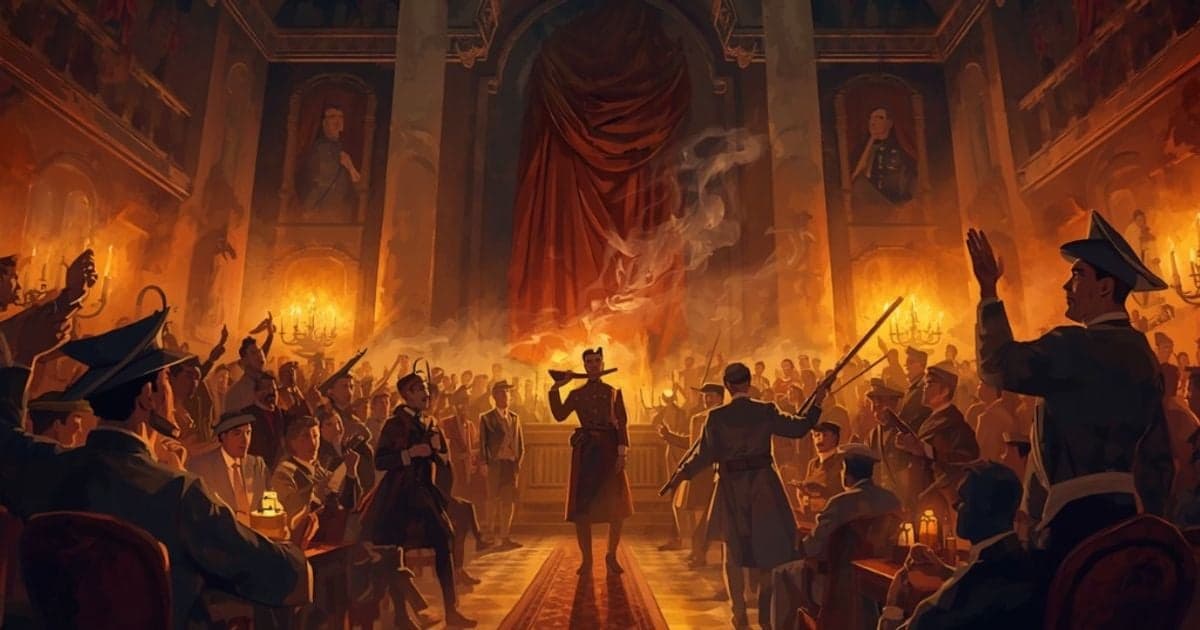
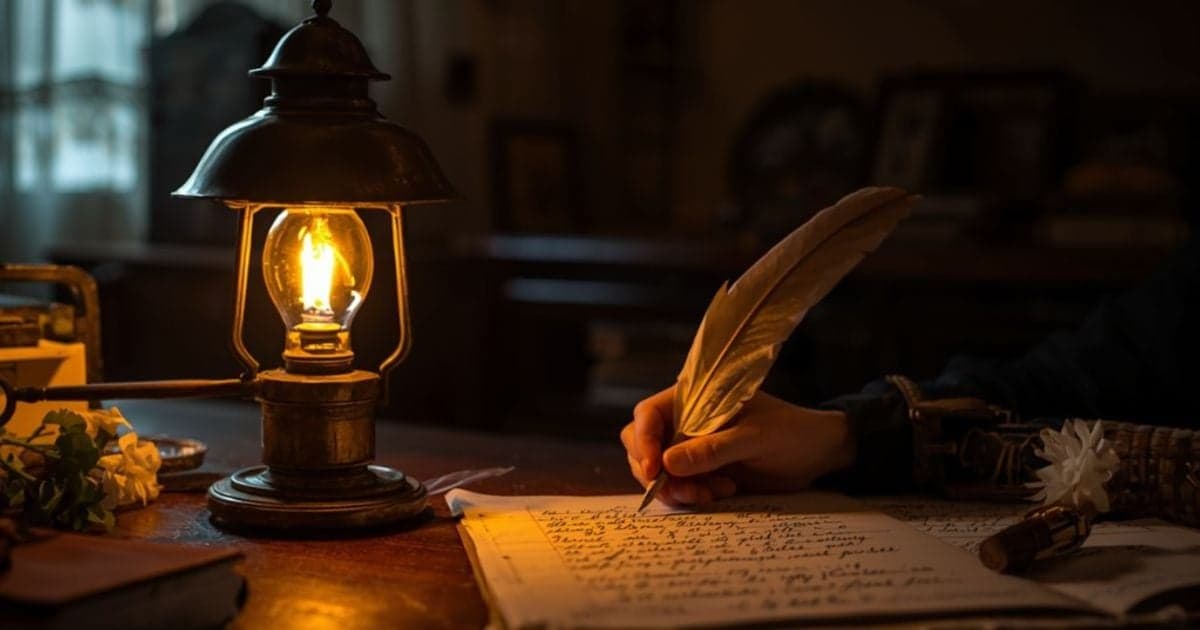
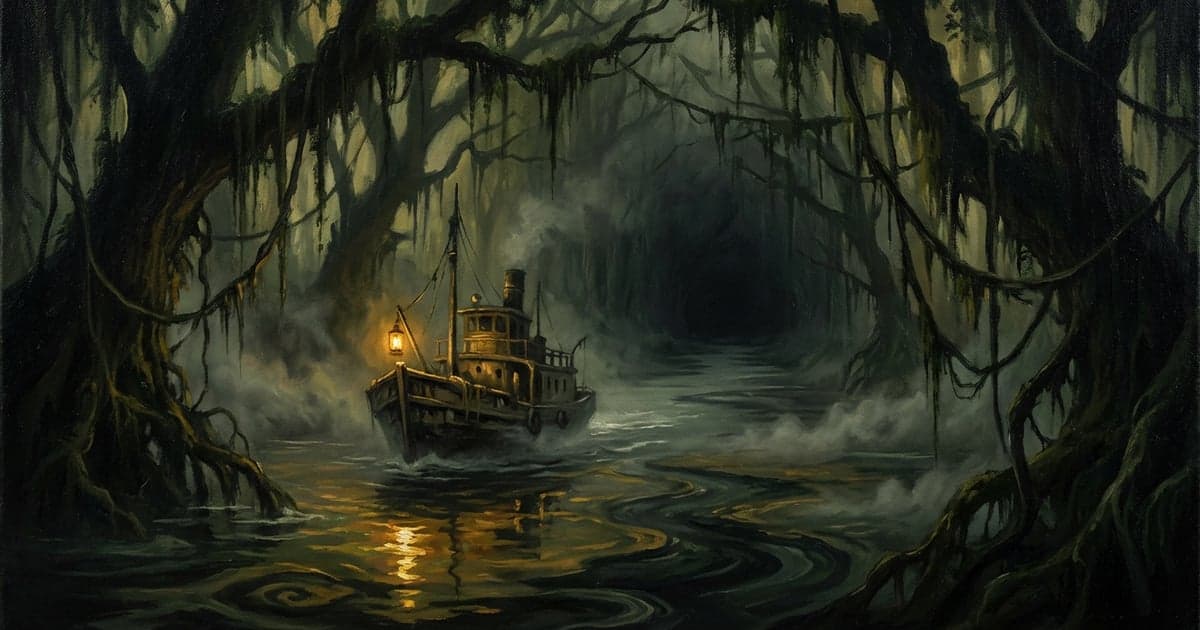
Over Tales' kidnapping and the curate's refusal to bury Selo, Basilio keeps his yearly vigil at Sisa's stones under the balete, hat off, in the Ibarras wood Tiago bought when the family's land was confiscated. Dissection halls and deathbed watches usually quiet his nerves, but ghost stories about this hour still quicken his pulse before he can leave for town. Twigs snap, a lantern flickers between roots grown thick as trunks, and a man sets the lamp on the ground so it catches riding-boots while he fits a shovel to a cane. The face in the lens is Simoun without the blue goggles: same bitter brow, thinner arms, white hair, the stranger who buried Basilio's mother thirteen years ago beside another corpse and paid the boy to flee. Old hunger, fire, and turned earth rush back, and with them the riddle Basilio has nursed since medical school. Was Ibarra the body with two bullet wounds on the lake, and is this jeweler, now rich and whispering to the Captain-General, the living man who once looked wretched at the same grave?
Basilio steps out and asks, in a student's flat tone, whether he can help. Simoun rises like a tiger at its prey, cocking a revolver, then lowers it when Basilio names a person sacred though the world believes him dead. Simoun admits he ought to seal the witness who holds two secrets, yet spares him as fellow dregs of justice while he confesses the merchant's real labour: return with gold, feed the colonial vulture on a corpse that will not fight back, stimulate greed and cruelty until death feels ordinary, choke trade until misery kills fear, because slow rot never made the people strike. Just as that poison nears its pitch, he rages, Basilio's generation arrives petitioning for Castilian instruction and Hispanist hope, garlands that hide chains harder than diamond.
Basilio offers only that Spanish might unite the islands; Simoun answers with a sermon on language as the thought of peoples, on rulers with bandaged eyes, on building a nation instead of copying Spain. He reveals himself as judge who punishes the system by flattering its defects and asks Basilio to turn the youth from assimilation. The medical student refuses: he signed for study, not politics, and will bind wounded people through science while dreaming centuries ahead when patriotism looks like fanaticism. Simoun insists patriotism under tyranny is still love of justice, then mocks the annual grave tears and the brother never avenged. Basilio will not trade peace for revenge that cannot restore a smile; Simoun quotes Tacitus that wrongdoers hate those they injured and mimics the dream of a quiet home, wife, and handful of rice.
Dawn thins the lantern horror. Simoun sends Basilio away with an open door on the Escolta and a warning that the jeweler friend of friars will always outweigh a native student marked for filibusterism. Alone, Simoun wonders if servitude has burned out every sentiment or if a hecatomb must cast the unfit aside, then whispers patience to the noble dead who would not choose his methods. Basilio walks toward graduation and Juli while the shovel man plans collapse in gold. Can a physician still trust slow healing once he has heard a confessor admit he poisoned the patient to kill the disease faster?