Free study guide · no paywall
The Wealth of NationsStudy Guide
by Adam Smith (1776)
Pins, the wool coat, and the bill Book V sends, mapped across 32 chapters and six lessons.

Start here
Plot, characters & chapter jump
32 chapter summaries · 7 key figures · discussion questions · quotes · free
Plot summary
Adam Smith opens in a pin shop to show how division of labour multiplies output, then tracks how markets, wages, rent, and capital actually produce national wealth — not gold in a vault. Book IV attacks mercantilist ministers; Book V asks what a sovereign must fund without becoming the merchants' clerk or borrowing past what labour can repay.
Key characters
Jump to chapter
What readers search for
Common questions about The Wealth of Nations
What is the invisible hand in The Wealth of Nations?
Not a blessing on every bargain, but one local claim in chapter 22. Smith watches a man who prefers the home trade for his own security and, without meaning to promote domestic industry, often supports domestic revenue anyway. Popular summaries turned two words into gospel; he used them once about diverted capital, then spent Book IV on tariffs, bounties, and merchants who toast liberty while asking for a lock. He never wrote that greed is good; chapter 2 gives the butcher who feeds you without loving you.
Self-Interest & The Invisible HandWhat is the division of labor in The Wealth of Nations?
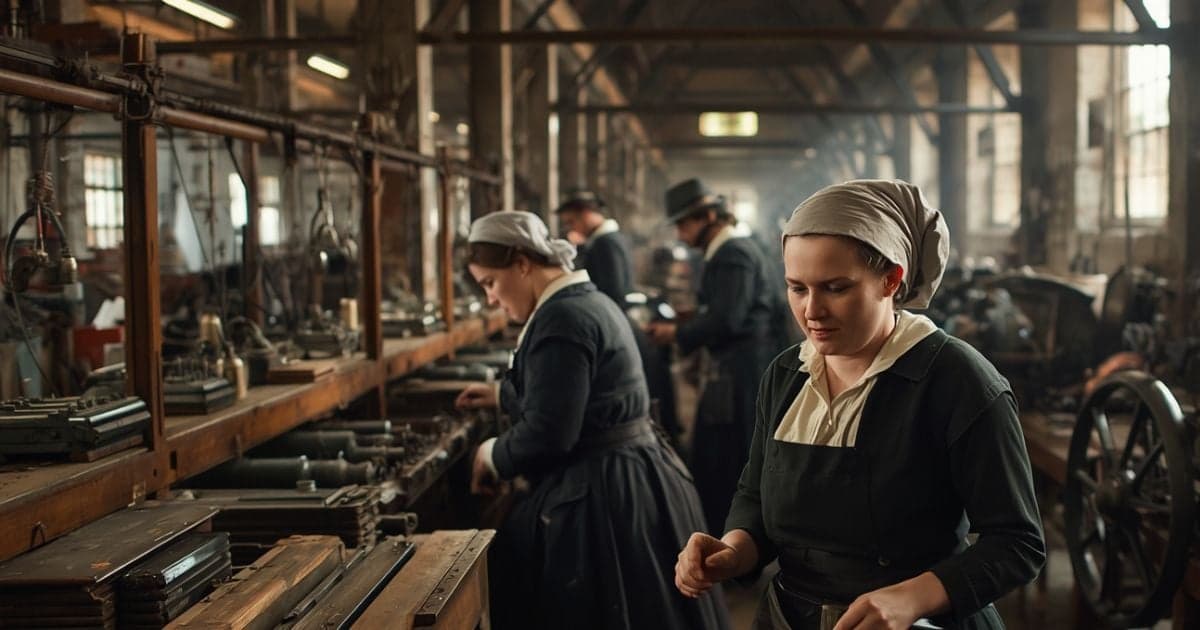
Chapter 1's pin factory: one workman might barely finish a pin in a day, while ten men who split the trade into about eighteen operations can turn out forty-eight thousand. Smith also counts the day-labourer in a coarse wool coat, where shepherds, dyers, sailors, and miners cooperated without knowing his name. Specialization multiplies output, but chapter 3 limits the habit: a remote village cannot support eighteen pin-makers without a market wide enough to buy the pins.
Division of Labor & SpecializationWhat is The Wealth of Nations about?
An inquiry into the nature and causes of national wealth, published in 1776. Smith opens in a pin shop, traces money and natural price through the middle books, attacks mercantilist gold-counting in Book IV, and ends in Book V asking how a sovereign pays for defence, justice, and public works without becoming the merchants' clerk. Chapter 21 refuses the vault: wealth is annual produce, not bullion locked behind a door.
Wealth Is Annual ProduceWhy does Smith warn that people of the same trade meet together?
Chapter 10's famous line: people of the same trade seldom meet, even for merriment and diversion, but the conversation ends in a conspiracy against the public or a contrivance to raise prices. Smith is not cynical about business. He is exact about rooms. Fellowship is the cover; the product is a narrower market. The same pattern returns as tariffs praised as patriotism, export bounties paid by consumers, and colonial preferences wearing a flag.
Recognizing Special InterestsWhat is the natural price in The Wealth of Nations?
Chapter 7 names a natural rate of wages, profit, and rent that the market price keeps missing and chasing. Chapter 4 introduces money because barter fails when the butcher wants beer and the brewer does not want meat. Once coin solves the double want and the market is wide enough, strangers who will never meet can still coordinate through price.
Markets & Human CoordinationFast track
Short on time? Start here
These seven chapters carry the argument end to end: the pin shop, exchange without sermons, merchants who toast liberty then ask for a lock, bullion mistaken for wealth, the invisible hand named once, and Book V's bill for justice and debt.
Full coverage
Everything in this study guide
The same surfaces readers expect from a traditional study guide — plot, characters, themes, quotes, and homework help — grouped across 5 parts, with audio and the source text on every chapter. Free, no paywall.
Plot overview
Summary, context, and why the book still matters
32 chapter summaries
Every chapter with audio narration
7 key figures
Who drives the plot and what each one does
6 lessons
Themes traced to scenes, not generic labels
15+ important quotes
Verified lines with chapter links and analysis
Discussion questions
Five per chapter, with suggested answers for class and essays
Original text
Author's words beside every summary
This is not a plot cheat sheet. Wide Reads walks The Wealth of Nations as Adam Smith's inquiry into what actually makes nations wealthy: annual produce, not bullion in a vault. Use the five-book path below, follow the six lesson deep dives when an argument hooks you, and open individual chapters for summaries, quotes, and audio.
For plot and theme questions about The Wealth of Nations, see Common Questions on the book page.
How to use this guide
How to Read This Book with Wide Reads
Start in the pin shop
Read Book I (Chapters 1–11) for the pin bench, the wool coat, the butcher and baker, and the natural price labor and rent keep chasing. You need Smith's definition of wealth before Book IV attacks the ministers who still count gold.
Follow the argument's turn
Book II (Chapters 12–16) sorts capital and circulation. Book III (Chapters 17–20) asks how opulence grows in town and country. Book IV (Chapters 21–29) is the mercantile indictment: tariffs, bounties, colonies, and the invisible hand named once, locally, in chapter 22.
Let the lessons carry you
When a chapter raises a question you cannot shake, whether specialization without a market, merchants who toast liberty then ask for a lock, or the debt a treasury cannot service, jump to the matching lesson page, then return to the chapter list.
Plot & context
Book Overview
Ten men at a pin bench can turn out forty-eight thousand pins in the time one workman might struggle to finish twenty. Adam Smith opens An Inquiry into the Nature and Causes of the Wealth of Nations there, in wire and sweat, not in a counting house. The wager he keeps pressing is simple enough to sound modest and hard enough to overturn an empire of bad definitions: a nation's wealth is what labor can produce and exchange, not the bullion a minister locks behind a door.
The figures in the case are not a novel's household. Smith is the moral philosopher who has watched factories, customs houses, and the machinery of empire, and who still writes as if a statesman might be taught. The isolated pin-maker is the proof that focus without a market stays poor. The butcher, brewer, and baker feed a city from regard to their own interest, not from kindness. The day-labourer in a coarse wool coat is the person Smith wants counted: shepherds, dyers, sailors, and miners already cooperated on his back without knowing his name. The merchant who petitions for a tariff praises open trade until his own door needs a lock. The mercantilist measures strength by gold retained. The sovereign is the addressee who must fund defense, justice, and public works without becoming the merchants' clerk. The quarrel is who gets to define wealth, and who pays when the definition is wrong.
The moves come in deliberate order. Chapter 1 is the pin shop and the wool coat. Chapter 2 names the propensity to truck, barter, and exchange that made the shop possible. Chapter 3 limits that habit: specialization only runs as deep as the market, and a remote village cannot support eighteen pin-makers. Chapter 4 introduces money because barter fails when the butcher wants beer and the brewer does not want meat. Chapters 5 through 7 turn price into labor, then into wages, profit, and rent, then into a natural price the market keeps missing and chasing. Book IV is the hinge. Chapter 21 attacks the habit of calling money wealth. Chapter 22 follows duties and prohibitions that gift home producers a monopoly and, in the same pages, names the invisible hand on a man who prefers the home trade for his own security. Chapter 27 opens the colonial ledger and finds an empire cheaper to praise than to keep. Book V does not abolish the state. Chapter 30 lists what a sovereign must still pay for: defense, justice, roads, and the education that narrow specialization can starve. Chapters 31 and 32 ask how the bill is raised, and what happens when a nation borrows past the produce that has to service the debt.
Smith is not writing a hymn to greed, and he is not writing a plan for a country without government. He is writing an inquiry observed in workshops and statutes, aimed at a reader who still thinks a full treasury is a full people. Popular summaries later sold the invisible hand as gospel; Smith used it once, locally, about diverted capital, and spent the rest of the book watching merchants meet even for merriment and end in a conspiracy against the public. The ending refuses both the gold-counter and the visionary who would run every workshop from a desk. Wealth is annual produce. Policy is what keeps that produce from being captured, hoarded, or spent on a war the revenue cannot carry.
Read the full summary on the book page →
Why this book now
Popular summaries still sell the invisible hand as gospel while Smith used it once about diverted capital. Tariffs arrive praised as patriotism, bounties are paid so a favorite can undersell abroad, and treasuries borrow against produce they have not yet grown. Smith wrote for a statesman who thinks a full vault is a full people. This guide keeps the pin shop, the customs house, and Book V's bill tied to definitions you still hear in every election cycle.
About Adam Smith
Adam Smith (1723-1790) was born in Kirkcaldy on the Firth of Forth and educated at Glasgow and Oxford. He became professor of moral philosophy at Glasgow, where his lectures on ethics, jurisprudence, and economics drew students from across Europe. His first major work, The Theory of Moral Sentiments (1759), explored sympathy and conscience; The Wealth of Nations (1776) applied the same careful observation to markets, labor, and trade. Smith traveled as tutor to the young Duke of Buccleuch and spent years in France meeting the Physiocrats and other Enlightenment thinkers. He observed factories, customs houses, and the machinery of empire at close range. His pin factory example was not a thought experiment but a report from watching work actually organized. The Wealth of Nations demolished mercantilist doctrine that measured national strength by gold reserves. Smith showed how specialization, competition, and exchange create genuine prosperity, then warned that businessmen would always try to rig markets in their favor. Knighted in 1787, he died in Edinburgh three years later, having shaped every modern debate about markets, regulation, and the public good.
Themes with proof
Lessons from The Wealth of Nations
Six pressures repeat across the thirty-two chapters: division of labour at the pin bench; self-interest and the invisible hand in the butcher and baker; markets and coordination when villages cannot specialize; special interests in tariffs and bounties; wealth as annual produce not vault gold; and funding justice without letting merchants write the tax code. Each spoke ties named chapters to the pattern.
Division of Labor & Specialization
Stand in chapter 1's pin shop: ten men, eighteen operations, and a wool coat no single craftsman could finish.
The greatest improvements in the productive powers of labour, and the greater part of the skill, dexterity, and judgment, with which it…
Self-Interest & The Invisible Hand
Start with the butcher, brewer, and baker in chapter 2, then watch chapter 22 name the invisible hand on a man who prefers the home trade for his own security.
It is not from the benevolence of the butcher, the brewer, or the baker that we expect our dinner, but from their…
Deep dives
Chapter-by-chapter breakdowns
Markets & Human Coordination
Follow chapter 3's village that cannot specialize, then the coin in chapter 4 and the natural price the market keeps chasing.
As it is the power of exchanging that gives occasion to the division of labour, so the extent of this division must…
Recognizing Special Interests
Sit with the petitions in chapters 22 and 25: a tariff praised as patriotism, a bounty paid so a merchant can undersell abroad.
People of the same trade seldom meet together, even for merriment and diversion, but the conversation ends in a conspiracy against the…
Wealth Is Annual Produce
Start with the wool coat in chapter 1 and the bullion fallacy in chapter 21: plenty is what labor makes, not what a vault holds.
The woollen coat... is the produce of the joint labour of a great multitude of workmen.
Funding Justice Without Capture
Follow Book V chapters 30 through 32: defense, justice, roads, education, and the debt a treasury cannot service when merchants write the tax code.
People of the same trade seldom meet together, even for merriment and diversion, but the conversation ends in a conspiracy against the…
Character guide
Key Figures
Who drives the plot, what each one wants, and why they matter to the argument of the book.
Adam Smith
Glasgow moral philosopher who watched factories and customs houses and still writes as if a reader might be taught, not flattered.
The day-labourer in the wool coat
Smith's census of hidden labor: shepherds, dyers, sailors, and miners who fed one back without knowing his name.
The butcher, brewer, and baker
Strangers who feed a city from regard to their own interest, not from kindness, and not from a claim to moral heroism.
The pin-shop workmen
Ten men splitting eighteen operations to show what focus multiplies when a market is wide enough to buy the pins.
The mercantilist minister
Statesman who measures strength by bullion retained while bread grows dear and produce stays thin.
The petitioning merchant
Dealer who praises open trade until his own door needs a lock, then asks the sovereign to write the statute.
The sovereign in Book V
Addressee who must fund defense, justice, and public works without becoming the merchants' clerk or borrowing past what labor can repay.
Memorable lines
Key Quotes
Verified passages with chapter links — the lines teachers and essays keep returning to.
“The greatest improvements in the productive powers of labour, and the greater part of the skill, dexterity, and judgment, with which it is anywhere directed, or applied, seem to have been the effects of the division of labour.”
“One man draws out the wire; another straights it; a third cuts it; a fourth points it; a fifth grinds it at the top for receiving the head;”
“It is not from the benevolence of the butcher, the brewer, or the baker that we expect our dinner, but from their regard to their own interest.”
“Nobody ever saw a dog make a fair and deliberate exchange of one bone for another with another dog.”
“As it is the power of exchanging that gives occasion to the division of labour, so the extent of this division must always be limited by the extent of that power, or, in other words, by the extent of the market.”
“In the lone houses and very small villages which are scattered about in so desert a country as the highlands of Scotland, every farmer must be butcher, baker, and brewer, for his own family.”
“Every man thus lives by exchanging, or becomes, in some measure, a merchant, and the society itself grows to be what is properly a commercial society.”
“But if this latter should chance to have nothing that the former stands in need of, no exchange can be made between them.”
“Labour therefore, is the real measure of the exchangeable value of all commodities.”
“The real price of every thing, what every thing really costs to the man who wants to acquire it, is the toil and trouble of acquiring it.”
“If among a nation of hunters, for example, it usually costs twice the labour to kill a beaver which it does to kill a deer, one beaver should naturally exchange for or be worth two deer.”
“the landlords, like all other men, love to reap where they never sowed, and demand a rent even for its natural produce.”
“When the price of any commodity is neither more nor less than what is sufficient to pay the rent of the land, the wages of the labour, and the profits of the stock employed in raising, preparing, and bringing it to market, according to their natural rates, the commodity is then sold for what may be called its natural price.”
“A very poor man may be said, in some sense, to have a demand for a coach and six; he might like to have it; but his demand is not an effectual demand, as the commodity can never be brought to market in order to satisfy it.”
“The produce of labour constitutes the natural recompence or wages of labour.”
Class & essay prep
Discussion Questions
Sample prompts drawn from the chapter guides — each with suggested answers for seminars and written work.
Why does Smith use a pin factory rather than a grand national example to introduce division of labor?
From Chapter 1What three mechanisms does Smith say division of labor increases output, and how do they differ?
From Chapter 1Why does Smith say division of labor is not originally the effect of human wisdom planning general opulence?
From Chapter 2How does Smith use the butcher, brewer, and baker to explain why benevolence cannot run a commercial society?
From Chapter 2Why can some jobs, like Smith's porter, exist only in large towns?
From Chapter 3How does Smith's wagon-versus-ship comparison explain why coastal regions industrialized earlier?
From Chapter 3What problem does Smith illustrate with the butcher, brewer, and baker?
From Chapter 4Why did metals beat cattle, salt, and shells as commodity money?
From Chapter 4Why does Smith say labor, not money, is the real measure of exchangeable value?
From Chapter 5How do discoveries of American silver and coin debasement illustrate the limits of nominal prices?
From Chapter 5Why does Smith begin with beaver and deer exchange before introducing profit and rent?
From Chapter 6How does Smith show that profit is tied to capital size rather than managerial effort?
From Chapter 6What is the difference between natural price and market price in Smith's terms?
From Chapter 7Why does Smith say market price gravitates toward natural price but grain fluctuates more than cloth?
From Chapter 7Why does Smith say masters generally have the advantage in wage disputes?
From Chapter 8Chapter by chapter
All Chapters
Grouped by 5 sections — the same structure as the book hub.
Book I
Chapters 1–11 · Division of labor, exchange, prices
Ch. 1 · How Breaking Work Into Pieces Creates WealthPin bench and wool coat
Smith starts by saying the biggest jumps in what workers can make come from splitting jobs into small steps. His famous example is a pin factory. One ...
Ch. 2 · Why We Trade Instead of BegDinner without a sermon
Smith says splitting work into jobs did not start because some smart ruler planned it. It grew slowly from a human habit: trading, bartering, and swap...
Ch. 3 · Markets Shape What Work We Can Do
Smith's main rule here is simple: you can only specialize as far as you can sell. A market town may support a porter. A tiny Scottish village cannot. ...
Ch. 4 · Why We Need Money
After people specialize, almost no one lives on only what he makes. Everyone trades surplus goods for what others make. That sounds fine until the tim...
Ch. 5 · The Real Cost of Everything
Smith asks what it really means to be rich or poor. After the division of labour, almost no one lives on what he makes himself. Wealth means how much ...
Ch. 6 · The Three Pieces of Every Price
Smith asks what any price is really made of. At first, people traded by comparing work. If killing a beaver took twice the effort of killing a deer, o...
Ch. 7 · Natural vs Market Price
Smith defines the natural price as what it takes to pay land, labor, and capital at normal rates in a place and time. The market price is what buyers ...
Ch. 8 · The Real Story of Wages
Smith opens with a simple claim: the produce of labour is the natural wage. In the earliest state, before private land and accumulated stock, the work...
Ch. 9 · The Profit Game: How Money Makes Money
Profits move with the same forces as wages, but in the opposite direction. As capital piles up in an economy, more merchants enter each trade and comp...
Ch. 10 · Why Some Jobs Pay More Than OthersMeeting after the toast
Smith asks why pay differs if competition should equalise advantages within a neighbourhood. In perfect liberty, people would crowd into the best-paid...
Ch. 11 · The Nature of Rent
Smith closes Book One on rent: what a tenant pays to use land. When setting a lease, the landlord tries to leave the farmer only enough produce to rep...
Book II
Chapters 12–16 · Capital, money, and stock
Ch. 12 · Understanding Your Money: Capital vs Consumption
Smith explains how personal wealth splits once you have more than a few weeks of savings. Poor workers spend almost everything they earn. A man with s...
Ch. 13 · Money as Society's Great Wheel
Smith asks what money costs society. Prices split into wages, profit, and rent, but the gold and silver that circulate goods are dead stock while they...
Ch. 14 · Productive vs. Unproductive Labor
Smith divides labour into productive and unproductive kinds. This is accounting, not moral ranking. Productive labour leaves something you can sell la...
Ch. 15 · The Two Faces of Borrowing
Smith looks at money lent at interest. The lender treats the sum as capital he expects back with an annual payment for its use. The borrower may use i...
Ch. 16 · Four Ways to Use Money Wisely
Smith closes Book Two by asking how the same pile of money can be used in different ways. Every stock must eventually pay for productive work, but cap...
Book III
Chapters 17–20 · Town, country, and opulence
Ch. 17 · The Natural Order of Economic Growth
Smith opens Book Three on the natural order of wealth. Town and country need each other. Farmers supply food and raw materials. Towns supply manufactu...
Ch. 18 · Why Big Landowners Don't Improve
After Rome fell, town-country trade collapsed and barbarian chiefs grabbed huge estates. Land might have been split among heirs or sold, but primogeni...
Ch. 19 · How Cities Broke Free from Feudalism
After Rome, European towns were unlike ancient Greek or Italian cities built by landowning citizens. Post-Roman burghs were filled with tradesmen who ...
Ch. 20 · How Cities Transformed the Countryside
Smith closes Book Three with three ways town commerce improved the countryside. First, cities offered ready markets for farm goods. Nearby farmers got...
Book IV
Chapters 21–29 · Mercantile system critiqued
Ch. 21 · The Money Trap: Why Nations Chase GoldGold called wealth
Smith opens Book Four by attacking a common mistake: thinking wealth means gold and silver. People say a rich man is worth a lot of money, so nations ...
Ch. 22 · The Hidden Costs of Trade ProtectionThe invisible hand, local and small
Smith examines the first mercantile tool: blocking imports that could be made at home. High duties give domestic producers a monopoly in the national ...
Ch. 23 · Trade Wars and Economic Myths
Smith turns to the second mercantile tool: punishing imports from countries said to run a bad balance of trade. Britain heaped huge duties on French w...
Ch. 24 · When Government Gives Money Back
Smith looks at drawbacks, which are tax refunds when goods are exported again. Merchants who already enjoy home monopolies still want foreign sales. D...
Ch. 25 · Government Handouts and Market Manipulation
Smith attacks export bounties: government payments meant to help British goods undersell foreigners abroad. If the state cannot force foreigners to bu...
Ch. 26 · Trade Deals and Hidden Costs
Smith looks at commercial treaties that give one foreign country special trade rights. The favoured nation's merchants gain a monopoly in the treaty p...
Ch. 27 · The Colonial System Exposed
Smith opens his huge chapter on colonies by comparing ancient Greek settlements with modern European empires. Greek daughter cities settled their own ...
Ch. 28 · The Mercantile System's Hidden Costs
Smith closes his attack on the mercantile system by showing how its rules flip when manufacturers lobby harder. The system normally pushes exports and...
Ch. 29 · The Agricultural System Debate
After mercantilism, Smith turns to French thinkers who said only farming creates real wealth. No nation actually ran its economy on that theory, but a...
Book V
Chapters 30–32 · Revenue, taxation, and debt
Ch. 30 · The State's Essential DutiesDuties the bargain will not pay
Smith opens Book Five by classifying the necessary expenses of the sovereign. He begins with defence. Among hunters every man is warrior and hunter at...
Ch. 31 · How Governments Fund Themselves
Smith asks where governments get money after listing what they must spend. Revenue can come from property the crown already owns, or from taxes on pri...
Ch. 32 · The Debt Trap Nations Fall IntoPublic debt and the produce that must repay it
Smith closes the Inquiry on public debt. In early societies a rich landowner could enjoy income only by feeding retainers and guests. Surplus wool and...
Using this guide
Study Guide FAQ
How to use Wide Reads for class, essays, and revision — and how this guide compares to traditional study sites.
Why Wide ReadsWhat makes this different from SparkNotes or CliffsNotes?
Traditional study guides summarise what happens in The Wealth of Nations. This guide gives you that coverage: all 32 chapters, seven key figures, and discussion questions with suggested answers, chapter by chapter. Wide Reads adds Division of Labor & Specialization and Recognizing Special Interests traced through named scenes like the pin shop and chapter 22's petitions. Summaries include audio; the original text sits beside every chapter. Free, no paywall.
Is The Wealth of Nations hard to read?
The Wealth of Nations is rated intermediate difficulty. Our chapter-by-chapter analysis breaks down complex passages, explains historical context, and highlights key themes to make the text more accessible. Each chapter includes summaries, character analysis, and discussion questions to deepen your understanding.
Can I use this study guide for essays and homework?
Yes — use this reading guide alongside The Wealth of Nations, not instead of it. Wide Reads exists to show you why the book still matters: lessons, chapter summaries with audio, and life skills you can carry into real life. That context can sharpen essays on themes, characters, and quotes. Always read Adam Smith's original text, though. We are the guide at the trailhead; the classic is still the point.
Begin in the pin shop
Chapter 1 opens with ten men at a wire bench, not a counting house. Each chapter adds summaries, quotes, audio, and the Lesson thread that separates Smith's inquiry from the two-word shorthand.
Wide Reads is different.
Plot, characters, and themes — plus audio, source text, and patterns you can use after class
Two ways in
Read & listen to the summary
Chapter by chapter, with audio. The meaning arrives because you experienced it — not because someone listed bullet points.
Start with this.
Read the original text
The actual words the author wrote, alongside every summary. Use the guide, then step into the source.
Then step into the source.
Either way, the door opens inward.
— and most of all, Why does this matter?
Continue Exploring
Guides, life skills, and the full library.More ways to read The Wealth of Nations: guides, life skills, and the wider library.