Wide Reads
Literature MattersLife IndexEducators
Sign in
Where to Begin

Why Big Landowners Don't Improve — The Wealth of Nations

The Wealth of Nations - Why Big Landowners Don't Improve

Adam Smith

The Wealth of Nations

Why Big Landowners Don't Improve

Home›Books›The Wealth of Nations›Chapter 18: Why Big Landowners Don't Improve
Previous
18 of 32
Next

Analysis by the Wide Reads editorial team·Reviewed against the source text·Updated December 1, 2025

Summary

Why Big Landowners Don't Improve

The Wealth of Nations by Adam Smith

0:000:00
Listen to Next Chapter

After German and Scythian invasions shattered Roman Europe, town-country commerce collapsed and barbarian chiefs engrossed vast estates. Land might have fragmented through succession or sale, but primogeniture kept holdings intact for military defence while entails blocked alienation, locking property in noble lines long after a single acre was as secure as a great domain. Great proprietors rarely improved soil: feudal disorder first consumed their attention, and later luxury, taste for ornament, and lack of commercial habits made estate embellishment more attractive than profitable cultivation. Even when they spent, it went to retainers and splendour, not to drainage, fences, and breeding stock.

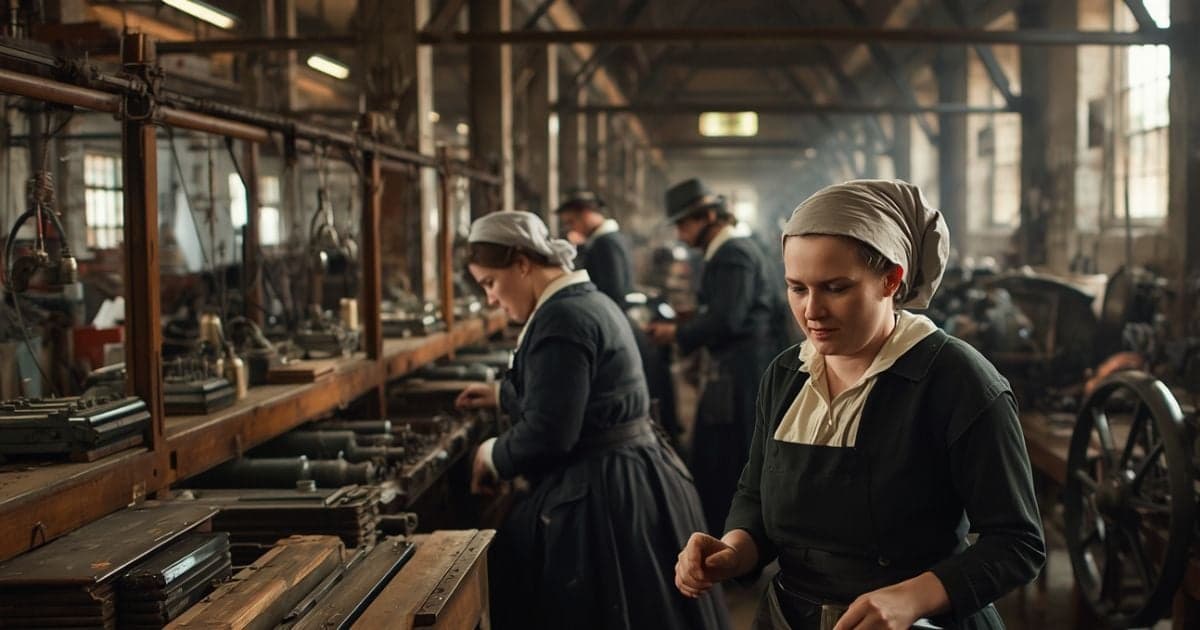
Tenants fared worse. Ancient occupiers were villanage slaves who could not acquire property; slave labour, Smith argues, costs most in the end because the worker labours only under compulsion. Metayers who split produce with landlords had some incentive to raise output but none to invest their own savings when half the gain went to an idle proprietor, a barrier likened to a tithe of one half. Gradually leaseholding farmers emerged, yet insecure tenure, arbitrary manor services, purveyance when royal troops passed, and public taxes as irregular as private exactions discouraged stocking land with cattle, draining marshes, or building lasting improvements. The farmer who rents is like a merchant trading on borrowed money: a large share of produce goes to rent as interest would to a creditor, leaving less to reinvest than a proprietor would retain. Social rank reinforced the bias: across Europe yeomen stood below prosperous tradesmen, so men of capital rarely quit superior stations for farming.

Public policy piled on private insecurity. Europe generally banned corn export without licence and hampered inland trade in farm produce through laws against engrossers, regraters, and forestallers, plus the privileges of fairs and markets. Those restraints, with import encouragement elsewhere, had already checked cultivation in fertile ancient Italy; on rougher soils the damage was worse. Smith's synthesis is that great estates, bad tenures, and mercantile restrictions together explain why post-Roman agriculture stagnated while small proprietors and rich tenant farmers, where they existed, remained the only steady improvers until towns later supplied markets, liberty, and examples of profitable cultivation.

In this chapter: Terms Characters Key Quotes Themes Modern Story

Why This Matters

Connect literature to life

Skill: Reading Institutional Drag

Smith shows that land abundance means little when law concentrates ownership and strips cultivators of upside. Inheritance rules, tenure insecurity, and taxes on farm stock can waste good soil for centuries. Spotting who holds title versus who keeps improvement returns explains why some regions stay poor beside fertile ground.

Coming Up in Chapter 19

While feudal law kept the countryside backward, Smith next traces how cities and towns revived after Rome, developing commerce and liberties that would eventually pull European agriculture forward from urban demand.

Share it with friends

PreviousPrevious ChapterNextNext Chapter
Original text
4,718 wordscomplete

Chapter 18

Why Big Landowners Don't Improve

OF THE DISCOURAGEMENT OF AGRICULTURE IN THE ANCIENT STATE OF EUROPE, AFTER THE FALL OF THE ROMAN EMPIRE. When the German and Scythian nations overran the western provinces of the Roman empire, the confusions which followed so great a revolution lasted for several centuries. The rapine and violence which the barbarians exercised against the ancient inhabitants, interrupted the commerce between the towns and the country. The towns were deserted, and the country was left uncultivated; and the western provinces of Europe, which had enjoyed a considerable degree of opulence under the Roman empire, sunk into the lowest state of poverty…

Public-domain chapter text, formatted for reading.

Master this chapter. Complete your experience

Purchase the complete book to access all chapters and support classic literature

Buy at Powell'sBuy on Amazon

Available in paperback, hardcover, and e-book formats

Now let's explore the literary elements.

Key Quotes & Analysis

"The law of primogeniture hindered them from being divided by succession; the introduction of entails prevented their being broke into small parcels by alienation."

— Smith

Context: Legal mechanisms that froze feudal land concentration

Smith links inheritance law directly to blocked subdivision of conquered estates.

In Today's Words:

Two legal devices kept estates huge forever: eldest sons inherited everything, and families could not sell or split the land. What began as military necessity hardened into custom that beggared younger children and trapped fertile soil in hands that rarely cultivated it with commercial care or frugal attention.

"It seldom happens, however, that a great proprietor is a great improver."

— Smith

Context: Why concentrated ownership stalls cultivation

Wealth and title do not translate into agricultural skill or frugal improvement.

In Today's Words:

Huge landowners rarely become great farmers. They chase display, burn income on houses and equipage, and lack the petty accounting patience profitable improvement demands every season. Smith invites readers to compare great entailed estates with small neighbouring farms and judge which fields look better drained, fenced, and cropped.

"the work done by slaves, though it appears to cost only their maintenance, is in the end the dearest of any."

— Smith

Context: Why unfree labour undermines agriculture

Workers without property maximize ease, not output, unless forced by violence.

In Today's Words:

Slave work looks cheap because you feed the worker, yet it proves costliest over time. Someone who keeps nothing works only when compelled and avoids effort whenever oversight relaxes. Ancient writers on Italy and Greece already noted corn cultivation failing and growing unprofitable for masters under such management.

"Those laws and customs, so favourable to the yeomanry, have perhaps contributed more to the present grandeur of England, than all their boasted regulations of commerce taken together."

— Smith

Context: Tenant security as foundation of English agriculture

Secure leases and yeoman political standing matter more than trade statutes.

In Today's Words:

England's tenant protections, long leases, and yeoman voting rights did more for national greatness than famous commercial laws. When farmers trust they will keep improvements, they drain, fence, and stock land boldly. Smith presents secure small holders as the practical engine behind English agricultural progress across centuries.

Thematic Threads

Class

In This Chapter

Legal systems designed to preserve aristocratic wealth regardless of merit or productivity

Development

Building on earlier themes of natural vs artificial class distinctions

In Your Life:

You might see this in workplaces where management decisions affect workers but not managers

Identity

In This Chapter

Landowner identity based on inherited status rather than actual contribution or skill

Development

Extends previous discussions of how economic roles shape social identity

In Your Life:

You might cling to outdated roles or titles that no longer serve your actual situation

Social Expectations

In This Chapter

Legal and social systems that prioritized family honor over economic efficiency

Development

Shows how social expectations can become economically destructive over time

In Your Life:

You might follow family or community expectations that hurt your long-term financial interests

Personal Growth

In This Chapter

Stagnation when people lack incentives to develop skills or improve their situation

Development

Demonstrates how external structures can block individual development

In Your Life:

You might avoid learning new skills if you don't see how they'll benefit you personally

Human Relationships

In This Chapter

Exploitative relationships between landowners and workers with no mutual benefit

Development

Illustrates how power imbalances corrupt human connections

In Your Life:

You might stay in relationships where you give more than you receive because the other person holds the power

You now have the context. Time to form your own thoughts.

Discussion Questions

This is not a test. Five prompts guide you through the chapter, from how it opens to how it closes, so you notice context and rhythm rather than facts to memorize. Sit with each question in your own words. When you see "One way to read it," treat it as a starting point, not the only answer.

  1. 1

    How did primogeniture and entails prevent the redivision of land after the barbarian conquests?

    ▶One way to read it

    Primogeniture sent entire estates to the eldest heir instead of splitting among children. Entails barred sale or gift outside the family line, so large holdings could not break into smaller productive farms.

    analysis • surface
  2. 2

    Why does Smith think great proprietors are poor improvers even after peace returns?

    ▶One way to read it

    They prefer ornament to profit, often spend revenues on display, and lack the frugal attention small gains require. Buying more land frequently beats improving what they already hold.

    analysis • medium
  3. 3

    How do metayers differ from slaves in incentive to raise output, and why do both systems still limit improvement?

    ▶One way to read it

    Metayers share produce and want a larger total crop, but investing their own capital raises the landlord's half without compensating them. Slaves keep only maintenance and minimize labour unless coerced.

    application • medium
  4. 4

    What made English tenant law comparatively favourable, according to Smith?

    ▶One way to read it

    Ejectment restored possession, long leases protected against successors, and yeoman freeholds carried political respect. Tenants could improve land trusting recovery of their investment, unlike much of continental Europe.

    application • deep
  5. 5

    How did export bans and inland trade restrictions add to the discouragement of agriculture?

    ▶One way to read it

    Prohibiting corn export and policing engrossers limited markets for surplus produce, reducing the reward for cultivation even when tenure improved. Smith cites Italy and argues less fertile countries suffered still more.

    reflection • deep

Critical Thinking Exercise

10 minutes

Map the Incentive Mismatch

Think of a frustrating situation in your life - at work, in your family, or dealing with a company or institution. Draw two columns: 'Who Decides' and 'Who Pays the Price.' Fill in both sides, then identify where the decision-maker doesn't feel the consequences of their choices. This reveals why the situation stays broken and suggests where to focus your energy.

Consider:

  • •Look for situations where the person with authority doesn't experience the results personally
  • •Consider both obvious power structures and subtle ones - who really influences decisions?
  • •Think about time delays - sometimes consequences come later, making the mismatch less obvious

Journaling Prompt

Write about a time when you had to deal with someone making decisions that affected you but not them. How did you handle it, and what would you do differently now that you understand this pattern?

Coming Up Next...

Chapter 19: How Cities Broke Free from Feudalism

While feudal law kept the countryside backward, Smith next traces how cities and towns revived after Rome, developing commerce and liberties that would eventually pull European agriculture forward from urban demand.

Continue to Chapter 19
Previous
The Natural Order of Economic Growth
Contents
Next
How Cities Broke Free from Feudalism
Keep exploring

Continue Exploring

Study guides, teaching tools, themes, and the full library.More ways to read The Wealth of Nations: study guides, teaching tools, and the wider library.

  • The Wealth of Nations Study Guide
  • Teaching Resources
  • Essential Life Index
  • Browse by Theme
  • All Books

What this chapter teaches

Theme analyses that draw on this chapter and apply it to modern life.

  • Markets & Human CoordinationExplore how markets coordinate human effort without central planning, and what that means for your decisions in Adam Smith

You Might Also Like

The Theory of Moral Sentiments cover

The Theory of Moral Sentiments

Adam Smith

Also by Adam Smith

Das Kapital cover

Das Kapital

Karl Marx

Explores systems thinking

The Art of War cover

The Art of War

Sun Tzu

Explores systems thinking

The Prince cover

The Prince

Niccolò Machiavelli

Explores systems thinking

Browse all 106+ books

Share This Chapter

Know someone who'd enjoy this? Spread the wisdom!

TwitterFacebookLinkedInEmail

Go further with Prestige

Unlock study guides and downloads, early access, and exclusive content — and support free access for everyone.

Subscribe to PrestigeCreate free account
Intelligence Amplifier
Intelligence Amplifier™Powering Wide Reads

Exploring human-AI collaboration through books, essays, and philosophical dialogues. Classic literature transformed into navigational maps for modern life.

2025 Books

→ The Amplified Human Spirit→ The Alarming Rise of Stupidity Amplified→ San Francisco: The AI Capital of the World
Visit intelligenceamplifier.org
hello@widereads.com

WideReads Originals

→ You Are Not Lost→ The Last Chapter First→ The Lit of Love→ Wealth and Poverty→ Wisdom for the Wounded
Arvintech
arvintechAmplify your Mind
Visit at arvintech.com

Navigate

  • Home
  • Library
  • Essential Life Index
  • How It Works
  • Subscribe
  • Account
  • About
  • Contact
  • Authors
  • Suggest a Book
  • Landings

Made For You

  • Trending
  • Students
  • Educators
  • Families
  • Readers
  • Literary Analysis
  • Finding Purpose
  • Letting Go
  • Recovering from a Breakup
  • Corruption
  • Gaslighting in the Classics

Newsletter

Weekly insights from the classics. Amplify Your Mind.

Legal

  • Privacy Policy
  • Terms of Service
  • Editorial Standards
  • Cookie Policy
  • Accessibility

Why Public Domain?

We focus on public domain classics because these timeless works belong to everyone. No paywalls, no restrictions—just wisdom that has stood the test of centuries, freely accessible to all readers.

Public domain books have shaped humanity's understanding of love, justice, ambition, and the human condition. By amplifying these works, we help preserve and share literature that truly belongs to the world.

A Pilgrimage

Powell's City of Books

Portland, Oregon

If you ever find yourself in Portland, walk to the corner of Burnside and 10th. The building takes up an entire city block. Inside is over a million books, new and used on the same shelf, organized by color-coded rooms with names like the Rose Room and the Pearl Room. You can lose an afternoon. You can lose a weekend. You will find a book you have been looking for your whole life, and three you did not know existed.

It is a pilgrimage. We cannot find a bookstore like it anywhere on earth. If you read the classics, and you ever get the chance, go. It belongs on every reader's bucket list.

Visit powells.com

We are not in any way affiliated with Powell's. We are just a very big fan.

© 2026 Wide Reads™. All Rights Reserved.

Intelligence Amplifier™ and Wide Reads™ are proprietary trademarks of Arvin Lioanag.

Copyright Protection: All original content, analyses, discussion questions, pedagogical frameworks, and methodology are protected by U.S. and international copyright law. Unauthorized reproduction, distribution, web scraping, or use for AI training is strictly prohibited. See our Copyright Notice for details.

Disclaimer: The information provided on this website is for general informational and educational purposes only and does not constitute professional, legal, financial, or technical advice. While we strive to ensure accuracy and relevance, we make no warranties regarding completeness, reliability, or suitability. Any reliance on such information is at your own risk. We are not liable for any losses or damages arising from use of this site. By using this site, you agree to these terms.