Wide Reads
Literature MattersLife IndexEducators
Sign in
Where to Begin
The Wealth of Nations - The Mercantile System's Hidden Costs

Adam Smith

The Wealth of Nations

The Mercantile System's Hidden Costs

Home›Books›The Wealth of Nations›Chapter 28
Previous
28 of 32
Next

Summary

The Mercantile System's Hidden Costs

The Wealth of Nations by Adam Smith

0:000:00
Listen to Next Chapter

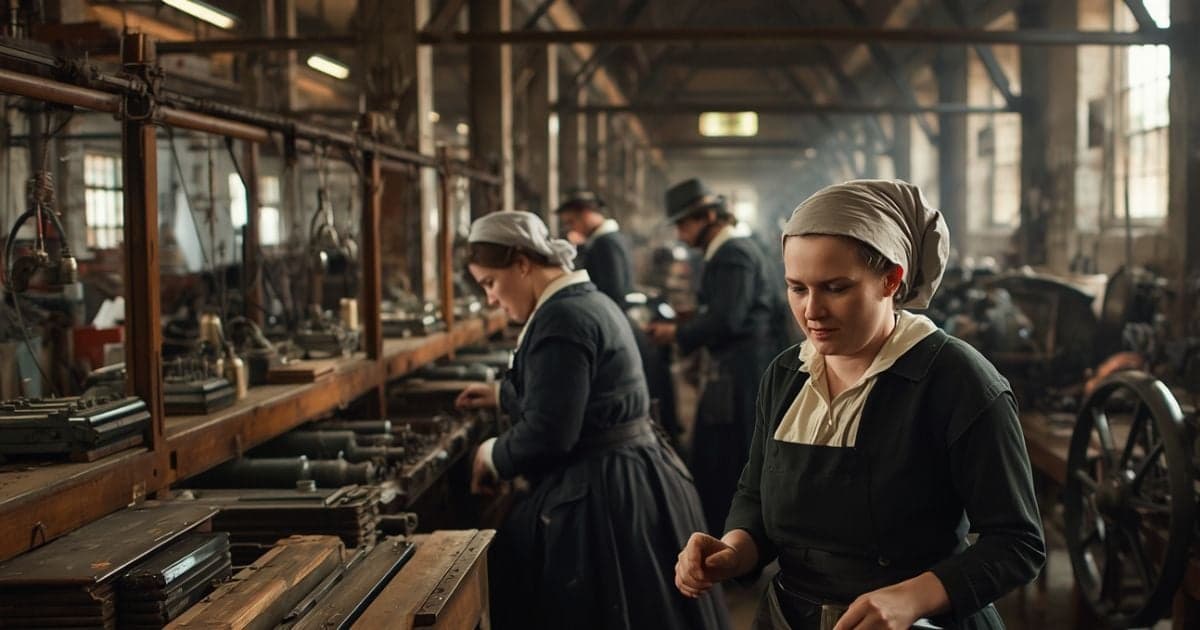
Smith exposes the mercantile system's contradictions and cruelties through detailed examples of how manufacturers manipulated government policy. He shows how wool producers convinced Parliament to impose barbaric penalties—including hand amputation and death—on anyone exporting sheep or wool, supposedly to protect England's competitive advantage. Yet Smith reveals these laws were based on false claims about English wool's superiority and actually depressed domestic wool prices while enriching manufacturers. The chapter details similarly oppressive regulations on leather, metals, and manufacturing tools, all designed to give domestic producers monopoly power. Smith demonstrates how these policies systematically sacrifice consumer interests to producer profits, forcing people to pay higher prices for inferior goods. He traces how manufacturers obtained bounties for importing raw materials while blocking exports that might benefit farmers or workers. The regulations become increasingly absurd—even restricting the movement of wool within England and requiring detailed paperwork for sheep farmers. Smith argues these laws violate basic principles of justice and liberty, turning the state into an enforcer for private monopolies. He concludes that the entire mercantile system serves not national wealth but the narrow interests of merchants and manufacturers who designed it. The chapter reveals how economic policy becomes corrupted when special interests capture the legislative process, creating a system that enriches the few while impoverishing the many. Smith's argument here remains foundational: productive economies are built not on hoarded gold or royal decree, but on the free exchange of labor, goods, and ideas — guided by competition and tempered by the moral sentiments that bind society together.

Coming Up in Chapter 29

Having demolished the mercantile system, Smith turns to examine agricultural systems of political economy that view land as the primary source of national wealth. He'll explore whether these alternative approaches offer better solutions for promoting genuine prosperity.

Share it with friends

Previous ChapterNext Chapter
GO ADS FREE — JOIN US
Original text
complete·8,386 words
C

ONCLUSION OF THE MERCANTILE SYSTEM.

1 / 42

Master this chapter. Complete your experience

Purchase the complete book to access all chapters and support classic literature

Read Free on GutenbergBuy at Powell'sBuy on Amazon

As an Amazon Associate, we earn a small commission from qualifying purchases at no additional cost to you.

Available in paperback, hardcover, and e-book formats

GO ADS FREE — JOIN US

Why This Matters

Connect literature to life

Skill: Detecting Policy Manipulation

This chapter teaches how to spot when rules are written by those who benefit from them, disguised as serving the common good.

Practice This Today

This week, notice when workplace policies, community regulations, or even family rules seem to benefit the rule-makers more than everyone else—then ask who really pays the cost.

GO ADS FREE — JOIN US

Now let's explore the literary elements.

Key Quotes & Analysis

"It discourages the exportation of the materials of manufacture, and of the instruments of trade, in order to give our own workmen an advantage, and to enable them to undersell those of other nations in all foreign markets"

— Smith (analyzing the system)

Context: Smith explains the mercantile system's supposed logic for restricting exports

Smith shows how manufacturers use worker welfare as cover for policies that really just protect their monopoly profits. The 'advantage' goes to owners, not workers, who end up paying higher prices as consumers.

In Today's Words:

They block exports claiming it helps American workers, but it really just lets companies charge more by eliminating competition.

"Such importation would interfere too much with the interest of those manufactures"

— Smith (explaining policy rationale)

Context: Describing why tool imports aren't encouraged even though raw material imports are

This reveals the system's true priority: protecting established manufacturers from any competition whatsoever. National interest becomes whatever serves producer profits.

In Today's Words:

They won't allow anything that might hurt their bottom line, even if it would help everyone else.

"The ultimate object, however, it pretends, is always the same, to enrich the country by an advantageous balance of trade"

— Smith (critiquing mercantile claims)

Context: Smith notes the gap between stated goals and actual effects of these policies

Smith uses 'pretends' to show these policies don't actually serve national wealth but private interests. The system enriches a few while impoverishing the country overall.

In Today's Words:

They claim it's all about making America richer, but it's really about making themselves richer.

Thematic Threads

Power

In This Chapter

Manufacturers use concentrated wealth and organization to capture government policy, turning state power into their private enforcement mechanism

Development

Evolved from earlier discussions of merchant influence to show systematic corruption of democratic institutions

In Your Life:

You see this when your workplace policies mysteriously favor management or when community rules benefit established residents over newcomers

Deception

In This Chapter

Special interests disguise self-serving policies as patriotic necessity, claiming wool export bans protect England when they only protect profits

Development

Builds on themes of merchant dishonesty to reveal how economic lies become political propaganda

In Your Life:

You encounter this when companies claim policies are 'for your protection' but actually increase their control or profits

Class

In This Chapter

Working farmers and consumers bear the costs of policies designed by and for wealthy manufacturers, creating systematic wealth transfer upward

Development

Deepens earlier class analysis by showing how political systems institutionalize economic inequality

In Your Life:

You experience this when regulations make your life harder or more expensive while benefiting those who can afford to influence the rules

Justice

In This Chapter

The state enforces barbaric penalties including death and amputation to protect private monopolies, perverting justice into corporate enforcement

Development

Introduced here as Smith reveals how captured systems corrupt moral and legal principles

In Your Life:

You see this when authorities punish people for violating rules that serve private interests rather than public good

Organization

In This Chapter

Concentrated manufacturer interests easily outmaneuver scattered consumer interests because organization beats numbers in political influence

Development

Introduced here as key mechanism explaining how small groups dominate large populations

In Your Life:

You face this disadvantage when dealing with organized interests like employers, landlords, or service providers who coordinate while customers remain isolated

GO ADS FREE — JOIN US

You now have the context. Time to form your own thoughts.

Discussion Questions

  1. 1

    Smith describes manufacturers convincing Parliament to impose death penalties for exporting wool while claiming it would make England wealthy. What was really happening behind these dramatic laws?

    analysis • surface
  2. 2

    Why were wool producers able to get such extreme laws passed while consumers had no voice in the process? What made this power imbalance possible?

    analysis • medium
  3. 3

    Where do you see this same pattern today—powerful groups writing rules that benefit them while claiming it's for everyone's good?

    application • medium
  4. 4

    When you encounter a new policy at work, in your community, or in government, how would you figure out who really benefits and who pays the cost?

    application • deep
  5. 5

    What does this chapter reveal about how people justify harming others for their own benefit? How do we recognize when we're doing this ourselves?

    reflection • deep

Critical Thinking Exercise

10 minutes

Decode the Real Story

Think of a rule or policy in your workplace, community, or life that seems complicated or unfair. Write down the official explanation for why this rule exists. Then identify who actually benefits from it and who pays the real cost. Finally, rewrite the rule's purpose in plain language based on what it actually does, not what it claims to do.

Consider:

  • •Look for gaps between stated purpose and actual effects
  • •Follow the money—who profits and who loses financially?
  • •Notice who had a voice in creating the rule and who was excluded
  • •Consider whether complexity might be hiding simple unfairness

Journaling Prompt

Write about a time when you realized a rule or system wasn't what it appeared to be. How did you figure it out, and what did you do with that knowledge?

GO ADS FREE — JOIN US

Coming Up Next...

Chapter 29: The Agricultural System Debate

Having demolished the mercantile system, Smith turns to examine agricultural systems of political economy that view land as the primary source of national wealth. He'll explore whether these alternative approaches offer better solutions for promoting genuine prosperity.

Continue to Chapter 29
Previous
The Colonial System Exposed
Contents
Next
The Agricultural System Debate

Continue Exploring

The Wealth of Nations Study GuideTeaching ResourcesEssential Life IndexBrowse by ThemeAll Books

You Might Also Like

War and Peace cover

War and Peace

Leo Tolstoy

Explores systems thinking

The Prince cover

The Prince

Niccolò Machiavelli

Explores systems thinking

The Art of War cover

The Art of War

Sun Tzu

Explores systems thinking

The Idiot cover

The Idiot

Fyodor Dostoevsky

Explores society & class

Browse all 47+ books
GO ADS FREE — JOIN US

Share This Chapter

Know someone who'd enjoy this? Spread the wisdom!

TwitterFacebookLinkedInEmail

Read ad-free with Prestige

Get rid of ads, unlock study guides and downloads, and support free access for everyone.

Subscribe to PrestigeCreate free account
Intelligence Amplifier
Intelligence Amplifier™Powering Wide Reads

Exploring human-AI collaboration through books, essays, and philosophical dialogues. Classic literature transformed into navigational maps for modern life.

2025 Books

→ The Amplified Human Spirit→ The Alarming Rise of Stupidity Amplified→ San Francisco: The AI Capital of the World
Visit intelligenceamplifier.org
hello@widereads.com

WideReads Originals

→ You Are Not Lost→ The Last Chapter First→ The Lit of Love→ Wealth and Poverty→ 10 Paradoxes in the Classics · coming soon
Arvintech
arvintechAmplify your Mind
Visit at arvintech.com

Navigate

  • Home
  • Library
  • Essential Life Index
  • How It Works
  • Subscribe
  • Account
  • About
  • Contact
  • Authors
  • Suggest a Book
  • Landings

Made For You

  • Students
  • Educators
  • Families
  • Readers
  • Literary Analysis
  • Finding Purpose
  • Letting Go
  • Recovering from a Breakup
  • Corruption
  • Gaslighting in the Classics

Newsletter

Weekly insights from the classics. Amplify Your Mind.

Legal

  • Privacy Policy
  • Terms of Service
  • Cookie Policy
  • Accessibility

Why Public Domain?

We focus on public domain classics because these timeless works belong to everyone. No paywalls, no restrictions—just wisdom that has stood the test of centuries, freely accessible to all readers.

Public domain books have shaped humanity's understanding of love, justice, ambition, and the human condition. By amplifying these works, we help preserve and share literature that truly belongs to the world.

A Pilgrimage

Powell's City of Books

Portland, Oregon

If you ever find yourself in Portland, walk to the corner of Burnside and 10th. The building takes up an entire city block. Inside is over a million books, new and used on the same shelf, organized by color-coded rooms with names like the Rose Room and the Pearl Room. You can lose an afternoon. You can lose a weekend. You will find a book you have been looking for your whole life, and three you did not know existed.

It is a pilgrimage. We cannot find a bookstore like it anywhere on earth. If you read the classics, and you ever get the chance, go. It belongs on every reader's bucket list.

Visit powells.com

We are not in any way affiliated with Powell's. We are just a very big fan.

© 2026 Wide Reads™. All Rights Reserved.

Intelligence Amplifier™ and Wide Reads™ are proprietary trademarks of Arvin Lioanag.

Copyright Protection: All original content, analyses, discussion questions, pedagogical frameworks, and methodology are protected by U.S. and international copyright law. Unauthorized reproduction, distribution, web scraping, or use for AI training is strictly prohibited. See our Copyright Notice for details.

Disclaimer: The information provided on this website is for general informational and educational purposes only and does not constitute professional, legal, financial, or technical advice. While we strive to ensure accuracy and relevance, we make no warranties regarding completeness, reliability, or suitability. Any reliance on such information is at your own risk. We are not liable for any losses or damages arising from use of this site. By using this site, you agree to these terms.