Wide Reads
Literature MattersLife IndexEducators
Sign in
Where to Begin
The Wealth of Nations - How Cities Broke Free from Feudalism

Adam Smith

The Wealth of Nations

How Cities Broke Free from Feudalism

Home›Books›The Wealth of Nations›Chapter 19
Previous
19 of 32
Next

Summary

How Cities Broke Free from Feudalism

The Wealth of Nations by Adam Smith

0:000:00
Listen to Next Chapter

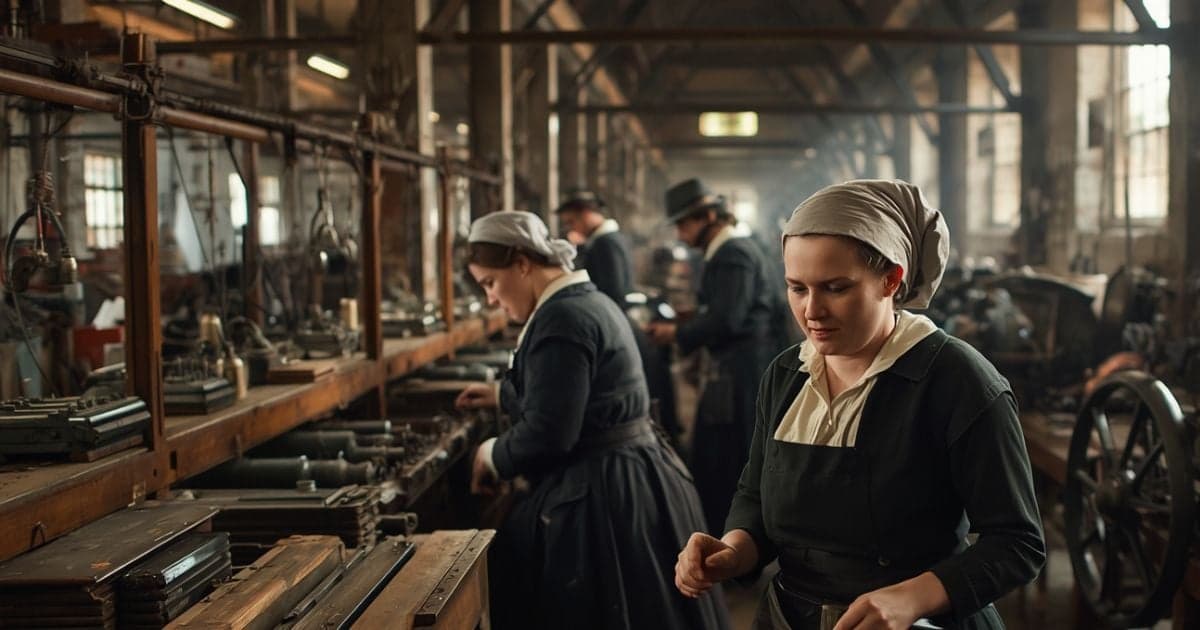
Smith traces how medieval cities transformed from collections of essentially enslaved craftsmen into independent economic powerhouses. After Rome's fall, landowners retreated to fortified castles while towns became home to traders and artisans who were little better than serfs—they couldn't even marry their daughters without their lord's permission or pass property to their children. But these townspeople discovered something powerful: collective action. By banding together to pay taxes as a group rather than individually, they gained leverage with kings who needed reliable revenue. Smart rulers realized that prosperous, independent cities were valuable allies against rebellious nobles who threatened royal authority. The king's enemies became the merchants' enemies too, creating a natural partnership. Cities negotiated for self-governance, built walls for protection, and established their own courts and militias. This security allowed commerce to flourish in ways impossible in the lawless countryside, where any accumulated wealth would be stolen. Towns near rivers or coasts could trade globally, importing luxuries that local nobles craved and gradually introducing manufacturing. Some cities grew so powerful they became independent republics, forcing rural nobles to abandon their castles and live as ordinary citizens. Meanwhile, agricultural regions remained trapped in subsistence living because violence made investment pointless. This chapter reveals how economic freedom isn't just about individual rights—it requires institutional frameworks that protect property, enable cooperation, and create incentives for productive work rather than predatory extraction. Smith's argument here remains foundational: productive economies are built not on hoarded gold or royal decree, but on the free exchange of labor, goods, and ideas — guided by competition and tempered by the moral sentiments that bind society together.

Coming Up in Chapter 20

Smith now examines the flip side of this urban revolution: how the wealth and trade of these newly independent cities began transforming the very countryside that had once oppressed them, creating the economic foundations of the modern world.

Share it with friends

Previous ChapterNext Chapter
GO ADS FREE — JOIN US
Original text
complete·4,436 words

OF THE RISE AND PROGRESS OF CITIES
AND TOWNS, AFTER THE FALL OF THE ROMAN EMPIRE.

1 / 20

Master this chapter. Complete your experience

Purchase the complete book to access all chapters and support classic literature

Read Free on GutenbergBuy at Powell'sBuy on Amazon

As an Amazon Associate, we earn a small commission from qualifying purchases at no additional cost to you.

Available in paperback, hardcover, and e-book formats

GO ADS FREE — JOIN US

Why This Matters

Connect literature to life

Skill: Reading Power Dynamics

This chapter teaches how to identify when you have more leverage than you realize by recognizing your collective value to those in authority.

Practice This Today

This week, notice when individual complaints get dismissed but group concerns suddenly get attention, and look for others who share your workplace frustrations.

GO ADS FREE — JOIN US

Now let's explore the literary elements.

Key Quotes & Analysis

"The people to whom it is granted as a privilege, that they might give away their own daughters in marriage without the consent of their lord, that upon their death their own children, and not their lord, should succeed to their goods"

— Narrator

Context: Smith describes the basic human rights that medieval townspeople had to negotiate for as special privileges

This shows how completely powerless these skilled workers were - they couldn't even control their own families or property. What we consider basic human rights had to be bought and negotiated for.

In Today's Words:

Imagine having to get your boss's permission to let your daughter marry who she wants, or having your boss inherit your house when you die instead of your kids

"The towns were chiefly inhabited by tradesmen and mechanics, who seem, in those days, to have been of servile, or very nearly of servile condition"

— Narrator

Context: Smith explains the low social status of urban craftsmen after Rome's fall

Despite having valuable skills, these workers had almost no legal rights or social standing. Their expertise didn't translate to freedom or respect in the feudal system.

In Today's Words:

The people who actually made things and provided services were treated like they barely owned themselves

"The proprietors of land seem generally to have lived in fortified castles on their own estates, and in the midst of their own tenants and dependants"

— Narrator

Context: Contrasting medieval landowners with ancient city-builders

This isolation of the wealthy from commerce and trade networks ultimately weakened their economic position compared to the connected, cooperative cities.

In Today's Words:

The rich people locked themselves away in their private compounds with their employees, cutting themselves off from where the real business was happening

Thematic Threads

Class

In This Chapter

Medieval craftsmen transform from essentially enslaved workers to independent citizens through collective organization

Development

Builds on earlier themes of class mobility, showing how economic organization can overcome birth status

In Your Life:

Your job title matters less than your ability to organize with others who share your interests

Security

In This Chapter

Cities build walls, courts, and militias to protect commerce and accumulated wealth from predators

Development

Extends security themes to show how institutional frameworks enable economic growth

In Your Life:

Your financial progress depends on systems that protect your investments and savings from being stolen or lost

Cooperation

In This Chapter

Merchants band together for collective tax payment, creating leverage with kings who need reliable revenue

Development

Introduced here as foundation for economic power

In Your Life:

Working with others who share your goals multiplies your individual power in ways that benefit everyone

Innovation

In This Chapter

Secure cities develop manufacturing and global trade while rural areas remain trapped in subsistence

Development

Shows how security enables innovation and risk-taking

In Your Life:

You can only invest in your future when you're not constantly worried about immediate survival

Power

In This Chapter

Cities grow so powerful they force rural nobles to abandon castles and live as ordinary citizens

Development

Demonstrates how economic power can overcome traditional authority

In Your Life:

Economic independence gives you choices that traditional authority figures can't control

GO ADS FREE — JOIN US

You now have the context. Time to form your own thoughts.

Discussion Questions

  1. 1

    How did medieval craftsmen transform from powerless individuals into influential city dwellers who could negotiate with kings?

    analysis • surface
  2. 2

    Why did kings find it advantageous to grant independence to cities rather than keep tight control over individual craftsmen?

    analysis • medium
  3. 3

    Where do you see this same pattern of collective bargaining creating power that individuals lack in your workplace, community, or family life?

    application • medium
  4. 4

    If you were facing a situation where you felt powerless as an individual, how would you identify potential allies and build collective leverage?

    application • deep
  5. 5

    What does this chapter reveal about the relationship between security, cooperation, and prosperity in any community?

    reflection • deep

Critical Thinking Exercise

10 minutes

Map Your Power Networks

Think of a current situation where you feel you have little individual influence - at work, in your community, or dealing with an institution. Draw a simple map showing who else might share your concerns or interests. Identify what value your potential group could offer that the other party needs or wants.

Consider:

  • •Look for people with the same problem, not just people you like
  • •Consider what the other party gains from the current situation and what they might lose
  • •Think about timing - when would your collective voice have the most impact

Journaling Prompt

Write about a time when you felt powerless in a situation. How might the outcome have been different if you had organized with others who shared your concerns?

GO ADS FREE — JOIN US

Coming Up Next...

Chapter 20: How Cities Transformed the Countryside

Smith now examines the flip side of this urban revolution: how the wealth and trade of these newly independent cities began transforming the very countryside that had once oppressed them, creating the economic foundations of the modern world.

Continue to Chapter 20
Previous
Why Big Landowners Don't Improve
Contents
Next
How Cities Transformed the Countryside

Continue Exploring

The Wealth of Nations Study GuideTeaching ResourcesEssential Life IndexBrowse by ThemeAll Books

You Might Also Like

War and Peace cover

War and Peace

Leo Tolstoy

Explores systems thinking

The Prince cover

The Prince

Niccolò Machiavelli

Explores systems thinking

The Art of War cover

The Art of War

Sun Tzu

Explores systems thinking

The Idiot cover

The Idiot

Fyodor Dostoevsky

Explores society & class

Browse all 47+ books
GO ADS FREE — JOIN US

Share This Chapter

Know someone who'd enjoy this? Spread the wisdom!

TwitterFacebookLinkedInEmail

Read ad-free with Prestige

Get rid of ads, unlock study guides and downloads, and support free access for everyone.

Subscribe to PrestigeCreate free account
Intelligence Amplifier
Intelligence Amplifier™Powering Wide Reads

Exploring human-AI collaboration through books, essays, and philosophical dialogues. Classic literature transformed into navigational maps for modern life.

2025 Books

→ The Amplified Human Spirit→ The Alarming Rise of Stupidity Amplified→ San Francisco: The AI Capital of the World
Visit intelligenceamplifier.org
hello@widereads.com

WideReads Originals

→ You Are Not Lost→ The Last Chapter First→ The Lit of Love→ Wealth and Poverty→ 10 Paradoxes in the Classics · coming soon
Arvintech
arvintechAmplify your Mind
Visit at arvintech.com

Navigate

  • Home
  • Library
  • Essential Life Index
  • How It Works
  • Subscribe
  • Account
  • About
  • Contact
  • Authors
  • Suggest a Book
  • Landings

Made For You

  • Students
  • Educators
  • Families
  • Readers
  • Literary Analysis
  • Finding Purpose
  • Letting Go
  • Recovering from a Breakup
  • Corruption
  • Gaslighting in the Classics

Newsletter

Weekly insights from the classics. Amplify Your Mind.

Legal

  • Privacy Policy
  • Terms of Service
  • Cookie Policy
  • Accessibility

Why Public Domain?

We focus on public domain classics because these timeless works belong to everyone. No paywalls, no restrictions—just wisdom that has stood the test of centuries, freely accessible to all readers.

Public domain books have shaped humanity's understanding of love, justice, ambition, and the human condition. By amplifying these works, we help preserve and share literature that truly belongs to the world.

A Pilgrimage

Powell's City of Books

Portland, Oregon

If you ever find yourself in Portland, walk to the corner of Burnside and 10th. The building takes up an entire city block. Inside is over a million books, new and used on the same shelf, organized by color-coded rooms with names like the Rose Room and the Pearl Room. You can lose an afternoon. You can lose a weekend. You will find a book you have been looking for your whole life, and three you did not know existed.

It is a pilgrimage. We cannot find a bookstore like it anywhere on earth. If you read the classics, and you ever get the chance, go. It belongs on every reader's bucket list.

Visit powells.com

We are not in any way affiliated with Powell's. We are just a very big fan.

© 2026 Wide Reads™. All Rights Reserved.

Intelligence Amplifier™ and Wide Reads™ are proprietary trademarks of Arvin Lioanag.

Copyright Protection: All original content, analyses, discussion questions, pedagogical frameworks, and methodology are protected by U.S. and international copyright law. Unauthorized reproduction, distribution, web scraping, or use for AI training is strictly prohibited. See our Copyright Notice for details.

Disclaimer: The information provided on this website is for general informational and educational purposes only and does not constitute professional, legal, financial, or technical advice. While we strive to ensure accuracy and relevance, we make no warranties regarding completeness, reliability, or suitability. Any reliance on such information is at your own risk. We are not liable for any losses or damages arising from use of this site. By using this site, you agree to these terms.