
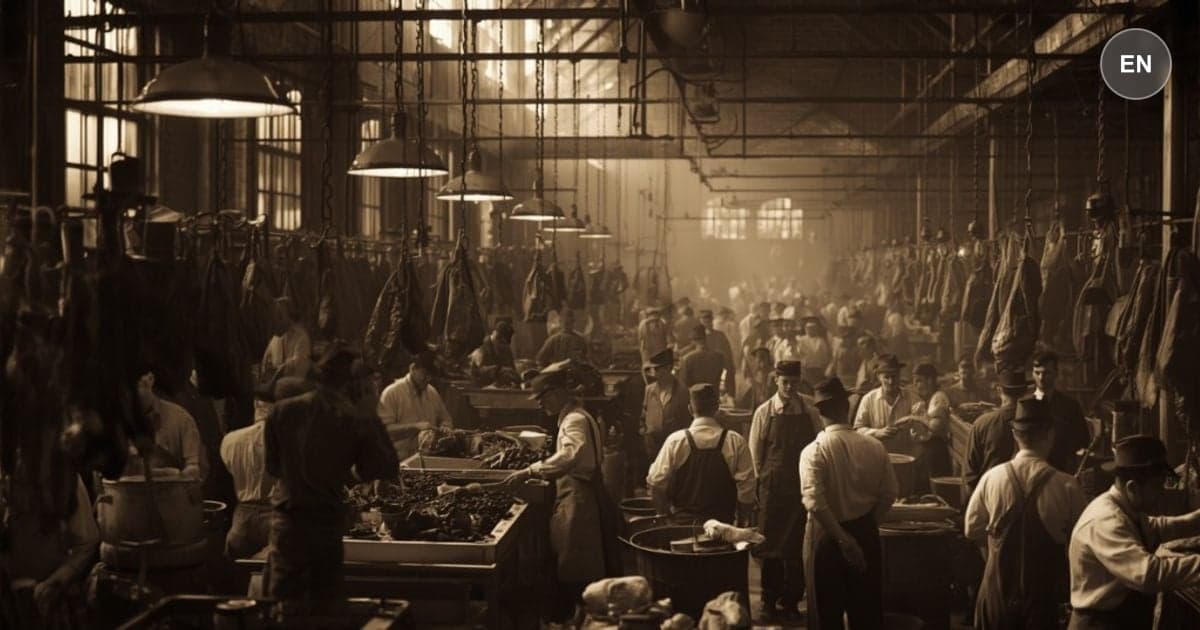
The bosses liked to get hold of Jurgis because he would go on the run when told. That eagerness was the product. The obstinate sprain is the recall. He walks back onto the line while the swelling will not go down, and the plant treats the return as proof that bodies are still cheap. Two men help him to the car. He sits in the snow. Sinclair will not let this be a sports injury. It is the moment the inventory stops matching the order, and the order does not wait.
What follows is not a comeback montage. The fertilizer mill marks the clothes so thoroughly that a kitchen can refuse him by smell. Beating Connor feels like the first free act in months and buys a cage, a missing coat, and a walk that may be twenty miles toward rooms that have already emptied. Tramping looks like the open road until a man cannot keep warm in the hay, until every warehouse door already has a crowd, until the lake that was a washbasin turns to ice. Mobility without a wage is a longer winter wearing a different hat.
By the time Sinclair compares him to an animal torn out of its shell, the point is not that Jurgis failed to be resilient. The point is that some markets do not return you to the person who entered them. New appetites, new shames, a body that cannot command a job: these do not go back in the bottle because you have learned a lesson. Survival after the break is refusing the sermon that one more try would have saved the product. The product was you. The plant already took delivery.
The Central Lesson
The system does not only underpay you. It uses you up and then treats the remainder as a personal failure. The sprain, the mill that will not wash out, the cage that felt like justice, the miles toward an emptied house, the hay that will not warm: these are how a strong man is torn from his shell. Survival is not proving you can still be inventory. It is naming that the order already shipped, and refusing to spend the rest of your life trying to grow claws the market pulled out.
Applying This to Your Life
Do Not Call a Recall Heroism
Going back early on an injury, a burnout, or a breakdown can look like character. Ask whether the institution is honoring you or checking whether the inventory still works. The snowbank is not a medal.
Tell a New Town from the Same Winter
Leaving town, switching industries, walking twenty miles: motion is not always a start. If every door already has a crowd and you still cannot get clean, you have not escaped. You have lengthened the season.
Refuse the Once-More Story
After a real break, the most expensive lie is that you would be fine if you had only tried harder. Some shells do not grow back. Plan for the person you are now, not the product they used to buy.
Other lessons in this book
More life-skill deep dives from the same classic.
Reading Graft as Everyday Government
Stay with Duane's cell and chapter 25: votes, inspectors, and a city that prices justice.
6 chapters·Explore AnalysisUnderstanding Reform Movements
Hear the union hall, the socialist meeting, and the night the country reached for the plate.
6 chapters·Explore AnalysisSeeing Systemic Exploitation
Sit with the house contract and the killing floor: the trap is design, not bad luck.
6 chapters·Explore AnalysisHolding a Family Together Under Scarcity
Watch Ona, Elzbieta, and the children keep a household when the wage cannot cover the winter.
6 chapters·Explore AnalysisImmigrant Perspective
Name the veselija, the English they cannot read, and the promise that never covered the ledger.
6 chapters·Explore Analysis
Continue exploring
Explore this theme
The same lessons in other books
See how other books teach the same life skills.
Les Misérables: Essential Edition
Navigating Poverty and Social ClassTrace Fantine from 1817 hope to factory gossip, and the class that treats need as indictment.
Hard Times
Understanding Worker DignityWatch Stephen refuse both mill-owner and union when each side treats him as a unit, and see what integrity costs when neither camp will have you.
A Tale of Two Cities
Loving Without PossessionTell Lucie you would give your life to keep a life she loves, after you already know she will marry Darnay.
Where the lesson lives in the book
The Swelling Will Not Go Down
Jurgis wrenches an ankle and goes back anyway. The pain stops him on the line. Two men help him to the car, and he sits in the snow until someone comes. Strength was what the bosses liked to get hold of. Now it is gone, and the plant has no second product to buy from him.
Key Insight:
A workplace that pays you for a body will not keep you when the body fails. Going back early is not heroism the company honors. It is the last inventory check before they replace you.
“It was a very obstinate sprain; the swelling would not go down, and the pain still continued.”
Clothes That Will Not Come Clean
The fertilizer mill is the job starving men avoid. The dust gets into the fabric and will not wash. Aniele will later refuse the phosphate stink in her kitchen. The mark is not only chemical. It is a smell other employers can use to know what you have already accepted.
Key Insight:
The bottom rung is not a stepping stone. It is a stain that advertises your desperation to the next door. Survival here is remaining employable as waste.
Satisfaction in a Cage
After beating Connor, Jurgis sits in a dull stupor of satisfaction, then learns the arithmetic: no wages, no coat, mouths at home while he rots. The fertilizer still clings. The charge is assault. Christmas is a desk and a patrol wagon. Rage can feel like the first free act in months and still be the move the system prices.
Key Insight:
A cell does not pause the rent. Survival after the break includes the people who keep paying while you are locked away. The feeling of justice is not the same as a plan.
“At first he was like a wild beast that has glutted itself; he was in a dull stupor of satisfaction.”
Twenty Miles Toward Nothing
Released into slush without an overcoat, Jurgis walks toward a house that is already gone. A stranger tells him it may be twenty miles. The family he meant to protect has been scattered by the weeks he spent satisfied in a cage. Coming back is not the same as returning.
Key Insight:
The life you broke yourself to defend can finish collapsing in your absence. Survival starts with naming what is actually left, not the address you still carry.
“Mebbe twenty miles or so.”
No Warmth Left in the Hay
Tramping loses its joy the moment a man cannot keep warm in the hay. Jurgis walks factories and warehouses and finds ten to a hundred men already at every door. There is nowhere in the city to wash his face except the lake, and the lake is turning to ice. Mobility looks like freedom and is a closed loop of the same refusal.
Key Insight:
After a collapse, a new town can still be the same winter. The skill is telling a start from a longer version of the door that will not open.
“All the joy went out of tramping as soon as a man could not keep warm in the hay.”
Claws Gone, Shell Torn
Jurgis is crippled in the way a wild animal is crippled: he can no longer command a job, can no longer steal with impunity, and must hide from the herd. New standards of living will not go back in the bottle. The man who believed in effort has nothing left to sell but chance.
Key Insight:
Some breaks do not reset. They change what you can still be in the market that broke you. Survival then is not grit. It is refusing the story that you would be fine if you had only tried once more.
“He was crippled—he was as literally crippled as any wild animal which has lost its claws, or been torn out of its shell.”