Master this chapter. Complete your experience
Purchase the complete book to access all chapters and support classic literature
As an Amazon Associate, we earn a small commission from qualifying purchases at no additional cost to you.
Available in paperback, hardcover, and e-book formats
Why This Matters
Connect literature to life
This chapter teaches how to identify when systems force people into moral compromises by eliminating all other options.
Practice This Today
This week, notice when someone's questionable behavior might be driven by financial desperation rather than character flaws—ask what pressures they're facing before judging.
Now let's explore the literary elements.
Key Quotes & Analysis
"He was as literally crippled as any wild animal which has lost its claws, or been torn out of its shell."
Context: Describing Jurgis after being cut off from his political connections
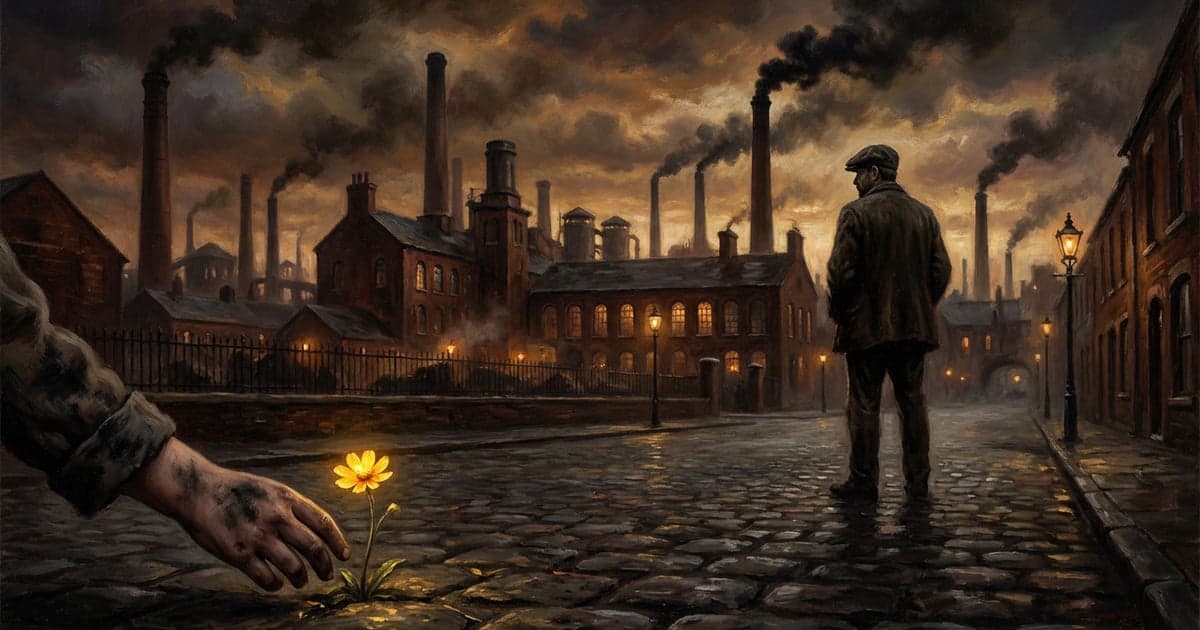
This animal metaphor shows how Jurgis's corrupt connections weren't just conveniences—they were survival tools. Without them, he's defenseless in a predatory system.
In Today's Words:
He was screwed—like losing your network and references all at once, with no way to make a living.
"We could have saved Ona if we'd known—but we were such fools, we couldn't understand."
Context: Explaining to Jurgis that Ona should have turned to prostitution from the beginning
Marija's hindsight reveals how naive moral standards can be deadly when survival is at stake. She now sees their earlier principles as fatal ignorance.
In Today's Words:
If we'd known how the world really works, we could have saved her—but we were too stupid to see it.
"I can't help it—I'm chained to this life now. There's no way out."
Context: Explaining why she can't leave prostitution even though she hates it
This reveals how economic desperation creates cycles that trap people. Once you're forced into certain survival strategies, escape becomes nearly impossible.
In Today's Words:
I'm stuck in this mess now—once you're in this deep, there's no climbing out.
Thematic Threads
Class
In This Chapter
Jurgis experiences life from the bottom—no political protection, no steady work, reduced to stealing food and sleeping rough
Development
Full circle from his arrival with hope and strength to complete destitution, showing how class mobility can work both ways
In Your Life:
You might see this when a job loss or medical emergency suddenly drops you into a lower economic bracket with completely different daily realities
Identity
In This Chapter
Marija has transformed from innocent immigrant girl to hardened prostitute who speaks pragmatically about selling bodies for survival
Development
Continuation of identity destruction theme, but now showing how people adapt and rationalize to preserve some sense of self
In Your Life:
You might recognize this when financial pressure forces you to take jobs or make choices that feel foreign to who you thought you were
Social Expectations
In This Chapter
Jurgis's moral shock at finding Marija in prostitution clashes with her practical acceptance of doing whatever survival requires
Development
Evolution from earlier chapters where characters tried to maintain respectability despite poverty—now survival overrides social norms
In Your Life:
You might face this when your family's needs conflict with what society says is 'proper' or 'respectable' behavior
Human Relationships
In This Chapter
The reunion between Jurgis and Marija is marked by her matter-of-fact discussion of family tragedies and survival strategies
Development
Shows how extreme hardship changes even intimate relationships—love becomes practical rather than sentimental
In Your Life:
You might experience this when crisis strips away romantic notions and forces family relationships to become purely about mutual survival
You now have the context. Time to form your own thoughts.
Discussion Questions
- 1
What specific events led to Jurgis discovering Marija in the brothel, and how had both their circumstances changed since we last saw them together?
analysis • surface - 2
Why does Marija speak so pragmatically about prostitution and suggest Ona should have done it from the beginning? What does this reveal about how desperation changes people's values?
analysis • medium - 3
Where do you see people today making choices they never thought they would because economic pressure left them no other options?
application • medium - 4
When someone you know makes a questionable decision to survive financially, how do you balance understanding their circumstances with maintaining your own moral boundaries?
application • deep - 5
What does Marija's transformation teach us about the difference between moral choices made from security versus those made from desperation?
reflection • deep
Critical Thinking Exercise
Map Your Moral Boundaries Under Pressure
Create two columns: 'Lines I'll Never Cross' and 'Pressures That Might Test Them.' In the first column, list moral boundaries you consider absolute. In the second, honestly identify what kinds of financial or family pressures might challenge each boundary. This isn't about planning to compromise—it's about recognizing where you're vulnerable so you can prepare better responses.
Consider:
- •Consider both sudden crises (job loss, medical emergency) and gradual pressures (rising costs, aging parents)
- •Think about how protecting others (children, elderly relatives) might affect your decision-making differently than protecting yourself
- •Remember that recognizing potential pressure points helps you build support systems before you need them
Journaling Prompt
Write about a time when financial pressure made you consider doing something you normally wouldn't. What factors influenced your final decision? What support systems or alternatives might have made the choice easier?
Coming Up Next...
Chapter 28: The Socialist Awakening
Jurgis faces the same judge who once showed him mercy, but this time his luck may have run out. Will his connection to Marija's world drag him deeper into the criminal justice system, or might this encounter lead to an unexpected revelation?