Master this chapter. Complete your experience
Purchase the complete book to access all chapters and support classic literature
As an Amazon Associate, we earn a small commission from qualifying purchases at no additional cost to you.
Available in paperback, hardcover, and e-book formats
Why This Matters
Connect literature to life
This chapter teaches how to identify when systems present impossible options as legitimate choices to mask their exploitation.
Practice This Today
This week, notice when someone offers you options that all serve their interests—like employers offering 'flexible' schedules that benefit only them, or landlords presenting lease terms as non-negotiable.
Now let's explore the literary elements.
Key Quotes & Analysis
"Perhaps it was the smoked sausage he had eaten that morning—which may have been made out of some of the tubercular pork that was condemned as unfit for export."
Context: Describing what likely killed little Kristoforas
This shows the cruel irony of industrial capitalism - the diseased meat deemed too dangerous to sell to other countries was fed to American workers' children. The poor become the dumping ground for products too toxic for profit elsewhere.
In Today's Words:
The kid probably died from eating the contaminated food they wouldn't even ship overseas.
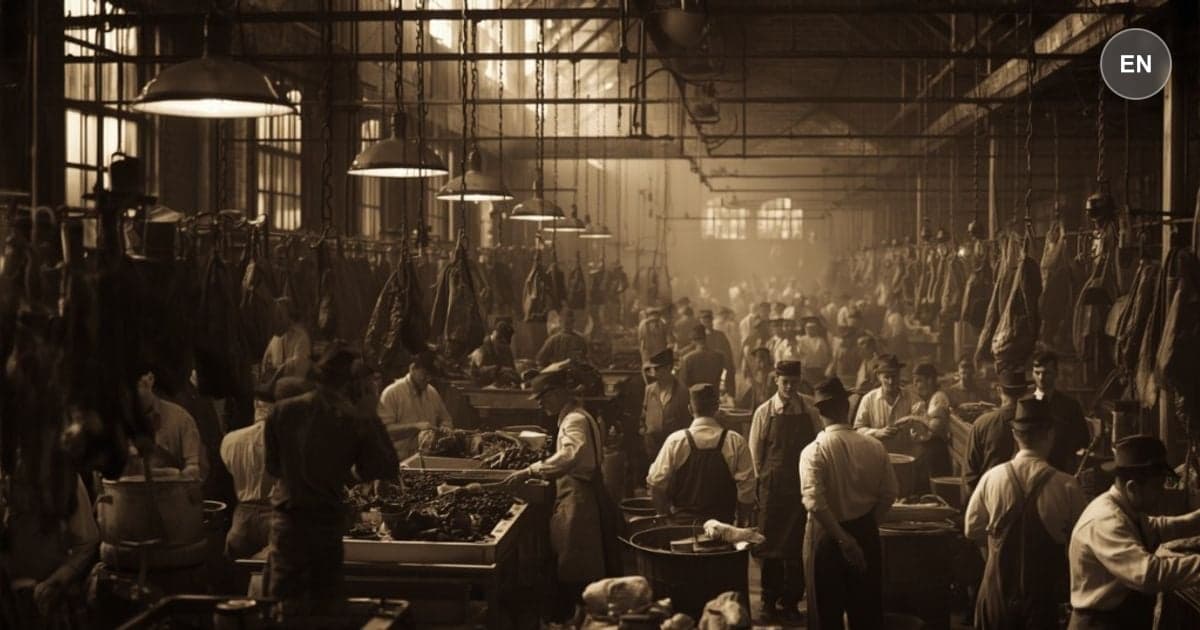
"It was a place where the workers worked in open vats near the level of the floor... their peculiar trouble was that they fell into the vats; and when they were fished out, there was never enough of them left to be worth exhibiting."
Context: Describing the fertilizer plant where Jurgis now works
This reveals the complete dehumanization of workers - they're so disposable that when they die horrifically, there's not even enough left for a proper funeral. It shows how the system literally consumes human beings.
In Today's Words:
Workers fell into the chemical vats and got dissolved - there wasn't enough left of them to even have a body to bury.
"The fertilizer works of Durham's lay away from the rest of the plant... All the men who worked here followed the boss's orders without a murmur, for they were the dregs of the earth, the last hope of the hopeless."
Context: Explaining why the fertilizer plant workers never complained
This shows how the system creates a hierarchy of desperation. These workers can't protest because they know they're at the absolute bottom - there's nowhere else to go. Fear keeps them silent.
In Today's Words:
The guys working there never complained because they knew they were rock bottom - this was their last chance at any job at all.
Thematic Threads
Impossible Choices
In This Chapter
Jurgis must poison himself daily at the fertilizer plant or watch his family starve; Elzbieta must choose between proper burial and survival
Development
Escalated from earlier financial pressures to life-or-death decisions with no good options
In Your Life:
You might face this when choosing between a toxic job and unemployment, or expensive healthcare and going without treatment
Information Hoarding
In This Chapter
Elzbieta never knew about the wealthy surgeon who might have saved Kristoforas until after he died
Development
Builds on earlier themes of hidden costs and deceptive contracts to show how life-saving information is kept from the poor
In Your Life:
You might miss out on financial aid, legal protections, or healthcare options because the system doesn't advertise them to people like you
Hierarchy of Exploitation
In This Chapter
Even within the plant, there are levels of suffering—fertilizer workers are looked down upon by sausage room workers
Development
Expands the class theme to show how the system creates divisions even among the exploited
In Your Life:
You might find yourself competing with coworkers for slightly better conditions instead of questioning why conditions are bad for everyone
Toxic Survival
In This Chapter
Jurgis becomes so contaminated with chemicals that he clears out streetcars, yet continues working because his family needs the money
Development
Shows how survival itself becomes a form of slow death when the system offers no viable alternatives
In Your Life:
You might stay in relationships, jobs, or situations that are slowly destroying you because leaving seems impossible
Childhood Corruption
In This Chapter
The children learn about gambling, prostitution, and crime while selling newspapers on the streets
Development
Introduces how poverty corrupts innocence and forces premature adulthood
In Your Life:
You might see kids in your neighborhood growing up too fast, learning survival skills that steal their childhood
You now have the context. Time to form your own thoughts.
Discussion Questions
- 1
What impossible choices do Jurgis and Elzbieta face in this chapter, and why are they impossible?
analysis • surface - 2
How does the system use information as a weapon against poor families like theirs?
analysis • medium - 3
Where do you see this pattern of 'choice elimination' in today's economy - healthcare, housing, education, or employment?
application • medium - 4
When you're facing what feels like impossible choices, what strategies could help you find alternatives the system doesn't advertise?
application • deep - 5
Why do you think systems create hierarchies of suffering instead of just one level of exploitation?
reflection • deep
Critical Thinking Exercise
Map Your Choice Architecture
Think of a major decision you're facing or recently faced. Draw three columns: 'Options They Show You', 'Real Costs Hidden', and 'Alternatives They Don't Mention'. Fill each column honestly. Look for patterns in how choices are presented to you versus what's actually available.
Consider:
- •Notice how 'urgent' decisions often have hidden alternatives if you slow down
- •Pay attention to who benefits from each option you're shown
- •Consider what information you might be missing and where to find it
Journaling Prompt
Write about a time when you felt trapped between bad choices. Looking back, what options existed that you didn't see at the time? How could you recognize hidden alternatives faster in the future?
Coming Up Next...
Chapter 14: The Meat Machine's Human Cost
The family's inside knowledge of Packingtown's operations is about to expand dramatically. With members working in different parts of the plant, they're getting a complete education in how spoiled and contaminated meat gets processed—and where it ends up.