
Lessons
Lessons from The Jungle
Six lessons from this classic work, traced chapter by chapter.
0:00 / 0:00
Jurgis Rudkus dances at his own wedding in a hall above a saloon in Packingtown, and when the guests cannot pay their share of the veselija he tells Ona he will work harder. Sinclair published the novel in 1906. The strongest man on the killing floor will still be priced like the cattle, and America will pass a food law before it saves his family.
Continue the summary
Jurgis is the Lithuanian who arrives with a back the bosses want and a faith that wages can buy a home. Ona Lukoszaite is the girl he married, slight enough that the winter and the night shift both take her. Teta Elzbieta keeps the household standing after the men fail. Marija Berczynskas is the cousin with a laugh and a job in the canning rooms who will end in a brothel with a needle in her arm. Dede Antanas is the old man who dies coughing fertilizer dust for a job he was too proud to refuse. Stanislovas is the child sent to work before he can keep warm. Phil Connor is the boss who prices Ona's job as a body. Jack Duane is the thief in the cell who teaches Jurgis that the law is a business. Jonas vanishes. Little Antanas drowns in a puddle the city will not pave. Ostrinski finally names the machine. The packers never need to appear as one man. The only opponent who never leaves the page is the claim that harder work can outrun a system built to harvest it.
Chapter 1 opens on the wedding that mortgages the future before the first paycheck. Chapters 3 and 4 put Jurgis on the killing beds, proud of a job that will use him up. Chapter 6 is the house: a down payment, hidden interest, and a contract they cannot read. Chapter 7 sends even Stanislovas out into the cold. Chapter 12 is the sprain that will not heal and the walk back to the line. Chapter 13 is the fertilizer mill. Chapter 15 is Ona's confession and the beating that sends Jurgis to jail. Chapter 19 is Madame Haupt wiping grease from her hands while Ona dies upstairs. Chapter 22 is the child who falls off a sidewalk into water the city left for him. Chapter 25 is the city as a second packing house: votes, inspectors, and a hundred-dollar bill Jurgis cannot change without being robbed. Chapter 27 finds Marija sold. Chapter 28 is the hall where a socialist speech finally gives Jurgis a sentence that can hold what happened. Chapter 31 is an election night that does not bring anyone back.
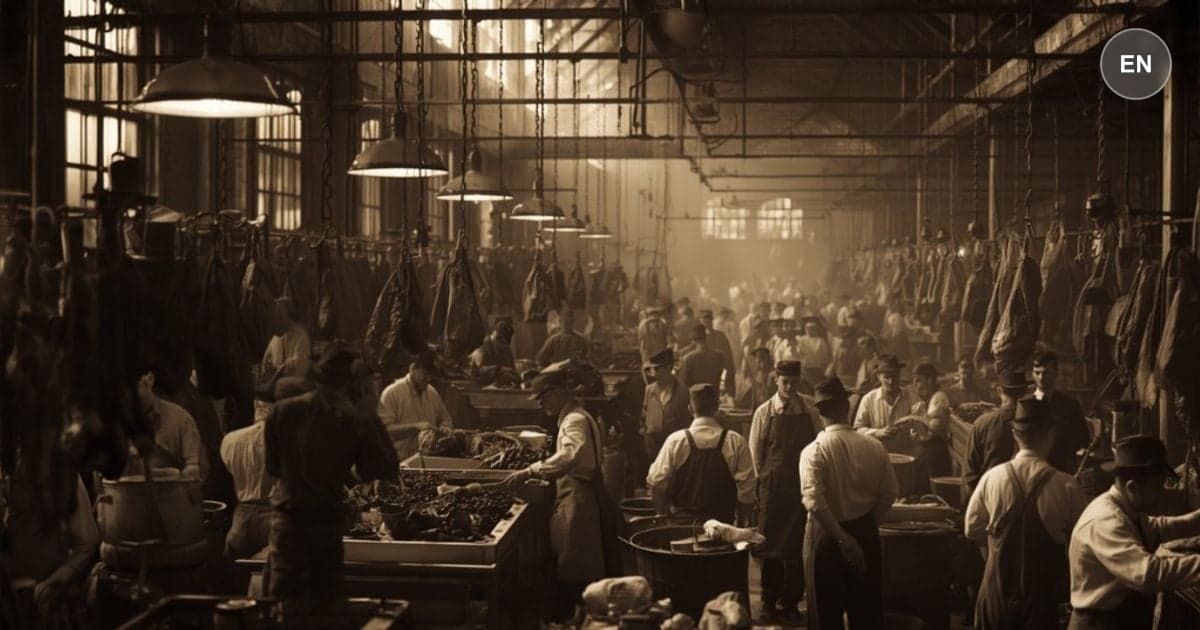
Sinclair spent seven weeks in the yards and never treats Packingtown as local color, or Jurgis as a mascot for grit, or the sausage as the real subject. He wrote to convert the country to the workers. The country converted its dinner. He refuses the cheap ending. Jurgis does not get the house. Ona does not survive the doctor who had no time to eat. The last chapter is a meeting, not a rescue. What remains is not a sermon that capitalism is rude. It is a picture of how a wage can look like a ladder while every rung is greased, and how a man who believed in effort learns that the effort was the product.
The unpaid veselija is the first pressure. Immigrant Perspective is that wedding, the English they cannot read on the house contract, and a promise that never covered the ledger. Seeing Systemic Exploitation is the killing beds, the hidden interest, and a trap that looks like bad luck until the same owners wrote the job, the lease, and the inspection. Holding a Family Together Under Scarcity is Elzbieta sending Stanislovas into the cold, Ona on the night shift, and Connor pricing that love as leverage. Surviving After the System Breaks You is the sprain that will not heal, the fertilizer mill, jail after Ona's confession, and the road that will not let a broken man walk back. Reading Graft as Everyday Government is Duane's cell and chapter 25: votes, inspectors, and a hundred-dollar bill Jurgis cannot change without being robbed. Understanding Reform Movements is the hall where a socialist speech finally gives him a sentence, and the election night that does not bring anyone back.
Madame Haupt wipes grease from her hands while Ona dies upstairs. Little Antanas falls off a sidewalk into water the city left for him. Wide Reads maps summaries, quotes, and audio across all thirty-one chapters, from a wedding that cannot pay for itself to an election night that does not bring Ona back.
Why this matters
People still watch a wage look like a ladder while every rung is greased: the contract written in language you cannot read, the inspection stamp that sells poisoned meat, the blacklist that travels without you. Sinclair wrote from seven weeks in the yards, not from a safe reform genre. This guide keeps the wedding, Ona's death, and the hall tied to choices you can still name.
Theme breakdowns
Explore the lessons
The Jungle is Upton Sinclair's 1906 novel about a wage that looks like a ladder while every rung is greased: Jurgis dances at his own wedding above a saloon, takes pride in a killing-floor job that will use him up, signs a house contract he cannot read, watches Ona die upstairs while Madame Haupt wipes grease from her hands, loses Little Antanas in a puddle the city will not pave, learns graft in chapter 25, and ends in a socialist hall on an election night that does not bring anyone back.
Each card traces a pattern through named chapters — summaries, quotes, and key insights tied to the scenes that prove it. Start with the featured lessons, then open the deep dives below.
Deep dives
Chapter-by-chapter breakdowns
Surviving After the System Breaks You
Follow Jurgis from the sprain and the fertilizer mill through jail, the road, and the fall.
It was a very obstinate sprain; the swelling would not go down, and the pain still continued.
Reading Graft as Everyday Government
Stay with Duane's cell and chapter 25: votes, inspectors, and a city that prices justice.
There were two rival sets of grafters, known as political parties, and the one got the office which bought the most votes.
Continue Exploring
Guides, life skills, and the full library.More ways to read The Jungle: guides, life skills, and the wider library.