
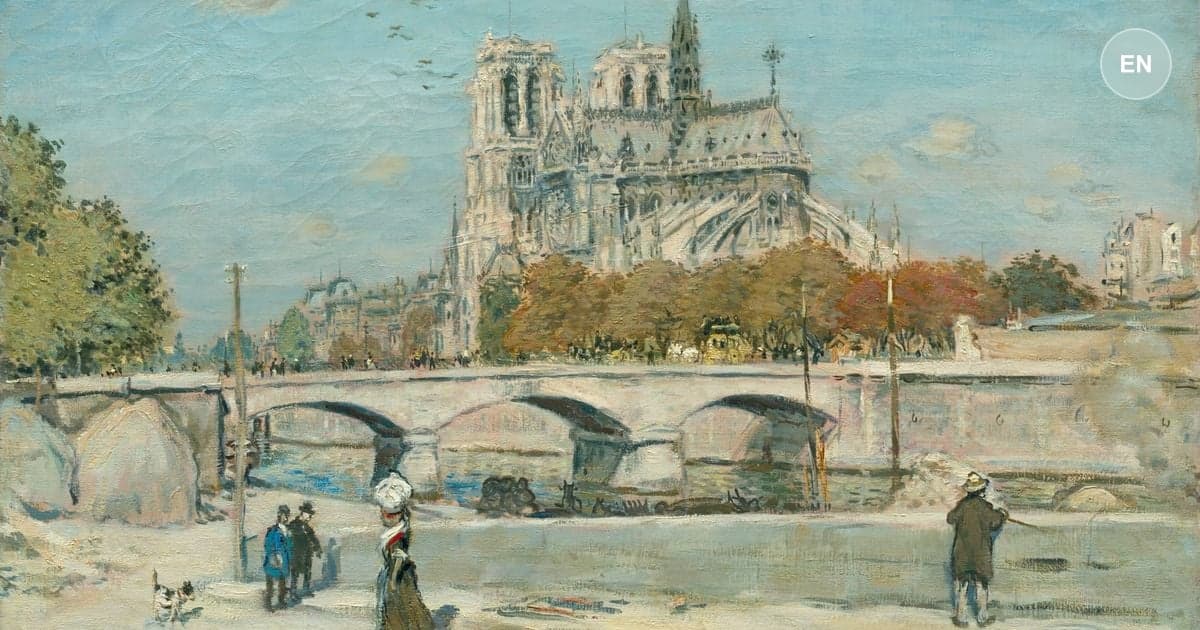
The law in this novel is not a place where the truth is tested. At the Châtelet a deaf judge sentences a deaf prisoner, and the hall laughs. At the Palais a dead leaf and a goat that taps a name become witchcraft. In the Question Chamber the boot produces a confession, and Charmolue calls justice enlightened. The sentence is written before dinner: penance at the cathedral, then the Grève. Hugo stacks these rooms so the later cry of sanctuary has something to interrupt.
Sanctuary does interrupt it. Quasimodo swings down, lifts Esmeralda, and the old custom holds for a while. The refuge is a cell of about six feet on the roof. One step outside, the gibbet returns. Parliament has already dated the end of the pause. The outcasts of the Court of Miracles attack the church to take their sister back before the king does. Quasimodo, who cannot hear their purpose, defends the door with beams and melted lead, and kills Jehan on the gallery. Louis, pleased by a riot he thinks is against his bailiff, learns it is a rescue and orders the refuge broken.
That order is the hinge. A church can hide her. It cannot overrule a king who has decided the noise is no longer useful. The priest, who keeps the keys, takes her out by the water while the troops clear the square. Tristan finds her at the Rat-Hole. Quasimodo, still believing the archers might help, opens hidden doors for them. The lesson is practical. A refuge that depends on custom, on one deaf defender, and on the patience of the man with the key will last until the first of those three changes its mind.
The Central Lesson
Sanctuary and the Law is the book's account of a pause that cannot last. A deaf court and a boot produce the sentence. A rope from the tower pauses it. Parliament dates the end of the pause, the king cancels it when the riot turns out to be a rescue, and the priest uses the church's own keys to finish what the court began. Hugo's lesson is that a custom of refuge is not a power. It holds only while the people who command soldiers, keys, and doors still feel like leaving it alone.
Prestige deep dive
A Psychological Reading of The Hunchback of Notre-Dame
Notre-Dame studies a city that finishes a marked body into a monster so the room can stay innocent, and a priest who renames desire as fate so he never has to ask.
Read the full psychological readingApplying This to Your Life
Separate the Room from the Proof
A confident procedure can run on a leaf, a trick, and a cry under a screw. Ask what was known before the confession, and what the room wanted to hear.
Name Who Can Cancel the Shelter
Notre-Dame holds until a man in a turret finds the rescue inconvenient. A refuge is only as strong as the person who can overrule it. Find that person before you trust the door.
Check the Keys
The building that hides her is run by her accuser. If the same office grants the shelter and keeps the key, the shelter is a delay, not a right.
Other lessons in this book
More life-skill deep dives from the same classic.
A Crowd That Makes a Monster
The Hall and the Pillory
Stay with the hall, the pillory, and the square that decides a face.
10 chapters·Explore AnalysisBeauty Used as a Verdict
The Goat Spells a Name
Notice when a dance, a goat, or a smile is treated as proof.
9 chapters·Explore AnalysisBelonging When You Are Shut Out
The Gourd, the Cell and Montfaucon
Watch the bell-ringer the crowd crowns, mocks, and then needs.
13 chapters·Explore AnalysisDesire That Turns into Possession
The Word Cut into the Wall
See what a priest does when he names want as fate.
15 chapters·Explore AnalysisWhat Stone Remembers
This Will Kill That
Read the cathedral and the city as arguments, not scenery.
9 chapters·Explore Analysis
Continue exploring
The same lessons in other books
See how other books teach the same life skills.

Les Misérables: Essential Edition
Navigating Poverty and Social ClassTrace Fantine from 1817 hope to factory gossip, and the class that treats need as indictment.
The Jungle
Reading Graft as Everyday GovernmentStay with Duane's cell and chapter 25: votes, inspectors, and a city that prices justice.
Hard Times
Understanding Worker DignityWatch Stephen refuse both mill-owner and union when each side treats him as a unit, and see what integrity costs when neither camp will have you.
Where the lesson lives in the book
Two Deaf Men in Court
On 7 January Robert d'Estouteville holds court at the Grand Châtelet. Master Florian, the auditor, is deaf and hides it. He fines people almost at random. Quasimodo is led in, bound. Florian asks his name, his age, and his trade. The prisoner hears nothing, so he says nothing. The judge hears nothing either, and supposes the answers have been given, until the hall laughs. The provost takes the bellringer's reply for mockery and orders a whipping.
Key Insight:
The law here is a room where neither man can hear the other, and the room still produces a sentence.
A Crown That Becomes a Leaf
Gringoire follows a crowd into the Palais de Justice. They are trying a woman for the death of a gendarme. La Falourdel says a shape like a priest fell into the Seine, and that the next day the crown was a dead leaf. Charmolue calls that magic. At the name Phoebus de Châteaupers the prisoner springs up. The king's advocate says the captain is dying. The goat strikes the hour, and the hall treats the trick as proof.
Key Insight:
A court that wants a witch will read a dead leaf and a trained goat as the case.
The Boot
In the Question Chamber a furnace lights the tools. Charmolue asks if she still denies the charge. She does. He chooses the boot. At the first terrible cry she confesses and begs for mercy. He warns that a confession means death. She says she hopes so. The clerk writes her yes to sabbaths, to a devil in the form of the goat, and to the murder of Phoebus. Charmolue says she cried in time and calls justice enlightened at last.
Key Insight:
The confession is the sound the screw was built to produce. The court then calls that sound the truth.
A Sentence Before Dinner
Charmolue tells the hall she has confessed. She says they may do what they like, so long as they kill her quickly. Her lawyer asks for an old Salic fine. The king's advocate says that text is no longer in force. Hungry and late, the judges vote without leaving the room. She is to do penance at Notre-Dame and then be hanged on the Place de Grève, the goat with her.
Key Insight:
The sentence is a timetable. Apology, rope, square. Procedure is how the city makes a killing look finished.
Sanctuary
At midday a cart brings Esmeralda in her shift, a rope at her neck, her goat at her feet. She falls when Phoebus goes inside. Quasimodo slides down a rope, knocks the guards aside, lifts her above his head, and carries her into the cathedral. For a moment the old cry holds. The church, not the court, has her.
Key Insight:
Sanctuary is a custom strong enough to stop the cart. It is not a law the king has to keep.
“Sanctuary!”
One Step Outside
Medieval France kept places of asylum. A person inside a church was sacred. One step outside returned them to the gibbet. At Notre-Dame the refuge is a tiny cell on the roof, under the flying buttresses. Quasimodo lays her there, brings clothes, bread, and his own bed, and tells her that if she leaves the church they will kill her and he will die.
Key Insight:
The refuge is a square of roof. The law begins again at the edge of it.
The Key Undoes the Roof
Claude has shut himself away since her rescue. He knows she is alive inside his own church. The small cares Quasimodo shows her look, from the window, like a claim. One night he takes a lamp and the key of the red door between his cell and the roof. The building that protects her also belongs to the man who wants her.
Key Insight:
A refuge run by her accuser is only as safe as his patience.
Parliament Will Reclaim Her
Dom Claude tells Gringoire that a decree of parliament will reclaim the dancer in three days, and that she will be hanged on the Grève. He asks the poet to change clothes with her and risk the halter in her place. Gringoire refuses. The church's protection already has an expiry the courts have written down.
Key Insight:
Sanctuary was a pause. The decree is the law remembering her.
Little Sword in Pocket
In the Court of Miracles, Clopin hands out swords and says the hour has come. Jehan, drunk in armour, boasts that the band will break into Notre-Dame, drag out the girl, and hang Quasimodo. The old Bohemian says King Louis is in Paris, and that this is another reason to take their sister from the king's claws. At midnight they move, with the password and no torches until the church.
Key Insight:
The outcasts attack the refuge to save her from the law. The law will hear only the attack.
He Defends the Door He Cannot Hear
From the northern tower Quasimodo sees a dark crowd fill the square. He hears nothing, so the march looks like a fog of dead men. Clopin demands their sister back. Quasimodo drops a beam, then stones, then melted lead. Jehan climbs to the gallery of the kings. Quasimodo hurls the ladder back and throws Jehan from the parapet. He is defending the church against the people who came to take her out of it.
Key Insight:
Deafness makes the rescue look like an assault. He fights the only allies she has left.
A Turret in the Bastille
Louis XI sits in a small round room high in a Bastille turret, raging at household bills, then inspects a new cage while the Bishop of Verdun begs from inside it. News of a revolt delights him, because he thinks the Court of Miracles is marching on his bailiff. A red glow over the City pleases him, until Olivier brings the truth. The people are attacking the church to save a prisoner. The pleasure ends. He orders the refuge broken.
Key Insight:
The king liked the noise when he thought it served him. The moment it is a rescue, sanctuary is over.
“the woman must be hung, nevertheless.”
The Second Key
Gringoire, spared by the king, meets a man in a black cloak who wants only the outcasts' password. The band has met resistance. The man has the key to the tower of Notre-Dame, and the key to a little door behind the cloister, where a boat has been moored since morning. The two of them set off towards the city.
Key Insight:
While the troops ride to the square, the priest is already using the church's own keys to take her out the back.
The King's Troops
Horsemen burst onto the Place, shouting for France and for Châteaupers. Quasimodo cannot hear the cries. He sees Phoebus at their head and hurls down the first men who have climbed into the gallery. These are the king's troops. The outcasts are struck from the side while they still attack the church, and Quasimodo still defends it. An arquebus lays Clopin low. The vagabonds break.
Key Insight:
The charge that looks like a rescue to the square is, to the deaf man, another assault. Both sides help the rope.
He Opens the Doors
Quasimodo finds the cell empty. The king's archers are entering to hunt the dancer. He does not know they mean her harm, and he opens hidden doors for Tristan l'Hermite. When he is sure she is gone, he kisses the bed and beats his head on the wall. Only Dom Claude had the key. The refuge ends with its defender guiding the search.
Key Insight:
Sanctuary fails twice: the king cancels it, and the man who believed in it helps the officers inside.