
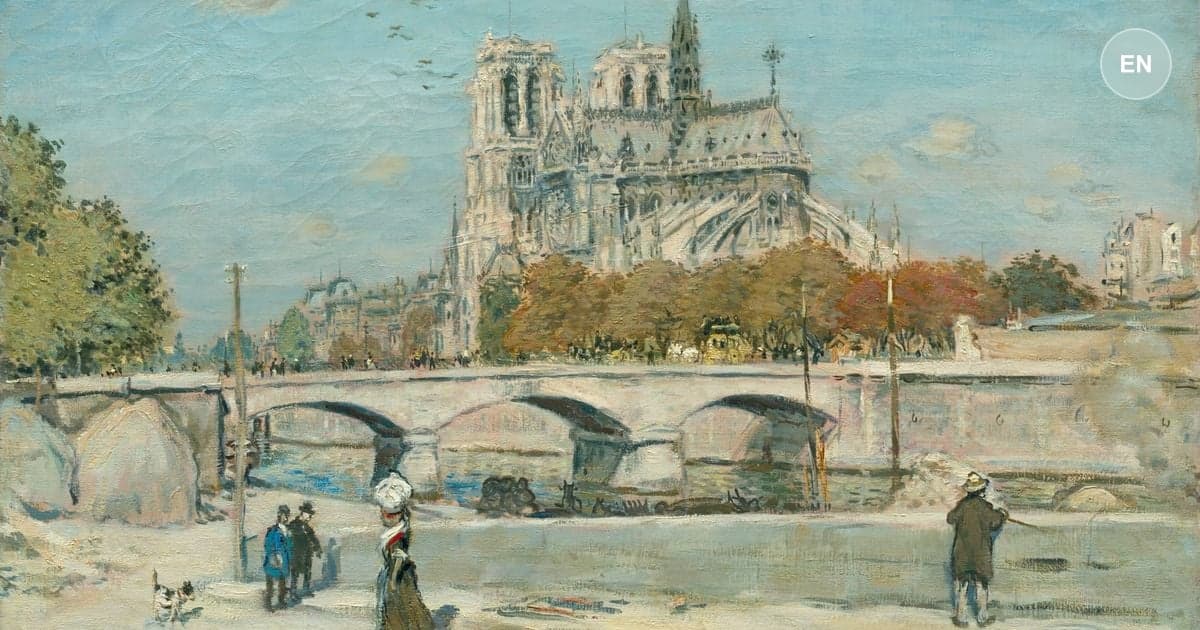
Quasimodo is shut out before the story starts. On the foundling bed the widows already know what should be done with him. The hall later crowns that same face, and the pillory finishes the joke. Hugo's point is not that a kind person eventually notices. The city has a habit, and the habit is to look at him and not take him in. Deafness, which the bells give him, completes the habit. He can no longer hear the insult, so the insult no longer needs to be said.
The places where he does belong are narrow. The towers are his, because the statues do not laugh. Claude Frollo is his, because Claude is the one living person who still has a language with him. Esmeralda's cell on the roof is not his. He brings bread and a bed and then stands outside, sure that an ugly man does not enter a beautiful girl's room. When she asks him to fetch Phoebus, he spends that errand on the captain and comes back kicked. Belonging, in this book, is often the willingness to stay where you are useful and unseen.
The image to keep is the gourd. After the sponge and the stone, one person climbs the ladder with water, and a tear falls. Hugo does not turn that into a romance. She is hanged on the square that watched her dance. He throws the priest from the tower and vanishes. Two years later, at Montfaucon, his skeleton is still holding hers, and it falls to dust when someone tries to pull them apart. The lesson is not that love wins. It is that a person the city has shut out may still be the one who holds on, and that the holding may be the only form of belonging he is allowed.
The Central Lesson
Belonging When You Are Shut Out is the book's long argument about Quasimodo. He is crowned, whipped, given water, and then asked to fetch the man who will not come. The cathedral houses him. It does not make the city see him. The one kindness that changes him is a gourd on a pillory, and even that does not save the woman who brought it. At Montfaucon he is still holding her. Hugo's lesson is bleak and exact: a person the crowd has decided against may spend a whole life on a loyalty the crowd will not count, and that loyalty can still be the truest thing in the book.
Prestige deep dive
A Psychological Reading of The Hunchback of Notre-Dame
Notre-Dame studies a city that finishes a marked body into a monster so the room can stay innocent, and a priest who renames desire as fate so he never has to ask.
Read the full psychological readingApplying This to Your Life
Notice the Person Already Decided
A room can crown someone as the joke before you arrive. The useful question is who has already been written off, and whether you will add to that or bring them the ordinary thing they asked for.
Do Not Confuse Shelter with Welcome
Quasimodo lives in the cathedral and is still outside the city's life. A place that houses you is not the same as a place that takes you in. Ask which of the two you are being offered.
Watch Who You Obey
When only one person can still speak to you, that person owns your yes. Gratitude is real. It is also how a shut-out person gets used. Keep one other witness.
Other lessons in this book
More life-skill deep dives from the same classic.
A Crowd That Makes a Monster
The Hall and the Pillory
Stay with the hall, the pillory, and the square that decides a face.
10 chapters·Explore AnalysisBeauty Used as a Verdict
The Goat Spells a Name
Notice when a dance, a goat, or a smile is treated as proof.
9 chapters·Explore AnalysisDesire That Turns into Possession
The Word Cut into the Wall
See what a priest does when he names want as fate.
15 chapters·Explore AnalysisSanctuary and the Law
The King Cancels the Refuge
Ask how long a church can hide someone once the king is bored.
14 chapters·Explore AnalysisWhat Stone Remembers
This Will Kill That
Read the cathedral and the city as arguments, not scenery.
9 chapters·Explore Analysis
Continue exploring
The same lessons in other books
See how other books teach the same life skills.
Les Misérables: Essential Edition
Navigating Poverty and Social ClassTrace Fantine from 1817 hope to factory gossip, and the class that treats need as indictment.
The Jungle
Reading Graft as Everyday GovernmentStay with Duane's cell and chapter 25: votes, inspectors, and a city that prices justice.
Hard Times
Understanding Worker DignityWatch Stephen refuse both mill-owner and union when each side treats him as a unit, and see what integrity costs when neither camp will have you.
Where the lesson lives in the book
An Outsider in the Court of Miracles
Gringoire follows a red glow into a yard where daylight beggars become thieves at night. Clopin Trouillefou, King of Thunes, tells him an outsider in the Kingdom of Argot must hang unless he can rob a belled manikin without a sound. He falls. The bells ring. Custom then offers him to the women, and they refuse, until Esmeralda comes.
Key Insight:
The only welcome he gets is a rescue from a hanging. Belonging here is a rule the yard already wrote.
A Marriage That Does Not Protect
Alone with Esmeralda, Gringoire decides the broken crock has made him her husband. She slips free with a little poniard, and the goat lowers gilded horns. The marriage, she says, was only to save him from the gibbet. She will not have him as husband or lover. Friendship, she says, is two souls that touch without mingling. A green silk amulet must not be touched. She asks what Phoebus means.
Key Insight:
A rite can put your name beside someone and still leave you outside their life.
The Foundling Bed
On Quasimodo Sunday in 1467 a deformed child is laid on the foundling bed in Notre-Dame, opposite Saint Christopher. Four widows call the child a monkey and a monster, fit for fire or water. They hope nobody will take it. Aloise de Gondelaurier turns away and throws a silver florin. The crowd begins to relish a burning. A severe young priest pushes through and takes the child.
Key Insight:
The first public verdict on Quasimodo is that he should not be kept. One man refuses that verdict.
Taken In for a Brother's Sake
Claude Frollo is shut in the college of Torchi until the plague of 1466 kills both parents. He finds his infant brother Jehan abandoned in the cradle and carries him off. He vows no wife and no child but Jehan's fortune. On Quasimodo day he takes the foundling from pity, and for Jehan's sake, as good works stored in the brother's name. He baptises the boy.
Key Insight:
The adoption is real, and it is also a deposit. Quasimodo is taken in as proof that Claude can still be good.
The Church as His Whole World
By 1482 Notre-Dame is Quasimodo's egg, nest, house, and country. Unknown birth and deformity shut him in. Frollo taught him speech, but at fourteen the bells deafen him, and he falls silent so others will not laugh. Men gave him hatred, and he learned it. The statues do not laugh. He loves the bells most, and big Marie is his favourite. People come to think him the soul of the church.
Key Insight:
When the living laugh, he belongs to the stone. Deafness is how the city finishes the shutting out.
One Man Excepted
Quasimodo excepts one man from his hatred, and loves him even more, perhaps, than the cathedral. Claude took him in, fed him, taught him to talk, to read, and to write, and made him bellringer. As a child he hid between Claude's legs when dogs and children came barking. Once he is deaf, they share a language of signs understood by them alone. A sign, and the wish to please, would send him from the summit.
Key Insight:
The one person who can still speak to him owns the whole of his obedience.
A Gourd on the Pillory
After the whipping, the extra hour of the pillory remains. A priest rides past on a mule. Quasimodo smiles, and Dom Claude looks down and spurs away. He cries out for drink. The square answers with a filthy sponge, a stone, and a broken jug. Then the dancer he tried to carry off comes through the crowd. He thinks she means to strike him too. In silence she puts a gourd to his lips. A large tear falls.
Key Insight:
The city has one answer for him. She has another, and it is water.
“Drink!”
The Bells Go Quiet
After the pillory, the neighbours notice that Quasimodo's eagerness for ringing has cooled. The church that once pealed from prime to compline now gives only the sound the ritual asks for. On Annunciation Day a little of that love returns. He sets six bells swinging and sees the scale instead of hearing it. Then, through the slate, he sees a young girl spread a carpet on the square. His pleasure breaks.
Key Insight:
Shame changes the one place that was his. The bells were how he belonged, and they go quiet.
A Shoe and a Mother
For fifteen years the recluse of the Tour-Roland has knelt before a little rose-coloured satin shoe, all that remains of her stolen daughter. On the morning a gypsy is to be hanged, she wants her daughter, not an angel. She rushes to the air-hole, sees the ladder against the gibbet, and curses the young dancer of the age her daughter would be.
Key Insight:
Grief can shut a person into a wall and still aim that grief at the wrong face.
The Owl and the Lark
Next morning Quasimodo says he is her friend and came only to watch her sleep, then hides behind the wall. She calls him back and takes his arm. He will not step inside. The owl, he says, does not enter the lark's nest. He tells her he is deaf, and he is sure she finds that the last lack in a man so ugly. He speaks of the drop of water on the pillory. If she ever wishes him to fall from the towers, a glance will be enough.
Key Insight:
He can save her and still refuse to stand in her room. Belonging, for him, means staying where he will not be looked at.
“I am—I am deaf.”
Earthenware and Crystal
Esmeralda's love for Phoebus is the one feeling still whole. She tells herself the woman beside him is his sister. Quasimodo brings food, but any flinch drives him off. He wishes he were a beast like the goat, or stone like the carving. She calls to the captain as he crosses the Place. He does not hear. Quasimodo offers to bring him, and she promises to love the bellringer for it. Phoebus, believing her dead, kicks him and says he is to marry.
Key Insight:
He spends the only favour she has offered him on fetching the man she actually wants.
The Mate of the Little Shoe
The priest gives Esmeralda to Gudule at the Rat-Hole. The recluse seizes her, then finds that the shoe in the girl's bag matches the little shoe kept for fifteen years. She breaks the bars and draws her daughter inside. For a moment the wall opens on the person it was built to remember.
Key Insight:
The shut-out child and the shut-in mother meet by a shoe, and the meeting comes too late to change the rope.
Two Skeletons at Montfaucon
Quasimodo disappears from Notre-Dame on the day the dancer and the archdeacon die. That night her body is carried, by custom, to the cellar of Montfaucon. About two years later, searchers looking for Olivier le Daim find two skeletons, one clasping the other. The woman still has a little silk bag with green glass, open and empty. The man who holds her has a crooked spine. When they try to pull the two apart, he falls to dust.
Key Insight:
The only lasting hold he gets is after both of them are past help. The city still tries to separate them.