
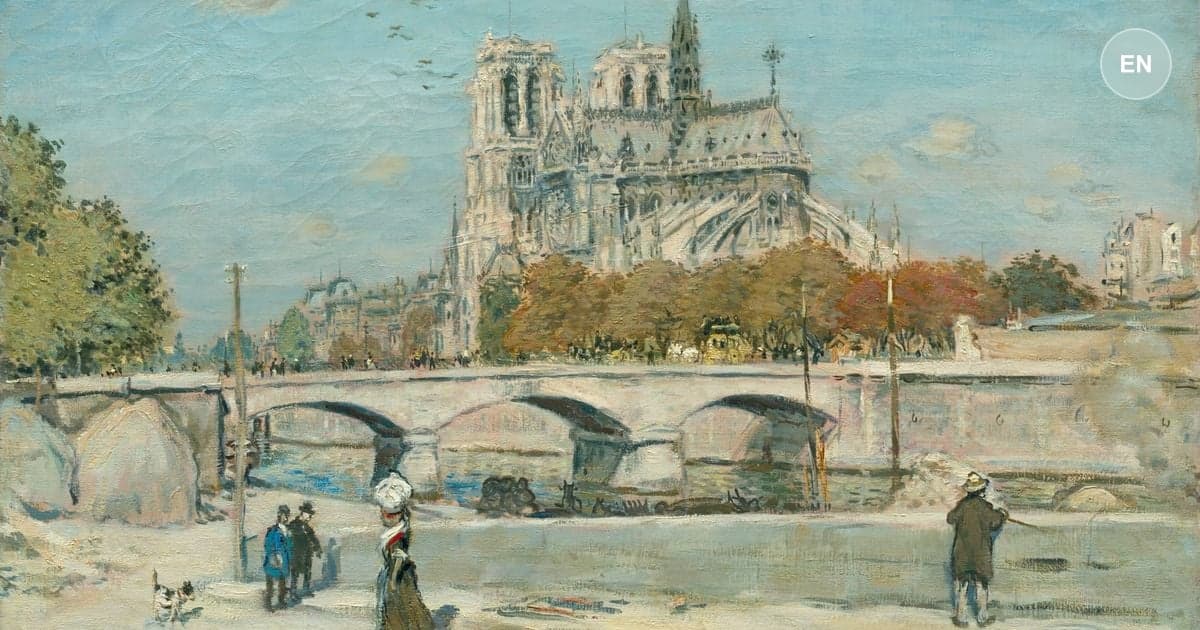
Claude Frollo does not begin as a man hunting a girl. He begins as a scholar who has finished lawful knowledge and moved into a secret cell, where gold and God are the same ambition. Esmeralda's dancing breaks that peace. Hugo is precise about the next move. Claude does not say he wants her. He cuts a Greek word for fate into the wall, under a name, and tells himself the fly was meant for the web. Desire that will not admit it is desire has to borrow a larger name. Fate is the name he borrows.
From that renaming, every later scene is a tighter hold. He pays Phoebus for a kennel to watch from. He stabs the captain and kisses Esmeralda while she has fainted. He denounces her, watches the torture, and then offers the cell as a rescue if she will have him. When Quasimodo carries her into the cathedral, the refuge lasts only until Claude remembers the key to the red door. The whistle stops him. It does not change the offer. On the square, beside the gallows, the choice is still him or the rope.
The lesson is not that wanting someone is a crime. Esmeralda wants Phoebus, and the book treats that want as a mistake, not as a right to own him. Claude's turn is the moment want becomes a plan to remove her refusal. He would rather see her with the executioner than in the captain's arms. When she hangs, he laughs. Quasimodo, who has obeyed him since the foundling bed, pushes him from the tower for that laugh. Possession spends the people it claimed to love, and it ends by being seen.
The Central Lesson
Desire That Turns into Possession is what Claude does with a feeling he will not call by its name. He carves fate on the wall, watches from a kennel, stabs the rival, denounces the woman, and then offers safety at the price of himself. The red door is the same argument carried into her room. She refuses him in the cell, at the penance, and beside the gallows. His last answer is a laugh when the ladder is kicked away. Hugo's lesson is that a want renamed as necessity will spend every refuge, including sanctuary, and still call the spending fate.
Prestige deep dive
A Psychological Reading of The Hunchback of Notre-Dame
Notre-Dame studies a city that finishes a marked body into a monster so the room can stay innocent, and a priest who renames desire as fate so he never has to ask.
Read the full psychological readingApplying This to Your Life
Name the Want Before You Rename It
Fate, destiny, and 'this was meant to be' are often the second sentence, written after the wanting. If you cannot say what you want in plain words, do not let a grander word decide for you.
Watching Is Already a Claim
Claude pays for a place to see a meeting that is not his. A view you bought, a message you reread, a route you take only to pass their door: the hold starts before anyone is touched.
A Key Is Not Consent
He knows the door because he lives in the building. Access, rank, and a rescue you control are not the same as a yes. If the offer is you or the harm, it was never an offer.
Other lessons in this book
More life-skill deep dives from the same classic.
A Crowd That Makes a Monster
The Hall and the Pillory
Stay with the hall, the pillory, and the square that decides a face.
10 chapters·Explore AnalysisBeauty Used as a Verdict
The Goat Spells a Name
Notice when a dance, a goat, or a smile is treated as proof.
9 chapters·Explore AnalysisBelonging When You Are Shut Out
The Gourd, the Cell and Montfaucon
Watch the bell-ringer the crowd crowns, mocks, and then needs.
13 chapters·Explore AnalysisSanctuary and the Law
The King Cancels the Refuge
Ask how long a church can hide someone once the king is bored.
14 chapters·Explore AnalysisWhat Stone Remembers
This Will Kill That
Read the cathedral and the city as arguments, not scenery.
9 chapters·Explore Analysis
Continue exploring
The same lessons in other books
See how other books teach the same life skills.

Les Misérables: Essential Edition
Navigating Poverty and Social ClassTrace Fantine from 1817 hope to factory gossip, and the class that treats need as indictment.
The Jungle
Reading Graft as Everyday GovernmentStay with Duane's cell and chapter 25: votes, inspectors, and a city that prices justice.
Hard Times
Understanding Worker DignityWatch Stephen refuse both mill-owner and union when each side treats him as a unit, and see what integrity costs when neither camp will have you.
Where the lesson lives in the book
The Cell with the Red Light
In 1482 Claude Frollo is about thirty-six, austere archdeacon of Josas, and no longer the young scholar. Jehan has soured him. With lawful knowledge finished, rumour says he has turned to alchemy. A secret cell in the tower over the Grève shows a red, pulsing light. He shrinks from women and refuses their company. The same gulfs, the narrator says, open in his heart.
Key Insight:
Before he names Esmeralda, the want already has a room. He calls the work gold and God.
She Is My Wife, and I Have Not Touched Her
The tambourine draws Claude to the north tower. In all Paris he sees only the dancing girl. He finds Gringoire in the square, holding a chair in his teeth for coins, and learns that the dancer is the poet's wife. Claude seizes him. Gringoire swears he has never touched her. The marriage is an empty rite. An amulet, she believes, will find her parents only while she stays a virgin. She fears a priest.
Key Insight:
The news that another man has a claim, even an empty one, is enough to put Claude's hands on him.
The Word on the Wall
Jehan climbs to the secret cell and finds alembics, skulls, and a dead furnace. Dom Claude sits turned away, talking of fire and gold, until a name snaps off at la Esmeral. He tries a curse on any man named Phoebus, then engraves a Greek word on the wall. Jehan, watching unseen, pretends to arrive and reads the carved word as FATE. Below it, cut by the same hand, is a name.
Key Insight:
He turns a person into a law of the universe so that wanting her can feel like obedience.
“FATE.”
The Fly and the Spider
Jacques Charmolue asks when he may arrest the dancer who works on the church square, against the ban, with a goat that reads and writes. Claude goes pale and will not name a day. A fly strikes the window web, and the spider seizes it. Claude stops any rescue and cries that fate must take its course. The dancer, he says, is a predestined fly.
Key Insight:
He will not sign the warrant himself. He watches the web and calls the outcome destiny.
She Will Come This Evening
Jehan and Captain Phoebus empty their money onto a post and set off for the wine shop. Claude follows, unrecognised. The name Phoebus has stayed with him since Gringoire. At a street corner a tambourine sounds. Phoebus hurries, afraid the dancer will speak to him in public, then whispers, laughs, and says she will come this evening. Claude's teeth chatter.
Key Insight:
Once he hears the appointment, the want stops being a thought in a cell. It acquires an hour.
A Crown to Hide in the Kennel
A man in a bought mantle waits outside Eve's Apple and will not leave. He stops Phoebus in the street, names the hour, the old woman, and the girl, and will not fight yet. He gives the captain a crown for the garret and asks to hide nearby and see if the woman is the one named. Phoebus bolts him into a dark kennel beside the chamber.
Key Insight:
He pays for a place to watch. Possession begins as a view of what he cannot have.
The Blade and the Kiss
Through a crack Claude sees Esmeralda tell Phoebus she is breaking a vow, that she loves him, and that she wants to be taught his religion so they may be married. He laughs and asks whether people marry. She offers to be his mistress. The priest breaks the door. The blade comes down, and Phoebus falls. She faints, and feels a burning kiss. She wakes among the watch. The priest is gone through the window on the river.
Key Insight:
When he cannot have her consent, he takes the scene. The kiss happens after the stab, while she cannot refuse it.
Love of a Damned Soul
In the inpace of the Tournelle a cowled priest tells Esmeralda she will die tomorrow. When he bares his face she knows him from the room above Phoebus. He says he loves her, with the love of a damned soul. Her dancing broke his peace. He denounced her to the official, watched the trial and the torture, and shows a breast torn by his own dagger. He begs her to flee with him before the gibbet. She asks for Phoebus. He says the captain is dead. She hurls him down the steps.
Key Insight:
He offers rescue as a bargain. The price of leaving the cell is him.
Have Me, or Hang
At the penance, Notre-Dame draped in black, the archdeacon whispers that he can still save her if she will have him. She tells him to begone or she will denounce him. He sees Phoebus with Fleur-de-Lys and hisses that no one shall have her. She cries the captain's name. Phoebus goes inside. She falls.
Key Insight:
The offer is not mercy. If he cannot keep her, he would rather the rope did.
He Does Not Repent
Claude tears off his vestments and runs through the University, away from the Grève. He does not repent. He would rather see her with the executioner than in the captain's arms. Phoebus is alive and merry. Two images remain: Esmeralda, and the gibbet. At midnight a white figure with a goat appears on the tower, and he takes her for a vision.
Key Insight:
Shame does not correct the want. It narrows the world to her and the rope.
The Key He Already Knows
Public rumour tells him she has been saved. He had accepted her death. To learn that she lives, and Phoebus too, starts the torment again. From the window he watches her with the goat and with Quasimodo, and jealousy reddens him: the captain might be excused, but not this man. One night he throws a surplice over his shirt and goes out with a lamp. He knows the key of the red door.
Key Insight:
Sanctuary holds her only until the man with the key decides the refuge is in his way.
The Whistle in the Dark
Esmeralda wakes to a figure with a lamp. He puts out the light and closes his arms about her. She calls him monster and assassin. He begs her to love him: his love is fire, melted lead, a thousand daggers. A wanton hand is on her. She finds Quasimodo's whistle and blows. The deaf man lifts the priest, then sees his face by moonlight and kneels, offering the knife. She snatches it. The priest kicks him aside and flees.
Key Insight:
The red door is the want carried into the room. He stops only because someone else hears the whistle.
Become a Vagabond
Jehan waits at the cell door, drawing his brother's profile in charcoal, and asks for money for ink, paper, and books. Claude says he has none. Jehan says fine offers are being made elsewhere. If his brother will not pay, he will become a professional vagabond. Coldly, the archdeacon tells him to become one. The brother who was once the whole of Claude's affection no longer reaches him.
Key Insight:
Possession empties the older loves. Jehan is dismissed in a sentence.
Choose Him or the Rope
A silent man in black rows Esmeralda away from the assault. At the far bank Gringoire slips off with the goat, and she is left with the priest. By the gallows on the Place de Grève he tells her to choose him or the rope. She says the gibbet causes her less horror than he does, and that she belongs to Phoebus. He gives her to the recluse.
Key Insight:
The last offer is the same offer as the cell: him, or death. She chooses the gibbet.
The Laugh on the Tower
At dawn Quasimodo follows Claude to the top of the northern tower. The priest stares at the Place de Grève. A man carries a girl in white up the gallows ladder. The ladder is kicked away. Quasimodo sees a frightful laugh on the priest's face and pushes Dom Claude over the balustrade. The archdeacon catches a stone spout. Quasimodo weeps and watches the gibbet.
Key Insight:
The want ends as a laugh at her death. That laugh is what Quasimodo cannot forgive.