
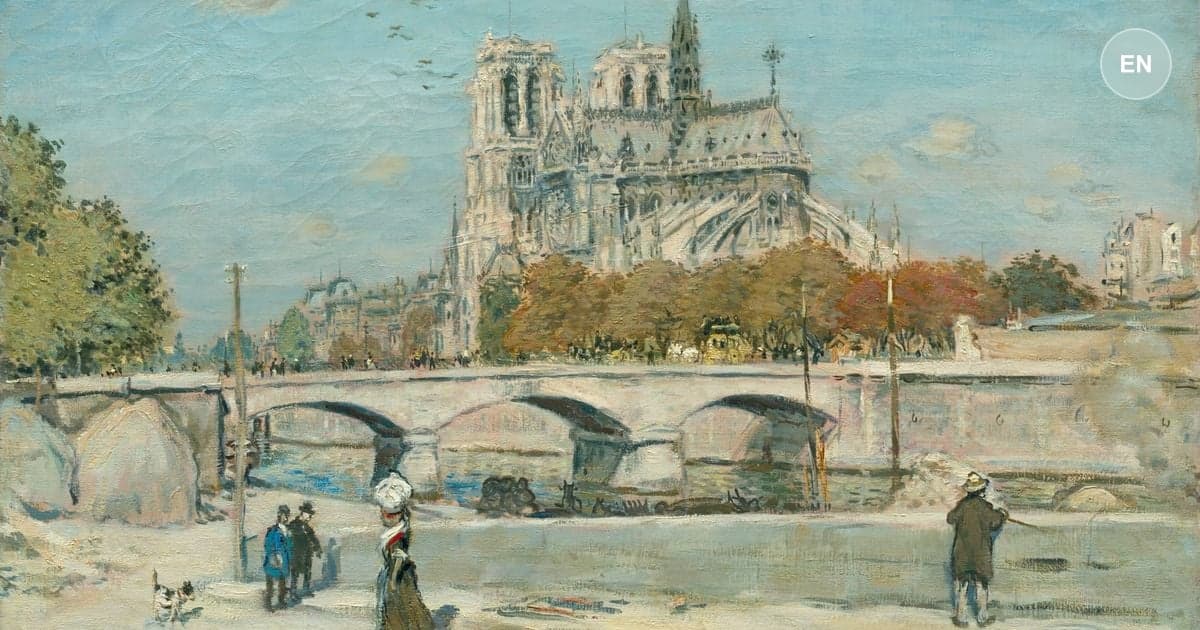
Esmeralda enters the book as a person the city looks at. A name shouted in the hall empties the last of Gringoire's audience. On the Grève a bald priest watches her dance and calls the goat's trick sorcery, then sacrilege, before anyone has charged her with a crime. Hugo's point is that looking comes first and the legal word follows. Beauty is not admired and then separately judged. In this city the admiration is already a verdict, and the verdict is that she is not ordinary enough to be innocent.
The goat is the clearest example. Djali taps the hour and spells Phoebus on lettered blocks. Gringoire calls it a harmless trick. Fleur-de-Lys and her companions treat the same bag as a humiliation. Charmolue ties the hoofs and reads the trick as witchcraft, beside a crown that has become a dead leaf. Nothing about the blocks has changed. The room has. A bright uniform does the same work in the other direction. Phoebus cuts her free, and she believes the uniform. The book keeps showing people treat a striking appearance as proof of a soul.
The older verdict is the mother's. When her child vanished, ribbons and a fire convinced the town that Egyptians had eaten the baby. That story is waiting on the square the day Esmeralda brings water to the pillory, and the recluse promises she will climb it again. By the end, the city explains the two deaths as a devil compact and buries the priest outside consecrated ground, while the captain marries. The lesson is to separate a striking sight from the charge hung on it. A dance, a goat, and a beautiful face are not evidence. They are what a fearful room prefers to evidence.
The Central Lesson
Beauty Used as a Verdict is how Paris reads Esmeralda. A dance becomes sorcery while it is still a dance. A goat's blocks become witchcraft without changing. A bright captain becomes a man worth breaking a vow for. The same habit, years earlier, turned a missing child into a tale of a people the town already feared. Hugo's lesson is that a room will promote a striking sight into proof whenever the proof would be slower, and that the promotion can end on a gibbet.
Prestige deep dive
A Psychological Reading of The Hunchback of Notre-Dame
Notre-Dame studies a city that finishes a marked body into a monster so the room can stay innocent, and a priest who renames desire as fate so he never has to ask.
Read the full psychological readingApplying This to Your Life
Separate the Sight from the Charge
A striking face, a strange skill, or a joke that lands too well can be treated as proof before any fact arrives. Ask what was actually seen, and what the room added.
A Trick Is Not a Confession
The goat spells a name because it was taught to. The court needs a witch, so the spelling becomes one. Charm is not a statement. Do not let a performance plead guilty.
Notice Who the Story Already Fits
The town was ready to believe Egyptians ate a child. Esmeralda arrives years later and inherits that story. When a new person fits an old fear, the fear will call itself evidence.
Other lessons in this book
More life-skill deep dives from the same classic.
A Crowd That Makes a Monster
The Hall and the Pillory
Stay with the hall, the pillory, and the square that decides a face.
10 chapters·Explore AnalysisBelonging When You Are Shut Out
The Gourd, the Cell and Montfaucon
Watch the bell-ringer the crowd crowns, mocks, and then needs.
13 chapters·Explore AnalysisDesire That Turns into Possession
The Word Cut into the Wall
See what a priest does when he names want as fate.
15 chapters·Explore AnalysisSanctuary and the Law
The King Cancels the Refuge
Ask how long a church can hide someone once the king is bored.
14 chapters·Explore AnalysisWhat Stone Remembers
This Will Kill That
Read the cathedral and the city as arguments, not scenery.
9 chapters·Explore Analysis
Continue exploring
The same lessons in other books
See how other books teach the same life skills.

Les Misérables: Essential Edition
Navigating Poverty and Social ClassTrace Fantine from 1817 hope to factory gossip, and the class that treats need as indictment.
The Jungle
Reading Graft as Everyday GovernmentStay with Duane's cell and chapter 25: votes, inspectors, and a city that prices justice.
Hard Times
Understanding Worker DignityWatch Stephen refuse both mill-owner and union when each side treats him as a unit, and see what integrity costs when neither camp will have you.
Where the lesson lives in the book
A Name Empties the Hall
The Pope of Fools has left, and Gringoire still hopes the mystery can finish. A scholar shouts one name, La Esmeralda, and everyone left runs to the windows. They have not seen her yet. The word is enough. The ladder for Jupiter is stolen in the rush. A face the hall has not met outranks the play in front of it.
Key Insight:
Beauty works here as a rumour. The city convicts itself of interest before it has looked.
Sorcery, Then Sacrilege
On the Place de Grève a young girl dances on a Persian rug. A bald man watches without looking away. Her white goat taps the hour as the clock strikes, then mimics a captain and the king's attorney. The bald man calls it sorcery, then sacrilege. From a dark window the recluse of the Tour-Roland shouts the dancer down. The Pope of Fools arrives, and the square changes shows.
Key Insight:
The first official word for her skill is a charge. Watching is converted into evidence on the spot.
A Bright Uniform
Gringoire follows the dancer because he has nowhere to sleep and because he likes walking behind her. At a corner, under a twist of tow at a Virgin's feet, two men seize her. One is Quasimodo. A captain of the king's archers pulls her onto his saddle and binds the bellringer. She asks the officer's name. It is Phoebus de Châteaupers. She thanks him and slips from the horse.
Key Insight:
She reads the rescue as the man. A bright uniform is easier to believe than the dark that grabbed her.
The Town Decides the Child Was Eaten
Mahiette tells of Paquette la Chantefleurie, who bore a daughter and lived for her. After Egyptians told the baby's fortune, the child vanished. One tiny pink shoe remained, and a lame, one-eyed child had been left behind. Ribbons and the trace of a fire convinced the town the child had been eaten. The strange child was sent to Notre-Dame as a foundling. On the square, the recluse stares at a little embroidered shoe.
Key Insight:
A frightened town turns a missing child into a story about a people it already fears. The shoe is the fact. The eating is the verdict.
You Will Climb It Again
Esmeralda comes down from the pillory, pale. The recluse calls after her. She is a thief of Egypt, the voice says, and she will climb the pillory once more. The people mutter that the sacked nun is in one of her rages. Women who pray day and night are feared, and fear makes them sacred. No one moves against her.
Key Insight:
The curse is a beauty-verdict in reverse: the dancer's face is read as the face of the theft, years before any trial.
The Bag at the Goat's Neck
On a balcony opposite the cathedral, Fleur-de-Lys and her companions sew under her mother's eye. Phoebus, betrothed to her and cold about it, is ill at ease among proper ladies. They call the dancer up. Her beauty turns the others cruel about her dress. The goat runs in. The bag at its neck, she says, is her secret. The ladies make her show it.
Key Insight:
A parlour can put beauty on trial without a judge. The goat's trick is about to become their evidence.
A Harmless Trick
Gringoire, questioned in the dark church, calls the goat's spelling of Phoebus a harmless trick, perhaps a name the animal was taught for coins. Claude does not hear a trick. He hears a rival. The same blocks will later be read in court as witchcraft. The meaning is chosen by the room, not by the goat.
Key Insight:
One party trick has two futures: a poet's joke, and a capital charge. The blocks do not change.
The Goat Copies the Prosecutor
At the trial the goat strikes seven and copies Charmolue's gestures until its hoofs are tied. The dead leaf, the black mantle, and the animal that seems to read are stacked into one charge. Esmeralda's face and her skill are no longer a performance. They are the count against her.
Key Insight:
The court needs her to be a witch more than it needs to know who held the knife.
The Devil and the Sorcerer
Officers of the bishop pick up the archdeacon's body from the Parvis. Quasimodo has disappeared. Rumour decides the day of their compact has come: the devil was to carry off the sorcerer. For this reason Claude is not buried in consecrated earth. Phoebus's marriage goes forward in the ordinary way. Gringoire saves the goat and returns to tragedy, which he calls a tragic end.
Key Insight:
The city explains the corpses with the same story it used in court. Beauty, deformity, and a priest become a devil compact, and the captain marries.