
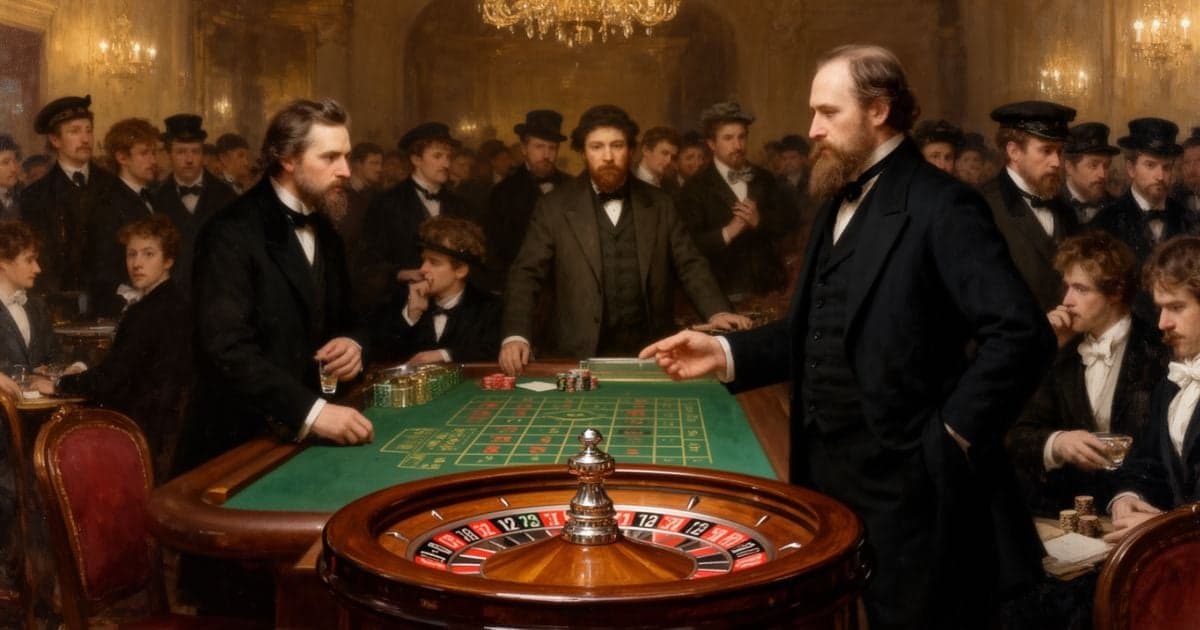
The after in this novel does not begin when the money is gone. It begins when the man can describe the wreck without flinching and still treat the description as a finished story. I have ruined myself. That is all. The sentence is accurate. It is also a lock. If nothing more can be said, tomorrow's stake is not a decision. It is the next sentence of a book he has already closed in theory. Dostoevsky's last chapter is not a moral. It is a portrait of self-knowledge that has not yet found a different night.
Paris is the dress rehearsal. He names the three weeks a delirium and lets Blanche ask what he wants with money, as if wanting a remainder were the joke. He is not deceived. He participates in the disposal because the fortune failed to mean what the hour promised, and money that has failed as proof has no job left except to disappear. Faster is better. That is not luxury. It is a second compulsion: loss as the only plot still available once the jackpot has been spent as a language and come up empty.
Astley does the decent, useless things. He tells him she did love him, too late for the information to be spent as a life. He presses ten louis and says take care of them, knowing the care may last an hour. The narrator hears both gifts as fuel. Tomorrow all shall be ended means the opposite of an ending. It means one more sacred session, the memory of a lucky coin treated as prophecy. What happens after, here, is not ignorance. It is a man who can pass every exam about his own case and still walk back to the window. Harder to look at than a fool. More common.
The Central Lesson
What happens after is not a new character. It is the same intelligence with a smaller purse. Alexei can name delirium, own the ruin, hear that she loved him, and still turn Astley's gold into tomorrow. Clarity is not an exit. A finished story about yourself is not an exit. After begins when a remainder is protected, when tomorrow is not allowed to mean another session, and when the verdict is no longer a licence to keep going. The novel will not do that work for him. It only shows how late the truths arrive, and how a man can walk back to the window with every one of them in his pocket.
Applying This to Your Life
Do Not Let the Verdict Replace the Next Night
I have ruined myself, that is all, can sound like honesty while functioning as a closed case. If your accuracy about the damage is the reason you will not try a different evening, the accuracy is serving the habit. Keep the verdict. Change the calendar anyway.
Watch What You Do with a Remainder
Blanche asks what he wants with money. Astley hands him ten louis. Aftermath is visible in the next small sum, not in the speech about the large one. If a remainder makes you restless until it is gone, you are still inside the book. Protecting a remainder is the first after that is not a pause.
Retire Tomorrow as a Theology
Tomorrow all shall be ended is the addict's clock: forever a reset, forever one more stake. If the plan only works in a future tense, it is not a plan. Put a constraint on tonight that does not require a miracle: a person, a time, a door you will not walk through. After is a practice, not a prophecy.
Other lessons in this book
More life-skill deep dives from the same classic.
The One Big Win Illusion
Sit with De Griers's visit, the desperate run to the tables, and the fortune Polina throws back because cash was never the problem.
5 chapters·Explore AnalysisWhen You Become the Instrument
See Alexei play her money, insult a stranger on command, and watch the General live as Blanche's ledger.
5 chapters·Explore AnalysisHumiliation as a Way of Life
Stay with the tutor's place in the household, the Baroness dare, and a devotion that uses contempt as proof of intensity.
5 chapters·Explore AnalysisRecognizing the Gambling Spiral
Watch Polina's first stake, the grandmother's afternoon transformation, and the chase that treats every loss as a correctable error.
6 chapters·Explore AnalysisStatus as the Real Stake
Read the inheritance telegrams, the Russians at the spa, and the wish that Baden talk about him as money that is really admission.
6 chapters·Explore Analysis
Continue exploring
Explore this theme
The same lessons in other books
See how other books teach the same life skills.
The Jungle
Reading Graft as Everyday GovernmentStay with Duane's cell and chapter 25: votes, inspectors, and a city that prices justice.
The Idiot
Maintaining Goodness Without NaivetySit with Myshkin on the train in chapter 1: honesty with no angle, and a city that can only call it idiocy.
Jude the Obscure
When Desire Becomes a TrapTrack the pig, the dimple, the false pregnancy, and the second marriage arranged over gin.
Where the lesson lives in the book
Passion Dead, and Still On Call
A month after the grandmother's wreck he can report that even his passion for Polina is dead. He fancies he must be mad. The report sounds like aftermath. It is only a quieter room in the same house. When she appears again, the old imperative still works. Aftermath that can still be drafted back into an errand is not aftermath. It is a pause.
Key Insight:
A cooling of feeling is not a change of plot. If the calendar still has you available for the same crisis, you have not entered after. You have entered intermission.
“Even my passion for Polina is dead.”
Delirium Named, and Spent Anyway
He looks back on three weeks and calls the whole proceeding a delirium, a madness. The naming is exact. It does not slow Blanche's inspection of the purse. She asks what he wants with money. He is not tricked. He participates. Aftermath here is not surprise. It is consent to disposal once the fortune failed to mean what it was supposed to mean.
Key Insight:
Money that was meant to prove you can be spent without a fight, because the proof already failed. Watching the extraction and allowing it is a second compulsion: loss as the only remaining plot.
“The whole proceeding was a delirium, a madness.”
What Do You Want with Money
Blanche empties the wallet as a daily habit, then treats his wanting cash as a category error. He tells her faster is better while horses at sixteen thousand francs leave the stable. The after of a jackpot can look like luxury from the street. From inside it is a man who no longer knows what a remaining coin is for, except to finish disappearing.
Key Insight:
When someone controls your funds and mocks the wish to keep any, you are not in a romance. You are in a liquidation. If you have begun to prefer a clean zero to the work of protecting a remainder, name that preference. It is not generosity.
“What do you want with money?”
I Have Ruined Myself. That Is All.
A year and eight months later he rejects sermons because he already owns the verdict. I have ruined myself. That is all. The sentence sounds like honesty. It functions as a closed door on change. If the story is finished, tomorrow's stake is not a relapse. It is continuity. Pride in self-knowledge replaces repentance without producing a different night.
Key Insight:
Some clarity is a licence to keep going. Total accuracy about the wreck, paired with the claim that nothing more can be said, is how a person stays destroyed while sounding like the wisest man in the cafe.
“I have ruined myself—that is all.”
She Did Love You
Astley waits until the narrator is past use to say the thing that would have mattered earlier. She did love you. The information arrives as epitaph, not invitation. Learning that the bond was real after you have spent the chance is a special cruelty. Aftermath includes truths that come too late to spend, and still get spent: they become fuel for the next sacred hour.
Key Insight:
A revelation timed for rock bottom is often an ending, not a door. If you use it as proof that one more win might still rewrite the past, you have converted an epitaph into a stake. That conversion is the disease speaking.
“She did love you”
Take Care of Them
Astley presses ten louis d'or and repeats the caution. He gives money while predicting it will fund the same habit. Care without illusion: help because the man is still a person, not because the gift will be kept safe. Alexei's last line answers the gift as the table always answers. Tomorrow all shall be ended. The ending is another session.
Key Insight:
Friends can hand you a remainder and still not be able to buy you an after. The test is what you do with the remainder before night. If tomorrow is still a reset, you have not left the book. You have only turned the page.
“No; tomorrow all shall be ended!”