
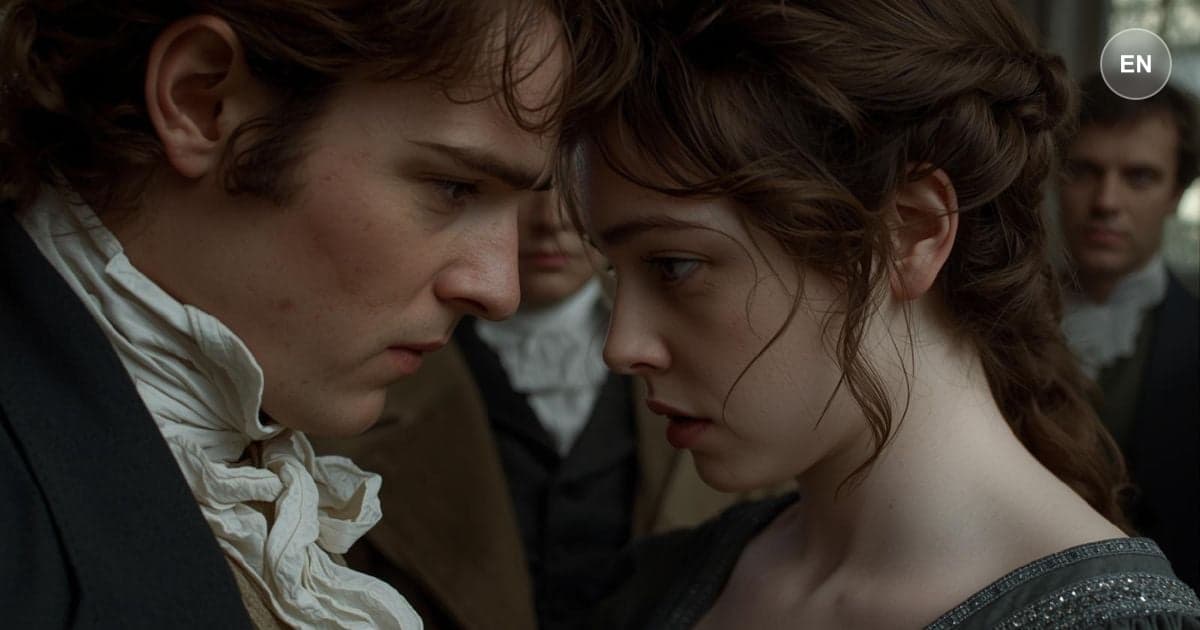
Class in Regency England wasn't just about having money—it was about inherited status, behavioral codes, marriage prospects, and economic security. For women like the Bennet sisters, class determined whether they could support themselves or would face poverty. Mrs. Bennet's frantic husband-hunting isn't mere comedy; it's survival strategy in a world where women had almost no economic options. Austen shows how class anxiety drives behavior that looks irrational until you understand the economic stakes.
The novel reveals how class operates through invisible mechanisms: manners, education, accent, confidence, knowing which fork to use. Charlotte Lucas's pragmatic marriage to Mr. Collins isn't weak or mercenary—it's survival strategy when you have no economic options. Darcy's rescue of Lydia isn't charity—it's using privilege to fix problems that privilege and class inequality create. The Bennets aren't poor, but their behavior and lack of refinement genuinely damage their daughters' marriage prospects. Darcy's class consciousness isn't pure snobbery; it reflects real social realities.
The modern lesson: Economic inequality isn't just about money in the bank. It's about options, security, and the luxury to make choices based on principle rather than survival. Understanding this creates empathy for those with fewer options and reveals where your own privilege operates invisibly. Class still shapes who we date, where we live, what risks we can take—Austen's insight remains urgently relevant.
The Central Lesson
Class operates through invisible mechanisms—money, yes, but also manners, education, behavior, and reputation. It shapes every relationship in Pride and Prejudice, from Mrs. Bennet's desperate matchmaking to Darcy's insulting proposal to Charlotte's pragmatic marriage. The novel doesn't moralize about class; it reveals how economic hierarchy functions and how people navigate it. The modern application: understand that economic inequality isn't just about bank accounts—it's about options, security, and the freedom to make choices based on principle. See where your privilege operates invisibly. Don't judge others' choices without their economic context. And use whatever advantage you have to help those with less—that's the ethical response to living in a world where class still shapes everything.
Applying This to Your Life
Don't Judge Others' Choices Without Their Context
What looks like selling out to those with options may be survival to those without. Charlotte's marriage to Mr. Collins seemed appalling to Elizabeth, who could afford to refuse. Before judging someone's pragmatic choice—a job they're "overqualified" for, a relationship that seems transactional—ask: What options do they actually have? Economic reality shapes choices in ways that aren't visible from the outside.
Use Your Privilege Ethically
Darcy's rescue of Lydia shows privilege used well: he had resources and connections that could solve a problem, and he used them without seeking credit. Privilege isn't inherently wrong—it's how you use it. Ask: Where do I have advantage that could help others? Can I use my position to open doors, solve problems, or prevent harm? The ethical use of privilege means leveraging advantage for others' benefit, not just maintaining your own position.
Build Confidence That Doesn't Depend on Class
Elizabeth's response to Lady Catherine—"He is a gentleman; I am a gentleman's daughter; so far we are equal"—shows self-worth rooted in internal standards rather than social validation. When class hierarchy tries to diminish you, the defense isn't arguing you deserve to be at the top. It's refusing to accept that the hierarchy gets to define your worth. Build confidence from character, capability, and self-respect—not from social position.
Other lessons in this book
More life-skill deep dives from the same classic.
Challenging First Impressions
When First Impressions Become Prisons
Revise quick judgments when new evidence arrives, from the assembly room to Pemberley and the letter.
21 chapters·Explore AnalysisDeveloping Self-Awareness
From Confident Certainty to Humbling Self-Knowledge
Track Elizabeth's admission that she was blind, vain, and prejudiced, and how honesty unlocks change.
19 chapters·Explore AnalysisReading Performative Civility
Manners as Mask
Distinguish sincere regard from manners deployed for access or advantage.
18 chapters·Explore AnalysisRecognizing When Pride Masks Vulnerability
When Pride Becomes Armor
Notice when confidence is protecting insecurity, as Elizabeth and Darcy both learn after their first meeting.
12 chapters·Explore AnalysisSetting Boundaries Under Family Pressure
When No Means Negotiate
Hold to a clear no when refusal is treated as negotiation, as with Collins and Lady Catherine.
12 chapters·Explore Analysis
Continue exploring
Explore this theme
The same lessons in other books
See how other books teach the same life skills.
Persuasion
Navigating Social DeclineWatch Kellynch go to the Crofts while Wentworth rises, and carry worth without performing the rank you lost.Persuasion
Distinguishing Prudence from PersuasionTell Lady Russell's caution from fear dressed as sense, then refuse the same music when it returns as Mr. Elliot.
Sense and Sensibility
Balancing Emotion and ReasonEach Defense Has a CostWatch Elinor carry Barton in silence and Marianne refuse to moderate a feeling, then see what each defense costs by Cleveland.
Where the lesson lives in the book
The Bennet Family's Vulnerability
The novel opens by establishing the Bennet family's financial crisis: five daughters, no sons, and an entailment that means their estate will go to a male cousin when Mr. Bennet dies. The girls will inherit almost nothing. Mrs. Bennet's frantic husband-hunting isn't comedy—it's survival strategy.
Key Insight:
Class isn't just about current wealth—it's about security and future prospects. The Bennets appear middle-class but are one death away from poverty. Understanding this desperation explains behavior that otherwise seems absurd.
“You must know that I am thinking of his marrying one of them.”
The Lucas Family's Pragmatism
We meet the Lucas family, who are socially beneath the Bennets (Sir William Lucas earned his knighthood through trade, not inheritance). Yet Charlotte Lucas understands the marriage market more clearly than anyone—she knows that for women without fortune, marriage is purely economic.
Key Insight:
People lower on the economic ladder often see class dynamics more clearly than those above them. Charlotte has no romantic illusions because she can't afford them. Privilege often blinds people to economic realities.
Jane's Illness—Access Through Crisis
When Jane falls ill at Netherfield, Elizabeth walks three miles through mud to reach her. She arrives disheveled and dirty. Miss Bingley and Mrs. Hurst are scandalized by her appearance and her willingness to walk alone—markers of lower social status. But Darcy is impressed by her devotion.
Key Insight:
Class markers (how you travel, how you look, what you're willing to do physically) are constantly being read and judged. Elizabeth's muddy petticoat signals she doesn't have a carriage. But it also signals character—she values her sister over social performance.
“Her manners were pronounced to be very bad indeed, a mixture of pride and impertinence.”
The Bingley Sisters' Performance
Miss Bingley and Mrs. Hurst spend the evening subtly insulting Elizabeth's family connections and social status. They're obsessed with maintaining class boundaries because they themselves are 'new money'—their fortune came from trade, and they're desperate to distance themselves from those origins.
Key Insight:
People who've recently climbed the class ladder are often the most vicious about guarding it. The Bingleys are wealthy but not aristocratic, so they police class boundaries even more strictly than the truly elite do. Insecurity breeds snobbery.
Mrs Bennet Confirms Every Prejudice
Mrs. Bennet arrives at Netherfield with Lydia and Kitty, loudly discussing Jane's prospects and marriage settlement while her daughter is ill—confirming to the Bingley sisters every class prejudice they already held.
Key Insight:
Economic desperation reads as vulgarity to people with security. Mrs. Bennet isn't simply loud; she's performing survival in a register the room was taught to despise, and the Bennets pay for it in reputation.
The Entail Becomes a Person
Mr. Collins's letter announces his visit as the heir who will inherit Longbourn. The abstract law that strips the daughters of the estate arrives as a named clergyman with apologies and a travel date.
Key Insight:
Class rules feel theoretical until a person walks through the door who benefits from them. The entail isn't background—it's the reason Mrs. Bennet's panic and Charlotte's pragmatism will make sense.
“I am very sensible, madam, of the hardship to my fair cousins, and could say much on the subject, but that I am cautious of appearing forward and precipitate.”
Mr. Collins's Proposal—Economic Transaction
Mr. Collins, who will inherit the Bennet estate, proposes to Elizabeth. His proposal is pure economic calculation: it would solve the family's financial crisis. He lists his reasons like a business transaction. Elizabeth refuses despite the security he offers.
Key Insight:
Marriage was an economic institution for women. Refusing Mr. Collins means Elizabeth is choosing potential poverty over financial security. Most women couldn't afford this choice. Her refusal is an act of class privilege disguised as romantic principle.
“You could not make me happy, and I am convinced that I am the last woman in the world who would make you so.”
Bingley Leaves the Field
Caroline Bingley's letter announces the Netherfield party gone to London for the winter with no return planned. A man's attachment can be undone by class pressure, family strategy, and distance before Jane ever receives a direct word.
Key Insight:
Marriage prospects in this world depend on access as much as affection. Bingley does not need to reject Jane outright—his circle can simply remove him from her orbit, and the economic game resets without anyone signing a refusal.
Charlotte's Pragmatic Choice
Charlotte Lucas accepts Mr. Collins's proposal three days after Elizabeth refuses him. She's 27, plain, and has no fortune. This is likely her only chance at financial security. Elizabeth is shocked, but Charlotte is clear-eyed: 'I am not romantic, you know. I ask only a comfortable home.'
Key Insight:
What looks like selling out to those with options is survival to those without them. Charlotte's choice isn't weak or mercenary—it's rational given her circumstances. Judging others' choices without acknowledging their economic reality is a luxury.
“I am not romantic, you know. I never was. I ask only a comfortable home.”
Charlotte's Match Goes Public
Sir William Lucas arrives to announce Charlotte's engagement to Collins while Mrs. Bennet vents that Elizabeth caused the mischief and the entail stands unchanged. The family's financial crisis has simply moved to a different daughter's pragmatic solution.
Key Insight:
Class pressure does not disappear when one woman refuses—it finds the next available path. Charlotte's marriage solves her household problem without solving the Bennets', and Mrs. Bennet's fury shows how economic anxiety turns into blame.
Mrs Bennet Counts What Was Lost
The Gardiners arrive for Christmas while Mrs. Bennet complains that two daughters were nearly married and nothing was gained. She blames Elizabeth's perverseness for refusing Collins while Charlotte will marry first and the entail remains.
Key Insight:
When security is scarce, every refusal looks like sabotage. Mrs. Bennet cannot separate Elizabeth's boundary from the family's economic trap—because in her world, one daughter's no really does cost them all.
Lady Catherine de Bourgh—Old Money Arrogance
Elizabeth visits Charlotte and meets Lady Catherine de Bourgh, Darcy's aunt. Lady Catherine embodies aristocratic entitlement—she interrogates Elizabeth about her family, education, and accomplishments with no shame. She sees these questions as her right as social superior.
Key Insight:
True aristocracy doesn't just have wealth—it has the confidence to be openly rude because consequences don't apply. Lady Catherine's interrogation reveals how class hierarchy operates: those at the top don't need to follow social niceties that govern everyone else.
Rosings and Rank on Display
Easter brings an invitation to Rosings where Lady Catherine greets them civilly but prefers her nephews' company, especially Darcy's. The drawing room makes rank visible: who is seated near whom, who may speak without permission, and whose accomplishments are inspected.
Key Insight:
Class is not only money—it is the choreography of a room. At Rosings, every arrangement reminds Elizabeth that she is a guest in someone else's hierarchy, and that civility from above still means obedience below.
Lydia's Brighton Campaign
Kitty and Lydia meet the party at the inn with triumphant news that the militia will encamp near Brighton. Lydia begs their father to take the whole family for the summer while Elizabeth thinks with horror of what one poor regiment already did to Meryton.
Key Insight:
When class behavior collapses into spectacle, the whole household pays. Lydia treats Brighton as a stage for flirtation without consequences—but Elizabeth already sees the scandal waiting at the end of that road.
Mr Bennet Refuses to Intervene
Mrs. Forster invites Lydia to Brighton with the regiment. Elizabeth secretly urges her father to refuse, naming disgrace and Kitty following Lydia into folly. Mr. Bennet jokes that lovers were not lost and shrugs that Lydia must expose herself somewhere—Brighton is the cheapest stage.
Key Insight:
Economic and social precarity make some parents treat danger as comedy. Mr. Bennet's wit substitutes for a boundary he will not set, and the novel treats that passivity as a class crisis—not a private joke.
Darcy's Insulting Proposal
Darcy proposes to Elizabeth but spends half the proposal explaining how hard he fought against loving her because of her family's inferior social connections. He lists all the reasons she's beneath him while expecting her to be grateful he's overlooking her low status.
Key Insight:
Love doesn't erase class consciousness—it often reveals it. Darcy genuinely loves Elizabeth but can't separate that love from his sense of social superiority. His proposal shows how deeply class hierarchy is internalized, even by people who consider themselves above such prejudice.
“Could you expect me to rejoice in the inferiority of your connections?”
Darcy's Letter—Class Justifications
In his letter, Darcy explains why he separated Jane and Bingley: Jane's family connections were too low. The Bennets' behavior—Mrs. Bennet's vulgarity, Lydia's wildness, the family's general impropriety—made them unsuitable connections for Bingley.
Key Insight:
Class isn't just about money—it's about behavior, manners, and social performance. The Bennets aren't poor, but they lack the refinement that marks true gentility. Darcy's objections weren't snobbish fantasy—the Bennet family's behavior genuinely damages their daughters' prospects.
Lydia's Elopement—Class Catastrophe
Lydia runs off with Wickham, who has no intention of marrying her. For the Bennet family, this is catastrophic: an unmarried daughter living with a man destroys the whole family's reputation and marriage prospects. Class position is fragile and can be destroyed by scandal.
Key Insight:
Social class in this era depended on reputation, which could be lost in an instant. What seems like Victorian prudishness was actually economic reality: a ruined reputation meant unemployability and unmarriageability. The Bennet family faces genuine destruction.
The Price of a Scandal
Leaving Lambton, Elizabeth argues against false hope that Wickham will marry Lydia privately. She knows his character and tells Mrs. Gardiner what the family long hid: Wickham's lies, profligacy, and why the truth about Pemberley never reached Meryton.
Key Insight:
Class catastrophe has a ledger before it has a wedding. Elizabeth can already calculate what Lydia's elopement will cost in money, reputation, and family prospects—and knows her father's indolence will not produce a rescue in time.
Numbers That Do Not Add Up
Mr. Gardiner's letter announces Lydia and Wickham found and willing to marry if the Bennets settle five thousand pounds and one hundred a year. Mr. Bennet complies but is ashamed Wickham asked so little—ten thousand pounds must be involved somewhere.
Key Insight:
When scandal is bought off, the visible price rarely matches the real one. The Bennets celebrate relief while Elizabeth senses someone with real money paid what they cannot afford to name.
Lydia's Victory Lap
Lydia returns on her wedding day unchanged—loud, shameless, boasting of three months' adventure and showing her ring from the carriage. She takes Jane's place at table as a married woman while Wickham's easy manners provoke Elizabeth's renewed contempt.
Key Insight:
Scandal repaired by money does not teach humility to the person who caused it. Lydia performs triumph because the class system has been forced to absorb her disgrace—not because she understands what she cost everyone.
Bingley Returns With Darcy
News spreads that Mr. Bingley is returning to Netherfield. On the third morning he rides to Longbourn with Mr. Darcy beside him. Mrs. Bennet vows to hate Darcy yet be civil as Bingley's friend while the family's recent debt to him goes unspoken in the room.
Key Insight:
Class gratitude and class resentment collide when the man who saved your house arrives as a guest you must tolerate. The Bennets' social survival now depends on manners toward someone Mrs. Bennet still treats as an enemy.
Darcy's Rescue—Using Privilege for Good
Darcy finds Wickham and Lydia, pays Wickham to marry her, and covers all debts—quietly, without seeking credit. He uses his wealth and social position to solve a problem that would have destroyed the Bennets. This is class privilege used well: solving problems that exist because of class inequality.
Key Insight:
Privilege isn't inherently bad—it's how you use it. Darcy could have walked away and let the Bennets suffer the consequences. Instead, he uses his money and connections to prevent catastrophe. Using advantage to help others rather than merely maintain your position—that's the ethical use of class privilege.
Lady Catherine's Confrontation
Lady Catherine arrives to demand Elizabeth promise never to marry Darcy. She's appalled at the prospect of her nephew marrying someone so socially inferior. She makes her class prejudice explicit: 'Are the shades of Pemberley to be thus polluted?' Elizabeth refuses to be intimidated.
Key Insight:
Standing up to class superiority requires genuine self-worth that doesn't depend on external validation. Elizabeth doesn't argue she's worthy of Darcy—she simply refuses to accept Lady Catherine's right to judge her. True confidence comes from internal standards, not social approval.
“He is a gentleman; I am a gentleman's daughter; so far we are equal.”
Darcy's Growth—Beyond Class
In their final conversation, Darcy admits that Elizabeth taught him humility. He was raised to think well of himself and look down on others. Her refusal of his first proposal forced him to examine his class prejudices. He learned that worth isn't determined by social position.
Key Insight:
Overcoming class prejudice requires more than good intentions—it requires being genuinely humbled. Darcy had to have his sense of superiority shattered before he could see Elizabeth (and others) clearly. Growth means accepting that your advantages don't make you better.