Wide Reads
Literature MattersLife IndexEducators
Sign in
Where to Begin
Pride and Prejudice - Chapter 31

Jane Austen

Pride and Prejudice

Chapter 31

Home›Books›Pride and Prejudice›Chapter 31
Previous
31 of 61
Next

Summary

Chapter 31

Pride and Prejudice by Jane Austen

0:000:00
Listen to Next Chapter

Elizabeth visits Rosings again and finds herself in an unexpected confrontation with Lady Catherine de Bourgh. The imperious lady has heard rumors about a possible engagement between Elizabeth and Mr. Darcy, and she's absolutely furious about it. Lady Catherine demands that Elizabeth promise never to marry her nephew, insisting that Darcy is destined to marry her own sickly daughter, Anne. She pulls out every weapon in her arsenal - class distinctions, family honor, social expectations - trying to intimidate Elizabeth into submission. But Elizabeth refuses to be bullied. She stands her ground with quiet dignity, neither confirming nor denying any engagement, but making it clear that she won't be dictated to by anyone about her personal choices. The confrontation reveals just how much Elizabeth has grown since the beginning of the story. The timid girl who once felt intimidated by wealth and status is gone, replaced by a woman who knows her own worth. Lady Catherine's visit backfires spectacularly - instead of securing Elizabeth's promise, she only strengthens Elizabeth's resolve. The scene also shows us something crucial about the world these characters inhabit: even the most powerful people can be driven by fear and insecurity. Lady Catherine's desperation suggests that maybe, just maybe, there's more truth to these engagement rumors than we might have thought. This confrontation marks a turning point where Elizabeth fully claims her agency, refusing to let social pressure determine her fate. It's a masterclass in how to handle a bully - with calm strength rather than angry defiance.

Coming Up in Chapter 32

Lady Catherine storms off in a rage, but her meddling may have consequences she never intended. Meanwhile, Elizabeth finds herself wondering if there might be more truth to the rumors than she realized.

Share it with friends

Previous ChapterNext Chapter
GO ADS FREE — JOIN US
Original text
complete·1,554 words
I

[llustration]

Colonel Fitzwilliam’s manners were very much admired at the Parsonage, and the ladies all felt that he must add considerably to the pleasure of their engagements at Rosings. It was some days, however, before they received any invitation thither, for while there were visitors in the house they could not be necessary; and it was not till Easter-day, almost a week after the gentlemen’s arrival, that they were honoured by such an attention, and then they were merely asked on leaving church to come there in the evening. For the last week they had seen very little of either Lady Catherine or her daughter. Colonel Fitzwilliam had called at the Parsonage more than once during the time, but Mr. Darcy they had only seen at church.

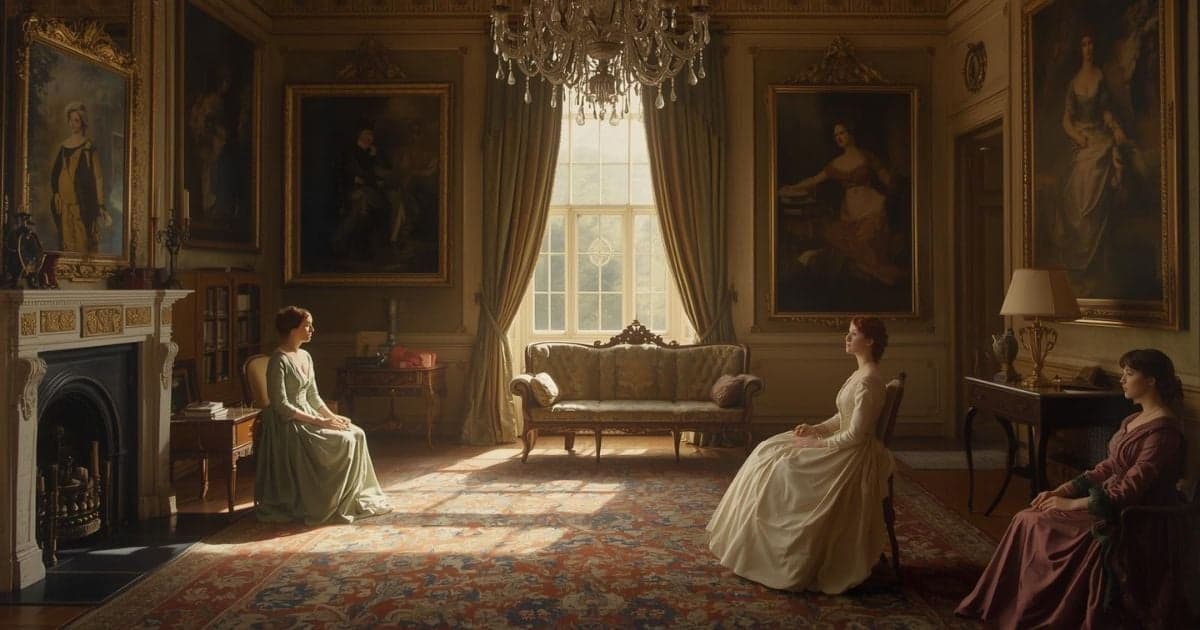
The invitation was accepted, of course, and at a proper hour they joined the party in Lady Catherine’s drawing-room. Her Ladyship received them civilly, but it was plain that their company was by no means so acceptable as when she could get nobody else; and she was, in fact, almost engrossed by her nephews, speaking to them, especially to Darcy, much more than to any other person in the room.

1 / 10

Master this chapter. Complete your experience

Purchase the complete book to access all chapters and support classic literature

Read Free on GutenbergBuy at Powell'sBuy on Amazon

As an Amazon Associate, we earn a small commission from qualifying purchases at no additional cost to you.

Available in paperback, hardcover, and e-book formats

GO ADS FREE — JOIN US

Why This Matters

Connect literature to life

Skill: Reading Power Dynamics

This chapter teaches how to recognize when someone's authority is actually crumbling beneath their aggressive display.

GO ADS FREE — JOIN US

Now let's explore the literary elements.

Key Quotes & Analysis

"I will not be interrupted. Hear me in silence."

— Lady Catherine de Bourgh

Context: Lady Catherine demands Elizabeth listen to her accusations without defending herself.

Shows Lady Catherine's authoritarian nature and expectation that lower-class people should submit without question. It's the classic bully's tactic of demanding silence from their victim.

"I am not to be intimidated into anything so wholly unreasonable."

— Elizabeth Bennet

Context: Elizabeth refuses Lady Catherine's demand that she promise never to marry Darcy.

This is Elizabeth's declaration of independence from social pressure. She recognizes manipulation when she sees it and refuses to be bullied into making promises about her own life.

"Do you think that any consideration would tempt me to accept the man who has been the means of ruining, perhaps for ever, the happiness of a most beloved sister?"

— Elizabeth Bennet

Context: Elizabeth throws Lady Catherine's assumptions back at her, referencing Darcy's interference with Jane and Bingley.

Elizabeth cleverly neither confirms nor denies any engagement while making it clear she won't be dictated to. She's learned to use strategic ambiguity as a defense against bullying.

Thematic Threads

Power

In This Chapter

Lady Catherine's desperate attempt to control Elizabeth's future through intimidation and social pressure

Development

Evolved from earlier subtle class distinctions to open confrontation and threats

In Your Life:

When someone tries to use their position or status to pressure you into a decision, how do you resist without escalating the conflict?

Agency

In This Chapter

Elizabeth's refusal to promise anything about her personal choices, claiming full control over her own life

Development

Culmination of her growth from passive observer to active agent of her own destiny

In Your Life:

What's one area of your life where you've stopped letting others make choices for you, and how did you claim that control?

Class

In This Chapter

Lady Catherine weaponizes social hierarchy, insisting Elizabeth's lower status disqualifies her from marrying Darcy

Development

Reaches its most explicit and ugly expression as desperate last resort

In Your Life:

Have you ever felt judged or dismissed because of your background, education, or economic status - how did you respond?

Fear

In This Chapter

Lady Catherine's panic about losing control over family arrangements reveals deep insecurity beneath her authority

Development

Previously hidden anxieties now exposed through desperate overreach

In Your Life:

What insecurities drive you to try to control situations or people, and when has that desperation backfired?

Dignity

In This Chapter

Elizabeth maintains composure and self-respect while being verbally attacked and threatened

Development

Demonstrates complete transformation from earlier intimidation by social superiors

In Your Life:

How do you stay calm and maintain your self-respect when someone is attacking your character or choices?

GO ADS FREE — JOIN US

You now have the context. Time to form your own thoughts.

Discussion Questions

  1. 1

    What specific tactics does Lady Catherine use to try to control Elizabeth, and how does Elizabeth respond to each one?

  2. 2

    Why does Lady Catherine become more desperate and aggressive as the conversation continues? What does this reveal about her actual position of power?

  3. 3

    Where do you see this same escalation pattern in modern situations - at work, in families, or in relationships?

  4. 4

    If you were in Elizabeth's position, facing someone using their authority to bully you into compliance, what would be your strategy?

  5. 5

    What does this confrontation teach us about the difference between real strength and the appearance of power?

Critical Thinking Exercise

Decode the Power Play

Think of a time when someone escalated their behavior when you didn't do what they wanted - a boss, family member, friend, or authority figure. Write down exactly what tactics they used and in what order. Then analyze: what were they really afraid of losing? How did their escalation actually reveal their weakness rather than their strength?

Consider:

  • •Notice how bullies often claim moral authority ('it's for your own good') when they're really protecting their own interests
  • •Pay attention to the sequence - how tactics get more desperate as initial manipulation fails
  • •Consider how staying calm and refusing to engage with the drama often exposes the other person's true motivations

Coming Up Next...

Chapter 32

Lady Catherine storms off in a rage, but her meddling may have consequences she never intended. Meanwhile, Elizabeth finds herself wondering if there might be more truth to the rumors than she realized.

Continue to Chapter 32
Previous
Chapter 30
Contents
Next
Chapter 32

Continue Exploring

Pride and Prejudice Study GuideTeaching ResourcesEssential Life IndexBrowse by ThemeAll Books
Social Class & StatusLove & RelationshipsIdentity & Self-Discovery

You Might Also Like

Great Expectations cover

Great Expectations

Charles Dickens

Explores personal growth

Anna Karenina cover

Anna Karenina

Leo Tolstoy

Explores society & class

The Great Gatsby cover

The Great Gatsby

F. Scott Fitzgerald

Explores personal growth

Jane Eyre cover

Jane Eyre

Charlotte Brontë

Explores personal growth

Browse all 47+ books

Share This Chapter

Know someone who'd enjoy this? Spread the wisdom!

TwitterFacebookLinkedInEmail

Read ad-free with Prestige

Get rid of ads, unlock study guides and downloads, and support free access for everyone.

Subscribe to PrestigeCreate free account
Intelligence Amplifier
Intelligence Amplifier™Powering Wide Reads

Exploring human-AI collaboration through books, essays, and philosophical dialogues. Classic literature transformed into navigational maps for modern life.

2025 Books

→ The Amplified Human Spirit→ The Alarming Rise of Stupidity Amplified→ San Francisco: The AI Capital of the World
Visit intelligenceamplifier.org
hello@widereads.com

WideReads Originals

→ You Are Not Lost→ The Last Chapter First→ The Lit of Love→ Wealth and Poverty→ 10 Paradoxes in the Classics · coming soon
Arvintech
arvintechAmplify your Mind
Visit at arvintech.com

Navigate

  • Home
  • Library
  • Essential Life Index
  • How It Works
  • Subscribe
  • Account
  • About
  • Contact
  • Authors
  • Suggest a Book
  • Landings

Made For You

  • Students
  • Educators
  • Families
  • Readers
  • Literary Analysis
  • Finding Purpose
  • Letting Go
  • Recovering from a Breakup
  • Corruption
  • Gaslighting in the Classics

Newsletter

Weekly insights from the classics. Amplify Your Mind.

Legal

  • Privacy Policy
  • Terms of Service
  • Cookie Policy
  • Accessibility

Why Public Domain?

We focus on public domain classics because these timeless works belong to everyone. No paywalls, no restrictions—just wisdom that has stood the test of centuries, freely accessible to all readers.

Public domain books have shaped humanity's understanding of love, justice, ambition, and the human condition. By amplifying these works, we help preserve and share literature that truly belongs to the world.

A Pilgrimage

Powell's City of Books

Portland, Oregon

If you ever find yourself in Portland, walk to the corner of Burnside and 10th. The building takes up an entire city block. Inside is over a million books, new and used on the same shelf, organized by color-coded rooms with names like the Rose Room and the Pearl Room. You can lose an afternoon. You can lose a weekend. You will find a book you have been looking for your whole life, and three you did not know existed.

It is a pilgrimage. We cannot find a bookstore like it anywhere on earth. If you read the classics, and you ever get the chance, go. It belongs on every reader's bucket list.

Visit powells.com

We are not in any way affiliated with Powell's. We are just a very big fan.

© 2026 Wide Reads™. All Rights Reserved.

Intelligence Amplifier™ and Wide Reads™ are proprietary trademarks of Arvin Lioanag.

Copyright Protection: All original content, analyses, discussion questions, pedagogical frameworks, and methodology are protected by U.S. and international copyright law. Unauthorized reproduction, distribution, web scraping, or use for AI training is strictly prohibited. See our Copyright Notice for details.

Disclaimer: The information provided on this website is for general informational and educational purposes only and does not constitute professional, legal, financial, or technical advice. While we strive to ensure accuracy and relevance, we make no warranties regarding completeness, reliability, or suitability. Any reliance on such information is at your own risk. We are not liable for any losses or damages arising from use of this site. By using this site, you agree to these terms.