Wide Reads
Literature MattersLife IndexEducators
Sign in
Where to Begin
Pride and Prejudice - Chapter 13

Jane Austen

Pride and Prejudice

Chapter 13

Home›Books›Pride and Prejudice›Chapter 13
Previous
13 of 61
Next

Summary

Chapter 13

Pride and Prejudice by Jane Austen

0:000:00
Listen to Next Chapter

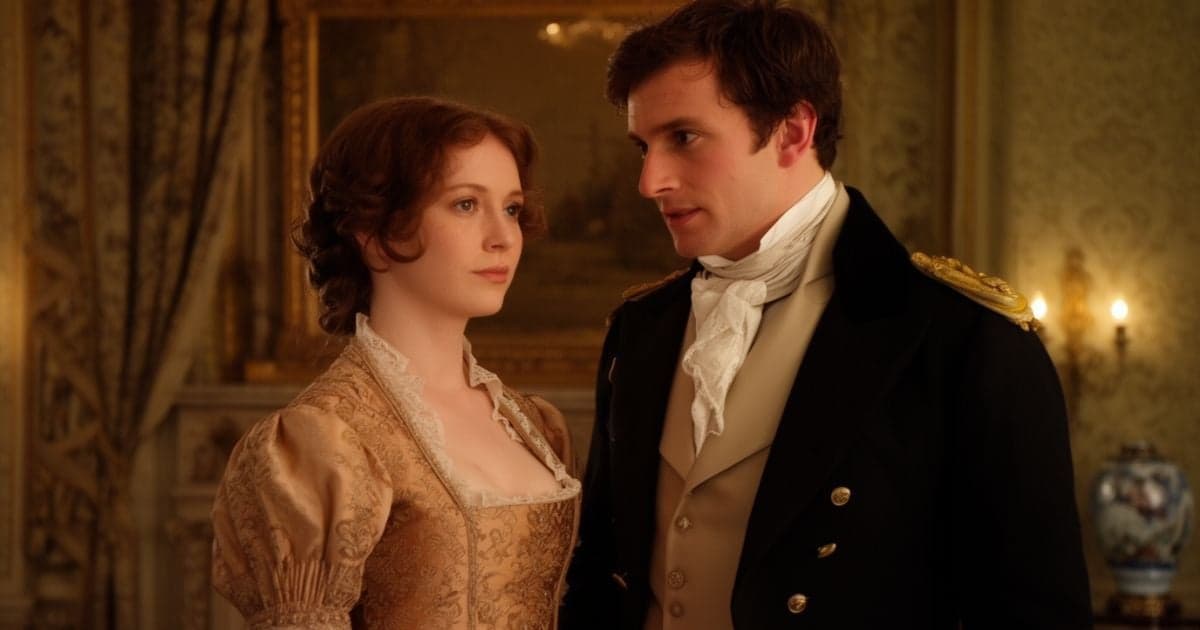
Mr. Collins arrives at Longbourn, and he's exactly as ridiculous as his letter suggested. This pompous clergyman spends his visit name-dropping his patroness Lady Catherine de Bourgh every other sentence, as if her approval makes him important. He's clearly here with a mission beyond just visiting his cousins - he keeps making awkward comments about the Bennet daughters and their futures. Mr. Collins represents everything wrong with people who mistake social climbing for actual worth. He's so busy trying to impress everyone with his connections that he completely misses how eye-roll-worthy he sounds. The way he talks about Lady Catherine like she's royalty reveals his desperate need for validation from people he sees as above him. This matters because Collins embodies the kind of person who uses religion and social position as weapons rather than tools for good. His visit creates tension because everyone can sense he's here for more than family bonding - there's something calculated about his attention to the daughters. Elizabeth sees right through his act, but her parents react differently. Mr. Bennet finds Collins entertaining in the way you'd watch a bad reality show, while Mrs. Bennet starts calculating potential advantages. Collins's arrival also foreshadows how external pressures and social expectations will soon disrupt the Bennet family's relatively peaceful existence. His presence brings the harsh realities of their economic situation into sharp focus - when someone like Collins feels entitled to judge their family's future, it highlights just how precarious their position really is.

Coming Up in Chapter 14

Mr. Collins reveals the true purpose of his visit, and his proposal catches everyone off guard. The family dynamics shift dramatically when his intentions become crystal clear.

Share it with friends

Previous ChapterNext Chapter
GO ADS FREE — JOIN US
Original text
complete·1,692 words
I

[llustration]

“I hope, my dear,” said Mr. Bennet to his wife, as they were at breakfast the next morning, “that you have ordered a good dinner to-day, because I have reason to expect an addition to our family party.”

“Who do you mean, my dear? I know of nobody that is coming, I am sure, unless Charlotte Lucas should happen to call in; and I hope my dinners are good enough for her. I do not believe she often sees such at home.”

“The person of whom I speak is a gentleman and a stranger.”

Mrs. Bennet’s eyes sparkled. “A gentleman and a stranger! It is Mr. Bingley, I am sure. Why, Jane--you never dropped a word of this--you sly thing! Well, I am sure I shall be extremely glad to see Mr. Bingley. But--good Lord! how unlucky! there is not a bit of fish to be got to-day. Lydia, my love, ring the bell. I must speak to Hill this moment.”

“It is not Mr. Bingley,” said her husband; “it is a person whom I never saw in the whole course of my life.”

1 / 9

Master this chapter. Complete your experience

Purchase the complete book to access all chapters and support classic literature

Read Free on GutenbergBuy at Powell'sBuy on Amazon

As an Amazon Associate, we earn a small commission from qualifying purchases at no additional cost to you.

Available in paperback, hardcover, and e-book formats

GO ADS FREE — JOIN US

Why This Matters

Connect literature to life

Skill: Detecting Borrowed Authority

This chapter teaches how to recognize when someone uses other people's power to mask their own inadequacy.

GO ADS FREE — JOIN US

Now let's explore the literary elements.

Key Quotes & Analysis

"Lady Catherine de Bourgh has been so kind as to wish me to choose a wife, and I think it a right thing to choose one of my own family, that the loss to them might be as little as possible when the melancholy event takes place."

— Mr. Collins

Context: Collins explains his mission to marry one of the Bennet daughters

This reveals Collins's calculated approach to marriage and his complete lack of romantic feeling. He frames his proposal as a favor while casually referring to Mr. Bennet's death as a 'melancholy event,' showing his insensitivity and self-importance.

"The garden in which stands my humble abode is separated only by a lane from Rosings Park, her ladyship's residence."

— Mr. Collins

Context: Collins describing his living situation to impress the Bennets

His emphasis on proximity to Lady Catherine's estate shows how he defines his worth by his connection to wealth and status. The phrase 'humble abode' is false modesty designed to invite contradiction and praise.

"Mr. Collins was not a sensible man, and the deficiency of nature had been but little assisted by education or society."

— Narrator

Context: The narrator's direct assessment of Collins's character

This blunt evaluation explains why Collins is so easily manipulated by flattery and why he mistakes social climbing for actual achievement. It also suggests that both natural intelligence and proper guidance have failed him.

Thematic Threads

Social Climbing

In This Chapter

Collins constantly name-drops Lady Catherine to establish his importance and worthiness

Development

Introduced here as a new character trait that will drive future conflicts

In Your Life:

When do you find yourself name-dropping connections or accomplishments to try to impress others, and what does this reveal about your own insecurities?

Class Anxiety

In This Chapter

Collins's desperate need for validation from his social superior reveals deep insecurity about his position

Development

Builds on earlier themes of social hierarchy and economic pressure

In Your Life:

Have you ever felt the need to constantly prove your worth to people you perceive as more successful or important than you?

Performance vs Authenticity

In This Chapter

Collins performs importance through borrowed authority rather than demonstrating genuine worth

Development

Contrasts with Elizabeth's authentic character established in earlier chapters

In Your Life:

Do you ever catch yourself trying to sound more impressive than you actually are, and how does this affect your relationships with others?

Economic Vulnerability

In This Chapter

Collins's visit reminds the family of their precarious financial future and his potential inheritance

Development

Escalates the economic pressure introduced with the entailment discussion

In Your Life:

When facing financial uncertainty, how do you balance practical concerns with maintaining your dignity and relationships?

Judgment

In This Chapter

Collins feels entitled to evaluate and advise the Bennet family despite being their social inferior

Development

Introduces new source of external judgment beyond neighborhood gossip

In Your Life:

Have you ever had someone offer unsolicited advice about your life choices, and how did their presumption make you feel?

GO ADS FREE — JOIN US

You now have the context. Time to form your own thoughts.

Discussion Questions

  1. 1

    What specific behaviors does Mr. Collins display that reveal his insecurity about his social status?

  2. 2

    Why does Collins constantly reference Lady Catherine de Bourgh, and what does this tell us about how he sees himself?

  3. 3

    Where do you see this same pattern of name-dropping and status signaling in modern workplaces, social media, or social situations?

  4. 4

    How would you handle a conversation with someone who constantly tries to impress you with their connections rather than engaging authentically?

  5. 5

    What does Collins's behavior teach us about the difference between borrowed authority and genuine confidence?

Critical Thinking Exercise

Decode the Status Signal

Think of someone you know who frequently name-drops, credential-flashes, or tries to impress others with their connections. Write down their typical phrases or behaviors, then translate what they're really communicating underneath. For example, 'As my friend the doctor always says...' might translate to 'I need you to think I'm important because I know important people.'

Consider:

  • •Notice the gap between what they're saying and what they're actually revealing about their insecurities
  • •Consider how this behavior affects their relationships and whether people genuinely respect them
  • •Reflect on whether you ever engage in similar behaviors and what genuine confidence would look like instead

Coming Up Next...

Chapter 14

Mr. Collins reveals the true purpose of his visit, and his proposal catches everyone off guard. The family dynamics shift dramatically when his intentions become crystal clear.

Continue to Chapter 14
Previous
Chapter 12
Contents
Next
Chapter 14

Continue Exploring

Pride and Prejudice Study GuideTeaching ResourcesEssential Life IndexBrowse by ThemeAll Books
Social Class & StatusLove & RelationshipsIdentity & Self-Discovery

You Might Also Like

Great Expectations cover

Great Expectations

Charles Dickens

Explores personal growth

Anna Karenina cover

Anna Karenina

Leo Tolstoy

Explores society & class

The Great Gatsby cover

The Great Gatsby

F. Scott Fitzgerald

Explores personal growth

Jane Eyre cover

Jane Eyre

Charlotte Brontë

Explores personal growth

Browse all 47+ books

Share This Chapter

Know someone who'd enjoy this? Spread the wisdom!

TwitterFacebookLinkedInEmail

Read ad-free with Prestige

Get rid of ads, unlock study guides and downloads, and support free access for everyone.

Subscribe to PrestigeCreate free account
Intelligence Amplifier
Intelligence Amplifier™Powering Wide Reads

Exploring human-AI collaboration through books, essays, and philosophical dialogues. Classic literature transformed into navigational maps for modern life.

2025 Books

→ The Amplified Human Spirit→ The Alarming Rise of Stupidity Amplified→ San Francisco: The AI Capital of the World
Visit intelligenceamplifier.org
hello@widereads.com

WideReads Originals

→ You Are Not Lost→ The Last Chapter First→ The Lit of Love→ Wealth and Poverty→ 10 Paradoxes in the Classics · coming soon
Arvintech
arvintechAmplify your Mind
Visit at arvintech.com

Navigate

  • Home
  • Library
  • Essential Life Index
  • How It Works
  • Subscribe
  • Account
  • About
  • Contact
  • Authors
  • Suggest a Book
  • Landings

Made For You

  • Students
  • Educators
  • Families
  • Readers
  • Literary Analysis
  • Finding Purpose
  • Letting Go
  • Recovering from a Breakup
  • Corruption
  • Gaslighting in the Classics

Newsletter

Weekly insights from the classics. Amplify Your Mind.

Legal

  • Privacy Policy
  • Terms of Service
  • Cookie Policy
  • Accessibility

Why Public Domain?

We focus on public domain classics because these timeless works belong to everyone. No paywalls, no restrictions—just wisdom that has stood the test of centuries, freely accessible to all readers.

Public domain books have shaped humanity's understanding of love, justice, ambition, and the human condition. By amplifying these works, we help preserve and share literature that truly belongs to the world.

A Pilgrimage

Powell's City of Books

Portland, Oregon

If you ever find yourself in Portland, walk to the corner of Burnside and 10th. The building takes up an entire city block. Inside is over a million books, new and used on the same shelf, organized by color-coded rooms with names like the Rose Room and the Pearl Room. You can lose an afternoon. You can lose a weekend. You will find a book you have been looking for your whole life, and three you did not know existed.

It is a pilgrimage. We cannot find a bookstore like it anywhere on earth. If you read the classics, and you ever get the chance, go. It belongs on every reader's bucket list.

Visit powells.com

We are not in any way affiliated with Powell's. We are just a very big fan.

© 2026 Wide Reads™. All Rights Reserved.

Intelligence Amplifier™ and Wide Reads™ are proprietary trademarks of Arvin Lioanag.

Copyright Protection: All original content, analyses, discussion questions, pedagogical frameworks, and methodology are protected by U.S. and international copyright law. Unauthorized reproduction, distribution, web scraping, or use for AI training is strictly prohibited. See our Copyright Notice for details.

Disclaimer: The information provided on this website is for general informational and educational purposes only and does not constitute professional, legal, financial, or technical advice. While we strive to ensure accuracy and relevance, we make no warranties regarding completeness, reliability, or suitability. Any reliance on such information is at your own risk. We are not liable for any losses or damages arising from use of this site. By using this site, you agree to these terms.