
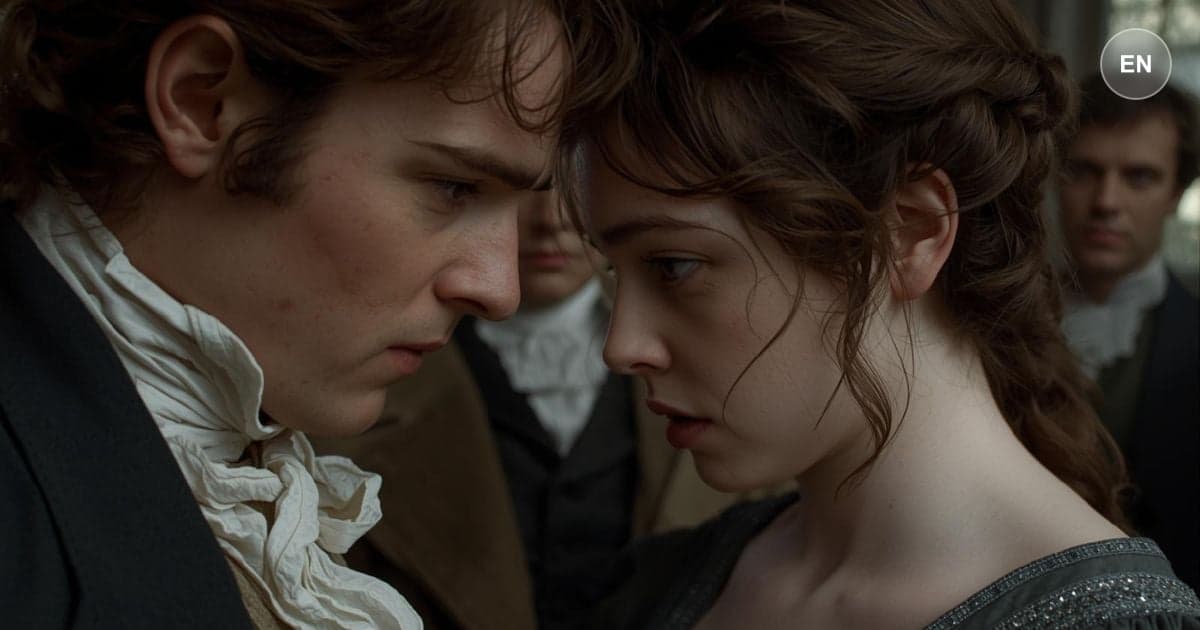
At Netherfield, Darcy's silence looks like contempt and Elizabeth's wit looks like ease. Neither is telling the truth. He has been trained to treat interest as a liability, so he withholds it until it hardens into rudeness. She overheard him call her tolerable, so she turned the insult into a joke she could live inside. Pride, here, is not a mood. It is the story each of them tells so they do not have to be seen wanting something they might not get.
The Hunsford proposal is that story collapsing in public. Darcy names his love and then spends the rest of the speech explaining why he fought it, as if honesty required a defense of his own rank. Elizabeth refuses him on the spot. The letter he writes the next morning is the first time he drops the performance: Wickham's fraud, Georgiana, the interference in Jane's happiness, written without an audience to impress. She reads it until she can no longer protect the version of herself that had been so sure.
Pemberley finishes what the letter began. A housekeeper with nothing to gain describes a kind master. Then Darcy himself appears, softer, introducing her to his sister without the old stiffness. The armor did not fall because either of them decided to be better people in the abstract. It fell because the facts left them no way to keep it on and still tell the truth.
The Central Lesson
Pride in Pride and Prejudice is a disguise for fear: Darcy's fear of being used, Elizabeth's fear of being wrong and of wanting a man who once dismissed her. The proposal wrapped in insults, the unguarded letter, the housekeeper's testimony, and the unexpected meeting on the grounds are the same lesson from four angles. The defense that keeps you from humiliation also keeps you from being known. Love does not begin until both people risk being seen without it.
Applying This to Your Life
Notice When You're Performing
In job interviews, we project confidence while hiding uncertainty. In relationships, we stay distant rather than risk rejection. Online, we curate perfection to mask insecurity. Ask yourself: Am I showing who I am, or am I showing who I think I need to be to be accepted? Pride often disguises itself as confidence.
Recognize That Connection Requires Vulnerability
Genuine connection requires being seen fully—including the parts you'd rather hide. Darcy and Elizabeth could only find love when both were willing to drop their defensive masks. What relationships in your life might deepen if you stopped protecting yourself and allowed yourself to be truly known?
Distinguish Pride From Self-Respect
There's a difference between healthy self-respect and defensive pride. Self-respect says "I deserve to be treated well." Defensive pride says "I won't let you see me, lest you reject me." Elizabeth's refusal of Collins was self-respect. Her early dismissal of Darcy was defensive pride. Learn to tell the difference in your own choices.
Other lessons in this book
More life-skill deep dives from the same classic.
Challenging First Impressions
When First Impressions Become Prisons
Revise quick judgments when new evidence arrives, from the assembly room to Pemberley and the letter.
21 chapters·Explore AnalysisDeveloping Self-Awareness
From Confident Certainty to Humbling Self-Knowledge
Track Elizabeth's admission that she was blind, vain, and prejudiced, and how honesty unlocks change.
19 chapters·Explore AnalysisNavigating Social Class Pressure
When Class Shapes Every Choice
Read how money, entail, and rank shape every marriage choice in the novel.
25 chapters·Explore AnalysisReading Performative Civility
Manners as Mask
Distinguish sincere regard from manners deployed for access or advantage.
18 chapters·Explore AnalysisSetting Boundaries Under Family Pressure
When No Means Negotiate
Hold to a clear no when refusal is treated as negotiation, as with Collins and Lady Catherine.
12 chapters·Explore Analysis
Continue exploring
Explore this theme
The same lessons in other books
See how other books teach the same life skills.
Persuasion
Navigating Social DeclineWatch Kellynch go to the Crofts while Wentworth rises, and carry worth without performing the rank you lost.Persuasion
Distinguishing Prudence from PersuasionTell Lady Russell's caution from fear dressed as sense, then refuse the same music when it returns as Mr. Elliot.
Sense and Sensibility
Balancing Emotion and ReasonEach Defense Has a CostWatch Elinor carry Barton in silence and Marianne refuse to moderate a feeling, then see what each defense costs by Cleveland.
Where the lesson lives in the book
Masks Begin to Slip
Elizabeth spends an evening at Netherfield with the Bingley sisters and Darcy while Jane recovers. Forced proximity creates tension as Elizabeth and Darcy engage in verbal sparring matches that reveal both their intelligence and their mutual fascination with each other.
Key Insight:
When we're forced into close proximity with someone, our carefully constructed social masks begin to slip. Darcy's stiff formality hides genuine interest; Elizabeth's wit becomes a shield against feeling attracted to someone she's 'decided' to dislike.
“Elizabeth found herself quite equal to the scene, and could observe the three ladies before her composedly.”
The Dance of Defense
Elizabeth continues her stay at Netherfield, observing how differently people behave in private versus public. The forced proximity reveals both characters' defensive mechanisms—Darcy's silence masking interest, Elizabeth's wit masking confusion about her own feelings.
Key Insight:
We judge others based on limited information. Elizabeth sees Darcy as proud and disagreeable, but there are moments where his behavior suggests something more complex underneath. Both are using pride as armor against vulnerability.
The Awkward Visit
Darcy finds Elizabeth alone at the parsonage and walks in without warning. Silence forces her to raise Bingley's sudden departure; he gives the briefest answers. When he hints she cannot bear to leave Hertfordshire, he draws his chair closer—then pulls back and takes up a newspaper.
Key Insight:
Vulnerability often looks like clumsiness before it looks like honesty. Darcy's visit is not the polished performance of Rosings—it is a man trying to reach someone while his pride keeps pulling him back into reserve.
The Disastrous Proposal
Darcy proposes to Elizabeth in one of literature's most famous scenes—and does it terribly. Instead of declaring his love romantically, he spends most of the proposal explaining how hard he's fought against his feelings because her family and social position are beneath him.
Key Insight:
This is what vulnerability looks like when it's wrapped in pride: 'In vain have I struggled. It will not do. My feelings will not be repressed.' Darcy is genuinely vulnerable but can't admit it without also defending his pride. The result destroys any chance of acceptance.
“In vain have I struggled. It will not do. My feelings will not be repressed. You must allow me to tell you how ardently I admire and love you.”
The Letter—Truth Unveiled
Darcy writes Elizabeth a letter explaining everything—the truth about Wickham, his reasons for separating Jane and Bingley. For the first time, he drops his prideful defenses and simply tells the truth, vulnerable and unguarded.
Key Insight:
When pride finally drops, truth emerges. Darcy's letter reveals genuine hurt, fear for his sister, and honest concern for his friend. His vulnerability in written form—where he can't hide behind social performance—changes everything.
“His belief of her sister's insensibility she instantly resolved to be false, and his account of the real, the worst objections to the match, made her too angry to have any wish of doing him justice.”
Till This Moment, I Never Knew Myself
Elizabeth reads and re-reads Darcy's letter, forced to confront hard truths about herself. She realizes she's been prideful and prejudiced, judging Darcy based on wounded vanity rather than facts. This is her rock-bottom moment of self-discovery.
Key Insight:
The most powerful realization: her own pride in her judgment was the vulnerability all along. She was so confident in her ability to read people that she became blind to her own biases. Pride masked her fear of being wrong.
“Till this moment, I never knew myself.”
Pemberley—Seeing Past Pride
Elizabeth visits Pemberley, Darcy's estate, and gets the truth from his housekeeper and servants—people who have no reason to lie. They describe a generous, kind master who cares for his sister and treats his servants well.
Key Insight:
Evidence trumps assumptions. The servants' genuine affection reveals Darcy's true character because they have nothing to gain by lying. They see him when the prideful mask is off. Elizabeth finally sees the vulnerable human beneath the proud exterior.
The Unexpected Meeting
Elizabeth encounters Darcy at Pemberley unexpectedly. This time, he's different—softer, more genuine, introducing her to his sister with obvious care. The prideful mask is gone, replaced by authentic vulnerability.
Key Insight:
Watch how people behave when they think no one important is watching. Darcy's kindness to his servants, his gentle care for his shy sister—these reveal the vulnerability his pride once hid.
New Understanding Emerges
The transformation is complete: both Elizabeth and Darcy have dropped their defensive pride. They interact with new honesty, each seeing the other's genuine vulnerability for the first time.
Key Insight:
Real connection becomes possible only when both people drop their prideful defenses. Vulnerability isn't weakness—it's the foundation of authentic relationship. Both had to risk being seen fully to find real love.
What Pride Paid in Secret
Mrs. Gardiner's letter reveals Mr. Darcy found Lydia and Wickham, paid debts over a thousand pounds, purchased Wickham's commission, and insisted on acting alone because his silence about Wickham had misled the world. Elizabeth is overwhelmed by pleasure, pain, and shame.
Key Insight:
The deepest vulnerability is action taken without applause. Darcy repairs what his earlier pride helped break—paying for a scandal he could have walked away from because Elizabeth's family mattered more than his reputation.
Silent Indifference at Dinner
At the large party Bingley sits by Jane while Darcy bears Elizabeth's presence with noble indifference. Elizabeth watches her mother cold and formal to the man the family owes everything, and wonders why he came at all if he will not speak to her.
Key Insight:
Pride can look like indifference when a man cannot yet show what he feels without risking refusal again. Darcy's silence at the dinner table is not the old contempt—it is guarded hope wearing the wrong mask.
Love Without the Old Armor
Elizabeth teases Darcy into accounting for falling in love with her. He cannot fix on the hour or look and says he was in the middle before he knew he had begun. They retrace awkward calls, Lady Catherine's interference, and his real purpose at Netherfield.
Key Insight:
Mature vulnerability is playful honesty about how long you resisted what you felt. Darcy no longer needs the armor of contempt or rank—he can admit he was lost in love before he had language for it.