Wide Reads
Literature MattersLife IndexEducators
Sign in
Where to Begin
Pride and Prejudice - Chapter 19

Jane Austen

Pride and Prejudice

Chapter 19

Home›Books›Pride and Prejudice›Chapter 19
Previous
19 of 61
Next

Summary

Chapter 19

Pride and Prejudice by Jane Austen

0:000:00
Listen to Next Chapter

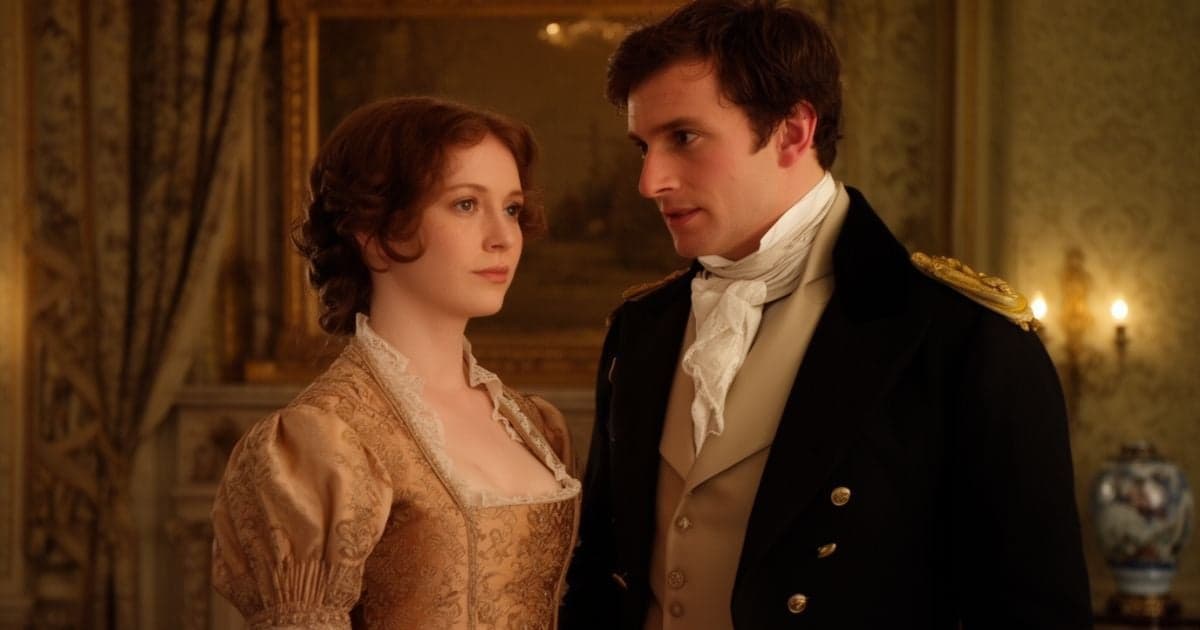
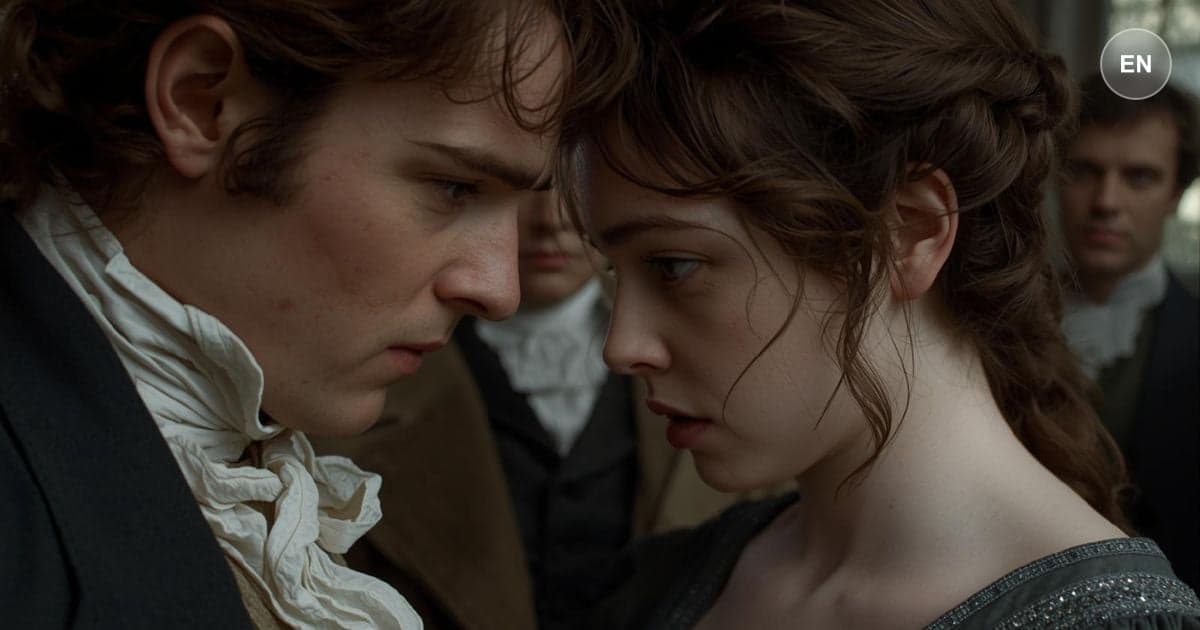
Mr. Collins proposes to Elizabeth in what might be the most awkward marriage proposal in literary history. He approaches it like a business transaction, listing his practical reasons: his patroness Lady Catherine expects him to marry, it will make him happy, and it will benefit the Bennet family. Elizabeth firmly refuses, but Collins refuses to accept her 'no' as final, convinced she's just being modest as women are supposed to be. This scene reveals everything wrong with how society views marriage and women's autonomy. Collins sees Elizabeth as an object to acquire, not a person with her own feelings and desires. His inability to hear her clear rejection shows how men were taught to dismiss women's voices. Elizabeth's firm refusal demonstrates her strength and self-respect - she won't marry for security or social expectation. The proposal also highlights the economic pressures on women like Elizabeth, who have little inheritance and few options. Collins assumes any woman would accept him because he offers financial stability, showing how marriage was often more about survival than love. Elizabeth's rejection is revolutionary for her time - she's choosing potential poverty over a loveless marriage. This moment sets up the central conflict of the novel: can Elizabeth find both love and security, or must she choose between them? The scene also shows Austen's sharp social criticism wrapped in comedy. We laugh at Collins's ridiculous proposal, but underneath is a serious critique of a system that gives women so few choices and men so much power.

Coming Up in Chapter 20

Collins isn't giving up that easily, and he's about to get some powerful backup. Meanwhile, Elizabeth faces mounting pressure from an unexpected source as the consequences of her refusal begin to unfold.

Share it with friends

Previous ChapterNext Chapter
GO ADS FREE — JOIN US
Original text
complete·1,911 words
I

[llustration]

The next day opened a new scene at Longbourn. Mr. Collins made his declaration in form. Having resolved to do it without loss of time, as his leave of absence extended only to the following Saturday, and having no feelings of diffidence to make it distressing to himself even at the moment, he set about it in a very orderly manner, with all the observances which he supposed a regular part of the business. On finding Mrs. Bennet, Elizabeth, and one of the younger girls together, soon after breakfast, he addressed the mother in these words,--

“May I hope, madam, for your interest with your fair daughter Elizabeth, when I solicit for the honour of a private audience with her in the course of this morning?”

Before Elizabeth had time for anything but a blush of surprise, Mrs. Bennet instantly answered,--

“Oh dear! Yes, certainly. I am sure Lizzy will be very happy--I am sure she can have no objection. Come, Kitty, I want you upstairs.” And gathering her work together, she was hastening away, when Elizabeth called out,--

1 / 10

Master this chapter. Complete your experience

Purchase the complete book to access all chapters and support classic literature

Read Free on GutenbergBuy at Powell'sBuy on Amazon

As an Amazon Associate, we earn a small commission from qualifying purchases at no additional cost to you.

Available in paperback, hardcover, and e-book formats

GO ADS FREE — JOIN US

Why This Matters

Connect literature to life

Skill: Recognizing Privileged Dismissal

This chapter teaches how to identify when someone's social position makes them unable to hear your clear communication as valid.

GO ADS FREE — JOIN US

Now let's explore the literary elements.

Key Quotes & Analysis

"My reasons for marrying are, first, that I think it a right thing for every clergyman in easy circumstances to set the example of matrimony in his parish."

— Mr. Collins

Context: Collins begins his proposal by listing his practical reasons for marriage.

This reveals how Collins sees marriage as a duty to perform, not an expression of love. He's literally checking boxes rather than proposing to someone he cares about, showing how society reduced marriage to a social obligation.

"I am not now to learn that it is usual with young ladies to reject the addresses of the man whom they secretly mean to accept."

— Mr. Collins

Context: Collins refuses to believe Elizabeth's rejection is real.

This shows the dangerous assumption that women don't mean what they say. Collins has been taught that women's 'no' means 'yes,' which completely dismisses their autonomy and right to make their own choices.

"You could not make me happy, and I am convinced that I am the last woman in the world who could make you happy."

— Elizabeth Bennet

Context: Elizabeth tries to make Collins understand why they're incompatible.

Elizabeth appeals to logic and mutual happiness, showing her mature understanding of what marriage should be. She's trying to save them both from misery, but Collins can't hear her because he sees marriage as duty, not partnership.

Thematic Threads

Gender Power Dynamics

In This Chapter

Collins assumes Elizabeth's refusal is feminine modesty rather than genuine choice, demonstrating how men dismiss women's autonomy

Development

Builds on earlier hints of women's limited agency, now explicitly showing male entitlement to female compliance

In Your Life:

Have you ever had someone dismiss your clear 'no' as just you being dramatic or not knowing what you really want?

Economic Coercion

In This Chapter

Collins believes his financial stability makes rejection impossible, treating marriage as a business transaction where money trumps personal preference

Development

Expands from Charlotte's earlier pragmatic view to show how economic pressure becomes a tool of control

In Your Life:

When has someone tried to convince you that their financial advantages should make you overlook red flags in a relationship or opportunity?

Class Privilege

In This Chapter

Collins's position as clergyman and future inheritor gives him confidence that his judgment supersedes Elizabeth's, showing how social rank creates assumed authority

Development

Continues the theme of class determining whose voice matters, now in intimate personal decisions

In Your Life:

Have you experienced someone using their job title, education, or social status to act like their opinion matters more than yours in personal decisions?

Personal Autonomy

In This Chapter

Elizabeth's firm refusal represents revolutionary self-determination, choosing potential hardship over surrendering her agency

Development

Crystallizes Elizabeth's emerging pattern of resisting social expectations in favor of personal integrity

In Your Life:

What's a situation where you've had to choose between doing what others expected and staying true to what you actually wanted?

Communication Breakdown

In This Chapter

Collins literally cannot process Elizabeth's clear words, hearing what he expects rather than what she says

Development

Introduced here as a new theme showing how power imbalances corrupt basic human communication

In Your Life:

Have you ever felt frustrated when someone completely misinterpreted your clear communication because they only heard what they wanted to hear?

GO ADS FREE — JOIN US

You now have the context. Time to form your own thoughts.

Discussion Questions

  1. 1

    What reasons does Mr. Collins give for wanting to marry Elizabeth, and what's missing from his list?

  2. 2

    Why does Collins refuse to accept Elizabeth's rejection as final, and what does this reveal about how he views women?

  3. 3

    Where do you see this pattern of 'privileged dismissal' in modern workplaces, healthcare, or relationships?

  4. 4

    If you were Elizabeth's friend, what advice would you give her about dealing with people who won't accept 'no' for an answer?

  5. 5

    What does Collins's proposal teach us about the difference between hearing someone's words and actually listening to them?

Critical Thinking Exercise

Map Your Own Power Dynamics

Think of a time when someone wouldn't accept your 'no' or kept pushing after you'd made your position clear. Write down what power advantage they had over you (money, position, gender, age, etc.) and how that shaped the interaction. Then identify one person whose 'no' you might have trouble accepting and honestly examine what advantage you have in that relationship.

Consider:

  • •Power isn't always obvious - sometimes it's cultural expectations or family roles rather than formal authority
  • •We can be both the dismissed person and the dismissive person in different relationships
  • •Recognizing these patterns helps you prepare better responses and check your own behavior with others
GO ADS FREE — JOIN US

Coming Up Next...

Chapter 20

Collins isn't giving up that easily, and he's about to get some powerful backup. Meanwhile, Elizabeth faces mounting pressure from an unexpected source as the consequences of her refusal begin to unfold.

Continue to Chapter 20
Previous
Chapter 18
Contents
Next
Chapter 20

Continue Exploring

Pride and Prejudice Study GuideTeaching ResourcesEssential Life IndexBrowse by ThemeAll Books
Social Class & StatusLove & RelationshipsIdentity & Self-Discovery

You Might Also Like

Great Expectations cover

Great Expectations

Charles Dickens

Explores personal growth

Anna Karenina cover

Anna Karenina

Leo Tolstoy

Explores society & class

The Great Gatsby cover

The Great Gatsby

F. Scott Fitzgerald

Explores personal growth

Jane Eyre cover

Jane Eyre

Charlotte Brontë

Explores personal growth

Browse all 47+ books

Share This Chapter

Know someone who'd enjoy this? Spread the wisdom!

TwitterFacebookLinkedInEmail

Read ad-free with Prestige

Get rid of ads, unlock study guides and downloads, and support free access for everyone.

Subscribe to PrestigeCreate free account
Intelligence Amplifier
Intelligence Amplifier™Powering Wide Reads

Exploring human-AI collaboration through books, essays, and philosophical dialogues. Classic literature transformed into navigational maps for modern life.

2025 Books

→ The Amplified Human Spirit→ The Alarming Rise of Stupidity Amplified→ San Francisco: The AI Capital of the World
Visit intelligenceamplifier.org
hello@widereads.com

WideReads Originals

→ You Are Not Lost→ The Last Chapter First→ The Lit of Love→ Wealth and Poverty→ 10 Paradoxes in the Classics · coming soon
Arvintech
arvintechAmplify your Mind
Visit at arvintech.com

Navigate

  • Home
  • Library
  • Essential Life Index
  • How It Works
  • Subscribe
  • Account
  • About
  • Contact
  • Authors
  • Suggest a Book
  • Landings

Made For You

  • Students
  • Educators
  • Families
  • Readers
  • Literary Analysis
  • Finding Purpose
  • Letting Go
  • Recovering from a Breakup
  • Corruption
  • Gaslighting in the Classics

Newsletter

Weekly insights from the classics. Amplify Your Mind.

Legal

  • Privacy Policy
  • Terms of Service
  • Cookie Policy
  • Accessibility

Why Public Domain?

We focus on public domain classics because these timeless works belong to everyone. No paywalls, no restrictions—just wisdom that has stood the test of centuries, freely accessible to all readers.

Public domain books have shaped humanity's understanding of love, justice, ambition, and the human condition. By amplifying these works, we help preserve and share literature that truly belongs to the world.

A Pilgrimage

Powell's City of Books

Portland, Oregon

If you ever find yourself in Portland, walk to the corner of Burnside and 10th. The building takes up an entire city block. Inside is over a million books, new and used on the same shelf, organized by color-coded rooms with names like the Rose Room and the Pearl Room. You can lose an afternoon. You can lose a weekend. You will find a book you have been looking for your whole life, and three you did not know existed.

It is a pilgrimage. We cannot find a bookstore like it anywhere on earth. If you read the classics, and you ever get the chance, go. It belongs on every reader's bucket list.

Visit powells.com

We are not in any way affiliated with Powell's. We are just a very big fan.

© 2026 Wide Reads™. All Rights Reserved.

Intelligence Amplifier™ and Wide Reads™ are proprietary trademarks of Arvin Lioanag.

Copyright Protection: All original content, analyses, discussion questions, pedagogical frameworks, and methodology are protected by U.S. and international copyright law. Unauthorized reproduction, distribution, web scraping, or use for AI training is strictly prohibited. See our Copyright Notice for details.

Disclaimer: The information provided on this website is for general informational and educational purposes only and does not constitute professional, legal, financial, or technical advice. While we strive to ensure accuracy and relevance, we make no warranties regarding completeness, reliability, or suitability. Any reliance on such information is at your own risk. We are not liable for any losses or damages arising from use of this site. By using this site, you agree to these terms.