Chapter 56
Power arrives to forbid your future, and calm refusal without boast...
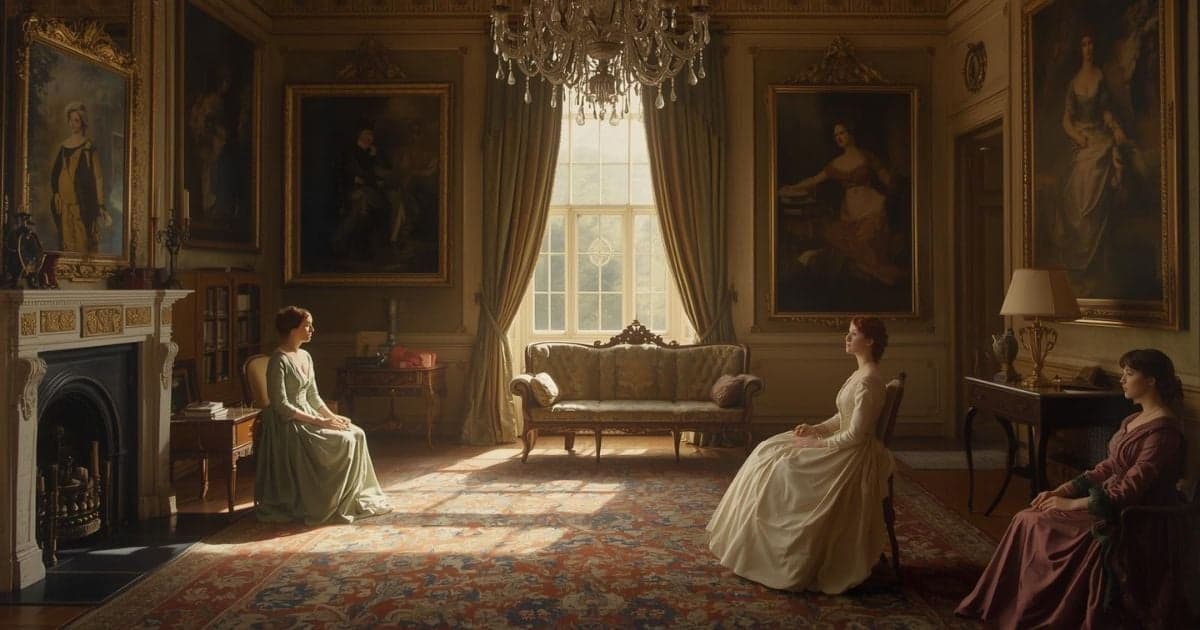
One morning, about a week after Bingley’s engagement with Jane had been formed, as he and the females of the family were sitting together in the dining-room, their attention was suddenly drawn to the window by the sound of a carriage; and they perceived a chaise and four driving up the lawn. It was too early in the morning for visitors; and besides, the equipage did not answer to that of any of their neighbours. The horses were post; and neither the carriage, nor the livery of the servant who preceded it, were familiar to them. As it was certain,…
Public-domain chapter text, formatted for reading.
Master this chapter. Complete your experience
Purchase the complete book to access all chapters and support classic literature
Available in paperback, hardcover, and e-book formats
Now let's explore the literary elements.
Key Quotes & Analysis
"_you_--that Miss Elizabeth Bennet would, in all likelihood, be soon afterwards united to my nephew--my own nephew, Mr. Darcy."
Context: In the copse, stating why she came
The report she means to kill—Elizabeth's match is the real target, not Jane's.
In Today's Words:
Lady Catherine heard Elizabeth was about to get engaged to her nephew Darcy. Like when office gossip spreads about workplace relationships, she's panicking about losing control over her family's social connections. In competitive environments, people often try to manage others' personal choices to protect their own interests and maintain their perceived status.
"Mr. Darcy is engaged to _my daughter_."
Context: Forbidding Elizabeth's presumption
The bluff Elizabeth punctures—if so, he cannot be offering to her.
In Today's Words:
Lady Catherine claims Darcy is already engaged to her daughter. It's like when someone drops a fake announcement to block competition, hoping others will back off. In dating apps or corporate politics, people sometimes bluff about exclusive arrangements to eliminate rivals and secure what they want for themselves.
"He is a gentleman; I am a gentleman’s daughter; so far we are equal."
Context: Refusing to quit her sphere
The novel's class answer—rank is not the only measure she accepts.
In Today's Words:
Elizabeth points out she and Darcy have equal social standing as professionals from good families. Like asserting your qualifications in a male-dominated tech startup, she's refusing to be diminished by outdated hierarchies. Modern relationships shouldn't be limited by old-fashioned ideas about who belongs with whom based on arbitrary social rankings.
"I am not to be intimidated into anything so wholly unreasonable."
Context: Refusing to promise never to marry Darcy
The chapter's spine—she will not be worked on by frivolous threats.
In Today's Words:
Elizabeth refuses to be bullied into making unreasonable promises about her future. Like standing up to a manipulative boss or toxic family member, she won't let fear tactics control her choices. In today's world, we shouldn't let others intimidate us into abandoning our rights to make our own decisions.
Thematic Threads
Authority refused
In This Chapter
Copse duel
Development
Elizabeth's growth complete
In Your Life:
When have you declined to let someone powerful dictate your future?
Class and equality
In This Chapter
Gentleman's daughter
Development
Answer to sphere
In Your Life:
When have you named a fair standard against snobbery?
Rumour as weapon
In This Chapter
Marriage report
Development
Visit confirms gossip
In Your Life:
When has confronting a rumour spread it further?
Scandal reused
In This Chapter
Lydia and Wickham
Development
Pemberley polluted
In Your Life:
When has an old family shame been thrown at you in a new fight?
Mother's blindness
In This Chapter
Civil call theory
Development
Elizabeth's silence
In Your Life:
When could you not tell family what really happened?
You now have the context. Time to form your own thoughts.
Discussion Questions
This is not a test. Five prompts guide you through the chapter, from how it opens to how it closes, so you notice context and rhythm rather than facts to memorize. Sit with each question in your own words. When you see "One way to read it," treat it as a starting point, not the only answer.
- 1
Why does Lady Catherine come to Longbourn, and what report angers her?
analysis • surfaceOne way to read it
A week after Jane's engagement she arrives in a chaise and four, having heard a report that Elizabeth will marry Mr. Darcy. She demands Elizabeth deny the report and promise never to engage herself to him.
- 2
How does Elizabeth respond when Lady Catherine claims Mr. Darcy is destined for Anne de Bourgh?
analysis • mediumOne way to read it
Elizabeth replies that a gentleman's daughter and a gentleman are equal, refuses to be intimidated, and will not promise away her future. She also says Wickham's connection is none of Lady Catherine's business if Darcy does not object.
- 3
When have you refused to let someone with authority over another person dictate your own choices?
application • mediumOne way to read it
Think of declining a family demand about whom to date, refusing a boss's pressure on personal life, or Elizabeth's calm refusal without boasting when Lady Catherine threatens ruin.
- 4
Lady Catherine mentions Lydia's marriage as part of her case against Elizabeth. How does Elizabeth answer that argument?
application • deepOne way to read it
She treats Lydia's disgrace as not Lady Catherine's concern if Mr. Darcy does not object. The answer shifts the standard from family shame to whether Darcy himself accepts the connection.
- 5
Mrs. Bennet thinks the visit was a civil call about the Collinses while Elizabeth cannot tell the truth. What irony sits in that ending?
reflection • deepOne way to read it
The most consequential conversation of the chapter remains invisible to the mother who cares most about marriage. Elizabeth's strength happens in the copse while Mrs. Bennet misreads power as civility.
Critical Thinking Exercise
When Someone Powerful Demanded You Step Aside
Recall a time someone with status or family ties told you to end a relationship or hope. What did you refuse to promise, and what happened after?
Consider:
- •What report or gossip prompted their visit?
- •Did you admit or withhold your real feelings?
- •Who misunderstood the encounter afterward?
Coming Up Next...
Chapter 57: Chapter LVII
Elizabeth will fear Lady Catherine has ruined everything, until a letter from Mr. Collins suggests otherwise. Power arrives to forbid your future, and calm refusal without boasting can be the strongest answer. Elizabeth into dominates the opening movement.