Chapter 23
Painful news often becomes public theatre before you find the words...
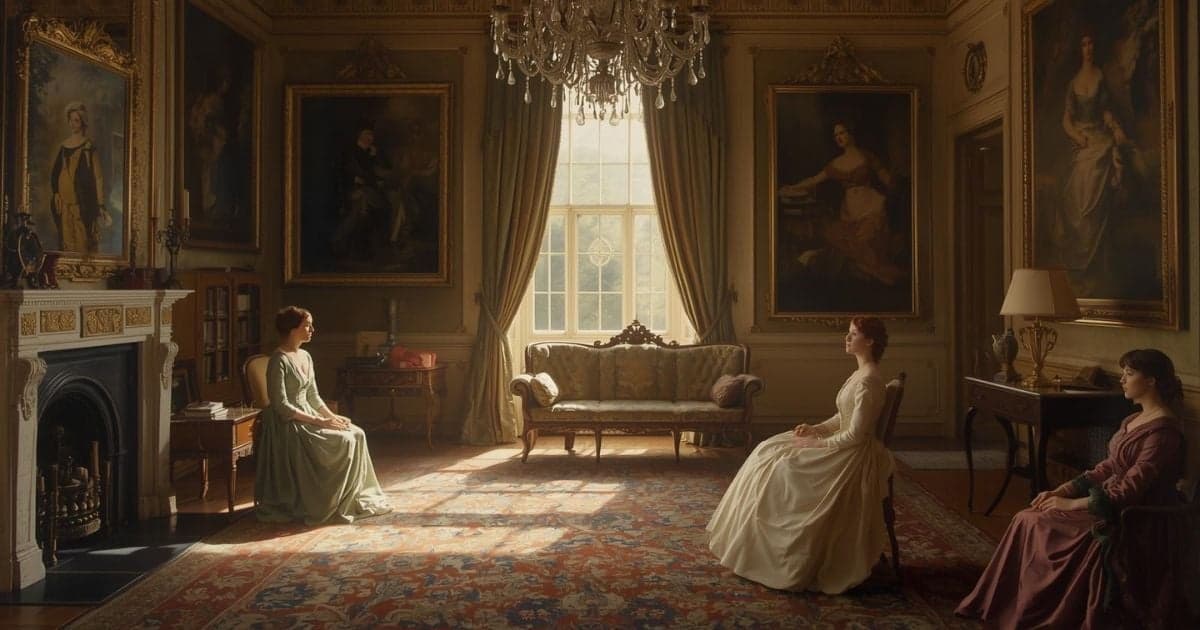
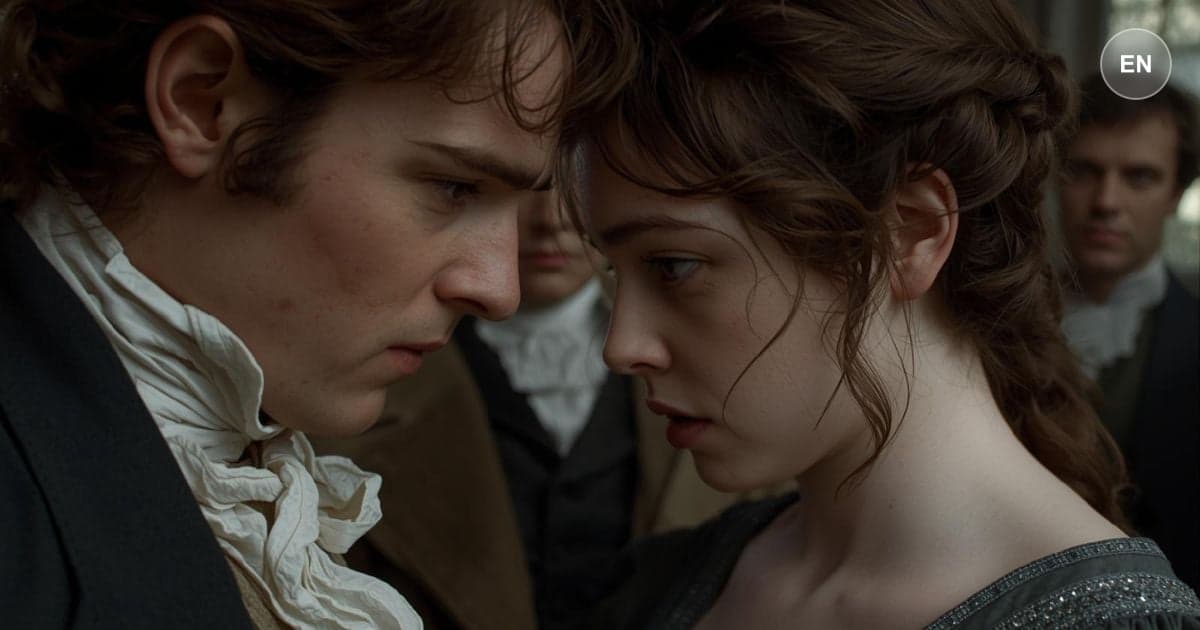
[Illustration] Elizabeth was sitting with her mother and sisters, reflecting on what she had heard, and doubting whether she was authorized to mention it, when Sir William Lucas himself appeared, sent by his daughter to announce her engagement to the family. With many compliments to them, and much self-gratulation on the prospect of a connection between the houses, he unfolded the matter,--to an audience not merely wondering, but incredulous; for Mrs. Bennet, with more perseverance than politeness, protested he must be entirely mistaken; and Lydia, always unguarded and often uncivil, boisterously exclaimed,-- “Good Lord! Sir William, how can you tell…
Public-domain chapter text, formatted for reading.
Master this chapter. Complete your experience
Purchase the complete book to access all chapters and support classic literature
Available in paperback, hardcover, and e-book formats
Now let's explore the literary elements.
Key Quotes & Analysis
"Good Lord! Sir William, how can you tell such a story? Do not you know that Mr. Collins wants to marry Lizzy"
Context: When Sir William announces Charlotte's engagement
Comic bluntness exposes the household's confusion—and how completely Collins's first proposal still dominates their thinking.
In Today's Words:
Sometimes family members just blurt out what everyone's thinking but shouldn't say. Lydia's complete lack of filter here is like when someone drops confidential info in a team meeting. She assumes everyone knows about Collins's failed proposal to Elizabeth, creating that awkward moment when private drama becomes public knowledge in professional or family settings.
"to discover that Charlotte Lucas, whom he had been used to think tolerably sensible, was as foolish as his wife, and more foolish than his daughter"
Context: His private verdict on the engagement
Bennet's wit lands on Charlotte's pragmatism as folly—aligning him with Elizabeth's view while refusing to intervene.
In Today's Words:
Mr. Bennet realizes Charlotte isn't the smart, practical person he thought she was. It's like discovering a respected colleague made a terrible career move for short-term security. He's judging her choice to marry Collins as even worse than his wife's usual dramatics, showing how practical decisions can look foolish to outsiders.
"Let us flatter ourselves that _I_ may be the survivor."
Context: Replying to Mrs. Bennet's fear that Charlotte will be mistress of Longbourn
Classic Bennet deflection—humour that refuses to solve the entail but momentarily punctures his wife's panic.
In Today's Words:
When faced with his wife's anxiety about their financial future, Mr. Bennet makes a dark joke about outliving her instead of addressing the real problem. It's classic avoidance behavior, like deflecting serious budget discussions at work with humor. He'd rather crack jokes than deal with the uncomfortable reality of their situation.
"_Whenever she spoke in a low voice_"
Context: From the second half of the chapter
This line anchors the chapter's closing movement and shows how social pressure and private feeling collide in the scene.
In Today's Words:
In today's language, the passage says: _Whenever she spoke in a low voice_ Readers still recognize the same dynamic when pride, strategy, or family pressure turns a private moment into public consequence. The pattern still shows up in offices, families, and neighborhoods today, where the same pressure narrows what people can see before anyone admits
Thematic Threads
Public vs private feeling
In This Chapter
Elizabeth congratulates while mourning Charlotte
Development
Performance under social pressure
In Your Life:
When have you had to act happy about news that privately hurt you?
Family blame
In This Chapter
Mrs. Bennet makes Elizabeth the cause of mischief
Development
Scapegoating for refused Collins match
In Your Life:
When has a parent pinned a household disappointment on one child?
Friendship erosion
In This Chapter
Silence between Elizabeth and Charlotte
Development
Pragmatic marriage costs intimacy
In Your Life:
Has a friend's practical choice ever made honesty between you impossible?
Bingley's absence
In This Chapter
Rumour, fear, Jane's concealed pain
Development
Plot tightens toward Caroline's next letter
In Your Life:
When has waiting for someone who's gone quiet felt worse than a clear no?
Entailment and envy
In This Chapter
Mrs. Bennet on Charlotte as future mistress
Development
Economic anxiety under the comedy
In Your Life:
Where do inheritance or housing fears turn into jealousy of a neighbour?
You now have the context. Time to form your own thoughts.
Discussion Questions
This is not a test. Five prompts guide you through the chapter, from how it opens to how it closes, so you notice context and rhythm rather than facts to memorize. Sit with each question in your own words. When you see "One way to read it," treat it as a starting point, not the only answer.
- 1
How does Sir William announce Charlotte's engagement, and how do Mrs. Bennet and Lydia respond?
analysis • surfaceOne way to read it
Sir William arrives sent by Charlotte to announce the match with many compliments. Mrs. Bennet protests he must be mistaken; Lydia insists Collins still wants Lizzy until Elizabeth confirms the truth.
- 2
What does Mrs. Bennet conclude once Sir William leaves, and whom does she blame?
analysis • mediumOne way to read it
She vents disbelief, hopes for misery, and decides Elizabeth caused the mischief by refusing Collins herself. She feels barbarously used and resents his future visits.
- 3
When have you had painful news become public before you were ready to speak about it yourself?
application • mediumOne way to read it
Think of a family announcement you already knew, a workplace rumor ahead of an official statement, or Elizabeth sitting with her mother still doubting whether she may mention what Charlotte told her when Sir William arrives.
- 4
Meryton reports that Bingley will not return to Netherfield all winter. What does Elizabeth begin to fear about his attachment to Jane?
application • deepOne way to read it
Even Elizabeth, who defended Bingley's feelings, begins to fear his sisters, Darcy, and London may overcome an attachment not equal to his own. Jane conceals her pain while the neighbourhood closes the story.
- 5
What does the restraint between Elizabeth and Charlotte after the public announcement suggest about friendship under incompatible choices?
reflection • deepOne way to read it
Elizabeth confirmed the engagement with civility but cannot forget what Charlotte sacrificed. The bond continues, yet something has shifted because Charlotte's security is built on the man Elizabeth refused and the future mistress of Longbourn.
Critical Thinking Exercise
The Announcement You Saw Coming
Recall news that was painful but not surprising—a friend's choice, a job, a relationship. Write how you behaved in public, what you felt alone, and whether anyone blamed you unfairly. Then note a parallel silence from someone you cared about.
Consider:
- •What did you say to keep peace in the room?
- •Who mapped their disappointment onto you?
- •Did absence or rumour hurt more than the original news?
Coming Up Next...
Chapter 24: Chapter XXIV
Miss Bingley's next letter will confirm the Netherfield party is settled in London for the winter, and Jane's hope will be entirely over. Painful news often becomes public theatre before you find the words to say you already knew.