
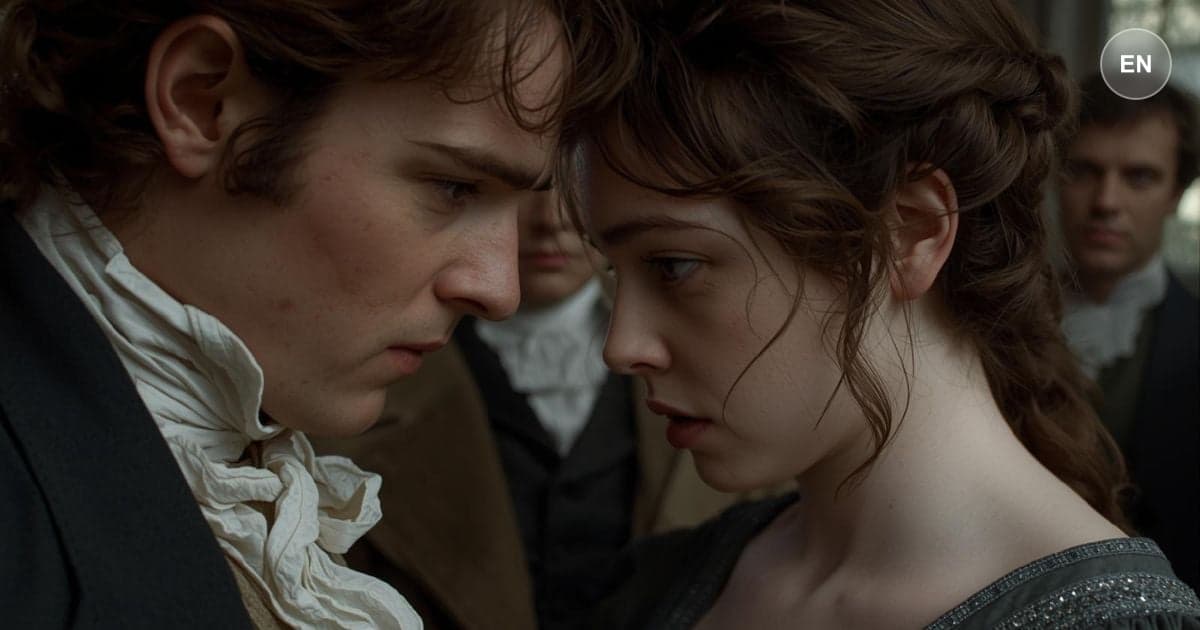
Pride and Prejudice was originally titled "First Impressions" for a reason. First impressions aren't just quick judgments—they're narratives we construct that become self-reinforcing. We interpret every future interaction through that initial lens, seeing evidence that confirms our first take while dismissing anything that contradicts it. Austen shows how both Elizabeth and Darcy trap each other (and themselves) in these first-impression prisons—and how costly that imprisonment becomes.
Elizabeth constructs a narrative where Darcy is a proud snob and Wickham is a wronged hero. That narrative becomes self-confirming until undeniable evidence—Darcy's letter—forces her to see differently. Darcy, too, is trapped: his first dismissal of Elizabeth blinds him to his growing feelings until he's proposing to someone he insulted. Both characters demonstrate that we judge quickly based on limited information, seek evidence that confirms our initial judgment, and become emotionally invested in being "right"—even when being right means losing what we most want.
The lesson isn't to stop forming first impressions—that's impossible. It's to hold them lightly enough that you can revise them when evidence demands it. Pride keeps us locked into being "right." Wisdom lets us be wrong. Elizabeth's journey from confident misjudgment to painful self-correction maps the path we all must take when our first impressions have led us astray.
The Central Lesson
First impressions are stories we tell ourselves, not truths we discover. They become self-reinforcing because we seek confirmation and dismiss contradiction. The escape requires willingness to be wrong—to seek evidence from neutral parties, to notice when we're interpreting through our narrative, and to value accurate perception over the comfort of being "right." Elizabeth and Darcy only find love when both are willing to revise their first impressions. The question isn't whether you'll form first impressions—it's whether you'll hold them lightly enough to revise them when evidence demands it.
Applying This to Your Life
Seek Evidence From Neutral Sources
When you've formed a strong first impression of someone, deliberately seek information from people who have no stake in what you believe. Elizabeth learned the truth about Darcy from his servants—unbiased witnesses. In your life: ask colleagues about someone you've judged, read multiple perspectives on someone you've decided you understand. First impressions thrive on partial information; counter them with fuller context.
Notice When You're Interpreting Through Your Narrative
If you find yourself consistently interpreting someone's actions as evidence of a negative trait, ask: Am I seeing what's there, or what my first impression needs me to see? Darcy's reticence looked like guilt to Elizabeth when it was actually discretion. We see what our story requires. Practice asking: "What's another way to interpret this?"
Value Truth Over Being Right
The hardest part of revising first impressions is the blow to our ego. Elizabeth had to accept she was completely wrong—about Darcy, about Wickham, about herself. That's humiliating. But holding onto wrong first impressions to protect your pride costs more. Ask: Would I rather be right in my judgment or right in my relationships? Sometimes wisdom means admitting "I was wrong about you."
Other lessons in this book
More life-skill deep dives from the same classic.
Developing Self-Awareness
From Confident Certainty to Humbling Self-Knowledge
Track Elizabeth's admission that she was blind, vain, and prejudiced, and how honesty unlocks change.
19 chapters·Explore AnalysisNavigating Social Class Pressure
When Class Shapes Every Choice
Read how money, entail, and rank shape every marriage choice in the novel.
25 chapters·Explore AnalysisReading Performative Civility
Manners as Mask
Distinguish sincere regard from manners deployed for access or advantage.
18 chapters·Explore AnalysisRecognizing When Pride Masks Vulnerability
When Pride Becomes Armor
Notice when confidence is protecting insecurity, as Elizabeth and Darcy both learn after their first meeting.
12 chapters·Explore AnalysisSetting Boundaries Under Family Pressure
When No Means Negotiate
Hold to a clear no when refusal is treated as negotiation, as with Collins and Lady Catherine.
12 chapters·Explore Analysis
Continue exploring
Explore this theme
The same lessons in other books
See how other books teach the same life skills.
Persuasion
Navigating Social DeclineWatch Kellynch go to the Crofts while Wentworth rises, and carry worth without performing the rank you lost.Persuasion
Distinguishing Prudence from PersuasionTell Lady Russell's caution from fear dressed as sense, then refuse the same music when it returns as Mr. Elliot.
Sense and Sensibility
Balancing Emotion and ReasonEach Defense Has a CostWatch Elinor carry Barton in silence and Marianne refuse to moderate a feeling, then see what each defense costs by Cleveland.
Where the lesson lives in the book
The Dangerous Opening Line
The novel begins with one of literature's most famous lines about wealthy single men—but it's ironic. Austen immediately signals that what 'everybody knows' is often wrong. Mrs. Bennet sees Mr. Bingley only as a potential husband for one of her daughters, reducing a human being to his bank account before ever meeting him.
Key Insight:
First impressions aren't just about meeting someone—they start with the stories we're told before we ever see them. Mrs. Bennet's obsession with Bingley's wealth creates a narrative that blinds her family to who he actually is.
“It is a truth universally acknowledged, that a single man in possession of a good fortune must be in want of a wife.”
The Visit Nobody Knew About
Mr. Bennet has already called on Bingley but lets Mrs. Bennet believe he refuses until the last moment, when he reveals he was among the first in the neighborhood to pay his respects. Her panic and triumph were built on a story that was never true.
Key Insight:
First impressions start before you meet someone—they start with the story your household tells. Mrs. Bennet organized her anxiety around a visit that had already happened because she assumed Mr. Bennet's indifference was fact, not theater.
“How good it was in you, my dear Mr. Bennet! But I knew I should persuade you at last.”
Darcy's Fatal First Words
At the Meryton ball, Darcy makes his catastrophic first impression on Elizabeth. When Bingley suggests he dance with her, Darcy replies that she's 'tolerable, but not handsome enough to tempt me.' Elizabeth overhears this. His first words about her set up a prejudice that takes the entire novel to overcome.
Key Insight:
One careless moment can define how someone sees you for years. Darcy's snobbish remark wasn't even meant for Elizabeth's ears, but it created a narrative about him that colored every future interaction. Words said carelessly have lasting weight.
“She is tolerable, but not handsome enough to tempt me.”
Jane and Bingley's Perfect Surface
Everyone approves of Bingley and Jane's attraction—they're both beautiful, pleasant, and well-matched in temperament. But this chapter shows Elizabeth and Charlotte disagreeing about the match. Charlotte warns that Jane isn't showing enough of her feelings, risking that Bingley might think she's indifferent.
Key Insight:
First impressions based on surface compatibility can be just as misleading as negative ones. What looks perfect from the outside might be missing crucial elements—like clear communication of actual feelings.
Attraction Versus First Judgment
Darcy finds himself increasingly attracted to Elizabeth despite his initial dismissal of her looks. He's 'caught by the easy playfulness' of her manner. Meanwhile, Elizabeth remains completely unaware of his growing admiration because his first impression of her was so negative.
Key Insight:
We're often most blind to change in people we've already judged. Darcy is revising his opinion in real-time, but Elizabeth can't see it because she's locked into her first impression of his pride. Both are trapped by the initial narrative.
Mrs Bennet Assumes the Wrong Visitor
Mr. Bennet teases that a gentleman stranger is coming; Mrs. Bennet assumes it is Bingley and orders fish. She prepares for marriage prospects when the visitor is the cousin who will inherit their home.
Key Insight:
We fill gaps in information with the story we want. Mrs. Bennet hears 'gentleman' and constructs Bingley before a name is spoken—the same habit Elizabeth will later have to unlearn about Wickham and Darcy.
“And what can he mean by apologizing for being next in the entail? We cannot suppose he would help it, if he could.”
Enter Wickham—The Charming Liar
George Wickham arrives and immediately charms Elizabeth with his good looks, easy manners, and sympathetic stories about being wronged by Darcy. He presents himself as the victim of Darcy's cruelty, and Elizabeth eagerly believes him because it confirms her existing prejudice against Darcy.
Key Insight:
We're most vulnerable to being deceived by people who tell us what we want to hear. Wickham's charm works on Elizabeth because his story validates her negative first impression of Darcy. Confirmation bias makes us gullible.
“Elizabeth's mind was soon made up against Mr. Darcy... Wickham's happiness in having such an opportunity of standing well with her was most evident.”
Wickham's Performance
Wickham continues his performance, sharing 'private' information about Darcy's supposed cruelty. He presents himself as an open, honest man while painting Darcy as a villain. Elizabeth never questions why Wickham is sharing these intimate details with a stranger.
Key Insight:
Beware of people who volunteer negative information about others too quickly. Genuine victims don't usually tell their sob stories to new acquaintances at parties. Wickham's oversharing is a red flag Elizabeth misses because his narrative fits her bias.
Elizabeth Tells Jane the Wickham Story
Elizabeth recounts Wickham's account of Darcy's cruelty to Jane, who is distressed but refuses to declare Darcy a villain without proof. Elizabeth treats Jane's caution as naïveté rather than wisdom.
Key Insight:
A compelling narrative from a charming source can feel like evidence. Elizabeth confuses Wickham's detailed story with verified truth—and dismisses her sister's refusal to judge without hearing both sides.
The Netherfield Ball—Confrontation
At the Netherfield ball, Elizabeth confronts Darcy about his treatment of Wickham. Darcy is clearly uncomfortable but doesn't defend himself in detail. Elizabeth interprets his reticence as guilt, when it's actually discretion—he won't speak ill of Wickham publicly.
Key Insight:
We interpret evidence through the lens of our first impressions. Darcy's refusal to gossip looks like guilt to Elizabeth, when it's actually integrity. We see what we expect to see, missing contradictory evidence.
Two Readings of the Same Letter
Jane reads Caroline Bingley's letter as polite regret and closes her hope with angelic grace. Elizabeth reads the same sentences as manipulation—Charles kept near Miss Darcy, intimacy engineered, Jane's chance deliberately ended.
Key Insight:
First impressions of a document can be as biased as first impressions of a person. Jane sees civility; Elizabeth sees strategy. Both are reading Caroline, but only one is willing to name the motive behind the manners.
Confidence Before the Correction
Elizabeth parts from Wickham on perfectly friendly terms and leaves Longbourn convinced he must always be her model of the amiable and pleasing. She carries that certainty toward Hunsford still certain Darcy is the villain of the piece.
Key Insight:
The most dangerous moment for first impressions is right before they collapse. Elizabeth's confidence in Wickham and contempt for Darcy are at their peak when she travels to Kent—making the letter that follows all the more devastating.
Reading Silence as Contempt
Elizabeth presses Darcy about Bingley's sudden November departure and receives the briefest answers. She interprets his reserve as the same proud contempt she has always assigned him—not as discomfort, interest, or the discretion of a man who knows more than he can say.
Key Insight:
Once a first impression hardens, even neutral behavior reads as confirmation. Darcy's awkward visit could be evidence of feeling; Elizabeth reads it as further proof of his coldness because that is the story she has already committed to.
The Letter That Shatters Everything
Darcy's letter reveals the truth: Wickham tried to elope with Darcy's 15-year-old sister to steal her fortune. Wickham is a practiced seducer and liar. As Elizabeth reads and re-reads, she's forced to confront how wrong her first impressions were about both men.
Key Insight:
Overcoming first impressions requires being willing to admit we were completely wrong. Elizabeth doesn't gradually revise her opinion—she has to accept she was deceived and misled. It's painful and humiliating, which is why most people never do it.
“How despicably have I acted!... Till this moment I never knew myself.”
Revising Wickham and Darcy
Elizabeth tells Jane the chief of Darcy's proposal and repeats the letter's account of Wickham. She insists there is but such a quantity of merit between the two men, shifting of late toward Mr. Darcy, and jokes that she meant to be clever in her old dislike.
Key Insight:
Overcoming first impressions is not a single moment—it is a conversation with someone you trust where you admit how wrong you were. Elizabeth can finally say aloud that Wickham's charm and Darcy's reserve were both misread.
Pemberley—Meeting the Real Darcy
Elizabeth visits Darcy's estate and meets his housekeeper, who speaks glowingly of his kindness, generosity, and care for his sister. These unbiased witnesses contradict everything Elizabeth believed about him. She begins to see who he actually is, not who she assumed he was.
Key Insight:
To truly overcome first impressions, seek evidence from neutral parties who have no reason to lie. The servants at Pemberley don't know Elizabeth and have nothing to gain by praising Darcy. Their genuine affection reveals the truth.
Revising the Man Who Saved Her
Mrs. Gardiner's letter forces Elizabeth to reconcile Darcy's secret rescue with the proud man she refused at Hunsford. The man she judged cruel and arrogant paid to save her sister—and did it because his silence about Wickham had misled the world.
Key Insight:
First impressions collapse when private virtue contradicts public manner. Elizabeth must revise not only what she thought of Darcy, but what she thought evidence looked like.
Reading Silence Wrong Again
After the first visit Elizabeth is vexed: why did Darcy come only to be silent and indifferent? Jane expects common acquaintance at Tuesday's dinner; Elizabeth laughs and warns she is in very great danger of making Bingley as much in love as ever.
Key Insight:
Old interpretive habits die hard. Elizabeth still reads Darcy's reserve as indifference even after the letter and the rescue—because revising first impressions is a process, not a single revelation.
Mrs Bennet's Obvious Matchmaking
Mrs. Bennet winks Elizabeth and Catherine out of the room so Jane and Bingley can be left alone. The performance is transparent, the outcome inevitable—and Elizabeth watches her sister win while her own future with Darcy still hangs unspoken.
Key Insight:
Sometimes the clearest evidence is what everyone in the room can see except the person still clinging to an old story. Bingley's return confirms Jane's first impression was right; Elizabeth must ask whether hers about Darcy can finally change too.
Tracing Lady Catherine's Rumour
Elizabeth cannot shake Lady Catherine's visit to break off a supposed engagement. She traces the rumour from Jane's wedding through the Lucases and Collinses, and fears Lady Catherine will persuade Darcy away from the Bennets entirely.
Key Insight:
Gossip can feel like evidence when it confirms your fear of being misjudged again. Elizabeth reads the Collins letter and Lady Catherine's campaign as proof Darcy may retreat—just as she once read his reserve as contempt.
Elizabeth Admits Her Change
When Elizabeth finally accepts Darcy's second proposal, she's honest about how her feelings changed. She acknowledges that her first impression was wrong and that coming to know him changed everything. This moment of honesty about being wrong is what makes their love possible.
Key Insight:
Real relationships require the humility to say 'I was wrong about you.' Pride keeps us locked into first impressions. Only by admitting we misjudged someone can we form a genuine connection based on who they actually are.