Chapter 16
When someone offers the story behind a stare, it can feel like insi...
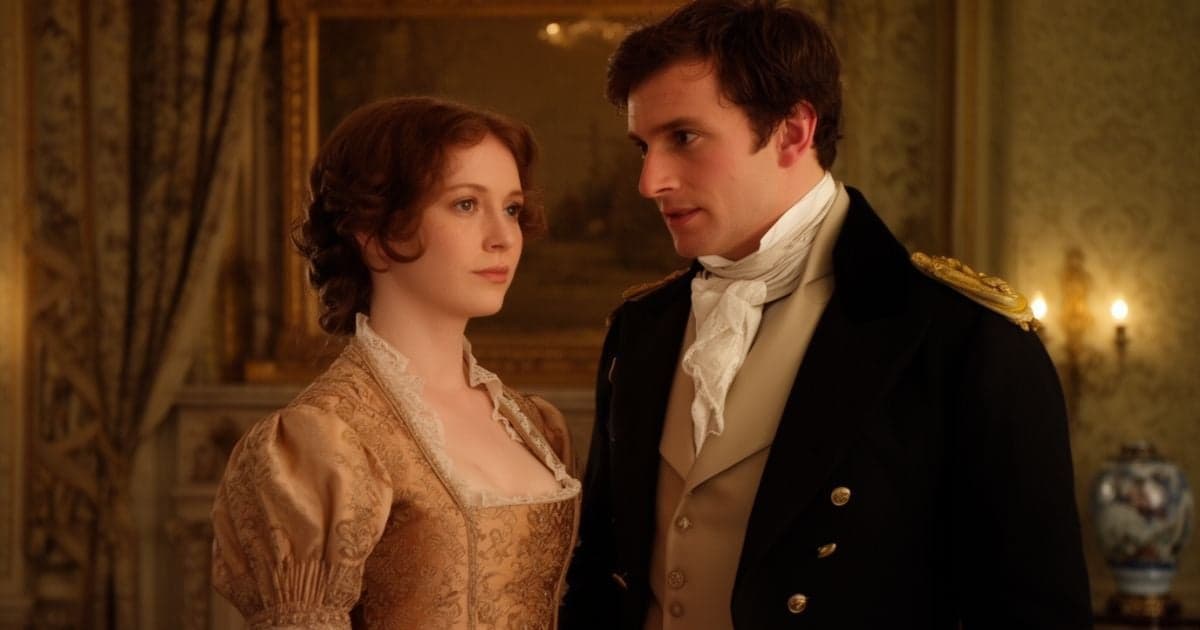
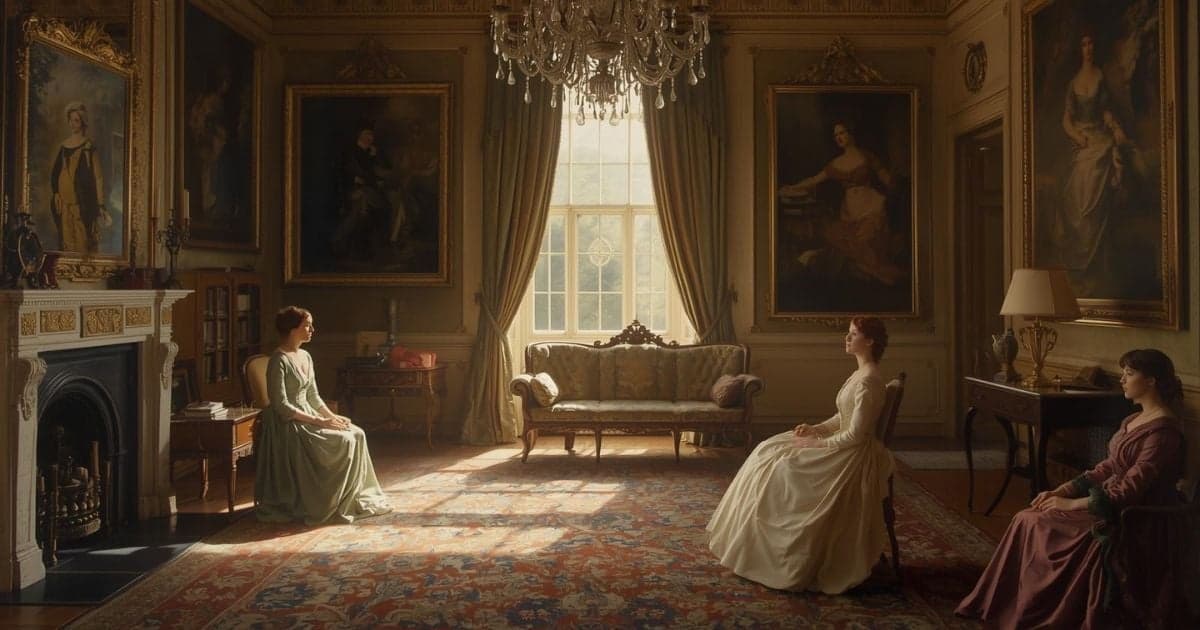
[Illustration] As no objection was made to the young people’s engagement with their aunt, and all Mr. Collins’s scruples of leaving Mr. and Mrs. Bennet for a single evening during his visit were most steadily resisted, the coach conveyed him and his five cousins at a suitable hour to Meryton; and the girls had the pleasure of hearing, as they entered the drawing-room, that Mr. Wickham had accepted their uncle’s invitation, and was then in the house. When this information was given, and they had all taken their seats, Mr. Collins was at leisure to look around him and admire,…
Public-domain chapter text, formatted for reading.
Master this chapter. Complete your experience
Purchase the complete book to access all chapters and support classic literature
Available in paperback, hardcover, and e-book formats
Now let's explore the literary elements.
Key Quotes & Analysis
"his being what he is. His father, Miss Bennet, the late Mr. Darcy, was one of the best men that ever breathed, and the truest friend I ever had; and I can never be in company with this Mr. Darcy without being grieved to the soul by a thousand tender recollections"
Context: After Elizabeth says she finds Darcy disagreeable, at the Philipses' lottery table
Wickham pairs praise of the father with pain at the son; emotional framing before the grievance.
In Today's Words:
When someone talks about how amazing their former boss was while throwing shade at the current leadership, you're hearing a setup. Wickham's playing the emotional card here, painting himself as the grieving protégé who lost his father figure. It's classic workplace drama where personal history becomes ammunition for professional grudges and reputation management.
"Yes--the late Mr. Darcy bequeathed me the next presentation of the best living in his gift. He was my godfather, and excessively attached to me"
Context: Explaining why he is not in the church though he was brought up for it
The core accusation of a broken promise that Elizabeth will treat as fact for much of the novel.
In Today's Words:
Here Wickham gets specific about his grievances. He claims Darcy promised him advancement or money that never came through. Picture a startup promising stock options that disappear, or a mentor who abandons you. Elizabeth hears what sounds like professional betrayal and believes every word without verification.
"Elizabeth went away with her head full of him. She could think of nothing but of Mr. Wickham, and of what he had told her, all the way home; but there was not time for her even to mention his name as they went"
Context: After the Philipses' party ends
The story's immediate grip; prejudice is now armed with narrative detail, not impression alone.
In Today's Words:
Elizabeth becomes totally absorbed in Wickham's story, mentally replaying each detail like rewatching a compelling documentary. The real danger lies in accepting one perspective without verification. She's constructing her entire judgment of Darcy based solely on Wickham's account, never pausing to consider alternative explanations or seek corroborating evidence from other sources.
"This is quite shocking! He deserves to be publicly disgraced."
Context: From the second half of the chapter
This line anchors the chapter's closing movement and shows how social pressure and private feeling collide in the scene.
In Today's Words:
In today's language, the passage says: This is quite shocking! He deserves to be publicly disgraced. Readers still recognize the same dynamic when pride, strategy, or family pressure turns a private moment into public consequence. The pattern still shows up in offices, families, and neighborhoods today, where the same pressure narrows what people can see
Thematic Threads
Prejudice and persuasion
In This Chapter
Elizabeth's dislike of Darcy meets Wickham's scripted history
Development
From Ch. XV's silent meeting to fixed narrative
In Your Life:
When has someone confirmed your negative view before you asked for evidence?
Appearance versus account
In This Chapter
Wickham's pleasing address versus Darcy's reported cruelty
Development
Elizabeth trusts the speaker she prefers
In Your Life:
Do you weigh who tells a story, or only how well they tell it?
Money and patronage
In This Chapter
Living, Rosings chimney-piece, five shillings at whist
Development
Class and cash shape every conversation
In Your Life:
Where do promises about jobs or introductions carry the same stakes as a living?
Family networks
In This Chapter
Lady Catherine, Miss de Bourgh, cousin marriage rumour
Development
Links Collins, Darcy, and Caroline Bingley's hopes
In Your Life:
When did gossip about who would inherit or marry reshape your view of a rival?
Double standards of pride
In This Chapter
Wickham on Darcy's pride helping the poor but harming him
Development
Complicates a simple villain reading—still one-sided
In Your Life:
Have you accepted a nuanced critique of someone you already disliked without hearing their side?
You now have the context. Time to form your own thoughts.
Discussion Questions
This is not a test. Five prompts guide you through the chapter, from how it opens to how it closes, so you notice context and rhythm rather than facts to memorize. Sit with each question in your own words. When you see "One way to read it," treat it as a starting point, not the only answer.
- 1
How does Mr. Wickham raise the subject of Mr. Darcy with Elizabeth at Mrs. Philips's, and what does she say about Darcy first?
analysis • surfaceOne way to read it
Wickham cites their cold meeting in the street and asks whether Darcy is generally so proud. Elizabeth says she has spent four days at Netherfield and finds him very disagreeable.
- 2
What story does Wickham tell about the living at Pemberley and the late Mr. Darcy?
analysis • mediumOne way to read it
He claims the late Mr. Darcy was his godfather, that he was intended for the church, and that the present Mr. Darcy denied him a valuable living out of jealousy and ill will.
- 3
When have you accepted someone's account of a conflict because it matched what you already believed about one party?
application • mediumOne way to read it
Think of siding with a coworker's story because you already disliked the manager, believing an ex's version because the other person had hurt you first, or Elizabeth remembering Darcy's boast of implacable resentment and finding Wickham's tale instantly credible.
- 4
Wickham reveals that Lady Catherine is Mr. Darcy's aunt and that a marriage with Miss de Bourgh may unite two estates. How does that detail connect two threads Elizabeth has heard separately?
application • deepOne way to read it
Collins's worship of Lady Catherine and Caroline's designs on Darcy suddenly share a family map. Elizabeth sees how rank, property, and marriage plans intertwine among people who seemed unrelated when she met them.
- 5
What does Elizabeth's ride home, unable to think of anything but Wickham's story, suggest about how a charming narrator can outrun evidence?
reflection • deepOne way to read it
Wickham offered names, facts, and a manner that felt truthful. Elizabeth has not heard Darcy's side, yet the story already occupies her mind completely, showing how quickly a preferred narrative can become certainty.
Critical Thinking Exercise
The Convenient Confession
Recall a time someone shared damaging personal history about a person you already disliked. What had you observed yourself first? What did their story add? Did you verify it before it changed your behaviour?
Consider:
- •Did they raise the topic or did you ask?
- •What would you have required as proof if the story had defended the person you disliked?
- •Who benefited from your believing the account immediately?
Coming Up Next...
Chapter 17: Chapter XVII
Elizabeth tells Jane everything Wickham said, and gentle Jane will try to believe both men innocent until facts force a choice. When someone offers the story behind a stare, it can feel like insight before it is proof.