Wide Reads
Literature MattersLife IndexEducators
Sign in
Where to Begin
Pride and Prejudice - Chapter 4

Jane Austen

Pride and Prejudice

Chapter 4

Home›Books›Pride and Prejudice›Chapter 4
Previous
4 of 61
Next

Summary

Chapter 4

Pride and Prejudice by Jane Austen

0:000:00
Listen to Next Chapter

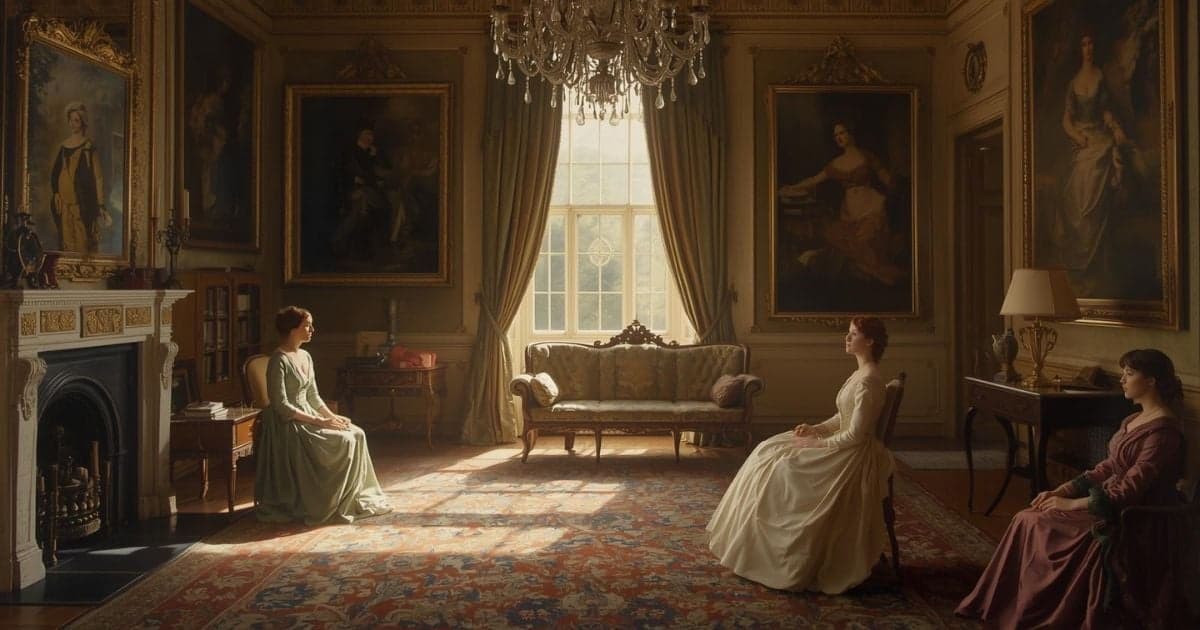
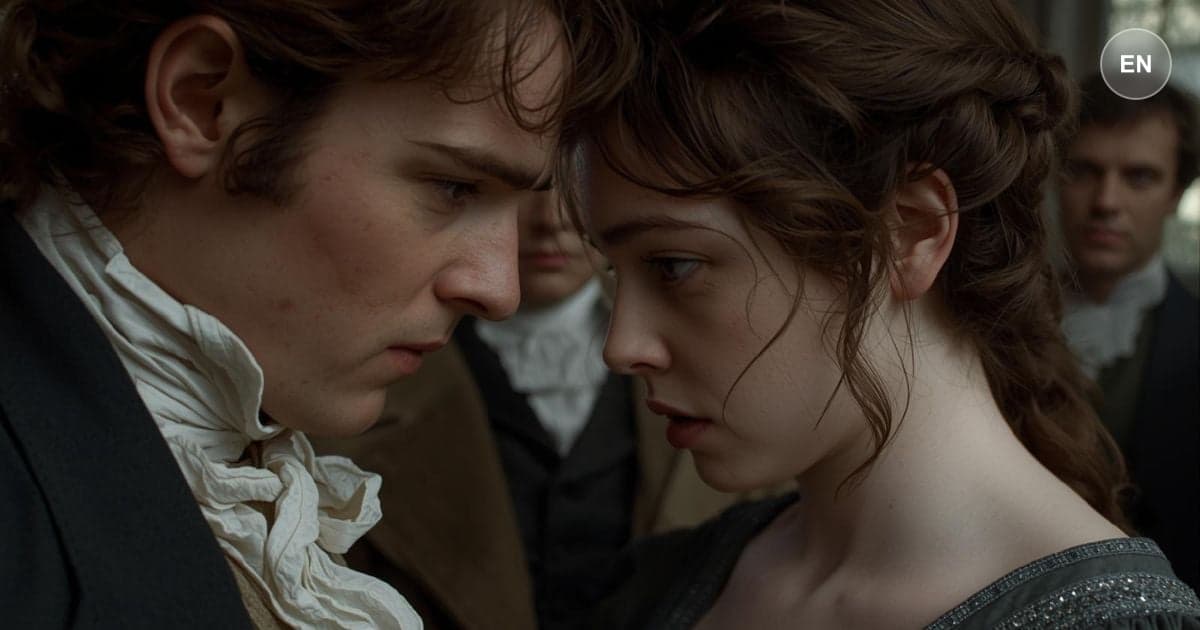
Jane and Elizabeth have a heart-to-heart about the Netherfield ball, and we get our first real look at how differently these sisters see the world. Jane, ever the optimist, insists that both Bingley sisters genuinely like her and that any coolness is just their natural reserve. Elizabeth, with her sharper eye for social dynamics, sees right through their fake friendliness and warns Jane that she's being too trusting. This conversation reveals a crucial pattern: Jane always assumes the best in people, while Elizabeth reads between the lines. Jane's determined to see good intentions everywhere, even when the evidence suggests otherwise. Elizabeth worries that her sister's kindness makes her vulnerable to manipulation. What makes this chapter significant is how it sets up the central tension between optimism and realism that will drive much of the story. Jane's generous nature is both her strength and her potential downfall - she can't imagine that people might smile to her face while working against her behind her back. Elizabeth's protective instincts kick in as she tries to shield her sister from disappointment, but she's fighting against Jane's fundamental belief that everyone means well. This dynamic between the sisters shows us two different ways of navigating social relationships: Jane's approach builds connections but leaves her exposed, while Elizabeth's skepticism protects her but might make her miss genuine goodness. The chapter also deepens our understanding of the Bennet family dynamics, showing how Elizabeth has taken on the role of Jane's protector, even when Jane doesn't think she needs protecting. Their bond is genuine, but their different worldviews will create challenges ahead.

Coming Up in Chapter 5

The Bennet household gets an unexpected visitor who brings news that will shake up everyone's assumptions about their neighbors. Someone's been keeping secrets, and the truth is about to come out.

Share it with friends

Previous ChapterNext Chapter
GO ADS FREE — JOIN US
Original text
complete·1,066 words
I

[llustration]

When Jane and Elizabeth were alone, the former, who had been cautious in her praise of Mr. Bingley before, expressed to her sister how very much she admired him.

“He is just what a young-man ought to be,” said she, “sensible, good-humoured, lively; and I never saw such happy manners! so much ease, with such perfect good breeding!”

“He is also handsome,” replied Elizabeth, “which a young man ought likewise to be if he possibly can. His character is thereby complete.”

“I was very much flattered by his asking me to dance a second time. I did not expect such a compliment.”

“Did not you? I did for you. But that is one great difference between us. Compliments always take you by surprise, and me never. What could be more natural than his asking you again? He could not help seeing that you were about five times as pretty as every other woman in the room. No thanks to his gallantry for that. Well, he certainly is very agreeable, and I give you leave to like him. You have liked many a stupider person.”

“Dear Lizzy!”

1 / 7

Master this chapter. Complete your experience

Purchase the complete book to access all chapters and support classic literature

Read Free on GutenbergBuy at Powell'sBuy on Amazon

As an Amazon Associate, we earn a small commission from qualifying purchases at no additional cost to you.

Available in paperback, hardcover, and e-book formats

GO ADS FREE — JOIN US

Why This Matters

Connect literature to life

Skill: Reading Social Manipulation

This chapter teaches how to spot the difference between genuine acceptance and strategic friendliness—a survival skill in any workplace or social group.

GO ADS FREE — JOIN US

Now let's explore the literary elements.

Key Quotes & Analysis

"You persist in supposing his sisters care for him."

— Elizabeth Bennet

Context: Elizabeth challenges Jane's assumption that the Bingley sisters genuinely want her to be happy.

This shows Elizabeth's ability to see through social pretense. She understands that the sisters' politeness masks their real agenda to separate Jane from their brother.

"I cannot make out so great a difference between you and your sister as you wish to represent."

— Jane Bennet

Context: Jane refuses to accept that she and Elizabeth judge people differently.

Jane's denial reveals how her optimistic nature protects her from painful truths but also leaves her unprepared for social manipulation. She can't imagine the calculating behavior Elizabeth sees clearly.

"They have none of them much to recommend them. They are all silly and ignorant like other girls; but Lizzy has something more of quickness than her sisters."

— Mr. Bennet

Context: Recalled conversation showing how Elizabeth is viewed within her own family.

This establishes Elizabeth's reputation for intelligence and sharp observation, explaining why she's more skeptical than Jane about people's motives.

Thematic Threads

Protective Love

In This Chapter

Elizabeth tries to warn Jane about the Bingley sisters' insincerity but Jane resists the warning

Development

Introduced here - establishes Elizabeth as Jane's protector

In Your Life:

When have you tried to protect someone you care about from people you sensed were fake, only to have them dismiss your concerns?

Social Deception

In This Chapter

The Bingley sisters maintain a facade of friendship while privately dismissing Jane

Development

Building from Chapter 3's introduction of their characters

In Your Life:

Have you ever maintained a friendly facade with someone while privately judging or dismissing them based on their background or status?

Optimism vs Realism

In This Chapter

Jane assumes good intentions while Elizabeth reads social undercurrents

Development

Deepens from earlier hints about their different personalities

In Your Life:

Do you tend to give people the benefit of the doubt like Jane, or do you read between the lines and trust your gut instincts like Elizabeth?

Class Barriers

In This Chapter

The sisters' condescension reflects their sense of social superiority over the Bennets

Development

Continues from established class tensions

In Your Life:

When have you caught yourself feeling superior to others based on your education, income, or social circle?

Sisterly Bonds

In This Chapter

Jane and Elizabeth's honest conversation reveals their deep connection despite different worldviews

Development

Evolving from their established closeness in earlier chapters

In Your Life:

How do you handle it when you and a close friend or sibling see the same situation completely differently?

You now have the context. Time to form your own thoughts.

Discussion Questions

  1. 1

    What does Jane believe about the Bingley sisters' feelings toward her, and what evidence does Elizabeth point to that suggests otherwise?

  2. 2

    Why does Jane resist Elizabeth's warnings about the Bingley sisters, even when Elizabeth provides specific examples of their coldness?

  3. 3

    Think about your own relationships - when have you seen someone dismiss warnings about a person who was clearly using or manipulating them?

  4. 4

    If you were in Elizabeth's position, how would you help Jane see the truth without making her defensive or damaging your relationship?

  5. 5

    What does this chapter reveal about the challenge of protecting people we love when they don't want to be protected?

Critical Thinking Exercise

Map Your Warning System

Think of a time when someone tried to warn you about a person or situation, but you resisted their advice. Write down what they said, why you dismissed it, and what eventually happened. Then flip it: recall a time when you tried to warn someone else but they wouldn't listen. What patterns do you notice about how warnings are given and received?

Consider:

  • •Consider how the relationship between warner and warned affects whether advice is accepted
  • •Notice whether warnings were given as direct statements or gentle questions
  • •Reflect on what it takes for someone to become ready to hear difficult truths about people they care about

Coming Up Next...

Chapter 5

The Bennet household gets an unexpected visitor who brings news that will shake up everyone's assumptions about their neighbors. Someone's been keeping secrets, and the truth is about to come out.

Continue to Chapter 5
Previous
Chapter 3
Contents
Next
Chapter 5

Continue Exploring

Pride and Prejudice Study GuideTeaching ResourcesEssential Life IndexBrowse by ThemeAll Books
Social Class & StatusLove & RelationshipsIdentity & Self-Discovery

You Might Also Like

Great Expectations cover

Great Expectations

Charles Dickens

Explores personal growth

Anna Karenina cover

Anna Karenina

Leo Tolstoy

Explores society & class

The Great Gatsby cover

The Great Gatsby

F. Scott Fitzgerald

Explores personal growth

Jane Eyre cover

Jane Eyre

Charlotte Brontë

Explores personal growth

Browse all 47+ books

Share This Chapter

Know someone who'd enjoy this? Spread the wisdom!

TwitterFacebookLinkedInEmail

Read ad-free with Prestige

Get rid of ads, unlock study guides and downloads, and support free access for everyone.

Subscribe to PrestigeCreate free account
Intelligence Amplifier
Intelligence Amplifier™Powering Wide Reads

Exploring human-AI collaboration through books, essays, and philosophical dialogues. Classic literature transformed into navigational maps for modern life.

2025 Books

→ The Amplified Human Spirit→ The Alarming Rise of Stupidity Amplified→ San Francisco: The AI Capital of the World
Visit intelligenceamplifier.org
hello@widereads.com

WideReads Originals

→ You Are Not Lost→ The Last Chapter First→ The Lit of Love→ Wealth and Poverty→ 10 Paradoxes in the Classics · coming soon
Arvintech
arvintechAmplify your Mind
Visit at arvintech.com

Navigate

  • Home
  • Library
  • Essential Life Index
  • How It Works
  • Subscribe
  • Account
  • About
  • Contact
  • Authors
  • Suggest a Book
  • Landings

Made For You

  • Students
  • Educators
  • Families
  • Readers
  • Literary Analysis
  • Finding Purpose
  • Letting Go
  • Recovering from a Breakup
  • Corruption
  • Gaslighting in the Classics

Newsletter

Weekly insights from the classics. Amplify Your Mind.

Legal

  • Privacy Policy
  • Terms of Service
  • Cookie Policy
  • Accessibility

Why Public Domain?

We focus on public domain classics because these timeless works belong to everyone. No paywalls, no restrictions—just wisdom that has stood the test of centuries, freely accessible to all readers.

Public domain books have shaped humanity's understanding of love, justice, ambition, and the human condition. By amplifying these works, we help preserve and share literature that truly belongs to the world.

A Pilgrimage

Powell's City of Books

Portland, Oregon

If you ever find yourself in Portland, walk to the corner of Burnside and 10th. The building takes up an entire city block. Inside is over a million books, new and used on the same shelf, organized by color-coded rooms with names like the Rose Room and the Pearl Room. You can lose an afternoon. You can lose a weekend. You will find a book you have been looking for your whole life, and three you did not know existed.

It is a pilgrimage. We cannot find a bookstore like it anywhere on earth. If you read the classics, and you ever get the chance, go. It belongs on every reader's bucket list.

Visit powells.com

We are not in any way affiliated with Powell's. We are just a very big fan.

© 2026 Wide Reads™. All Rights Reserved.

Intelligence Amplifier™ and Wide Reads™ are proprietary trademarks of Arvin Lioanag.

Copyright Protection: All original content, analyses, discussion questions, pedagogical frameworks, and methodology are protected by U.S. and international copyright law. Unauthorized reproduction, distribution, web scraping, or use for AI training is strictly prohibited. See our Copyright Notice for details.

Disclaimer: The information provided on this website is for general informational and educational purposes only and does not constitute professional, legal, financial, or technical advice. While we strive to ensure accuracy and relevance, we make no warranties regarding completeness, reliability, or suitability. Any reliance on such information is at your own risk. We are not liable for any losses or damages arising from use of this site. By using this site, you agree to these terms.