
El Filibusterismo
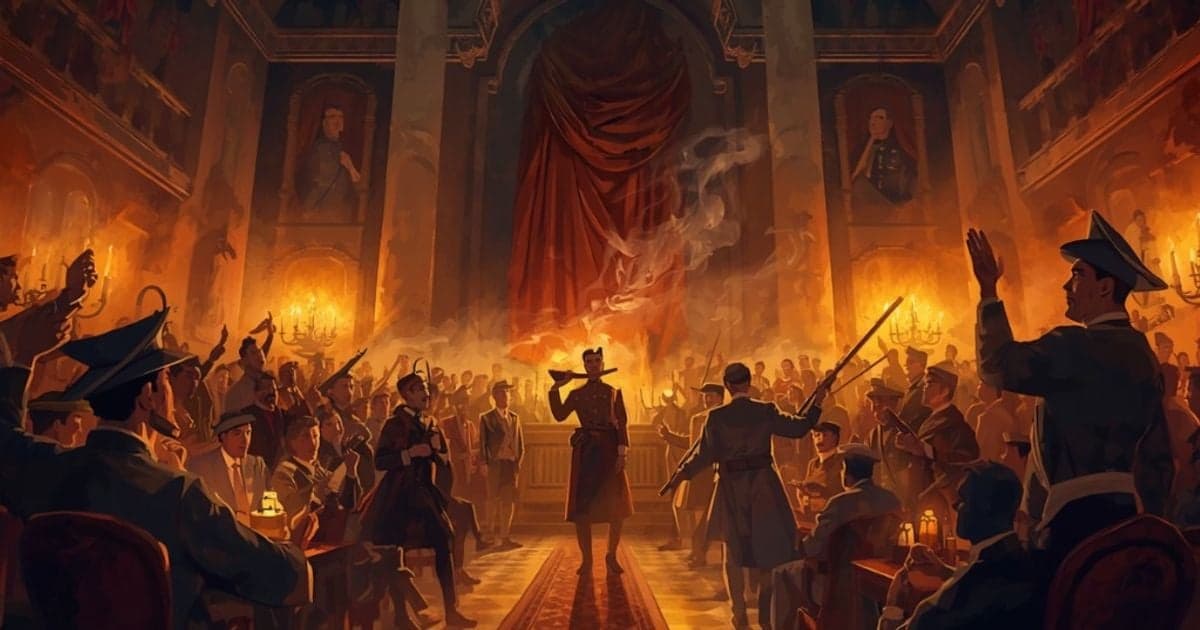
One December morning the steamer Tabo crawls up the Pasig while friars on the upper deck joke that the boat is the Ship of State: noisy, stuck on sandbars, and split between a cool awning and a lower deck full of brown faces who pole the hull through the same curves every day. Among them sits a jeweler named Simoun, pale beneath blue goggles, who proposes to dig a canal through Manila, fill the old river, and use prisoners and villagers like pyramid builders if anyone objects. Rizal published El Filibusterismo in Ghent in 1891 as the sequel to Noli Me Tángere. The title names what Spanish law already feared: filibusterism, the crime of asking for change too loudly. The novel opens as satire and ends as a question about what patience is worth once reform has already failed.
Simoun is Crisóstomo Ibarra returned after thirteen years on the lake where Elias once spent his body so the younger man could live. He is rich enough to rent influence, wounded enough to stockpile fuses, and careful enough to sell jewels to the same officials he plans to ruin. Basilio, once the boy at Sisa's side, is now a medical student who tends Capitan Tiago while opium and friar flattery finish what grief began. Isagani still loves Paulita Gomez while her aunt Doña Victorina performs Europe on her hair and hunts a husband who fled her temper. Padre Florentino, Isagani's uncle, keeps a native priest's dignity without needing the friars' table. Ben-Zayb turns every river legend into a column. Señor Pasta tells each side to lose quietly. The cast is Noli's survivors, older and less sure that petitions will be read.
The middle of the book turns on education and visibility. Students collect centavos for a Castilian academy and wait on a friar's permit while Simoun smirks from the steerage deck. Placido Penitente walks out of a physics class that teaches obedience instead of inquiry. Pasquinades name hypocrisy on cathedral walls, and the cells answer curiosity with charges. Cabesang Tales clears forest land with his family's labour, then watches a religious corporation raise the rent each harvest until courts side with the friars and rifles disarm the farmer piece by piece. His daughter Juli sells her freedom to ransom a father the law will not protect. Quiroga's Chinese merchant learns the same lesson in another accent: under colonial rule, profit buys no safety.
Simoun's plot moves toward a wedding at the cathedral, a lamp rigged with a fuse, and a performance at the theatre where laughter and smoke hide who will burn. Love, rain, and conscience interfere. A high official arrives too late. A corpse in the street becomes gossip before it becomes justice. Rizal wrote in Spanish so the ruling class could not claim misunderstanding, then sent the book home to be banned. When the Katipunan rose in 1896 he opposed armed revolt, yet a military court executed him for what he had written. The novel keeps that tension alive. Simoun's conspiracy is not Rizal's prescription. Padre Florentino's refusal to bless the explosion is.
When Reform Runs Out follows Simoun from the upper deck to the jeweler's workshop, where Europe's library has already failed. Resistance Versus Revenge tracks the fuse, the wedding, and the priest who hides the jewels for a future hand that might spend them without becoming greed. Education as Control sits in the physics class, the student house, and the cells that answer a petition with a charge. Colonial Performance watches Doña Victorina, Ben-Zayb, and the Ship of State joke that smoke equals progress. Grief That Hardens stays with Basilio, Juli, and Capitan Tiago after hope stops answering from the powerful. Naming Systemic Greed reads Cabesang Tales's land, the Chinese merchant's tribulations, and the ultimatum that arrives when pasquinades name the friar before the governor can.
Thirty-nine chapters in Charles E. Derbyshire's public-domain English, the same translator as Noli Me Tángere, move from the Tabo's upper deck to the sea where Padre Florentino improvises a requiem and decides what to do with a dead man's treasure. Pair this book with Noli if you want the full argument: first how a schoolhouse fails, then what temptation looks like when the schoolhouse is already ash. Wide Reads offers chapter summaries, verified quotes, discussion questions, and theme lessons for every chapter, with no paywall on the text.
Lessons from El Filibusterismo
Six lessons from this classic novel.
Lessons from El Filibusterismo
Six lessons from this classic novel.Deep dives
Chapter-by-chapter breakdowns
Education as Control
Sit in Placido's walkout, the look-but-touch-not physics class, and Bilibid after pasquinades to see when schools train obedience and cells finish the lesson.
from day to day we're expecting the permit
Colonial Performance
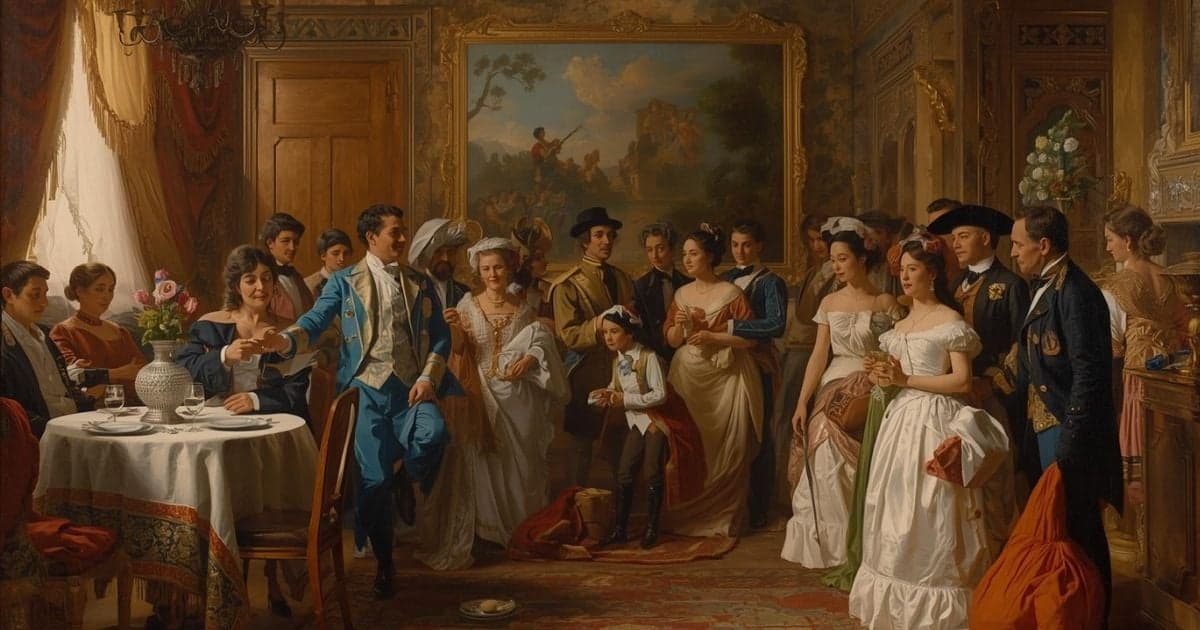
Read Doña Victorina, Ben-Zayb, and the Ship of State joke as survival costumes that rent approval upstairs while the lower deck still poles the hull.
if there were not a single Indian in the world
Table of Contents
On the Upper Deck
The whistle on the Tabo shrieks hoarse and commanding, like a tyrant who rules by shouting, until no...
On the Lower Deck
There, below, other scenes were being enacted. While the awning crowd still traded port plans in coo...
Legends
Ich weiss nicht: Rizal opens chapter three with the Lorelei melancholy before Padre Florentino climb...
Cabesang Tales
Those who have read the first part of this story will perhaps remember the woodcutter Tandang Selo; ...
A Cochero's Christmas Eve
Basilio reaches San Diego on Christmas Eve just as the procession blocks the street, hours late beca...
Basilio
Simoun
Over Tales' kidnapping and the curate's refusal to bury Selo, Basilio keeps his yearly vigil at Sisa...
Merry Christmas
Juli wakes before dawn on Christmas still hoping the Virgin might stop the sun or drop two hundred a...
Pilates
Word spreads that Tandang Selo has gone dumb and Juli is bound to service, and the town splits betwe...
Wealth and Want
The day after Pilates, Simoun arrives at Cabesang Tales' door with two chests and servants, asking h...
Los Baños
At Bosoboso the Captain-General hunts with a brass band and a tail of friars, soldiers, and clerks, ...
Placido Penitente
The Class in Physics
Rizal opens in the University of Santo Tomas physics hall, the Dominican college in Manila: bright w...
Common Questions About El Filibusterismo
Trending search questions mapped to the six lessons in this sequel—what readers actually ask Google about Simoun, reading Noli first, why Spanish authorities banned the book, the ending with Padre Florentino, and what changes when reform runs out.
What is El Filibusterismo about?
Thirteen years after Noli Me Tángere, the jeweler Simoun returns to Manila with money and a conspiracy. Basilio is now a medical student marked by his mother's madness. Students who ask for a useful school are jailed for pasquinades. Rizal published the novel in Ghent in 1891 to ask what happens when reform is answered with cells and fuses, not schools.
Explore When Reform Runs OutWho is Simoun in El Filibusterismo?
Simoun is Crisóstomo Ibarra returned in disguise, rich enough to buy influence after Europe ignored Noli's argument. He stockpiles weapons and plans an explosion at a cathedral wedding. When the plot fails he dies, and Padre Florentino refuses to bless revenge. The novel treats his conspiracy as a diagnostic of exhausted patience, not as Rizal's prescription for liberation.
Explore Resistance Versus RevengeDo I need to read Noli Me Tángere before El Filibusterismo?
The sequel stands alone, but the pair is stronger together. Noli shows Ibarra believing a schoolhouse can repair San Diego; Fili shows the same world answering petitions with planted charges and jailed students. Basilio, Capitan Tiago, and Padre Salvi carry Noli's wounds into this plot.
Explore Grief That HardensWhy was El Filibusterismo banned?
Spanish authorities treated filibusterism as sedition, and Rizal's sequel names colonial greed with the same precision as Noli: friar land grabs, controlled universities, and a wedding lamp meant to kill officials and friars together. The dedication to the executed priests Gómez, Burgos, and Zamora was itself used against him at trial.
Explore Naming Systemic GreedHow does El Filibusterismo portray education and student protest?
Students collect centavos for a Castilian academy and wait on a friar's permit while Simoun smirks from the steerage deck. Placido Penitente walks out of a physics class that teaches obedience instead of inquiry, and pasquinades on cathedral walls are answered with cells. Rizal treats the university as a gate the friars control, not a ladder that automatically frees a colony.
Explore Education as ControlWhat life lessons does El Filibusterismo teach?
Six lessons run through the sequel: patience has a cost when reform channels close; resistance must be distinguished from revenge; education becomes control when curiosity is punished; colonial subjects perform Europe to survive; grief can harden into conspiracy; and greed survives by renaming rent as piety or law. Those skills are why the book still travels with Noli in schools worldwide.
About José Rizal
Published 1891
José Rizal (1861-1896) was born in Calamba, Laguna, the seventh of eleven children in a Filipino family living under Spanish colonial rule. He trained as a doctor and ophthalmologist in Manila and Madrid, spoke more than twenty languages, and spent much of his adult life in European exile writing, sculpting, and arguing for lawful reform while friar power at home stayed unchanged.
Noli Me Tángere (1887) named extraction and hypocrisy with enough precision that authorities banned it on sight, yet copies still moved hand to hand. In Ghent in 1891 he wrote El Filibusterismo as the sequel's darker half: Simoun's returned grief, the student strike, Cabesang Tales's land, and Padre Florentino's refusal to bless a fuse. He wrote in Spanish so the ruling class could not claim misunderstanding, then watched both novels treated as rebellion in print.
When the Katipunan rose in 1896 Rizal opposed armed revolt, yet a military court convicted him and executed him at thirty-five after he smuggled out a farewell poem. Filipino schools still teach the pair as one argument: Noli tests whether reform can survive the system, Fili tests what patience costs once it cannot, and the execution asked whether a writer could be separated from the revolt his clarity helped start.
Why José Rizal Matters Today
Rizal speaks to the moment when patience has been answered with jail cells and you must decide whether the next move is repair, exposure, or revenge. El Filibusterismo puts Simoun's fuse and Padre Florentino's refusal in the same book so readers cannot treat explosion as the only honest response after reform fails.
He wrote the sequel in Ghent in 1891 after Noli had already been banned and circulated underground. Basilio, Capitan Tiago, and the students who ask for a useful school carry the first novel's wounds into a plot that is darker because the author no longer pretends a schoolhouse alone will outrun friar power. Rizal had trained as a doctor, operated on his own mother's eyes, and spent years in Europe watching how colonial power actually moved before he staged that argument on the Tabo's upper deck.
Rizal opposed armed revolt when the Katipunan rose in 1896, yet was executed for what he wrote. The pair of novels still travels together in Philippine schools because Noli names the machine and Fili names the temptation to blow it up, while Florentino names the cost. The common mistake is to treat Simoun as the author's prescription; the book keeps Florentino on the shore so you cannot finish it without asking who should hold the treasure next.
More by José Rizal in Our Library
Wide Reads is different.
Plot, characters, and themes — plus audio, source text, and patterns you can use after class
Two ways in
Read & listen to the summary
Chapter by chapter, with audio. The meaning arrives because you experienced it — not because someone listed bullet points.
Start with this.
Read the original text
The actual words the author wrote, alongside every summary. Use the guide, then step into the source.
Then step into the source.
Either way, the door opens inward.
— and most of all, Why does this matter?
Get the Full Book
Purchase the complete book to access all chapters and support classic literature

Available in paperback, hardcover, and e-book formats
You Might Also Like

Free to read • No account required