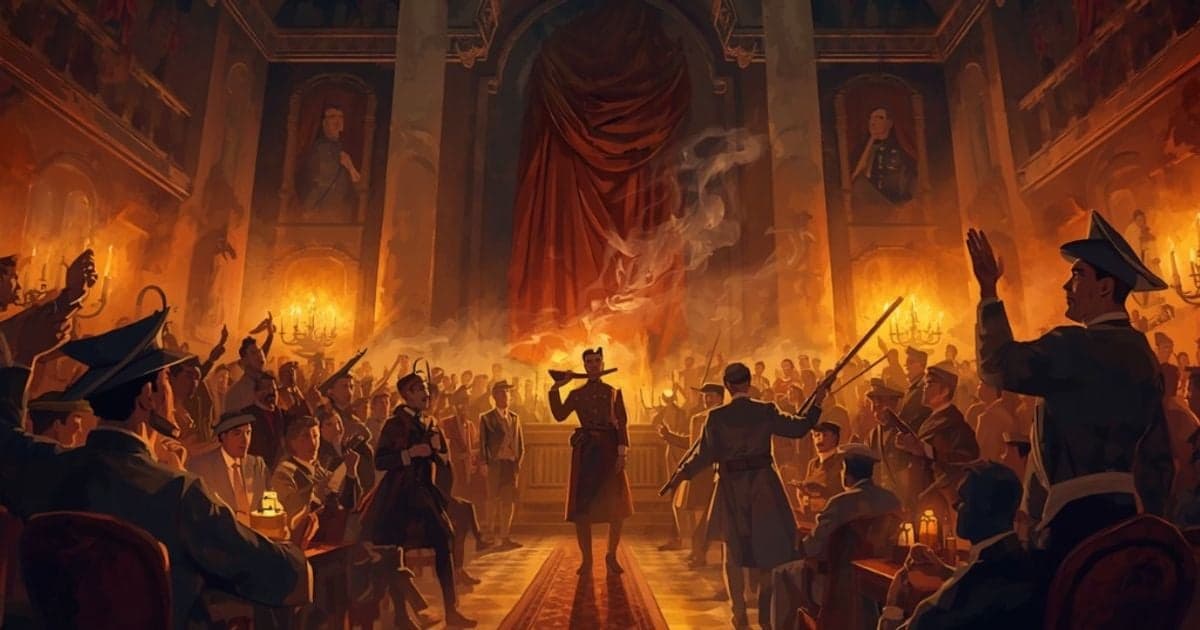
While bells call San Diego to midnight mass and sleepers curse the noise from their beds, Basilio slips out of Capitan Tiago's house, walks the streets twice to shake off any follower, then turns onto unfrequented paths toward the Ibarras wood Tiago bought when the family's land was confiscated. A waning Christmas moon barely touches the brook, tangled lianas, and the balete in a crumbling enclosure where a mound of stones marks his mother. He takes off his hat, as he always does before any other duty in town; tomorrow he owes Cabesang Tales' family, but tonight grief comes first, and his past rises like a long film, rosy at first, then spotted with blood, then grey, toward a dawn still hidden in cloud.
Thirteen years ago, almost to the hour, Sisa died there mad and fleeing her wounded son on a night when the Christian world rejoiced. A stranger ordered a pyre; another helped bury her and paid Basilio to leave, the tall man with blood-shot eyes he would not name again until Simoun. Alone, he fled San Diego toward Manila, eating forest fruit and hiding from Civil Guard uniforms, once nearly throwing himself under silver carriages until he tracked Capitan Tiago on the day Maria Clara entered the nunnery and was taken in as unpaid servant with leave to study at San Juan de Letran.
In clogs and rags he memorised Latin without understanding while a handsome Dominican frowned and never questioned him beyond roll call; classmates boasted that college meant memorising the book, not thinking. He passed exams reciting like a machine; a game-cock tip bought shoes and a felt hat but could not buy notice until a joke-loving friar called him parrot and quizzed him for sport, then shunned him when he answered seriously, because in a college that treats knowledge as danger for natives, the boy who will not clown becomes suspect. Only when a poet-professor sent collegians to brawl with cadets did Basilio's courage make him a favourite and win medals.
Capitan Tiago, vexed with friars since his daughter's veil, moved him to the Ateneo where one year compressed five years of instruction; a Dominican inspector smiled that he was not bad, in Latin. Medicine followed, Tiago hoping for poison for his game-cocks; Basilio earned fees, saved, and dreamed of marrying Juli and delivering a valedictory that would aid poor students and face the carriages that once nearly crushed him. He sits at Sisa's grave with that speech still rehearsing in his head on the Christmas Eve he learned Tales was taken and Selo will not be buried as a pauper. How can a graduation oration promise justice to students tomorrow when the town tonight cannot ransom the father of the girl he hoped to marry?