
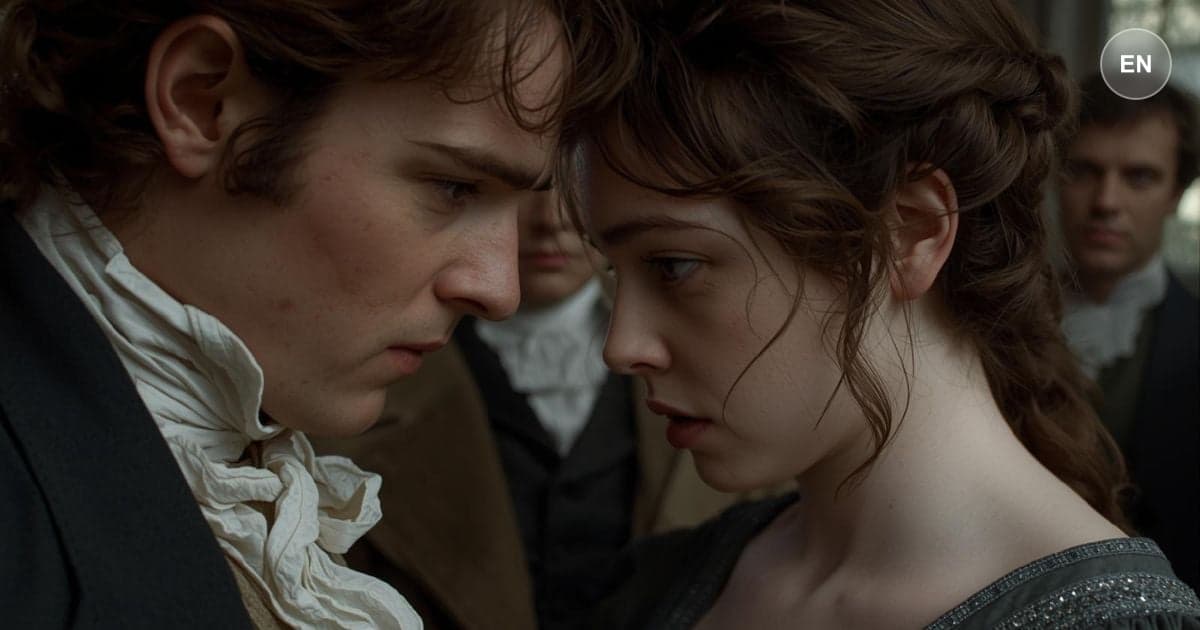
Pride and Prejudice is a novel about people performing. Collins performs devotion to Lady Catherine. Wickham performs wounded innocence. Caroline Bingley performs friendship while nursing jealousy. Lady Catherine performs condescension as if it were generosity. Even Darcy and Elizabeth perform confidence, wit, and indifference long after their feelings have outgrown the script.
Austen never suggests that manners are worthless. Propriety keeps society functioning, and genuine warmth often travels through polite forms. The skill she teaches is discrimination: knowing when civility expresses real regard and when it is a tool for access, advantage, or control.
Elizabeth learns this lesson painfully. She trusts Wickham because his performance confirms her prejudice. She misreads Darcy because his reserve violates the script she expects. Only when performances drop, in the letter, at Pemberley, and in the second proposal, can she see who people actually are.
The Central Lesson
Civility is not the same as character. Austen fills her novel with people who perform regard beautifully while pursuing their own advantage. The skill is learning to read the performance without becoming cynical about all manners. Sincere people exist, but they are often quieter, less rehearsed, and less immediately gratifying than the Wickhams and Collinses of the world. Wait for the unguarded version.
Applying This to Your Life
Watch the Gap Between Rooms
Notice how people behave in public versus private. Caroline is civil to Jane in company and cruel in letters. Collins is obsequious at Rosings and self-important at Longbourn. The gap between performances is often where the truth lives.
Ask What the Compliment Is For
When someone flatters you, praises your enemy, or confides a grievance too quickly, ask what the performance is buying. Wickham gains Elizabeth's trust. Collins gains Lady Catherine's approval. Caroline gains proximity to Darcy. Warmth with an agenda still feels like warmth until you look for the motive.
Trust the Unrehearsed Moment
Fitzwilliam's slip, Darcy's letter, and the second proposal all work because they are unscripted. The servants at Pemberley describe Darcy without performance. Seek the moments when people forget to manage your impression. That is usually when you see them clearly.
Other lessons in this book
More life-skill deep dives from the same classic.
Challenging First Impressions
When First Impressions Become Prisons
Revise quick judgments when new evidence arrives, from the assembly room to Pemberley and the letter.
21 chapters·Explore AnalysisDeveloping Self-Awareness
From Confident Certainty to Humbling Self-Knowledge
Track Elizabeth's admission that she was blind, vain, and prejudiced, and how honesty unlocks change.
19 chapters·Explore AnalysisNavigating Social Class Pressure
When Class Shapes Every Choice
Read how money, entail, and rank shape every marriage choice in the novel.
25 chapters·Explore AnalysisRecognizing When Pride Masks Vulnerability
When Pride Becomes Armor
Notice when confidence is protecting insecurity, as Elizabeth and Darcy both learn after their first meeting.
12 chapters·Explore AnalysisSetting Boundaries Under Family Pressure
When No Means Negotiate
Hold to a clear no when refusal is treated as negotiation, as with Collins and Lady Catherine.
12 chapters·Explore Analysis
Continue exploring
Explore this theme
The same lessons in other books
See how other books teach the same life skills.
Persuasion
Navigating Social DeclineWatch Kellynch go to the Crofts while Wentworth rises, and carry worth without performing the rank you lost.Persuasion
Distinguishing Prudence from PersuasionTell Lady Russell's caution from fear dressed as sense, then refuse the same music when it returns as Mr. Elliot.
Sense and Sensibility
Balancing Emotion and ReasonEach Defense Has a CostWatch Elinor carry Barton in silence and Marianne refuse to moderate a feeling, then see what each defense costs by Cleveland.
Where the lesson lives in the book
Two Performances at the Assembly
At the Meryton ball, Bingley dances with everyone and wins the room while Darcy refuses to be introduced and dismisses Elizabeth within her hearing. The contrast is stark: one man performs warmth as social duty, the other performs superiority as self-protection. The neighbourhood forms its verdict on manners alone.
Key Insight:
We often judge character by public performance before we have any private evidence. Bingley's easy civility reads as goodness; Darcy's cold reserve reads as contempt. Austen shows that both readings may be wrong, but the performance still sets the story in motion.
“She is tolerable; but not handsome enough to tempt me.”
Visits in Due Form
The Longbourn and Netherfield ladies exchange visits with elaborate propriety while Charlotte Lucas advises Elizabeth that a woman had better show more affection than she feels. Social life runs on scripted gestures: who calls first, who waits, who performs regard they do not quite mean.
Key Insight:
Country society in Austen operates on rituals that look like sincerity but often function as strategy. Charlotte's advice is pragmatic, not cynical: in a world where feeling must be inferred from performance, underplaying your interest can cost you everything.
“In nine cases out of ten, a woman had better show more affection than she feels.”
Hospital Visit as Social Theater
What should be a private call about Jane's health becomes a spectacle of Lydia and Kitty's manners, Mrs. Bennet's marriage calculations, and Caroline Bingley's polished contempt delivered with a smile.
Key Insight:
Performative civility is often class performance in both directions—Mrs. Bennet's desperation and Caroline's polished disdain are both scripts about who belongs in the room.
Caroline Bingley's Polished Performance
Elizabeth joins the Netherfield drawing room while Darcy writes and Caroline hovers over his shoulder, praising his penmanship, offering flattery, and trying to belittle Elizabeth by reading aloud from Jane's letters.
Key Insight:
When civility is deployed for access—to a man's attention, to rank, to exclusion of a rival—it reads differently from plain regard. Caroline's every compliment is a move on the board.
Collins and the Art of Flattery
Mr. Collins spends the evening praising Lady Catherine with rehearsed eloquence while Mr. Bennet asks whether these pleasing attentions proceed from the impulse of the moment or the result of previous study. Collins cannot tell the difference between servility and sincerity because the performance is his identity.
Key Insight:
Performative civility often borrows someone else's authority. Collins speaks in Lady Catherine's voice because her approval is his only measure of worth. Watch for people whose compliments sound memorized, or whose warmth arrives only when a patron is watching.
“May I ask whether these pleasing attentions proceed from the impulse of the moment, or are the result of previous study?”
Wickham's Rehearsed History
At Mrs. Philips's, Wickham raises Darcy himself and tells Elizabeth a detailed tale of betrayal: godfather, church living, cruel denial. His manner is so open, so apparently reluctant, that Elizabeth never asks why a near-stranger would confide such intimacy to her so quickly.
Key Insight:
The most dangerous performances are the ones that look like vulnerability. Wickham's story feels true because it confirms what Elizabeth already wants to believe. Charm plus a grievance is one of literature's oldest masks, and one of the hardest to see through in the moment.
“His father, Miss Bennet, the late Mr. Darcy, was one of the best men that ever breathed, and the truest friend I ever had.”
The Ball's Competing Scripts
At the Netherfield ball, Collins introduces himself to Darcy despite Elizabeth's protest and misreads Darcy's distant civility as warmth. Caroline Bingley offers a competing narrative on Wickham's parentage while Mrs. Bennet performs her hopes aloud and Mary performs her accomplishments twice. Everyone is on stage.
Key Insight:
In a single crowded room, multiple performances collide and the audience must choose which script to trust. Elizabeth trusts Wickham's version because it fits her prejudice. Collins trusts Darcy's civility because he needs it to be warmth. Neither reads what is actually there.
“Heaven forbid! That would be the greatest misfortune of all! To find a man agreeable whom one is determined to hate.”
Collins Shifts His Script
After Elizabeth refuses him, Mr. Collins stays stiff and silent with her but pays assiduous attentions to Charlotte Lucas. His warmth was never personal—it was always a role that could be redirected to whichever woman would accept the part.
Key Insight:
When someone's civility moves instantly from you to your friend, you are watching performance, not feeling. Collins does not mourn Elizabeth; he recasts his flattery because the script was always about securing a wife, not knowing a person.
Caroline Bingley's Polite Cruelty
Caroline Bingley's letter announces the Netherfield party settled in London for the winter with no plan to return. Jane reads regret and kindness; Elizabeth reads a performance designed to close a door while sounding sympathetic.
Key Insight:
The most effective social performances sound like concern. Caroline's letter never says Jane should give up—it simply arranges the facts so that giving up feels like good manners. Civility can wound without raising its voice.
“I depend on you for that; and to Jane, who had been only half a listener, it was a letter of the most formal apology.”
Wickham's Perfect Goodbye
Elizabeth's parting with Wickham is perfectly friendly on both sides. He reminds her of Lady Catherine and leaves her convinced he must always be her model of the amiable and pleasing—right before she travels toward the truth at Hunsford.
Key Insight:
A charming farewell can seal a false first impression as firmly as a first meeting. Wickham performs warmth so well that Elizabeth carries his version of Darcy into Kent. The performance works because it feels unforced—which is exactly the point.
Lady Catherine's Condescension
At Rosings, Lady Catherine receives the party with elaborate condescension and talks without intermission, questioning Elizabeth impertinently about her sisters, accomplishments, and age. Her civility is a weapon: every polite question is an assertion of rank, every compliment a reminder of who holds power.
Key Insight:
Performative civility from above often masquerades as interest while functioning as surveillance. Lady Catherine's questions feel like conversation but operate as inspection. When someone powerful asks about your family, income, or plans, they may be performing concern while gathering leverage.
“He is a gentleman; I am a gentleman's daughter; so far we are equal.”
Collins Reports Every Carriage
At Hunsford, Charlotte has arranged the house so Collins keeps to his book room facing the road, reporting every carriage—especially Miss de Bourgh's phaeton. Lady Catherine visits and inspects the parsonage like a magistrate while Collins performs gratitude for their extraordinary advantage.
Key Insight:
Some people turn civility into surveillance. Collins's constant reporting and Lady Catherine's inspections are performances of deference that also function as control—every polite visit is a reminder of who holds rank.
The Unguarded Slip
Walking in the park with Colonel Fitzwilliam, Elizabeth learns by accident that Darcy recently saved a friend from an imprudent marriage. Fitzwilliam speaks easily, without strategy, and does not realize he has confirmed Elizabeth's worst fears about Darcy's interference in Jane's happiness.
Key Insight:
Unguarded honesty is the foil to performative civility. Fitzwilliam's loose tongue reveals what Darcy's stiff reserve concealed. The contrast teaches Elizabeth to weigh not just what people say, but whether they are performing a role or simply telling the truth without calculation.
“I do not see what right Mr. Darcy had to decide on the propriety of his friend's inclination.”
Indispensable Parting Civilities
On her last morning at Hunsford, Collins delivers indispensable parting civilities at breakfast: grateful for Elizabeth's condescension, sorry their humble rooms could not tempt her, proud that Rosings introduced her to superior society.
Key Insight:
Gratitude can be a performance that flatters the speaker more than the listener. Collins's farewell speech is rehearsed flattery dressed as humility—and Elizabeth must receive it with civility while knowing exactly what Charlotte has married into.
Caroline's Barbed Pleasantries
At Pemberley, Miss Bingley attacks Elizabeth with veiled insults about the militia and her looks while Darcy listens. Caroline's civility is malice in evening dress. Darcy answers by declaring Elizabeth one of the handsomest women of his acquaintance, and the performance collapses.
Key Insight:
When civility is deployed to wound, composure is the best response. Elizabeth does not need to match Caroline's performance because Darcy's unscripted defense speaks louder. Sometimes the person performing warmth is the one doing damage, and the person staying quiet is the one telling the truth.
“for it is many months since I have considered her as one of the handsomest women of my acquaintance.”
Shameless Performance as Triumph
Lydia parades to the servants as Mrs. Wickham, plans to dazzle Meryton, and shows her ring from the carriage while Wickham's easy manners never acknowledge what the marriage cost anyone else. Elizabeth resolves never again to limit her contempt for his impudence.
Key Insight:
Performative civility from someone who caused harm is not remorse—it is entitlement. Wickham behaves as if the wedding erased the elopement, and Lydia's loud joy teaches Elizabeth how easily scandal can be repackaged as romance.
Civil to the Man You Owe
Mrs. Bennet vows to hate Mr. Darcy yet be civil because he arrives with Mr. Bingley. Wickham leaves satisfied and silent; the drawing room fills with people performing normal acquaintance while Elizabeth knows exactly what Darcy did in secret.
Key Insight:
Social scripts require politeness toward people whose real role in your story you cannot acknowledge. The room performs indifference while Elizabeth reads every signal from the man who saved her family without asking for credit.
When Performance Finally Drops
Darcy returns to Longbourn and proposes again, this time without insult, without rank, without the elaborate defenses of his first attempt. He speaks plainly of unchanged affection and asks only for one word. Elizabeth thanks him for Lydia without performance; he asks that thanks be for herself alone.
Key Insight:
The novel's resolution comes when both characters stop performing and start speaking. Darcy's second proposal works because he drops the script of superiority. Real civility is not the absence of awkwardness; it is the presence of honesty. That is what Elizabeth can finally accept.
“If you will thank me, let it be for yourself alone.”