Wide Reads
Literature MattersLife IndexEducators
Sign in
Where to Begin

Chapter XXX — Pride and Prejudice

Pride and Prejudice - Chapter XXX

Jane Austen

Pride and Prejudice

Chapter XXX

Home›Books›Pride and Prejudice›Chapter 30
Previous
30 of 61
Next

Analysis by the Wide Reads editorial team·Reviewed against the source text·Updated November 27, 2025

Summary

Chapter XXX

Pride and Prejudice by Jane Austen

0:000:00
Listen to Next Chapter

After the spectacle, life becomes routine, and routine reveals who manages power quietly while the great circle prepares its next act. Sir William leaves satisfied with Charlotte's marriage. Elizabeth is thankful Collins is less in her way: Charlotte has placed the ladies' room backwards so he keeps to his book room facing the road, reporting every carriage, especially Miss de Bourgh's phaeton.

Collins and Charlotte dine at Rosings about twice a week; Lady Catherine visits the parsonage and inspects everything like a magistrate in her parish. Elizabeth spends the time comfortably: pleasant talk with Charlotte, walks in the sheltered grove beyond Lady Catherine's curiosity.

Easter will bring visitors to Rosings; Elizabeth has heard Mr. Darcy is expected and looks forward to watching his behaviour toward Anne and the hopelessness of Miss Bingley's designs. Collins watches the lodge; when Darcy arrives with Colonel Fitzwilliam, he hurries home and brings both gentlemen to the parsonage next morning. Fitzwilliam talks easily; Darcy is reserved until he asks after the Bennets. Elizabeth adds that Jane has been in town three months and watches for confusion; he says he has never been so fortunate, and they leave. The subject was pursued no further, and the gentlemen soon afterwards went away.

In this chapter: Terms Characters Key Quotes Themes Modern Story

Why This Matters

Connect literature to life

Skill: Testing conscience without drama

A single well-placed question can reveal what polite talk hides. Charlotte limits Collins with room arrangement; Lady Catherine inspects the parsonage like a parish magistrate; Elizabeth asks Darcy whether he has seen Jane in London three months and watches for confusion. Credit practical coping in constrained lives, read domestic strategy, and test conscience with calm questions instead of drama.

Coming Up in Chapter 31

At church and on walks to Rosings, Elizabeth will meet Darcy and Colonel Fitzwilliam again, and conversation will open beyond a single guarded question. After the spectacle, life becomes routine, and routine reveals who manages power quietly while the great circle prepares its next act.

Share it with friends

PreviousPrevious ChapterNextNext Chapter
Original text
1,248 wordscomplete

Chapter 30

After the spectacle, life becomes routine, and routine reveals who ...

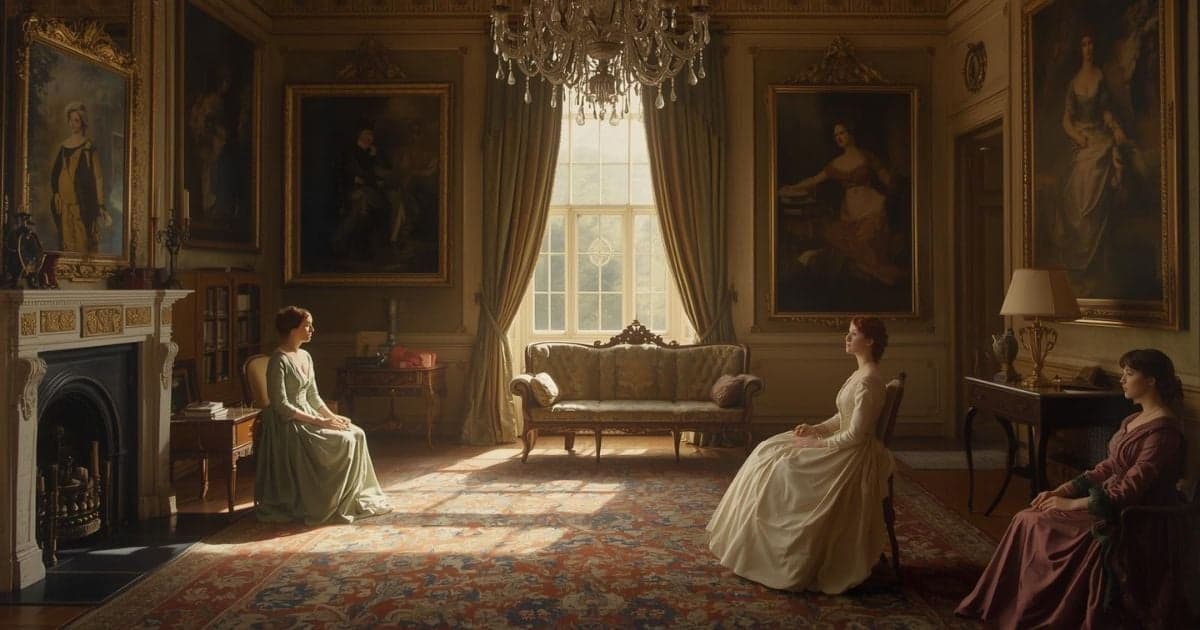
[Illustration] Sir William stayed only a week at Hunsford; but his visit was long enough to convince him of his daughter’s being most comfortably settled, and of her possessing such a husband and such a neighbour as were not often met with. While Sir William was with them, Mr. Collins devoted his mornings to driving him out in his gig, and showing him the country: but when he went away, the whole family returned to their usual employments, and Elizabeth was thankful to find that they did not see more of her cousin by the alteration; for the chief of…

Public-domain chapter text, formatted for reading.

Master this chapter. Complete your experience

Purchase the complete book to access all chapters and support classic literature

Buy at Powell'sBuy on Amazon

Available in paperback, hardcover, and e-book formats

Now let's explore the literary elements.

Key Quotes & Analysis

"I may thank you, Eliza, for this piece of civility. Mr. Darcy would never have come so soon to wait upon me."

— Charlotte Collins

Context: When Darcy and Fitzwilliam call at the parsonage

Charlotte teases that Elizabeth's presence drew Darcy—true in part, and ironic given their history.

In Today's Words:

Charlotte suggests Elizabeth attracted their key client to arrive early at the meeting. It's like that office dynamic where someone's clear attraction makes them suddenly invested in previously ignored events. Similar to how executives mysteriously develop interest in departmental meetings after new hires join. Friends often recognize romantic patterns before we acknowledge them.

"My eldest sister has been in town these three months. Have you never happened to see her there?"

— Elizabeth Bennet

Context: After Darcy inquires about her family's health

Elizabeth tests him on Jane in London—she watches for guilt; he looks a little confused.

In Today's Words:

Elizabeth drops a strategic question about her sister being in the city for months, watching his reaction carefully. It's like casually mentioning a mutual connection on LinkedIn to see if someone deliberately avoided networking with your friend. She's testing whether he intentionally kept Jane and her brother apart, looking for signs of guilt or manipulation.

"she gave Charlotte credit for the arrangement."

— Narrator (Elizabeth's view)

Context: On Charlotte placing the sitting room away from Collins's road-facing study

Charlotte's marriage is a management problem solved by architecture—admiration without romance.

In Today's Words:

Elizabeth admires how Charlotte strategically designed their living space to minimize exposure to her husband's annoying work habits. It's like respecting a coworker who negotiates remote work to avoid their micromanaging boss. Charlotte treats marriage like a business arrangement, using smart logistics to make an imperfect situation bearable rather than romantic.

"ight expect, adding,-- “I may thank you, Eliza, for this piece of civility. Mr. Darcy would never have come so soon to wait upon me"

— Narrator

Context: From the second half of the chapter

This line anchors the chapter's closing movement and shows how social pressure and private feeling collide in the scene.

In Today's Words:

In today's language, the passage says: I may thank you, Eliza, for this piece of civility. Mr. Darcy would never have come so soon to wait upon me. Readers still recognize the same dynamic when pride, strategy, or family pressure turns a private moment into public consequence.

Thematic Threads

Charlotte's management

In This Chapter

Room arrangement and Rosings attendance

Development

Elizabeth's respect deepens without approving the match

In Your Life:

When has someone made a hard marriage bearable by small structural choices?

Darcy returns

In This Chapter

Expected at Rosings; parsonage call

Development

Plot moves toward proposal and letter

In Your Life:

When did someone from a painful episode reappear in a new setting?

Fitzwilliam as foil

In This Chapter

Easy manners beside Darcy's silence

Development

Social ease vs pride

In Your Life:

When has the friendly cousin made the stiff one look stranger?

Jane and London

In This Chapter

Elizabeth's three-month question

Development

Bingley wound still live

In Your Life:

When did you ask an indirect question to see if someone flinched?

Lady Catherine's reach

In This Chapter

Parish magistrate and inspections

Development

Power beyond the dinner table

In Your Life:

Where does local royalty control even your furniture?

You now have the context. Time to form your own thoughts.

Discussion Questions

This is not a test. Five prompts guide you through the chapter, from how it opens to how it closes, so you notice context and rhythm rather than facts to memorize. Sit with each question in your own words. When you see "One way to read it," treat it as a starting point, not the only answer.

  1. 1

    Why is Elizabeth thankful after Sir William leaves, and what does she admire about Charlotte's house arrangement?

    ▶One way to read it

    Collins is less in her way once Sir William departs. Charlotte has placed the ladies' room backwards so Collins keeps to his book room facing the road, reporting every carriage, especially Miss de Bourgh's phaeton.

    analysis • surface
  2. 2

    How does Lady Catherine involve herself in the parish and the parsonage?

    ▶One way to read it

    Collins and Charlotte dine at Rosings about twice a week, and Lady Catherine visits the parsonage and inspects everything as if she were magistrate in her own parish.

    analysis • medium
  3. 3

    When have you seen someone manage a household cleverly around a person who needed constant attention?

    ▶One way to read it

    Think of rearranging rooms so a needy relative has a view of the street, scheduling visits to keep a boss occupied elsewhere, or Charlotte engineering space so Collins stays happy without dominating her.

    application • medium
  4. 4

    Mr. Darcy arrives at Rosings with Colonel Fitzwilliam, and Collins hurries to bring both gentlemen to the parsonage. How do the two men behave differently toward Elizabeth?

    ▶One way to read it

    Colonel Fitzwilliam is immediately pleasant and conversational. Darcy is more guarded, yet he answers when Elizabeth asks about Jane, showing concern Elizabeth did not expect from the man she still resents.

    application • deep
  5. 5

    Elizabeth looks forward to watching Darcy's behaviour toward Anne de Bourgh and the hopelessness of Miss Bingley's designs. What does that anticipation reveal about her view of him at this point?

    ▶One way to read it

    She still reads him through rivalry and family duty rather than attraction. She expects to enjoy seeing him trapped by obligation, which shows prejudice has not softened even in his aunt's territory.

    reflection • deep

Critical Thinking Exercise

The Indirect Test

Recall a time you asked someone a casual question designed to see if they knew something painful you suspected. What did you learn from their face or answer? Was it worth it?

Consider:

  • •What would direct confrontation have cost you?
  • •Did someone's easier companion make the guarded one more telling?
  • •What small domestic choices by others have you since admired as survival skill?

Coming Up Next...

Chapter 31: Chapter XXXI

At church and on walks to Rosings, Elizabeth will meet Darcy and Colonel Fitzwilliam again, and conversation will open beyond a single guarded question. After the spectacle, life becomes routine, and routine reveals who manages power quietly while the great circle prepares its next act.

Continue to Chapter 31
Previous
Chapter XXIX
Contents
Next
Chapter XXXI
Keep exploring

Continue Exploring

Study guides, teaching tools, themes, and the full library.More ways to read Pride and Prejudice: study guides, teaching tools, and the wider library.

  • Pride and Prejudice Study Guide
  • Teaching Resources
  • Essential Life Index
  • Browse by Theme
  • All Books

Life-skill deep dives in Pride and Prejudice

  • Challenging First ImpressionsDiscover how first impressions trap us—and the courage it takes to admit we were wrong in Pride and Prejudice and beyond.
  • Developing Self-AwarenessExplore developing self-awareness through Pride and Prejudice by Jane Austen. Life lessons from classic literature applied to modern challenges.
  • Navigating Social ClassExplore how Pride and Prejudice reveals the complex dance of class, money, and worth—and what it teaches us about navigating economic divides today.
  • Pride Masks VulnerabilityLearn how pride becomes armor against the fear of rejection—and what it takes to let those defenses down in Pride and Prejudice and beyond.
Social Class & StatusLove & RelationshipsIdentity & Self-Discovery

You Might Also Like

Persuasion cover

Persuasion

Jane Austen

Also by Jane Austen

Emma cover

Emma

Jane Austen

Also by Jane Austen

Sense and Sensibility cover

Sense and Sensibility

Jane Austen

Also by Jane Austen

Northanger Abbey cover

Northanger Abbey

Jane Austen

Also by Jane Austen

Browse all 106+ books

Share This Chapter

Know someone who'd enjoy this? Spread the wisdom!

TwitterFacebookLinkedInEmail

Go further with Prestige

Unlock study guides and downloads, early access, and exclusive content — and support free access for everyone.

Subscribe to PrestigeCreate free account
Intelligence Amplifier
Intelligence Amplifier™Powering Wide Reads

Exploring human-AI collaboration through books, essays, and philosophical dialogues. Classic literature transformed into navigational maps for modern life.

2025 Books

→ The Amplified Human Spirit→ The Alarming Rise of Stupidity Amplified→ San Francisco: The AI Capital of the World
Visit intelligenceamplifier.org
hello@widereads.com

WideReads Originals

→ You Are Not Lost→ The Last Chapter First→ The Lit of Love→ Wealth and Poverty→ Wisdom for the Wounded
Arvintech
arvintechAmplify your Mind
Visit at arvintech.com

Navigate

  • Home
  • Library
  • Essential Life Index
  • How It Works
  • Subscribe
  • Account
  • About
  • Contact
  • Authors
  • Suggest a Book
  • Landings

Made For You

  • Trending
  • Students
  • Educators
  • Families
  • Readers
  • Literary Analysis
  • Finding Purpose
  • Letting Go
  • Recovering from a Breakup
  • Corruption
  • Gaslighting in the Classics

Newsletter

Weekly insights from the classics. Amplify Your Mind.

Legal

  • Privacy Policy
  • Terms of Service
  • Editorial Standards
  • Cookie Policy
  • Accessibility

Why Public Domain?

We focus on public domain classics because these timeless works belong to everyone. No paywalls, no restrictions—just wisdom that has stood the test of centuries, freely accessible to all readers.

Public domain books have shaped humanity's understanding of love, justice, ambition, and the human condition. By amplifying these works, we help preserve and share literature that truly belongs to the world.

A Pilgrimage

Powell's City of Books

Portland, Oregon

If you ever find yourself in Portland, walk to the corner of Burnside and 10th. The building takes up an entire city block. Inside is over a million books, new and used on the same shelf, organized by color-coded rooms with names like the Rose Room and the Pearl Room. You can lose an afternoon. You can lose a weekend. You will find a book you have been looking for your whole life, and three you did not know existed.

It is a pilgrimage. We cannot find a bookstore like it anywhere on earth. If you read the classics, and you ever get the chance, go. It belongs on every reader's bucket list.

Visit powells.com

We are not in any way affiliated with Powell's. We are just a very big fan.

© 2026 Wide Reads™. All Rights Reserved.

Intelligence Amplifier™ and Wide Reads™ are proprietary trademarks of Arvin Lioanag.

Copyright Protection: All original content, analyses, discussion questions, pedagogical frameworks, and methodology are protected by U.S. and international copyright law. Unauthorized reproduction, distribution, web scraping, or use for AI training is strictly prohibited. See our Copyright Notice for details.

Disclaimer: The information provided on this website is for general informational and educational purposes only and does not constitute professional, legal, financial, or technical advice. While we strive to ensure accuracy and relevance, we make no warranties regarding completeness, reliability, or suitability. Any reliance on such information is at your own risk. We are not liable for any losses or damages arising from use of this site. By using this site, you agree to these terms.