
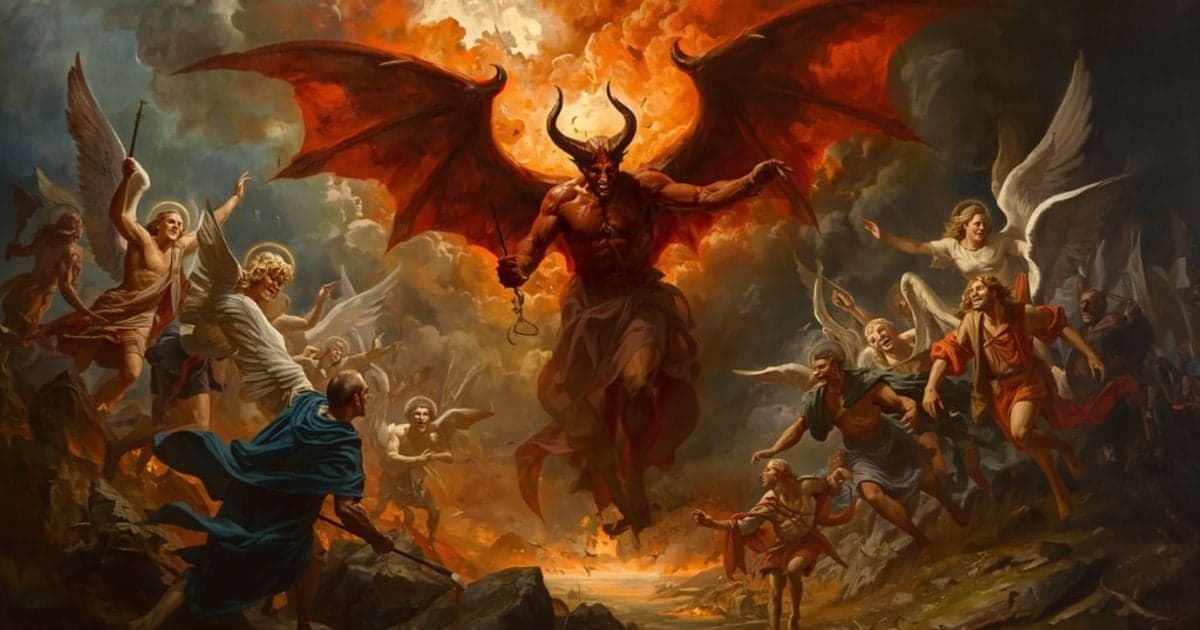
Eve is not a fool in this poem, and that is why the temptation works. Satan does not overpower a weak mind. He borrows the language of growth, equality, and withheld good, then waits for her intelligence to do the rest. Milton had watched political argument dress appetite as insight. The garden scene is that craft at the scale of a marriage and a world. The fruit is almost secondary. The frame is the product: a limit recast as an insult, caution recast as being left behind.
The pitch is prepared before the conversation. He watches. He enters a dream so the tree will feel familiar by daylight. He lets a reasonable marital debate about working apart open the hour he needs. Raphael has already said that evil can pass through thought without guilt, and that they were made perfect, not immutable. The warning is not missing. What is missing at the tree is a pause that still feels like strength. The serpent's best move is making delay look like a smaller mind.
You will not meet a talking snake. You will meet a sentence that flatters the part of you that already wanted the thing, then treats your remaining hesitation as evidence that you are not yet free. Advisors, feeds, lovers, and colleagues all use the costume. The skill is catching the pair: praise plus a renamed prohibition. Wisdom can be questioned and still remain. A sales pitch for your own supposed growth cannot afford the time it would take you to ask who benefits if you stop waiting.
The Central Lesson
Persuasion in Paradise Lost wears the clothes of insight: growth, equality, a good being withheld by a jealous limit. Eve is argued with because she can think. The serpent's craft is not force. It is a frame that makes caution feel like a smaller mind, then uses a prepared hour, a familiar dream, and a flattering question. Wisdom can be tested and still wait. A pitch cannot. If the counsel already knew what you wanted, punished delay, and left you with a story about who made you do it, you were not taught. You were closed.
Applying This to Your Life
Ask Who Mapped You Before They Advised You
Satan inventories the pair before he speaks. If someone knows your hunger, your status worry, and your sore limit, and then offers a philosophy that happens to feed all three, you are not in a seminar. You are in a closing conversation.
Keep the Pause When It Starts to Feel Like Insult
The tree scene turns delay into a slight against Eve's reason. That is the tell. Real insight can survive a night's sleep, a second conversation, a question the speaker does not like. If waiting makes you feel suddenly small, the frame has already changed.
Watch the Story You Tell After You Comply
Adam's first public sentence is that she gave him the fruit. If your post-choice narrative is only a chain of other people's verbs, the pre-choice counsel was probably not wisdom. Own the yes, or admit you bought a pitch. Both are cleaner than a genealogy of blame.
Other lessons in this book
More life-skill deep dives from the same classic.
When Pride Sounds Like Principle
Hear Satan on the burning lake and at Eden's edge: wounded dignity reframed as liberty, and a no that is only a refusal to be second.
6 chapters·Explore AnalysisNavigating Irreversible Choice
Stay with the quarrel after the fruit, the walk with Michael, and the flaming sword that regret cannot unmake.
5 chapters·Explore AnalysisUnderstanding Free Will and Temptation
Foreknowledge is not a leash. Raphael warns because they can still refuse. The Fall counts because it was chosen.
5 chapters·Explore AnalysisDistinguishing Love from Possession
Follow Adam from companionship under the stars to the tree, where he eats so he will not live without her.
5 chapters·Explore AnalysisReading Charisma Without Confusing It with Virtue
Sit in Pandemonium, then watch Abdiel walk out alone, and Satan return to a hissing court.
7 chapters·Explore AnalysisHearing Who Gets to Name Good and Evil
Track how liberty in Hell and insight in the garden both rename obedience as tyranny.
6 chapters·Explore Analysis
Continue exploring
The same lessons in other books
See how other books teach the same life skills.

Siddhartha
Living in the PresentStay at the ferry until past and future stop being places you can live.
The Blue Castle
Building a Life of Your OwnLeave Elm Street for Mistawis, lock a house that is yours, and keep the Blue Castle after the excuse to live is withdrawn.The Blue Castle
Seeing Past ReputationRevise Barney the jailbird, Cissy the disgrace, and the John Foster study Deerwood never bothered to check.
Where the lesson lives in the book
The Survey Before the Sentence
Satan studies the pair at work and rest, notes their harmony, and chooses the hour and the method. Open force would fail. Guile requires a map of what they love. The watching is not curiosity. It is inventory.
Key Insight:
When someone has mapped your wants before offering counsel, ask whether the counsel is for your flourishing or for a gap they already measured. Wisdom rarely needs a hidden reconnaissance.
“So hand in hand they passed, the loveliest pair, That ever since in love's embraces met;”
The Rehearsal in Sleep
Eve wakes from a dream in which a voice like Adam's leads her to the tree and a winged figure praises the fruit. Adam comforts her: fancy can err in sleep. Raphael adds the harder rule. Evil may pass through the mind unreproved. Consent is still later, in the day.
Key Insight:
Persuasion often starts below refusal. If an idea feels familiar before you have chosen it, ask who staged the rehearsal. A dream is not guilt. Treating the dream as destiny is how the pitch gets a head start.
“Evil into the mind of God or Man May come and go, so unreproved, and leave No spot or blame behind:”
A Reasonable Split
Eve proposes working apart to get more done. Adam prefers shared labor and names the danger. He yields because she wants the trial, and because love that never risks a no starts to look like distrust. The argument is adult. The timeline is still the one the watcher needed.
Key Insight:
Good reasons can serve a bad hour. Persuasion sometimes works by making a risky isolation feel like mature trust. Name the asymmetry: who is more exposed if the trial goes wrong.
“Be strong, live happy, and love! But, first of all, Him, whom to love is to obey, and keep His great command;”
Flattery, Then the Frame
The serpent praises Eve's beauty and reason, eats without dying, and recasts the prohibition as fear of equals. The question is no longer whether to obey. It is whether caution is an insult. Eve eats to avoid seeming less than she could be. The pitch succeeded when delay started to feel like weakness.
Key Insight:
Wisdom invites scrutiny and can wait. Manipulation punishes the pause. If you suddenly feel ashamed of not knowing, check whether someone just renamed prudence as a slight against your mind.
“For good unknown sure is not had;”
The Story After the Sale
God asks. Adam points to Eve. Eve points to the serpent. The Son still treats the wills as intact. The post-choice script is evasion, which is often how you know the pre-choice script was not wisdom. Ownership would have sounded different.
Key Insight:
If the only story you can tell after a decision is who made you do it, the counsel you followed was probably a pitch. Real advice survives being owned.
“She gave me of the tree, and I did eat.”
Honesty After the Frame Breaks
Adam and Eve turn from accusation to prayer. The petition reaches Heaven. Milton does not pretend the manipulation never happened. He shows that recovery is a different skill from detection: telling the truth after you have already bought the frame.
Key Insight:
Recognizing a pitch late is still better than defending it. The work after persuasion is not a better theory of the serpent. It is dropping the story that you had no mind left to use.