
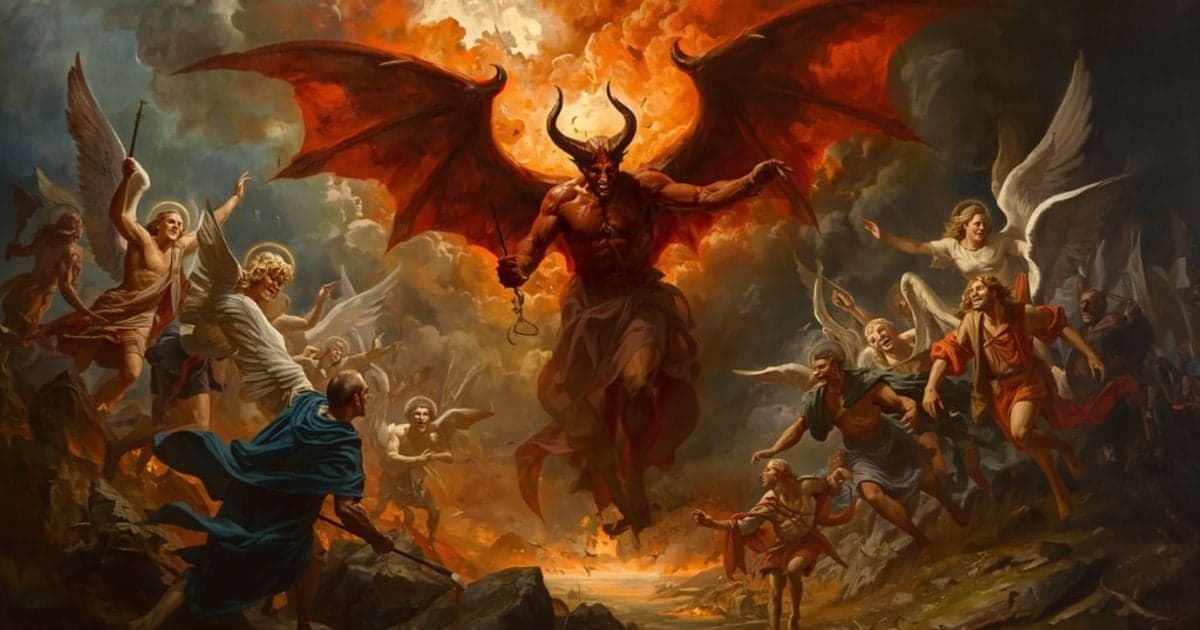
Paradise Lost is a poem about a threshold that does not reopen. That sounds obvious until you watch how many characters try to live as if speech could still bargain with the act. Satan names a hard road back and will not take it. Eve reaches. Adam reaches after her, seeing clearly. Shame, leaves, a quarrel, a judgment, a vision of flood, a slow walk. Milton is not interested in the cheap consolation that everything is reversible if you feel bad enough. He is interested in what a will does once the garden is no longer a place you can re-enter.
The sequence matters. Hell's council is already a closed return dressed as strategy. The fruit is a closed innocence dressed as knowledge. The blame scene is a closed companionship dressed as explanation. Michael's history is what consequence looks like when it is allowed to have grandchildren. None of these is a metaphor for a mood. Each is a door that the chooser still wants to narrate as a hallway. The flaming sword at the end is almost kind in its clarity. You may walk. You may not pretend the gate is still a gate.
Most lives contain smaller versions of this map: a sent message, a broken confidence, a signature, a silence that lasted a year. The skill is double. Before the line, notice the private veto on going back, because that is often the real crossing. After the line, stop spending the day on a restoration fantasy that requires other people to unlive what you did. Adam learns to see death, then a covenant, then a road. That is not optimism. It is the only adult plot left once undoing has been ruled out.
The Central Lesson
Irreversible choice in Paradise Lost is not only the bite. It is the earlier no to a hard road back, the later shame that cannot unmake knowledge, and the history Michael forces Adam to see. Milton refuses the comfort that feeling sorry rewinds a world. The flaming sword is clarity: you may still choose a place of rest, and you may not re-enter the morning before the act. The skill is timing. Notice the private veto while return is still possible. After the line, spend yourself on the next walk, not on a story in which the gate was never shut.
Applying This to Your Life
Catch the Veto on Return While It Is Still Internal
Satan's refusal of the hard road happens before the later crimes. If you have already decided that going back would annihilate you, you are not still deciding. You are protecting a performance. Name the return path out loud before appetite spends it.
Do Not Treat Regret as a Rewind
Leaves, tears, and better speeches arrive on schedule in this poem. They do not reopen Eden. After a crossed line, ask what is now true in the world, not what would be true if your remorse were a time machine. Other people are already living in the new fact.
Choose the Next Place of Rest, Not the Old Morning
The last image is slow steps, a world in front, a sword behind. That is the assignment. Pick the next honest constraint and walk it. Restoration theater will eat the hours you needed for the only freedom that is left.
Other lessons in this book
More life-skill deep dives from the same classic.
When Pride Sounds Like Principle
Hear Satan on the burning lake and at Eden's edge: wounded dignity reframed as liberty, and a no that is only a refusal to be second.
6 chapters·Explore AnalysisUnderstanding Free Will and Temptation
Foreknowledge is not a leash. Raphael warns because they can still refuse. The Fall counts because it was chosen.
5 chapters·Explore AnalysisDistinguishing Love from Possession
Follow Adam from companionship under the stars to the tree, where he eats so he will not live without her.
5 chapters·Explore AnalysisRecognizing Persuasion Disguised as Wisdom
Watch Eve's dream, Raphael's warning, and the serpent that makes the prohibition sound like a cage.
6 chapters·Explore AnalysisReading Charisma Without Confusing It with Virtue
Sit in Pandemonium, then watch Abdiel walk out alone, and Satan return to a hissing court.
7 chapters·Explore AnalysisHearing Who Gets to Name Good and Evil
Track how liberty in Hell and insight in the garden both rename obedience as tyranny.
6 chapters·Explore Analysis
Continue exploring
The same lessons in other books
See how other books teach the same life skills.

Siddhartha
Living in the PresentStay at the ferry until past and future stop being places you can live.
The Blue Castle
Building a Life of Your OwnLeave Elm Street for Mistawis, lock a house that is yours, and keep the Blue Castle after the excuse to live is withdrawn.The Blue Castle
Seeing Past ReputationRevise Barney the jailbird, Cissy the disgrace, and the John Foster study Deerwood never bothered to check.
Where the lesson lives in the book
The Return Path Refused
The way out of Hell is named as long and hard. Satan will not take it, because the end of that road is submission. Guile toward a weaker world is chosen while the original war is still a memory. The will closes first. The geography follows.
Key Insight:
Irreversibility often begins as a private veto on going back, long before outsiders can see a completed act. If return would cost the self you have been performing, you may already have spent the choice.
“Long is the way And hard, that out of Hell leads up to light.”
Knowledge That Will Not Unknow Itself
They eat. The body registers what the mind now knows. Fig leaves, fear of each other, a morning that cannot be put back. Innocence does not fade by degrees in this scene. It exits through an act that looked, a minute earlier, like a conversation about wisdom.
Key Insight:
Irreversible choices often feel local until the next hour. The skill is recognizing the threshold while you are still on it, not after appetite has already spent the only currency that was innocence.
“she plucked, she eat!”
When Private Regret Meets a Public World
Sin and Death rise. Judgment is spoken. A bridge is built to Earth. The Fall is no longer a quarrel under a tree. It is a fact other beings will inhabit. Accountability arrives on a schedule the choosers do not control.
Key Insight:
Shame is not a time machine. Navigating a crossed line means admitting that systems, bodies, and other people's futures have already shifted, whether or not you have finished explaining yourself.
“Her seed shall bruise thy head, thou bruise his heel.”
The Cost Shown at Scale
Michael does not offer a speech about feelings. He shows Adam violence, flood, tyranny, and a covenant anyway. The vision is instruction, not theater. One act is allowed to have a history. Adam has to look at the history without pretending he was a spectator.
Key Insight:
After an irreversible choice, wisdom includes grieving the range of the harm without denying the agency that started it. Scale is not an excuse. It is information about what must be carried.
“Death thou hast seen In his first shape on Man;”
Exile That Still Has a Direction
They leave. The sword is behind them. A world is in front of them, and a guide that is not a restored garden. Milton's last mercy is not a rewind. It is a harder freedom: choosing a place of rest after the unrecoverable past has already been named.
Key Insight:
The work after a line you cannot uncross is not fantasy restoration. It is the next faithful step that would still be true if the old morning never came back. You choose where to rest. You do not choose to have the threshold back.
“world was all before them, where to choose Their place of rest, and Providence their guide: They, hand in hand, with wandering steps and slow, Through Eden took their solitary way.”