
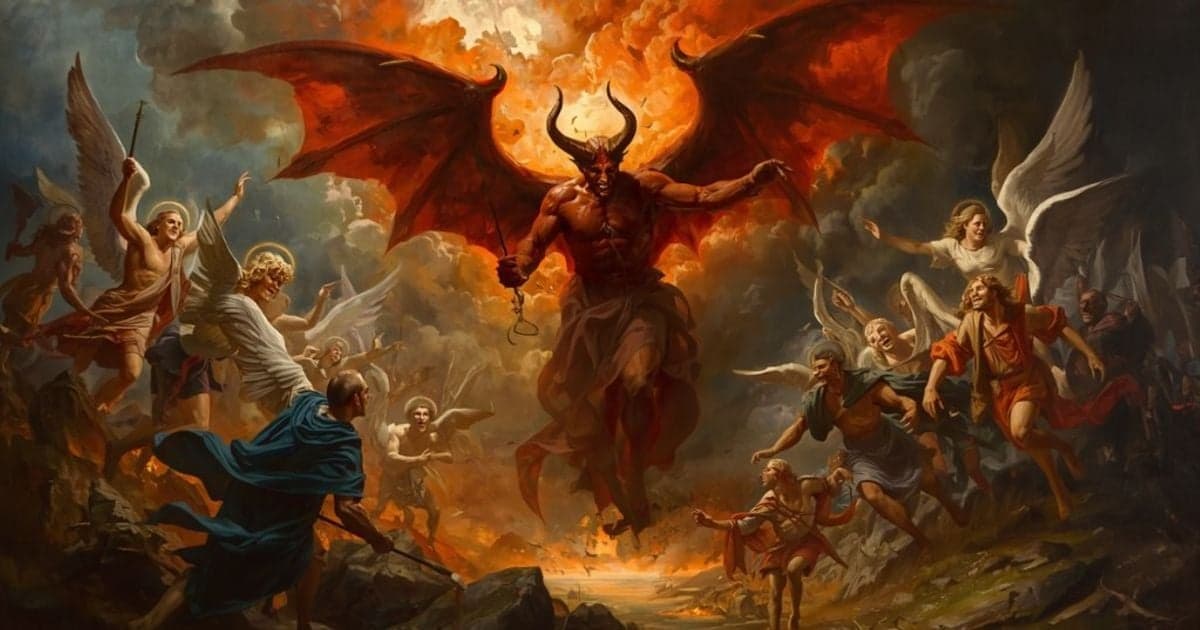
Milton's Satan is never a cartoon. That is the problem. He speaks in the cadences of endurance, merit, and injured honor, and the verse is good enough that generations of readers have wanted him to be right. He is not right. He is a mind that can look at the sun, agree that God deserved praise, and still refuse to return, because return would mean being seen as the one who lost. The speech that sounds like liberty is a constitution written to protect a rank. Once that constitution is in force, every later argument is downstream of it.
Watch how the costume travels. On the lake, defeat becomes a philosophy of the mind. In Pandemonium, the philosophy becomes a parliament, and the parliament praises the speaker for having earned a throne by not splitting in failure. At the border of Eden, philosophy becomes a private no: repentance is available, shame is the price, and shame is intolerable. Abdiel is the control case. He hears the same arguments, in the same camp, and walks back alone. God does not praise him for winning the room. God praises him for keeping a word when the room had already voted.
The skill is not cynicism toward every rebel. It is hearing when a principle has a veto hidden in it: I will be just, provided I am never second. Offices, families, and movements all mint this coin. Someone is wounded. The wound is real. Then the wound is promoted to a worldview, and anyone who asks for a smaller self is accused of tyranny. Milton's harder picture is a man who knows he is wrong and still cannot afford to be small. If your stand cannot survive looking ordinary, it is not a stand. It is a throne you are still furnishing in the dark.
The Central Lesson
Pride in Paradise Lost almost never announces itself as pride. It arrives as liberty, merit, endurance, and the refusal to live on someone else's terms. Satan can tell the truth about God and still not return, because return would mean occupying a smaller self than the one the war invented. Abdiel proves the other possibility: a word held when the room has already renamed rebellion as justice. The test is simple and unkind. If your principle cannot survive being second, it is not a principle. It is a wound that has learned to give speeches.
Applying This to Your Life
Separate the Injury from the Constitution
Write the original slight in one sentence. Then write the rule you have been living under since. If the rule is that you must never again occupy a lesser seat, you are no longer answering the slight. You are staffing a cosmology. Satan's lake speech is that promotion in one breath.
Test the Principle Where It Would Cost Rank
Ask whether your stand would still be required if nobody saw it, and if it left you looking like the one who yielded. Abdiel's walk is the test. A principle that only works as a speech to an admiring host is already wearing pride's clothes.
Notice When Conscience Has Already Voted
The dangerous hour is not ignorance. It is Book 4: you have already admitted the other side deserved praise, and you are bargaining with shame. If the remaining argument is how it would look to go back, you are not defending truth. You are defending a face.
Other lessons in this book
More life-skill deep dives from the same classic.
Navigating Irreversible Choice
Stay with the quarrel after the fruit, the walk with Michael, and the flaming sword that regret cannot unmake.
5 chapters·Explore AnalysisUnderstanding Free Will and Temptation
Foreknowledge is not a leash. Raphael warns because they can still refuse. The Fall counts because it was chosen.
5 chapters·Explore AnalysisDistinguishing Love from Possession
Follow Adam from companionship under the stars to the tree, where he eats so he will not live without her.
5 chapters·Explore AnalysisRecognizing Persuasion Disguised as Wisdom
Watch Eve's dream, Raphael's warning, and the serpent that makes the prohibition sound like a cage.
6 chapters·Explore AnalysisReading Charisma Without Confusing It with Virtue
Sit in Pandemonium, then watch Abdiel walk out alone, and Satan return to a hissing court.
7 chapters·Explore AnalysisHearing Who Gets to Name Good and Evil
Track how liberty in Hell and insight in the garden both rename obedience as tyranny.
6 chapters·Explore Analysis
Continue exploring
The same lessons in other books
See how other books teach the same life skills.

Siddhartha
Living in the PresentStay at the ferry until past and future stop being places you can live.
The Blue Castle
Building a Life of Your OwnLeave Elm Street for Mistawis, lock a house that is yours, and keep the Blue Castle after the excuse to live is withdrawn.The Blue Castle
Seeing Past ReputationRevise Barney the jailbird, Cissy the disgrace, and the John Foster study Deerwood never bothered to check.
Where the lesson lives in the book
A Heaven Made of Hell
On the burning lake Satan consoles Beelzebub by relocating the argument. The war is lost. The mind, he says, is still its own place, able to make a Heaven of Hell. Then the famous line: better to reign in ruin than serve in light. The cadence is honor. The content is a veto on being anyone's second.
Key Insight:
Listen for the swap. A speaker who cannot imagine dignity without rank is not defending a principle. He is defending a self that would vanish if it had to share the room.
“The mind is its own place, and in itself Can make a Heaven of Hell, a Hell of Heaven.”
Merit Earned in the Wreck
Enthroned in Pandemonium, Satan opens the council by treating his elevation as payment for bearing defeat without faction. He invites debate on open war versus guile while the outcome is already chosen. The rhetoric is collective. The wound is still his.
Key Insight:
Pride sounds principled when it claims to speak for everyone harmed by the same fall. Ask whether the speaker's injury has become the only credential the room is allowed to honor.
“Long is the way And hard, that out of Hell leads up to light.”
The Sun, and Then the No
Alone at Paradise's edge, Satan looks at the sun and admits the truth: God deserved praise, not war. Conscience is clear. Shame is the price of return. He will not pay it. Hell, he says, is himself. Then he enters the garden anyway.
Key Insight:
The moment pride most resembles principle is the moment you already know you are wrong and still refuse, because being seen as wrong would cost more than staying lost. If the barrier is how it would look, you are not defending truth.
“Which way I fly is Hell; myself am Hell;”
The One Who Walked Back
Abdiel refuses Satan's arguments in the rebel camp and returns to Heaven alone. God names the better fight: not the war of numbers, but the word held against a revolted multitude. One voice against a charismatic majority is Milton's counter-image to wounded rank.
Key Insight:
Principle sometimes looks like isolation, not applause. Abdiel does not win the debate in Hell. He keeps a self that can still stand in a room that has already renamed rebellion as justice.
“Servant of God. Well done; well hast thou fought The better fight, who single hast maintained Against revolted multitudes the cause Of truth, in word mightier than they in arms;”
The Triumph That Hisses
Satan returns expecting acclamation and finds his hosts turned to serpents. The mission succeeded. The self that needed the mission is smaller. Heaven's judgment proceeds while the rebel's victory over Adam and Eve fails to restore what pride spent.
Key Insight:
Pride can hit its target and still leave the hitter diminished. A short-term win that requires you to become the thing you claimed to oppose is not a principle kept. It is an appetite paid for in identity.
A History That Will Not Center the Wound
Michael walks Adam through covenant and mercy that outlast any one grievance. The epic does not end with Satan's speech. It ends with two people leaving a garden, tears wiped, a world still to choose. Pride wanted the cosmos to rearrange around its injury. Providence will not.
Key Insight:
A principle rooted in reality can survive not being the main character. Pride demands that history orbit the wound. Maturity acts rightly even when the arc will not audition your pain.
“A Paradise within thee, happier far.”