
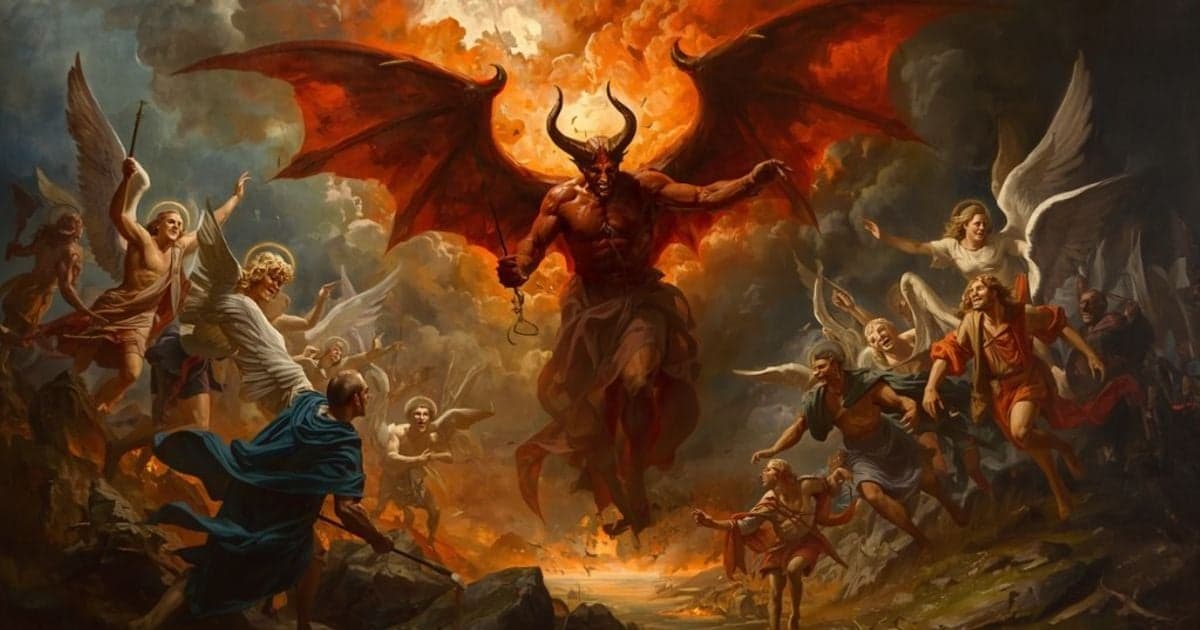
English epic has no more magnetic speaker than the one Milton puts on the lake. That is not a compliment the poem forgets to qualify. Satan can console, organize, debate, weep at the sun, and then sell a tree. The verse makes you feel the pull on purpose. The skill the poem is teaching is not how to resist dull villains. It is how to keep your judgment when the voice is the most interesting thing happening.
Charisma in this poem has several costumes. In Hell it is command dressed as consolation, then a parliament whose vote was already taken. At the garden's edge it is a conscience displayed just long enough to look tragic. In Eve's ear it is intellectual companionship: you deserve to know, the limit is an insult, eat and be as gods. Abdiel is again the control. He hears the same music and leaves. Heaven later names him the one who returned not lost. The majority in Pandemonium had better lines. They did not have a better cause.
You will meet this split in rooms that are not cosmic. A founder who lost the board and still holds the staff. A friend whose self-critique is so eloquent it functions as permission. A counselor who needs you to grow in a direction that happens to serve them. Milton's test is crude and usable: watch what the magnetism asks you to sacrifice next, and whether dissent still has a cost after the speech. Applause measures heat. It does not measure whether the speaker ought to be followed out of the fire.
The Central Lesson
Charisma in Paradise Lost is a talent, not a proof. Satan can hold a ruined army, stage a council, fool a sentry, and match Eve's mind at the tree. Abdiel can do almost none of that, and he is the one Heaven calls not lost. The poem trains a habit: separate the heat of a voice from the rightness of a path. Ask what the speaker needs from you after the feeling peaks, whether dissent still has a price, and whether a displayed conscience changed the next act. Applause is data about a room. It is not data about virtue.
Applying This to Your Life
Ask What the Speech Requires After the Feeling
Satan's lake address does not end in shared grief. It ends in a next method. After you have been moved, name the assignment. If you cannot name it, you were not counseled. You were enlisted.
Look for the Vote That Could Have Gone the Other Way
Pandemonium looks like debate and behaves like choreography. Real counsel produces friction that costs the leader something. If every gifted speaker in the room somehow lands where the magnetic figure already stood, you are watching theater.
Do Not Treat Displayed Doubt as a Credential
The pause at Eden's border is moving and still operational. A person can narrate their own hell and then walk into yours. Virtue is what they do with the knowledge, not how well they can describe the knowledge.
Other lessons in this book
More life-skill deep dives from the same classic.
When Pride Sounds Like Principle
Hear Satan on the burning lake and at Eden's edge: wounded dignity reframed as liberty, and a no that is only a refusal to be second.
6 chapters·Explore AnalysisNavigating Irreversible Choice
Stay with the quarrel after the fruit, the walk with Michael, and the flaming sword that regret cannot unmake.
5 chapters·Explore AnalysisUnderstanding Free Will and Temptation
Foreknowledge is not a leash. Raphael warns because they can still refuse. The Fall counts because it was chosen.
5 chapters·Explore AnalysisDistinguishing Love from Possession
Follow Adam from companionship under the stars to the tree, where he eats so he will not live without her.
5 chapters·Explore AnalysisRecognizing Persuasion Disguised as Wisdom
Watch Eve's dream, Raphael's warning, and the serpent that makes the prohibition sound like a cage.
6 chapters·Explore AnalysisHearing Who Gets to Name Good and Evil
Track how liberty in Hell and insight in the garden both rename obedience as tyranny.
6 chapters·Explore Analysis
Continue exploring
The same lessons in other books
See how other books teach the same life skills.

Siddhartha
Living in the PresentStay at the ferry until past and future stop being places you can live.
The Blue Castle
Building a Life of Your OwnLeave Elm Street for Mistawis, lock a house that is yours, and keep the Blue Castle after the excuse to live is withdrawn.The Blue Castle
Seeing Past ReputationRevise Barney the jailbird, Cissy the disgrace, and the John Foster study Deerwood never bothered to check.
Where the lesson lives in the book
The Voice That Outshines the Ruin
Satan's first address mixes consolation with command. He accepts blame for the war, then converts the wreck into a project. The fallen listen because the voice sounds like courage under impossible odds. Force failed. He already names the next method: fraud or guile.
Key Insight:
Charisma often tells one true thing (we lost) in order to smuggle the next assignment. Listen for what the speaker needs you to become after the consolation lands.
“Awake, arise, or be for ever fallen!”
Parliament as Choreography
Pandemonium rises at a word. The debate on war versus guile looks like counsel. Moloch, Belial, and Mammon speak. Beelzebub then delivers the enterprise Satan wanted: an easier target, a world hanging like a star. The vote follows the magnetism, not the friction.
Key Insight:
When every speech ends where the most magnetic figure needed it to end, you are not in a deliberation. You are in a performance that borrowed the furniture of a council.
“What if we find Some easier enterprise?”
A Face That Fools a Sentry
Uriel, sharpest of the sun's angels, is taken in by a cherub's disguise. Milton names hypocrisy the only evil that walks invisible except to God. Magnetism here is not a speech. It is a countenance borrowed for passage.
Key Insight:
Charisma is not only volume. It is the talent for looking like the thing a good watcher expects. If sincerity can be worn, virtue has to be read in the next act, not in the face at the gate.
“Hypocrisy, the only evil that walks Invisible, except to God alone,”
The Pause That Disarms
At Eden's border Satan halts, seemingly moved by light, memory, and the pair walking the garden. The soliloquy makes him appear tragic, even self-aware. Then he goes in. Displayed conscience does not alter the mission.
Key Insight:
Self-doubt shown at the threshold is still a tool if the next act is destruction. Charismatic figures often reveal a wound just long enough to make resistance feel crude.
“Which way I fly is Hell; myself am Hell;”
Fury Is Not Legitimacy
Heaven's armies move in order. Satan's host fights with the energy of desperation. Abdiel's lone fidelity is praised before the field is even joined. The war is real. The rightness of the cause is not decided by who can still rally a crowd after a fall.
Key Insight:
Organizational force and moral authority come apart under pressure. A leader can still fill a hall after the argument is lost. Filling the hall does not reopen the argument.
“that one, That of so many myriads fallen, yet one Returned not lost.”
Companionship as a Method
In the garden the voice is no longer a general's. It is a fellow seeker at a tree, matching Eve's curiosity, praising her reason, offering a knowledge that looks like equality. The conversation feels intellectual until the fruit is gone. Magnetism here is intimacy, not thunder.
Key Insight:
The most dangerous charisma meets you as a peer with your growth at heart. Ask what the speaker gains if you say yes, not only what you might become.
“In plain then, what forbids he but to know, Forbids us good, forbids us to be wise?”
When the Court Becomes a Hiss
Satan returns for the ovation and receives a metamorphosis. The hosts that cheered the project cannot cheer the result. Charisma delayed the bill. It did not cancel it. Sin and Death build their bridge while the applause dies into noise.
Key Insight:
Admiration is not the same as trust, and a delayed consequence is still a consequence. Communities that confuse a thrilling voice with a right one discover the difference when the mission's fruit arrives.