
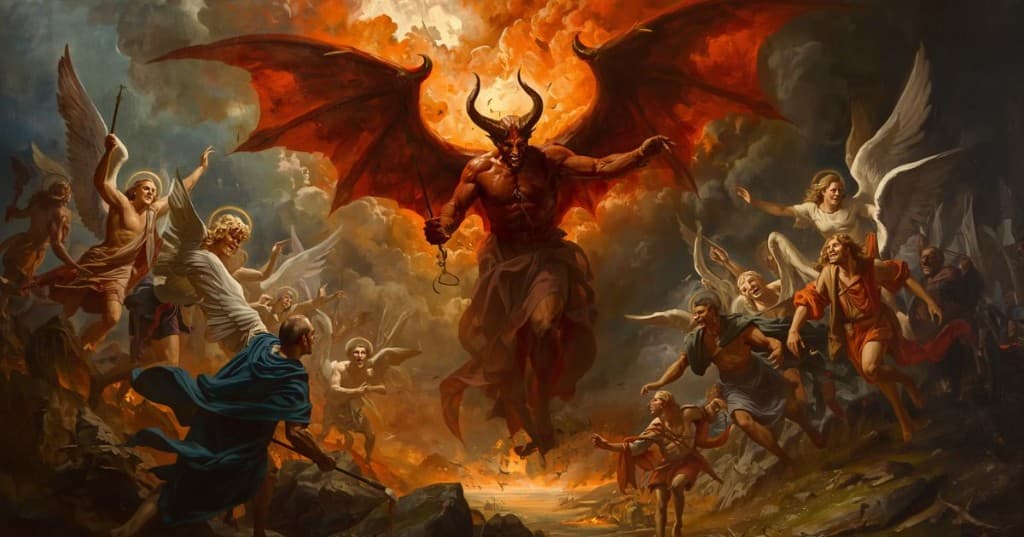
Lessons
Lessons from Paradise Lost
Six lessons from this classic work, traced chapter by chapter.
0:00 / 0:00
Satan wakes on a burning lake and tells the fallen host that the mind is its own place, then that it is better to reign in Hell than serve in Heaven. The speech sounds like liberty. It is a refusal to be second. He will climb out of the fire, build a capital, and hunt a weaker target. Milton published the poem in 1667. The most magnetic speaker in English epic is already lost. The humans he will ruin still have a choice.
Continue the summary
Satan is the rebel: wounded, eloquent, and so sure that submission would erase him that he would rather rule a ruin. Adam is the first man, companionable, curious, and so bound to Eve that he will take a death he understands rather than live without her. Eve is intellect and appetite together, not a fool, the one Satan chooses because she can be argued with. Raphael comes as teacher and warning. Michael comes as the last guide, walking Adam through history after the fruit is already eaten. Beelzebub converts defeat into a mission. Abdiel walks back to Heaven alone. Sin and Death keep Hell's gate. The Father and Son in Heaven will not unmake freedom to prevent the fall.
In Hell the fallen debate open war, then send Satan after a weaker target. At Paradise's edge he admits God deserved praise and still refuses to repent. Raphael sits with Adam and Eve and tells the war in Heaven so they will know the cost of listening to the wrong counselor. The serpent flatters Eve's desire to grow and reframes the prohibition as tyranny; she eats; Adam, unwilling to be parted from her, eats too. Shame arrives before they leave the tree. In Hell Satan expects a triumph and finds his hosts turned to serpents. Michael leads Adam through flood, covenant, and a promised seed, then walks both of them out of Eden with a flaming sword behind them.
Milton wrote the poem after going blind, after serving Cromwell, after the Restoration had already punished his side. He never treats Satan as a cartoon, or the fruit as a cute origin story, or Eve as a simple weak link. Blank verse carries theology, psychology, and political argument in the same line. Liberty that cannot survive being second is not liberty. Love that cannot survive a no is not devotion. What remains is not a sermon against curiosity. It is a picture of what language can do when pride needs a better name, and of what a marriage costs when one person will not live in a world the other has already left.
The first pressure is already on the burning lake: the mind is its own place, and it is better to reign in Hell than serve in Heaven. When Pride Sounds Like Principle is that speech, then the moment at Eden's edge when conscience agrees God deserved praise and pride still refuses. Reading Charisma Without Confusing It with Virtue is Pandemonium's debate, Abdiel walking back to Heaven alone, and Satan returning to a hissing court. Recognizing Persuasion Disguised as Wisdom is Eve's dream, Raphael's warning ignored, and the serpent that makes the prohibition sound like a cage. Distinguishing Love from Possession is Adam at the tree, taking a death he understands rather than live without her. Navigating Irreversible Choice is the quarrel after the fruit, the hosts turned to serpents, and the walk out of Eden that regret cannot reverse. Hearing Who Gets to Name Good and Evil is the same language in Hell and in the garden: liberty used as a cover for conquest, obedience renamed as tyranny.
Hand in hand they take the solitary way out of Eden, a flaming sword behind them and the world all before them. Satan expected a triumph and found a hissing court. The fruit is already eaten. Michael has already shown Adam the flood and a promised seed. Wide Reads keeps summaries, quotes, and audio on all twelve books, from a burning lake that sounded like liberty to that last walk.
Why this matters
People still arrive when the most persuasive voice in the room is already serving an injury, when a prohibition is reframed as tyranny by someone who wants what you want, or when love becomes possession at the tree. Milton does not treat Satan as a cartoon or the fruit as a cute origin story. He wrote blind after a revolution won and then lost, and he knew how freedom can cover a hunger to rule. This guide keeps the burning lake, the serpent, and the flaming sword tied to counsellors and choices you can still recognise.
Theme breakdowns
Explore the lessons
Paradise Lost is a story about the most magnetic speaker in English epic already being lost on a burning lake: wounded dignity reframed as liberty, Pandemonium's debate that sends Satan after a weaker target, Raphael's warning ignored in Eden, a serpent that makes the prohibition sound like a cage, Adam eating so he will not live without Eve, hosts turned to serpents when triumph was expected, and hand in hand the solitary way out of Eden with a flaming sword behind them and the world all before them.
Each card traces a pattern through named chapters — summaries, quotes, and key insights tied to the scenes that prove it. Start with the featured lessons, then open the deep dives below.
Deep dives
Chapter-by-chapter breakdowns
Recognizing Persuasion Disguised as Wisdom
Watch Eve's dream, Raphael's warning, and the serpent that makes the prohibition sound like a cage.
So hand in hand they passed, the loveliest pair, That ever since in love's embraces met;
Distinguishing Love from Possession
Follow Adam from companionship under the stars to the tree, where he eats so he will not live without her.
So hand in hand they passed, the loveliest pair, That ever since in love's embraces met;
Navigating Irreversible Choice
Stay with the quarrel after the fruit, the walk with Michael, and the flaming sword that regret cannot unmake.
Long is the way And hard, that out of Hell leads up to light.
Continue Exploring
Guides, life skills, and the full library.More ways to read Paradise Lost: guides, life skills, and the wider library.