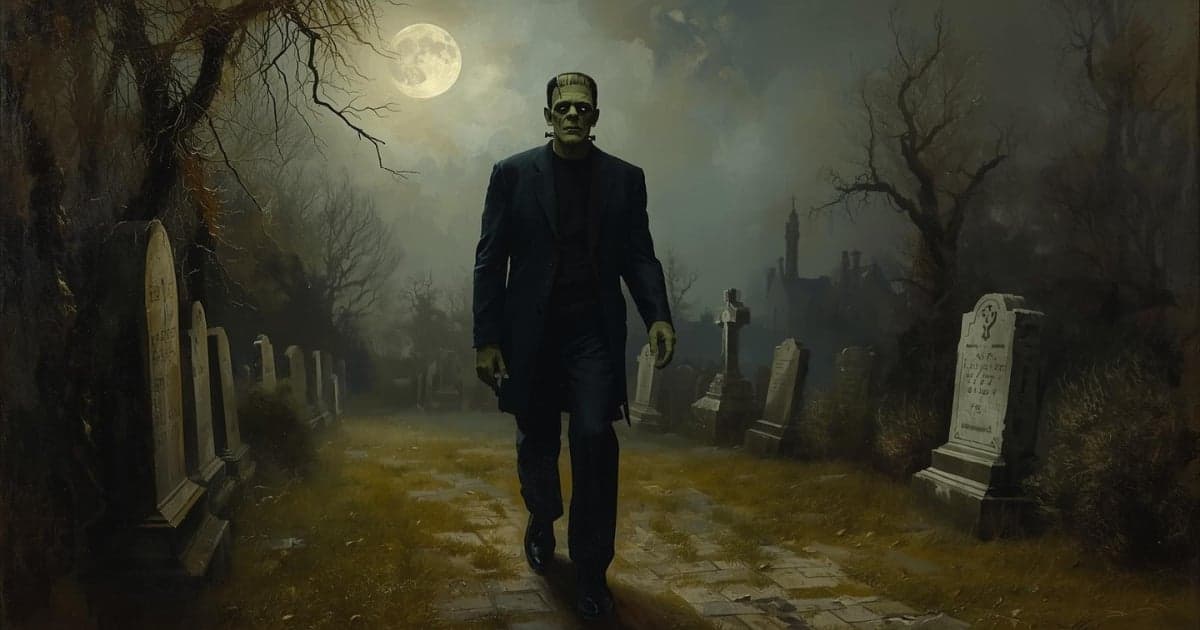
The Strange Case of Dr Jekyll and Mr Hyde
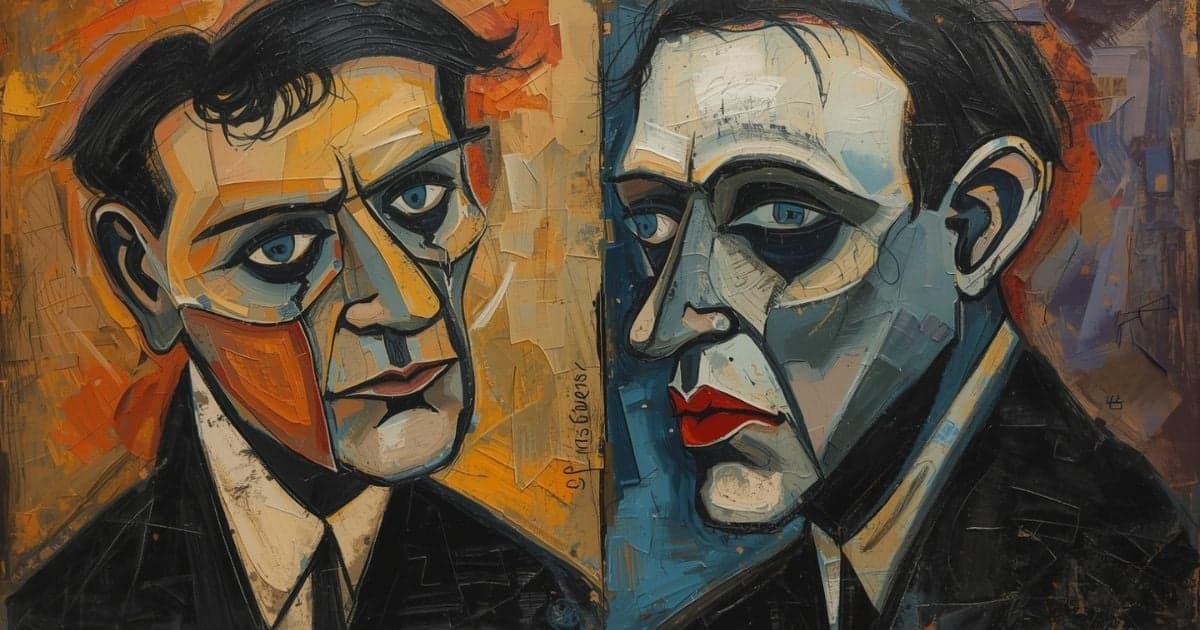
Robert Louis Stevenson
0:000:00
0:00 / 0:00

Prestige · $2.99/month
Chapter audio, theme analysis, and downloads
Robert Louis Stevenson
0:00 / 0:00
Mr. Utterson hears about a man who trampled a child and paid the witnesses with a check signed by a celebrated doctor. Enfield told it on a Sunday walk, pointing at a door nobody respectable should use. Stevenson published the novella in 1886, after a nightmare he would not leave alone. The bargain is that the gentleman and the monster share one body, and the gentleman is the one who chose the split.
Henry Jekyll is the celebrated London doctor: charitable, grave, and so committed to looking better than other men that even his pleasures have to hide. Edward Hyde is the smaller, younger figure the potion releases, a man whose face makes strangers sweat. Gabriel Utterson is the lawyer who lets his brother go to the devil in his own way until the devil is named in a will. Dr. Hastie Lanyon is the scientific friend who broke with Jekyll over unscientific medicine and will die of what he is forced to watch. Richard Enfield tells the trampling story on a Sunday walk. Poole keeps the household and finally begs Utterson to break the cabinet door. Sir Danvers Carew is beaten to death in a by-street. The chemists cannot remake the salt that once worked. The only opponent who never leaves the page is the public face Jekyll cannot afford to lose.
Enfield watches Hyde trample a girl and take a check signed Jekyll. Utterson reads the will that leaves everything to Hyde if Jekyll disappears. At dinner Jekyll begs him to help Hyde for my sake and will not drop the subject. A maid sees Hyde beat Carew to death with a cane. Jekyll hands Utterson a letter that Guest proves is in Jekyll's own hand. For two months Jekyll is social again, then he locks the cabinet. At the window he says he dare not come down, and his face changes before the friends can look away. Poole and Utterson break the door and find Hyde dead in Jekyll's clothes. Lanyon has already watched the transformation at midnight. The last chapter is the confession: man is not truly one, but truly two, and the worse half learned to stay.
Stevenson wrote the story after a nightmare, and he never treats the potion as a cute device, or Hyde as a separate species, or Jekyll's charity as proof of innocence. Reputation is a costume. Science is a lockpick. Friends who should have asked harder questions accepted a will, a letter, and two months of good behaviour. What remains is not a sermon against appetite. It is a picture of how a man who cannot bear to be seen whole builds a second life, and how that second life stops asking permission. The ending does not let Jekyll blame a chemical for what happened. He writes the confession himself, in his own hand, before anyone forces the cabinet door.
The trampling and the check signed Jekyll already show Integrating Your Shadow Self: what he denied has a body and a street. That split was built by Recognizing the Cost of Perfectionism, the grave public face that made a potion feel like mercy. Understanding Compartmentalized Lives is the next cost: laboratory hours, a forged letter, two months of reform, still the same addiction in different clothes. Seeing How Suppressed Impulses Escalate arrives with the cane that kills Carew, then the window that will not open, then the salt that will not work twice. Reading Public Persona vs Private Truth is what Utterson and Lanyon are left holding: a Sunday walk, a midnight visitor, handwriting that matches the public man. Choosing Integration Over Splitting is the last chapter, where the confession admits the split was the crime, not the cure.
Poole and Utterson break the cabinet door and find Hyde dead in Jekyll's clothes. The last statement is already on the desk. Wide Reads files summaries, quotes, and audio with all ten chapters, from a check signed by a celebrated doctor to a salt that would not work twice.
We meet Mr. Utterson, a reserved lawyer who embodies quiet integrity: he judges no one but helps eve...
Utterson returns home deeply troubled by what he learned about Hyde. He retrieves Jekyll's will from...
Utterson finally gets his chance to confront Jekyll about Hyde during a private dinner conversation....
A brutal murder shatters London's sense of safety when Mr. Hyde savagely beats Sir Danvers Carew to ...
Utterson visits Jekyll in his laboratory after the Carew murder, finding his friend looking deathly ...
After Hyde's disappearance following the murder, Jekyll seems to transform back into his old self - ...
Utterson and Enfield take their usual Sunday walk and find themselves back at the mysterious door th...
Poole arrives at Utterson's fireside on a wild March night, too shaken to touch his wine. For a week...
Dr. Lanyon receives a frantic letter from his old colleague Jekyll, begging him to retrieve a myster...
Jekyll's confession opens on a man born to privilege who already lived a double life before science ...
Published 1886
Robert Louis Stevenson (1850-1894) was a Scottish novelist, poet, and travel writer whose adventure stories and darker psychological tales made him one of the most beloved writers of the Victorian era. Born in Edinburgh to a family of lighthouse engineers, he rebelled against the respectable career path mapped for him and chose literature instead, despite chronic tuberculosis that shadowed him from childhood.
Treasure Island and Kidnapped won young readers; Strange Case of Dr Jekyll and Mr Hyde, published in 1886, shocked adults. Written in a feverish burst, often at night while his wife Fanny copied revisions, the novella transformed a private nightmare about moral doubleness into literature's most famous metaphor for the divided self. Critics debated its meaning while readers recognized themselves in Jekyll's impossible bargain.
Stevenson traveled extensively, eventually settling in Samoa, where he advocated for local rights and continued writing until his death at forty-four. His life mirrored his art: the polite Edinburgh boy and the Pacific adventurer, the invalid and the tireless walker, the moralist fascinated by human appetite. Jekyll and Hyde endure because Stevenson refused to treat good and evil as separate species. He showed them sharing one body, one choice at a time.
Stevenson speaks to the exact cost of a spotless reputation: the grave public face that has to be maintained at all hours, the pleasures that get quietly rerouted because they would not survive daylight, and the moment a person realises the mask has started making decisions the face never agreed to. He wrote for readers who already suspect that the person who never seems to slip is hiding the most, not the least.
Plot, characters, and themes — plus audio, source text, and patterns you can use after class
Two ways in
Chapter by chapter, with audio. The meaning arrives because you experienced it — not because someone listed bullet points.
Start with this.
The actual words the author wrote, alongside every summary. Use the guide, then step into the source.
Then step into the source.
Either way, the door opens inward.
— and most of all, Why does this matter?
Purchase the complete book to access all chapters and support classic literature
Available in paperback, hardcover, and e-book formats
Free to read • No account required

Weekly insights from the classics. Amplify Your Mind.
We focus on public domain classics because these timeless works belong to everyone. No paywalls, no restrictions—just wisdom that has stood the test of centuries, freely accessible to all readers.
Public domain books have shaped humanity's understanding of love, justice, ambition, and the human condition. By amplifying these works, we help preserve and share literature that truly belongs to the world.
© 2026 Wide Reads™. All Rights Reserved.
Intelligence Amplifier™ and Wide Reads™ are proprietary trademarks of Arvin Lioanag.
Copyright Protection: All original content, analyses, discussion questions, pedagogical frameworks, and methodology are protected by U.S. and international copyright law. Unauthorized reproduction, distribution, web scraping, or use for AI training is strictly prohibited. See our Copyright Notice for details.
Disclaimer: The information provided on this website is for general informational and educational purposes only and does not constitute professional, legal, financial, or technical advice. While we strive to ensure accuracy and relevance, we make no warranties regarding completeness, reliability, or suitability. Any reliance on such information is at your own risk. We are not liable for any losses or damages arising from use of this site. By using this site, you agree to these terms.
Deep dives
Stay with the laboratory hours, the forged letter, and the two months of reform: a second life is still an addiction.
Compartments begin as architecture: a door the neighbors do not use, an hour the calendar does not show. If a part of…
See the cane that kills Carew, the window that will not open, and the salt that will not work twice.
He was perfectly cool and made no resistance, but gave me one look, so ugly that it brought out the sweat on…
Trending search questions mapped to the six lessons in this novella: what readers actually ask Google about who Mr Hyde is, why Jekyll makes him, the suspicious will, Sir Danvers Carew's murder, and Dr Lanyon's death.
Hyde is the smaller, younger body a potion releases from inside the respectable Dr Jekyll. Enfield, the first witness, cannot even describe him properly, only that "he gives a strong feeling of deformity" that brings "the sweat on me like running." Hyde is not a stranger who moves in. He is what Jekyll spent a lifetime refusing to claim, given a face and a latchkey of his own.
Explore Integrating Your Shadow SelfJekyll's own confession names the cause: he wanted to "carry my head high, and wear a more than commonly grave countenance before the public" while still keeping pleasures he judged beneath that face. Stevenson does not open with the potion. He opens with a man already "committed to a profound duplicity of life" long before any chemistry existed to give the second life a separate body.
Explore Recognizing the Cost of PerfectionismUtterson reads a will that transfers Jekyll's whole estate to Hyde the instant Jekyll disappears or is absent for more than three months, and it distresses him so much that Jekyll snaps, "This is a matter I thought we had agreed to drop." Jekyll is not protecting a blackmailer. He is protecting the only door back into his own second life, filed as an ordinary legal document so no one has to ask what it is really for.
Explore Understanding Compartmentalized LivesA maid watching from her window sees an old, courteous gentleman greet a smaller man on the street, then sees that smaller man break into "a great flame of anger" and beat him to death with a cane, stamping on the body after it falls. The victim is Sir Danvers Carew, and the killer is Hyde. The murder is not a break from the pattern the trampled child already showed in chapter 1. It is that pattern with nothing left to check it.
Explore Seeing How Suppressed Impulses EscalateJekyll's letter warns him in advance, "Lanyon, my life, my honour, my reason, are all at your mercy; if you fail me to-night, I am lost," but nothing prepares Lanyon for watching Hyde drink a draught and become his old friend in front of him. Lanyon was the scientific colleague who had already broken with Jekyll over what he called "unscientific" work. Seeing the proof does not relieve him. It is the shock of the seeing itself, not a new fact, that kills him within weeks.
Explore Reading Public Persona vs Private TruthSix lessons run through the novella: integrate your shadow self instead of exiling what you deny into a separate name and body; recognise the cost of perfectionism when a grave public face turns ordinary appetite into a secret; understand compartmentalized lives as a second addiction, not a clever arrangement; see how suppressed impulses escalate once a smaller self is given a key and no audience; read public persona against private truth the way Utterson and Lanyon are forced to; and choose integration over splitting, since the final confession admits the split itself was the crime, not the cure.
What makes him indispensable is that he lived the split before he named it. Raised in Edinburgh by a family of lighthouse engineers who expected him to follow a respectable trade, he chose literature and a bohemian life instead, all while chronic illness kept him half a patient for most of his adult years. He wrote the novella in a feverish burst after a nightmare he could not shake, and the bargain he gives Jekyll, that a grave face and a hidden appetite can share one body only for so long, was a pressure Stevenson had already tested on himself.
The names Jekyll and Hyde outgrew the book within years of publication, becoming shorthand for anyone leading a double life long before most readers had opened the actual pages. Stevenson never let the potion stand in for the real argument: the split was a choice before it was a chemical, and the worse half only wins because the better half refused to claim it first.