Master this chapter. Complete your experience
Purchase the complete book to access all chapters and support classic literature
As an Amazon Associate, we earn a small commission from qualifying purchases at no additional cost to you.
Available in paperback, hardcover, and e-book formats
Why This Matters
Connect literature to life
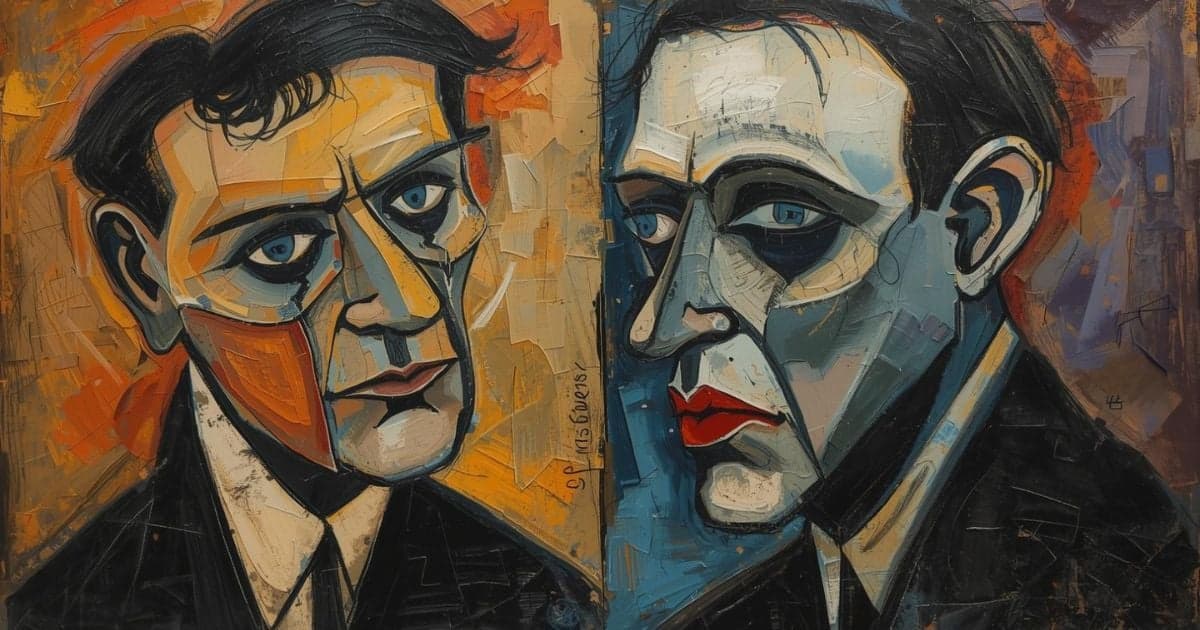
This chapter teaches how to spot when you're trying to split yourself into separate personas instead of integrating conflicting parts of your nature.
Practice This Today
This week, notice when you act significantly different in different settings—if 'work you' and 'home you' feel like different people, that's a red flag worth examining.
Now let's explore the literary elements.
Key Quotes & Analysis
"I was driven to reflect deeply and inveterately on that hard law of life, which lies at the root of religion and is one of the most plentiful springs of distress."
Context: Jekyll explaining what led him to his experiments with dual nature
This reveals Jekyll's fundamental misunderstanding - he sees the struggle between good and evil as a problem to be solved rather than a natural part of being human. His 'solution' becomes his destruction.
In Today's Words:
I couldn't stop thinking about how we're all stuck being both good and bad, and it was driving me crazy.
"I began to profit by the strange immunities of my position; for Hyde, it was observed, was much smaller, slighter and younger than Jekyll."
Context: Describing his early enjoyment of being Hyde
Jekyll initially saw his transformation as beneficial - Hyde was physically weaker because he represented only part of Jekyll's nature. This shows how Jekyll underestimated the power of unchecked evil impulses.
In Today's Words:
At first, I thought being my worst self was actually pretty great - he seemed harmless enough.
"I was slowly losing hold of my original and better self, and becoming slowly incorporated with my second and worse."
Context: Realizing he's losing control of the transformations
This is the horror of Jekyll's situation - the evil side is taking over permanently. It shows what happens when we try to compartmentalize rather than integrate different aspects of ourselves.
In Today's Words:
The bad version of me was taking over, and the real me was disappearing.
"Should the throes of change take me in the act of writing it, Hyde will tear it in pieces."
Context: Writing his final confession, knowing Hyde might emerge at any moment
This creates dramatic tension while showing Jekyll's complete loss of control. He's literally racing against his own transformation, making this confession feel urgent and desperate.
In Today's Words:
If I turn into my evil self while writing this, he'll destroy everything I'm trying to tell you.
Thematic Threads
Identity
In This Chapter
Jekyll's complete revelation of his dual identity and the impossibility of maintaining the split
Development
Evolved from mysterious transformations to full confession of deliberate self-division
In Your Life:
When you find yourself being completely different people in different contexts, losing track of who you really are
Control
In This Chapter
Jekyll's total loss of control over his transformations and Hyde's dominance
Development
Progressed from Jekyll's confident control to involuntary changes to complete surrender
In Your Life:
When habits or behaviors you thought you could manage start managing you instead
Class
In This Chapter
Jekyll's privileged background driving his need to maintain respectability while indulging desires
Development
Revealed as the root cause—his high social position made integration feel impossible
In Your Life:
When social expectations make you feel like you can't be authentic about your struggles or desires
Deception
In This Chapter
Jekyll's elaborate self-deception that he could separate his moral responsibility from Hyde's actions
Development
Culminated in the ultimate self-deception—that compartmentalization could work permanently
In Your Life:
When you tell yourself your behavior 'doesn't count' in certain situations or relationships
Consequences
In This Chapter
Jekyll facing the permanent loss of his identity to Hyde
Development
Final revelation of where the pattern leads—complete dissolution of the original self
In Your Life:
When you realize that avoiding difficult integration work has made the problem much worse
You now have the context. Time to form your own thoughts.
Discussion Questions
- 1
What was Jekyll's original plan for managing his dual nature, and why did he think it would work?
analysis • surface - 2
Why did Jekyll's compartmentalization strategy backfire so dramatically?
analysis • medium - 3
Where do you see people today trying to split themselves into 'work self' and 'home self' or 'public self' and 'private self'?
application • medium - 4
When you notice yourself compartmentalizing behavior rather than addressing it directly, what healthier approach could you take?
application • deep - 5
What does Jekyll's story teach us about the difference between managing our contradictions versus trying to eliminate them?
reflection • deep
Critical Thinking Exercise
Map Your Own Compartments
Think about different areas of your life—work, home, social media, family gatherings. Write down how you act differently in each space. Are there behaviors or attitudes you allow in one area that you wouldn't in another? Look for patterns where you might be giving yourself permission to act in ways that don't align with your overall values.
Consider:
- •Notice areas where your behavior feels inconsistent with your core values
- •Pay attention to which 'version' of yourself feels more authentic
- •Consider whether your different behaviors are healthy adaptations or problematic splits
Journaling Prompt
Write about a time when behavior from one area of your life started bleeding into another area. How did you handle it, and what would you do differently now?