
The Reframe · No. 25
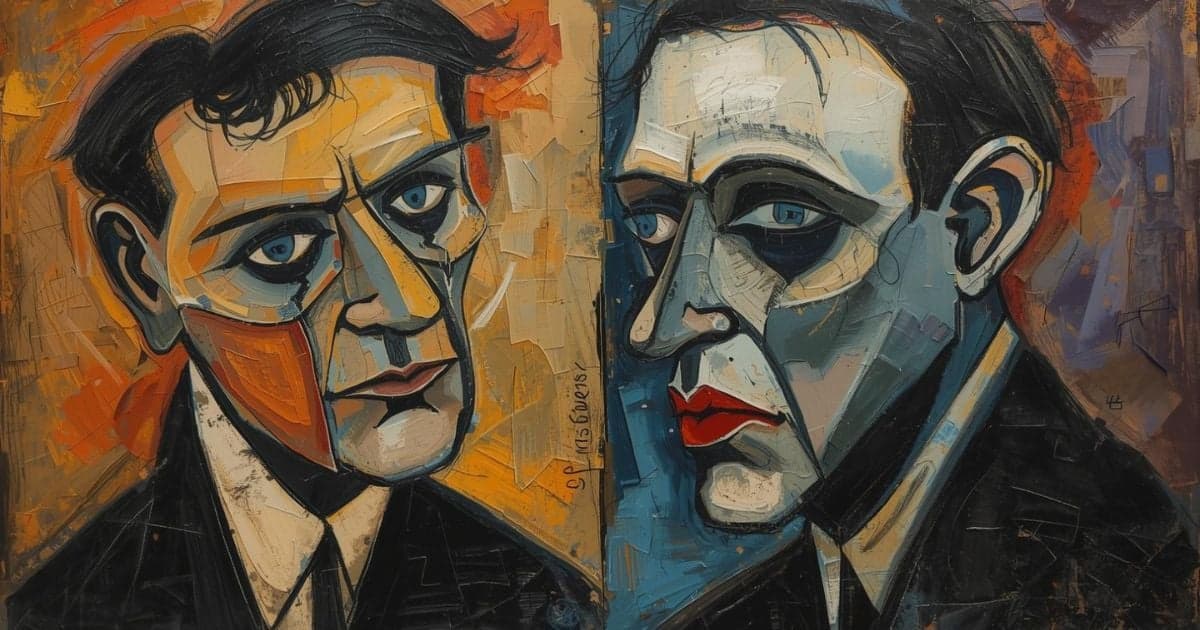
Dr Jekyll and Mr Hyde is not a monster story. Stevenson wrote a man who chose the split.
Most readers arrive with Halloween props and a clinical shorthand: mad science, an evil twin, a lesson about split personality. That is the cliché. It is not what Robert Louis Stevenson put on the page.
Stevenson published The Strange Case of Dr Jekyll and Mr Hyde in 1886 after a nightmare he would not leave alone. Henry Jekyll is a celebrated London doctor, so committed to looking better than other men that his pleasures must hide. Edward Hyde is not a separate species. He is appetite Jekyll leased a body to: trampling a child with a cheque signed by the doctor, beating Sir Danvers Carew with a cane, slipping through a door Utterson passes on Sunday walks.
The reframe is not that the potion is fake. It works. The reframe is that the draught is a lockpick for reputation, not the cause of the appetite. When the salt fails, chemistry cannot be the excuse. The last chapter is not a monster's defeat. It is Jekyll's confession that man is not truly one, but truly two: that he chose the split, and that the worse half learned to stay.
What most readers assume
“a Halloween monster story: mad doctor brews an evil twin, and the good man fights his bad alter ego until science wins or loses”
Halloween props · film adaptations · “split personality” shorthand
What Stevenson actually stages
A respectable man who cannot bear to be seen whole, leases a body to appetite, forges a letter in his own hand, and confesses that the split was chosen: not a monster defeated by science.
The Strange Case of Dr Jekyll and Mr Hyde · Robert Louis Stevenson · 1886
The popular summary sells potion and evil twin. The book sells a respectable man who built a second life for appetite, then wrote the confession in his own hand before anyone broke the cabinet door.
The door, the cheque, and the will already name him
Enfield tells Utterson the trampling story on a Sunday walk in Chapter I. Hyde walks over a child's body, then settles the scandal with a cheque signed by a celebrated doctor: Henry Jekyll. The link is not rumour. It is paper.
In Chapter II, Utterson reads the will that leaves everything to Hyde if Jekyll disappears. At dinner in Chapter III, Jekyll begs him to help Hyde “for my sake,” and will not drop the subject. That is not blackmail from outside. It is loyalty to the life he built in secret.
 Read the chapter
The source · Chapter I, The Strange Case of Dr Jekyll and Mr Hyde
“…the man trampled calmly over the child's body and left her screaming on the ground.”Robert Louis Stevenson, The Strange Case of Dr Jekyll and Mr Hyde, Chapter I (public domain)
Carew's cane, then a letter in Jekyll's hand
In Chapter IV, a maid watches Hyde beat Sir Danvers Carew to death with a cane. The cane is Jekyll's. Appetite has stopped settling scandals with cheques. It has escalated into murder on a by-street.
After the murder, Jekyll hands Utterson a letter signed Edward Hyde. In Chapter V, Utterson's clerk Guest compares the hands and finds them identical in many points: only differently sloped. The forgery is not clever. It is Jekyll writing Hyde into existence on paper he already owned.
Read the chapterThe source · Chapter V, The Strange Case of Dr Jekyll and Mr Hyde
“…the two hands are in many points identical: only differently sloped.”Robert Louis Stevenson, The Strange Case of Dr Jekyll and Mr Hyde, Chapter V (public domain)
Two months of reform, then the window and the midnight visit
For a stretch after Carew, Jekyll is social again: dinners, charity, the public face restored. Then the cabinet locks. At the window in Chapter VII, he tells Utterson and Enfield he dare not come down, and his face changes before the friends can look away. Reform was not a cure. It was a pause.
In Chapter IX, Lanyon receives a midnight visitor and watches the transformation. The scientific friend who once broke with Jekyll over “unscientific” medicine dies of what he is forced to see. Stevenson does not stage a monster defeated by science. He stages a doctor's friend destroyed by proof.
The door breaks. The confession is already written.
Poole and Utterson break the cabinet door in Chapter VIII. They find Hyde dead in clothes of the doctor's bigness. Nowhere is there any trace of Henry Jekyll, dead or alive. The body on the floor is the lease ending. The statement on the desk is the landlord admitting he built the arrangement.
Read the confessionThe source · Chapter X, The Strange Case of Dr Jekyll and Mr Hyde
“…that man is not truly one, but truly two.”Robert Louis Stevenson, The Strange Case of Dr Jekyll and Mr Hyde, Chapter X (public domain)
In Chapter X, Jekyll writes what the popular summary cannot say: he was the first that ever hired a second self for his pleasures, not his crimes. He could plod in the public eye with respectability, then strip it off like a schoolboy. The draught only made the costume change faster. When the salt fails and Hyde begins to stay without the cup, the chemical alibi collapses. Appetite was never the potion's invention.
That is the reframe. Same door, same potion, same double name everyone half remembers. Different verdict. Stevenson did not write a monster defeated by science. He wrote a respectable man who chose the split for reputation, leased a body to what he would not own in daylight, and left the confession in his own hand before anyone forced the cabinet door.
A psychoanalytic reading: the split is a defence, not a diagnosis
Stevenson published the novella in 1886, years before Freud gave this bargain a clinical vocabulary. The commentary below is a reading of the confession, not a case file. Jekyll is not a patient with a divided mind that arrived uninvited. He is a man who daydreamed the separation, then built it.
What the defence says
Hyde alone was guilty. The just man can walk his upward path if the worse half lives in another name.
In Chapter X, Jekyll writes that life would be relieved of all that was unbearable if each nature could be housed apart. He can scarce grant that he committed the infamy. Conscience slumbers because the guilt has an address that is not his.
What the text shows
One hand, one will, one confession. The pleasure was already his. The draught only made the costume change faster.
Guest has already matched the handwriting. Jekyll calls Hyde a familiar drawn out of his own soul. He furnished the Soho house, wrote the will, and hired the silence. The sentence “Hyde alone was guilty” is the defence speaking inside the admission.
Later psychoanalysis has a name for the first move: repression as a wish, not an accident. Jekyll does not stumble into a second self. He dwells with pleasure on the thought of separation, so the upright twin can do good without disgrace and the unjust twin can go free of remorse. That is a severe conscience buying purity by exile. Ordinary pleasure becomes unlivable inside the public face, so pleasure has to be outsourced. He says it plainly: men had hired others to commit their crimes while reputation sat safe. He was the first to do it for his pleasures.
The second move is what Freud would later call the return of the repressed. Hyde begins smaller and younger, a diminished version of what Jekyll will not own. Refusal does not shrink him for long. The cheque becomes a cane. Two months of charity become a locked cabinet. The salt fails, and Hyde appears without the cup. What was split off comes back with more force the more the respectable self insists it is unimpaired.
Jung's later word is the shadow: the part of the self the public face refuses to claim. Stevenson stages the danger of that refusal without the term. Housing the shadow in a second identity is the opposite of owning it. Jekyll's experiment tries to purify the man London applauds by giving appetite its own door, its own clothes, and its own legal heir. The shadow then stops asking permission. Integration, in this reading, is not a slogan about everyone having a dark side. It is the work Jekyll will not do: keep both natures in one room, under one name, where remorse still has someone to reach.
Bring this to the table
Jekyll called the draught a solution. When the salt failed, what exactly was chemistry supposed to fix: the appetite, or the need to look better than other men?
Common Questions
Who Hyde is, what the draught actually does, and why the confession will not let chemistry take the blame.
Is Dr Jekyll and Mr Hyde about split personality?
No. The title gets used as shorthand for a divided mind, but Stevenson is not writing a medical case.
Henry Jekyll is a celebrated London doctor who cannot bear to be seen whole. He builds a second life so appetite can go out while the public face stays clean. The split is chosen. It is a social and moral bargain before it is anything clinical.
Are Dr Jekyll and Mr Hyde the same person?
Yes. One body, one life, one handwriting. In the last chapter Jekyll writes that man is not truly one, but truly two, and that he was radically both.
Hyde is not a twin who arrived from outside. He is smaller, younger, and free of the manners charity required. Utterson's clerk Guest has already proved it on paper: the letter signed Edward Hyde is Jekyll's own hand, only differently sloped.
What does the potion do in Jekyll and Hyde?
It changes the costume. It does not create the appetite. Jekyll had already learned to dwell on separating his two natures, so the upright self could do good without disgrace.
The draught only makes that change faster. When the salt fails and Hyde appears without the cup, the chemical excuse collapses. Chemistry did not invent the vice. It made denial harder to keep.
Why does Jekyll leave his fortune to Hyde?
So the second life can survive if the public man disappears. Utterson reads the will early and is horrified: if Jekyll vanishes, everything passes to a man already linked to trampling a child.
That document is the first proof that respectability and Hyde are not strangers. At dinner Jekyll begs Utterson to help Hyde "for my sake." The bond is not blackmail from outside. It is loyalty to a life he built himself.
What is the psychoanalytic reading of Dr Jekyll and Mr Hyde?
A reading of the confession, not a diagnosis. Stevenson published the novella in 1886, before Freud had this vocabulary.
Jekyll daydreams a split so the upright self can walk free of shame. Pleasure is outsourced. Reputation stays. Hyde begins smaller, then returns without the draught: the refused part gains force. The line "Hyde alone was guilty" is the defence speaking inside the admission. Jung's later word, the shadow, names the same refusal. Giving that part its own door is the opposite of owning it.
What is the moral of Dr Jekyll and Mr Hyde?
Splitting yourself to protect a public face trains the hidden half to stop asking permission. A cheque signed Jekyll settles a child trampled in the street. A cane that belongs to Jekyll kills Sir Danvers Carew. Two months of charity follow, then a locked cabinet.
The moral is not that everyone has a dark side. Jekyll writes the confession in his own hand before anyone breaks the door. The worse half learned to stay because he gave it a separate name.
Read the book, not the Halloween version.
The Strange Case of Dr Jekyll and Mr Hyde is ten chapters on reputation, compartmentalised vice, and a confession that refuses the chemical excuse. We narrate it chapter by chapter, in plain language, so the will, the cane, and the cabinet door land as argument, not costume. First chapter's audio is free. The rest is $2.99 a month, every book on the shelf.