
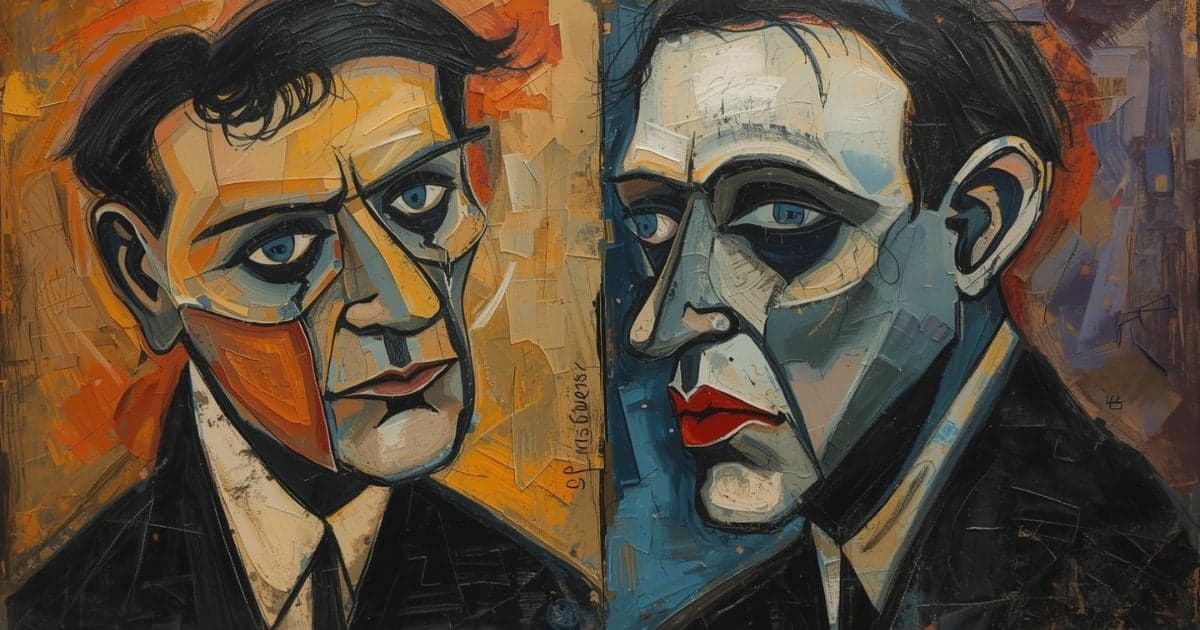
Stevenson is not writing a fable about a monster who invades a good man. He is writing about a good man who would not claim his own heat. Jekyll's early fault is not cruelty. It is cosmetics. He wants a head carried higher than his neighbors, and he treats every pleasure that would lower that head as a private emergency. The emergency does not dissolve. It concentrates. By the time Hyde has a key, the denied material has already learned how to stand in a street and make decent people sweat without offering them a diagnosis they can use.
Integration, in this book, is the move Jekyll never makes. He studies the split, legalizes it, and then congratulates himself for being able to dismiss it. That is management, not ownership. Ownership would mean remaining Henry Jekyll while the appetite was still in the room: named, limited, visible to at least one other adult. Instead he outsources the appetite to a smaller man and asks his lawyer to protect the smaller man for his sake. The shadow is not asked to grow up. It is given a latch and a will.
The last chapter is almost embarrassingly plain. Man is not truly one, but truly two. The error is the next inference: that two natures require two bodies. What you refuse to metabolize will not stay a mood. It will look for a door, a night, and a face that does not have to answer at breakfast. The skill is not becoming only light. The skill is refusing to let the dark half become the only one allowed to act.
The Central Lesson
A shadow does not remain an idea because you are respectable. It remains an idea only while you are willing to feel it in the same body that signs the checks. Jekyll's experiment fails because he treats denied appetite as a staffing problem: hire a smaller man, write him into the will, and keep the grave face for daylight. Stevenson's warning is colder than do not have a dark side. It is that the dark side you will not claim becomes the only side that knows how to move. Integration is the unglamorous alternative: one name, one door, and no exile with a key.
Applying This to Your Life
Treat Recoil as a Clue
Enfield cannot name the deformity and still knows he is looking at a problem. If people consistently flinch around one version of you, do not start with their manners. Ask which hour of yours they met. The shadow often arrives as other people's nausea before it arrives as your confession.
Stop Calling Ownership Control
Jekyll's claim that he can be rid of Hyde is a man describing a tenant he still pays. If your plan for a habit, a rage, or a double life is that you can quit the moment you choose, you are still splitting. Ownership sounds like a schedule and a witness, not a threat you issue to yourself.
Keep the Appetite in One Name
Give the refused part a sentence in the same voice you use at work. Not a second inbox. Not a second city. A sentence: I want this, and here is the limit. Hyde learns to stay because he is the only self Jekyll ever lets want anything out loud.
Other lessons in this book
More life-skill deep dives from the same classic.
Choosing Integration Over Splitting
Hear the confession: the split was the crime, not the cure, and the worse half learned to stay.
6 chapters·Explore AnalysisReading Public Persona vs Private Truth
Read Utterson's Sunday walk, Lanyon's midnight visitor, and the handwriting that matches the public man.
6 chapters·Explore AnalysisRecognizing the Cost of Perfectionism
Follow Jekyll's grave public face to the potion that felt like mercy: impossible standards create the secret.
6 chapters·Explore AnalysisSeeing How Suppressed Impulses Escalate
See the cane that kills Carew, the window that will not open, and the salt that will not work twice.
6 chapters·Explore AnalysisUnderstanding Compartmentalized Lives
Stay with the laboratory hours, the forged letter, and the two months of reform: a second life is still an addiction.
6 chapters·Explore Analysis
Continue exploring
The same lessons in other books
See how other books teach the same life skills.

The Essays of Montaigne
Choosing Real FriendshipHear essay 27 answer La Boétie: because it was he, because it was I.
The Idiot
Maintaining Goodness Without NaivetySit with Myshkin on the train in chapter 1: honesty with no angle, and a city that can only call it idiocy.
Jude the Obscure
When Desire Becomes a TrapTrack the pig, the dimple, the false pregnancy, and the second marriage arranged over gin.
Where the lesson lives in the book
A Deformity No One Can Point To
Enfield can describe the trampling and the payment. He cannot describe Hyde. The man gives a strong feeling of deformity, and still no feature will sit still long enough to be named. The room's hatred is immediate. The explanation never arrives.
Key Insight:
A denied part of the self often shows up first as a feeling other people have about you. They cannot cite the trait. They still step back. That recoil is data, not rudeness.
“He must be deformed somewhere; he gives a strong feeling of deformity, although I couldn't specify the point.”
The Dream That Will Not Stay in the Safe
Utterson reads the will, then dreams Hyde at Jekyll's bedside. The lawyer's waking mind wants a blackmail story. His sleeping mind already knows the stranger is not a stranger. The shadow enters the house before anyone has a theory.
Key Insight:
The psyche often tells the truth in a form you will not file. If a person, habit, or hour keeps returning in dread, it is not an interruption. It is the part of the story you have not agreed to own.
I Can Be Rid of Him
After dinner Jekyll treats Hyde as a removable associate. He can drop the connection at will, he says. The claim is the oldest lie about a shadow: that you can keep using it and still dismiss it like a clerk.
Key Insight:
Control talk is not integration. If you need to boast that you can stop, the other self is already bargaining. Integration would sound quieter: this is mine, and I will not give it a separate name.
“the moment I choose, I can be rid of Mr. Hyde”
The Face That Will Not Stay Put
At the window Jekyll wants company and dares not come down. Then the expression changes in front of friends who had been willing to chat. The shadow no longer waits for a locked room. It uses the ordinary hour.
Key Insight:
When the refused self can rewrite your face in a conversation, secrecy has failed. The work is no longer hiding. The work is whether you will stay in the room as one person after the look has given you away.
“I dare not.”
The Friend Forced to Watch the Collapse
Lanyon wanted a scientific quarrel, not a midnight visitor. Hyde drinks, and the colleague becomes the doctor. The shock that kills Lanyon is not magic. It is the end of the story that the denied part was someone else.
Key Insight:
People who love your public self often need your shadow to stay theoretical. Showing them the join can cost the friendship. That cost is real. It is still smaller than letting the split choose the audience for you.
“Lanyon, my life, my honour, my reason, are all at your mercy; if you fail me to-night, I am lost.”
Already Committed to Duplicity
The confession does not begin with a potion. It begins with a young man who hid his pleasures so he could wear a graver face than other men. Hyde is the later technology. The shadow was already a practice.
Key Insight:
You do not wait for a laboratory to grow a second self. You grow it by treating appetite as a scandal instead of a fact. The potion only gave the scandal a smaller body and a louder walk.
“I stood already committed to a profound duplicity of life.”