
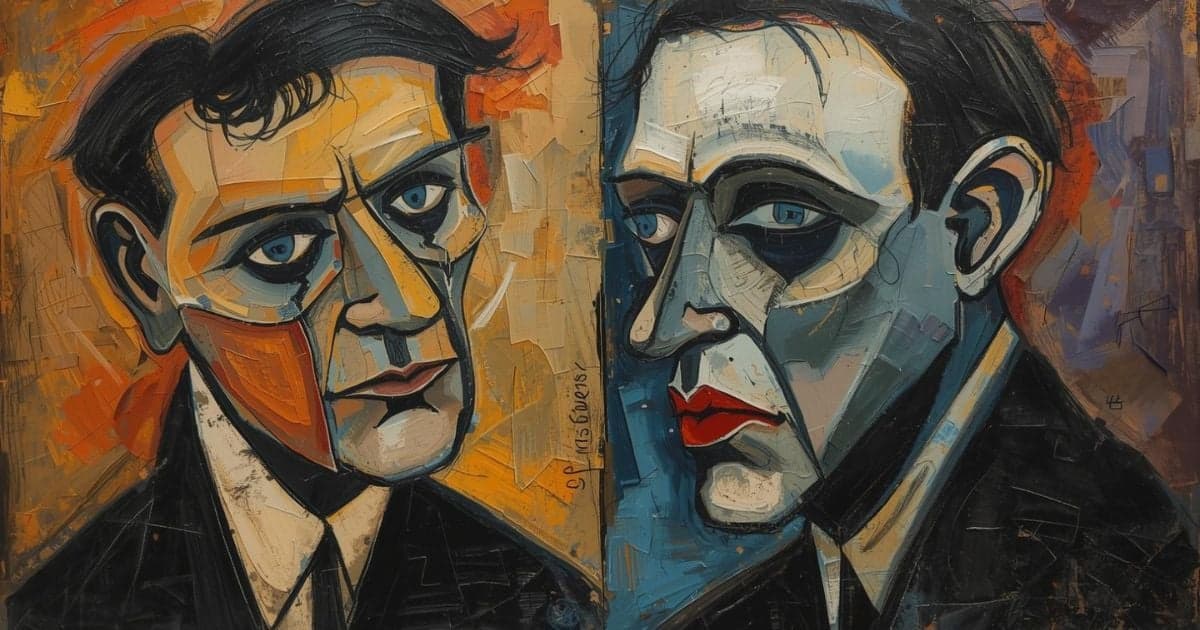
Jekyll's idea is seductive because it sounds like hygiene. Keep the grave face for the public. Give appetite a smaller body. Walk away clean. He is right about the diagnosis and wrong about the cure. A person is not truly one. That does not mean a person needs two addresses. The bargain runs for ten chapters until the worse half has the key and the better half is a memory in a letter. Splitting did not eliminate the thing he feared. It trained it.
Integration is not a slogan in this book. It is the thing Jekyll never tries. He asks Utterson to protect Hyde. He vows to stop. He locks a cabinet. He never sits in one name with the appetite still in the room. After Carew he looks ill and relieved in the same hour, as if dismissing the worse self were the same as becoming whole. A vow to be only good is still a split. Wholeness would have been less dramatic: this is mine, and it stays in this body, with limits, in front of at least one other adult.
The confession is the closest he comes. Man is not truly one, but truly two. The next sentence, the one he cannot live, is that two natures still have to share a life. Lanyon dies of watching that sentence become flesh. Poole hears a voice that is not his master's. The window will not open. The salt will not work twice. Choosing integration is the harder mercy: one name, one body, and no second door. It is riskier than a costume. It is the only arrangement that does not concentrate the thing you fear.
The Central Lesson
A potion that promises two clean lives will leave you with neither. Stevenson's last chapter is not a lecture against desire. It is the record of a man who would not be seen whole, and who discovered that the part he exiled became the part that could not be dismissed. He was right that a person contains more than one nature. He was wrong that the answer was two bodies. Integration is the harder mercy: one name, one body, and no second door.
Prestige deep dive
A Psychological Reading of The Strange Case of Dr Jekyll and Mr Hyde
Jekyll and Hyde shows a respectable man who builds a second body for appetites he will not let his public self sign, and friends who help him keep that split deniable until the face will not change back.
Read the full psychological readingApplying This to Your Life
Keep One Name in the Room
Jekyll's will tries to give the worse self a separate legal life. Ask whether you are building a second inbox, a second city, or a second version of yourself that the first one never has to meet. Integration is the decision that both parts stay in one conversation.
Stop Asking Friends to Protect the Other Half
Help him for my sake is a request that other people finance your split. If you need someone to cover, lie, or look away so you can remain the good one, you are still running Jekyll's experiment. Integration would mean asking for help with the whole person, not with the heir.
Sit With the Appetite Instead of Banishing It
The vow after Carew is still exile. Wholeness is less dramatic: name the impulse, put limits on the hours, and refuse the fantasy that a second body will keep your reputation clean. The worse half learns to stay when it is the only one you ever let act.
Other lessons in this book
More life-skill deep dives from the same classic.
Integrating Your Shadow Self
Watch Hyde's face, the will, and the trampling: what you deny does not stay small.
6 chapters·Explore AnalysisReading Public Persona vs Private Truth
Read Utterson's Sunday walk, Lanyon's midnight visitor, and the handwriting that matches the public man.
6 chapters·Explore AnalysisRecognizing the Cost of Perfectionism
Follow Jekyll's grave public face to the potion that felt like mercy: impossible standards create the secret.
6 chapters·Explore AnalysisSeeing How Suppressed Impulses Escalate
See the cane that kills Carew, the window that will not open, and the salt that will not work twice.
6 chapters·Explore AnalysisUnderstanding Compartmentalized Lives
Stay with the laboratory hours, the forged letter, and the two months of reform: a second life is still an addiction.
6 chapters·Explore Analysis
Continue exploring
The same lessons in other books
See how other books teach the same life skills.

The Essays of Montaigne
Choosing Real FriendshipHear essay 27 answer La Boétie: because it was he, because it was I.
The Idiot
Maintaining Goodness Without NaivetySit with Myshkin on the train in chapter 1: honesty with no angle, and a city that can only call it idiocy.
Jude the Obscure
When Desire Becomes a TrapTrack the pig, the dimple, the false pregnancy, and the second marriage arranged over gin.
Where the lesson lives in the book
The Split Made Legal
Utterson reads the will that leaves Jekyll's estate to Hyde if the doctor disappears. Before anyone has seen a transformation, the public man has already tried to house his other life in a separate legal person. The paperwork is the first refusal of one name.
Key Insight:
Integration starts by noticing the paperwork of a split: the second name, the contingency plan, the heir who must not be discussed. A will can be a confession written in advance.
Help Him for My Sake
Jekyll will not drop Hyde. He asks Utterson for justice and protection for the man the lawyer already distrusts. The plea treats the two lives as separate enough to deserve separate loyalty. That is the opposite of sitting in one name.
Key Insight:
Asking friends to protect your worse self is not integration. It is outsourcing the cost of a split you will not own in the same sentence.
“I only ask for justice; I only ask you to help him for my sake.”
The Fantasy of a Clean Break
After Carew, Jekyll swears the connection is finished. He looks ill and relieved in the same hour. Ending Hyde by willpower is still the same theory: that one half can dismiss the other and remain whole. The vow is still a split.
Key Insight:
A vow to be only the good self is still a split. Integration would mean staying in one name while the appetite is still in the room, not banishing it until the salt fails.
When One Body Will Not Hold the Schedule
At the window Jekyll wants the walk and dares not take it. The face that changes in front of his friends is the split refusing to stay on his timetable. He can no longer choose which self the street gets.
Key Insight:
If you cannot appear as one person in an ordinary conversation, the experiment has already answered. The parts you separated will choose the moment you are least ready.
“I dare not.”
Lanyon Sees They Are One
Hyde drinks in Lanyon's room and becomes Jekyll. The friend who wanted a scientific disagreement is forced to watch the two names collapse. The shock kills him because the theory of two people was the last comfort he had.
Key Insight:
Other people often need your split more than you do. They can love the public version only if the private one stays offstage. Integration costs them a story they were using. It still costs you more to keep the story running.
“Lanyon, my life, my honour, my reason, are all at your mercy; if you fail me to-night, I am lost.”
Man Is Not Truly One, but Truly Two
Jekyll's statement admits the diagnosis and the error. He was right that a person contains more than one nature. He was wrong that the answer was two bodies. The worse self learned to stay. The better self lost the key.
Key Insight:
The book does not ask you to become only good. It asks you to stop giving the denied part a separate address. Wholeness is riskier than a costume, and it is the only arrangement that does not concentrate the thing you fear.
“I was slowly losing hold of my original and better self, and becoming slowly incorporated with my second and worse.”