Teaching Richard III
by William Shakespeare (1597)
Teaching Map
This guide is not only for literature teachers. Parents, tutors, book clubs, and anyone reading Richard III together can use it to open conversation — not just recap plot. Each Why it matters note is a question-starter: ask toward a Collision (two views meet and something shifts), a Reframe (the same facts suddenly mean something different), or a Recognition (what was always there finally becomes visible). The map shows how the book breaks into stages, which anchor scenes to lean on, and where each Lesson fits — whether you are planning a term or a single evening.
Opening
Chapters 1–8
Winter of our discontent
“Actus Primus. Scoena Prima. Enter Richard Duke of Gloster, solus. Now is the Winter of our Discontent, Made glorious Summer…”
Why it matters
Ask a question — toward Collision, Reframe, or Recognition.
The most dangerous people often tell you the truth twice: once as a joke and once when they think no one decent is listening. Richard promises Clarence he will go to the King to free him, then alone vows to send Clarence's soul to heaven and urges the King toward more hatred. Treat performative loyalty as evidence and watch what someone rehearses when the witness leaves the room.
Recognizing Sociopathic Charm
“Actus Primus. Scoena Prima. Enter Richard Duke of Gloster, solus. Now is the Winter of our Discontent, Made glorious Summer…”
Why it matters
Ask a question — toward Collision, Reframe, or Recognition.
The most dangerous people often tell you the truth twice: once as a joke and once when they think no one decent is listening. Richard promises Clarence he will go to the King to free him, then alone vows to send Clarence's soul to heaven and urges the King toward more hatred. Treat performative loyalty as evidence and watch what someone rehearses when the witness leaves the room.
Seeing Through Strategic Vulnerability
“Actus Primus. Scoena Prima. Enter Richard Duke of Gloster, solus. Now is the Winter of our Discontent, Made glorious Summer…”
Why it matters
Ask a question — toward Collision, Reframe, or Recognition.
The most dangerous people often tell you the truth twice: once as a joke and once when they think no one decent is listening. Richard promises Clarence he will go to the King to free him, then alone vows to send Clarence's soul to heaven and urges the King toward more hatred. Treat performative loyalty as evidence and watch what someone rehearses when the witness leaves the room.
Recognizing Triangulation
“Actus Primus. Scoena Prima. Enter Richard Duke of Gloster, solus. Now is the Winter of our Discontent, Made glorious Summer…”
Why it matters
Ask a question — toward Collision, Reframe, or Recognition.
The most dangerous people often tell you the truth twice: once as a joke and once when they think no one decent is listening. Richard promises Clarence he will go to the King to free him, then alone vows to send Clarence's soul to heaven and urges the King toward more hatred. Treat performative loyalty as evidence and watch what someone rehearses when the witness leaves the room.
Understanding Manipulation Tactics
“Actus Primus. Scoena Prima. Enter Richard Duke of Gloster, solus. Now is the Winter of our Discontent, Made glorious Summer…”
Why it matters
Ask a question — toward Collision, Reframe, or Recognition.
The most dangerous people often tell you the truth twice: once as a joke and once when they think no one decent is listening. Richard promises Clarence he will go to the King to free him, then alone vows to send Clarence's soul to heaven and urges the King toward more hatred. Treat performative loyalty as evidence and watch what someone rehearses when the witness leaves the room.
Anne at the coffin
“Scena Secunda. Enter the Coarse of Henrie the sixt with Halberds to guard it, Lady Anne being the Mourner. Anne.…”
Why it matters
Ask a question — toward Collision, Reframe, or Recognition.
The most dangerous admissions come with a motive rewrite attached. Anne spits at Richard beside Henry's bleeding corpse, then accepts his ring after he offers his sword and blames her beauty for the murders. Separate factual confession from flattery that makes you the center of someone else's harm.
Protecting Yourself from Predators
“Scena Tertia. Enter the Queene Mother, Lord Riuers, and Lord Gray. Riu. Haue patience Madam, ther's no doubt his Maiesty…”
Why it matters
Ask a question — toward Collision, Reframe, or Recognition.
Some people do not win arguments; they set factions against each other and arrive as the calm center. Richard plays the plain wronged man, lets Margaret curse the court, and then pretends repentance while sending murderers to Clarence. Ask who started the fight that suddenly needs their leadership.
Clarence in the malmsey-butt
“Scena Quarta. Enter Clarence and Keeper. Keep. Why lookes your Grace so heauily to day Cla. O, I haue past…”
Why it matters
Ask a question — toward Collision, Reframe, or Recognition.
Some harm arrives through intermediaries so the person who ordered it can keep performing loyalty. Clarence appeals to law and brotherhood, then learns Gloucester sent the killers; he still trusts the tears over the warrant. Believe the commission and the payment trail before the hug you remember.
Detecting Performative Emotion
“Scena Quarta. Enter Clarence and Keeper. Keep. Why lookes your Grace so heauily to day Cla. O, I haue past…”
Why it matters
Ask a question — toward Collision, Reframe, or Recognition.
Some harm arrives through intermediaries so the person who ordered it can keep performing loyalty. Clarence appeals to law and brotherhood, then learns Gloucester sent the killers; he still trusts the tears over the warrant. Believe the commission and the payment trail before the hug you remember.
Hastings killed for if
“Scena Quarta. Enter Arch-bishop, yong Yorke, the Queene, and the Dutchesse. Arch. Last night I heard they lay at Stony…”
Why it matters
Ask a question — toward Collision, Reframe, or Recognition.
Clear sight without power is torture unless you use it to move what you can still protect. York repeats Gloucester's weed insult, then arrests reveal the trap and the Queen flees to sanctuary with the Archbishop's help. Read early removals as a map, name the predator, and take the last defensive step even when you cannot stop the plot.
Middle
Chapters 9–17
Prayer book between two bishops
“Maior. See where his Grace stands, tweene two Clergie men Buck. Two Props of Vertue, for a Christian Prince, To…”
Why it matters
Ask a question — toward Collision, Reframe, or Recognition.
Power can be seized under the costume of duty forced by others. Richard deflects to Edward's fruit, refuses the crown, then accepts only if the Mayor's enforcement acquits him of scandal blots before coronation is set for tomorrow. Treat a hard no followed by a walkout and a waiver as proof the acceptance was scripted, not discovered.
Buckingham hesitates
“Scena Tertia. Enter old Queene Margaret Mar. So now prosperity begins to mellow, And drop into the rotten mouth of…”
Why it matters
Ask a question — toward Collision, Reframe, or Recognition.
Shared loss becomes evidence when survivors stop competing and start counting. Margaret lists every Richard killing, teaches Elizabeth to curse, and the Duchess ends with bloody thou art while Elizabeth says amen. Treat repeated naming of the same harm as indictment, especially when the leader responds with drums instead of answers.
Closing
Chapters 18–25
Ghosts before Bosworth
“Enter the Lords to Richmond sitting in his Tent. Richm. Good morrow Richmond Rich. Cry mercy Lords, and watchfull Gentlemen,…”
Why it matters
Ask a question — toward Collision, Reframe, or Recognition.
The last morning before battle can split spirits before swords cross. Richmond wakes jocund from ghost dreams and names wronged souls as bulwarks while Richard reads a hidden sun, claims the same heaven frowns on both, and draws battle order ending on what think'st thou Norfolk. Weigh blessed sleep against shared omens and to expect the next beat to break the map.
A horse, a kingdom for a horse
“Be prais'd Victorious Friends; The day is ours, the bloudy Dogge is dead Der. Couragious Richmond, Well hast thou acquit…”
Why it matters
Ask a question — toward Collision, Reframe, or Recognition.
A final scene can be governance, not celebration alone. Richmond names victory, crowns, asks if George Stanley lives, buries the slain, pardons fled soldiers, unites the white rose and red, and closes civil wounds stopped. Read hostage check, amnesty, and house union as one settlement after the tyrant falls.
Why Teach Richard III?
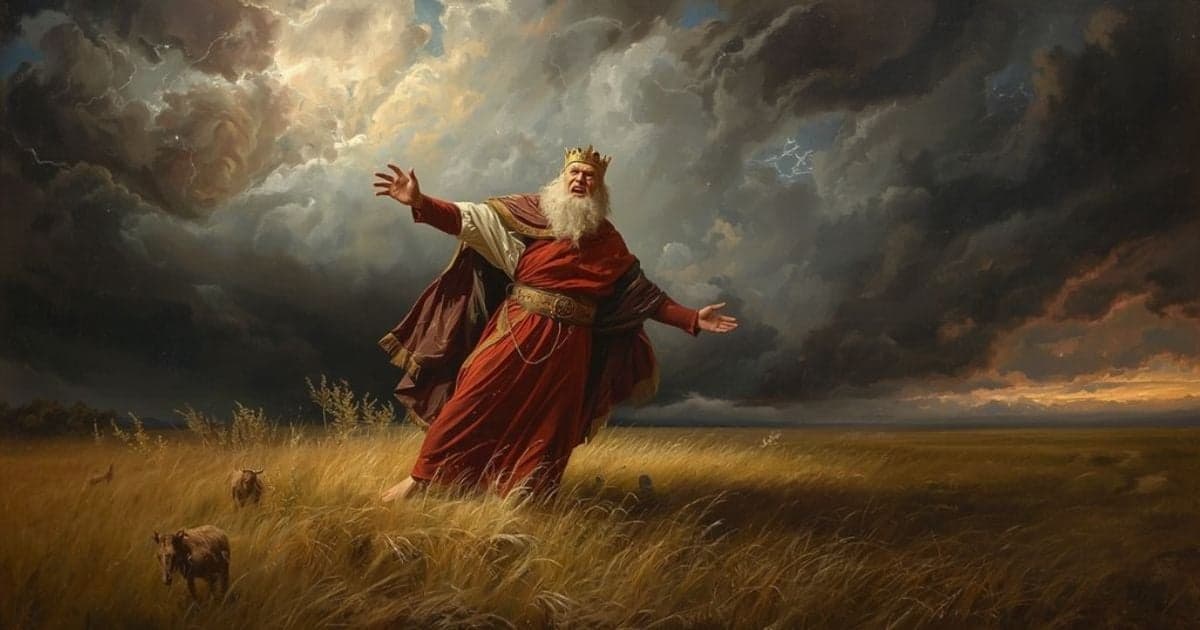
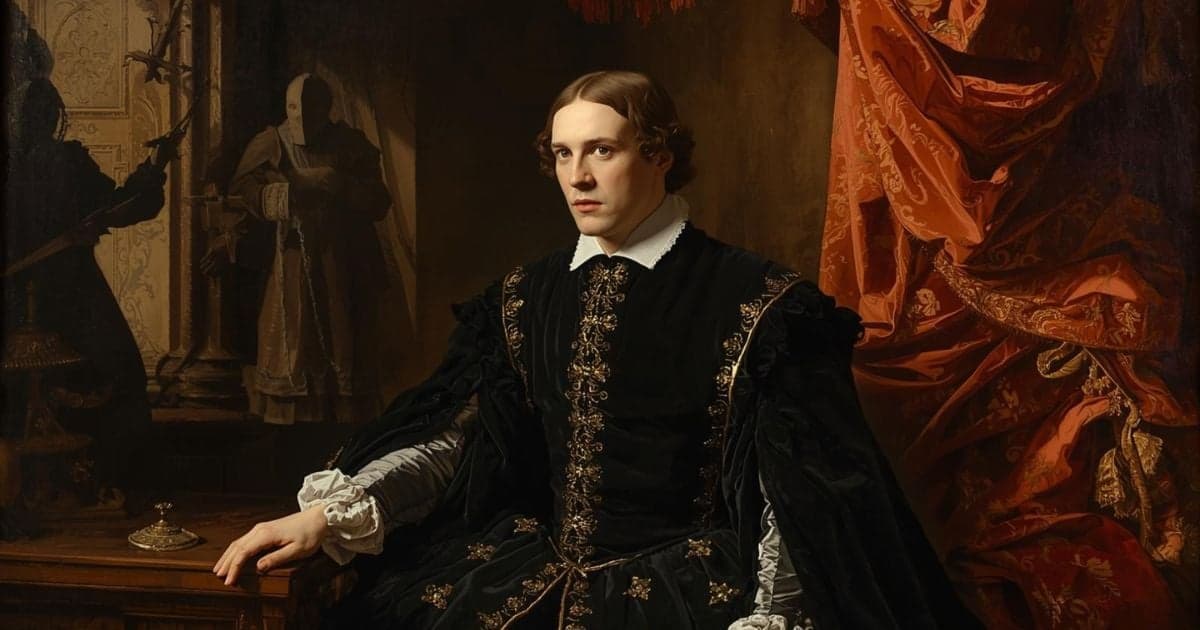
Richard names his villainy in the opening speech and hunts a crown through Clarence's murder, Hastings's if, and a prayer book between two bishops. Lady Anne takes his ring. Buckingham builds the theater until he hesitates. Tyrrell smothers the princes. Richard dies at Bosworth crying a horse, my kingdom for a horse.
Lessons from Richard III
Six named pressures the book tests, each tied to a chapter and a deeper lesson page. Send students to one when a theme hooks them, then back to the scene that proves it.
Recognizing Sociopathic Charm
Watch the funeral ring and the prayer book between two bishops: charm that arrives too fast and never has a self underneath.
Detecting Performative Emotion
See Richard weep over Hastings's head and kneel with a prayer book: feeling performed for the room, not felt.
Protecting Yourself from Predators
Sit with Elizabeth's verbal duel and Buckingham's pause, then notice who gets discarded the moment they hesitate.
Seeing Through Strategic Vulnerability
Hear deformity used as permission and humility used as a mask, then the reluctant-king act that forces a crown.
Recognizing Triangulation
Watch him blame the Queen's faction, split allies, and make himself the only safe person in the room.
Understanding Manipulation Tactics
Follow Clarence's arrest, Hastings's if, and the Guildhall script as Richard makes people feel responsible for their own destruction.
Suggested Teaching Approach
1Before class: map the setup
Read Scenes 1–4 for winter of discontent, Clarence's arrest, Anne at the coffin, and the murder in the malmsey-butt. You need Richard recruiting the audience before the crown can feel inevitable.
2Discussion starter: name the mechanism
Skip plot recall. Ask where students see this book's pressures play out in their own lives, from Winter of our discontent (Ch. 1) to A horse, a kingdom for a horse (Ch. 25). Tie every answer to a chapter number, not a theme label alone.
3Modern connections: use the six lessons
Scenes 16–25 bring Tyrrell's work, Richard courting Elizabeth, the ghosts before battle, whether Richard loves Richard, and the last ride for a horse.
4Assessment: application, not recall
Essay prompts that work: compare Winter of our discontent (Ch. 1) to Prayer book between two bishops (Ch. 13); trace how it pays off by the ending. Pair with a current-events angle, then require a scene from the book as counterweight. Assess application, not recall. AI cannot help with lived experience.
Chapter-by-Chapter Resources
Act I, Scene 1: The Deformed Villain's Opening
Why it matters: The most dangerous people often tell you the truth twice: once as a joke and once when they think no one decent…
Act I, Scene 2: The Seduction of Lady Anne
Why it matters: The most dangerous admissions come with a motive rewrite attached. Anne spits at Richard beside Henry's bleeding corpse, then accepts his ring…
Act I, Scene 3: The Court Intrigue Begins
Why it matters: Some people do not win arguments; they set factions against each other and arrive as the calm center. Richard plays the plain…
Act I, Scene 4: Clarence's Murder
Why it matters: Some harm arrives through intermediaries so the person who ordered it can keep performing loyalty. Clarence appeals to law and brotherhood, then…
Act II, Scene 1: King Edward's Death
Why it matters: Transitions invite performance, and predators time their strikes for the moment trust feels restored. Edward forces a public peace, then Richard destroys…
Act II, Scene 2: The Princes' Arrival
Why it matters: Predators often arrive as protectors, especially when grief has cleared the room of judgment. Gloucester weeps with Clarence's son while the Duchess…
Act II, Scene 3: The Citizens' Fears
Why it matters: Instability at the top reaches the street before the court admits anything is wrong. The citizens name a child king's danger, point…
Act II, Scene 4: The Queen's Flight
Why it matters: Clear sight without power is torture unless you use it to move what you can still protect. York repeats Gloucester's weed insult,…
Act III, Scene 1: Richard as Protector
Why it matters: False guardians remove your allies first, then offer themselves as the only safe path. Gloucester smears Rivers, breaks sanctuary for young York,…
Act III, Scene 2: Hastings' Warning
Why it matters: Past loyalty can blind you to present elimination when the predator uses your history as cover. Hastings mocks the boar dream, passes…
Act III, Scenes 3-4: Pomfret and Hastings' Execution
Why it matters: Power without process is a signal, not an exception. At Pomfret, Grey names Margaret's curse falling on Hastings; at the Tower, Richard…
Act III, Scenes 5-7: The Propaganda Machine
Why it matters: Legitimate procedure can hide decisions already made. Richard stages armor and grief for the Mayor, while a scrivener shows Hastings's indictment written…
Act III, Scene 7 (cont.): The Reluctant King
Why it matters: Power can be seized under the costume of duty forced by others. Richard deflects to Edward's fruit, refuses the crown, then accepts…
Act IV, Scene 1: The Princes Imprisoned
Why it matters: Isolation often precedes harm when power changes hands. Elizabeth is barred from the princes because the Lord Protector forbids visits, Anne is…
Act IV, Scene 2: The Princes Murdered
Why it matters: A single pause after a plain order can end years of alliance. Richard wishes the bastards dead suddenly, Buckingham asks breath, and…
Act IV, Scene 3: The Mothers' Curses
Why it matters: Shared loss becomes evidence when survivors stop competing and start counting. Margaret lists every Richard killing, teaches Elizabeth to curse, and the…
Act IV, Scene 3 (cont.): The Monstrous Proposal
Why it matters: Harm dressed as dynasty still needs your consent to look lawful. Richard tells Elizabeth he will beget issue on her daughter after…
Act IV, Scene 4 (cont.): The Verbal Duel
Why it matters: Safe refusal is not always available when power is unequal. Elizabeth voids Richard's George, Garter, and crown, answers his nest-of-spicery repair with…
Act IV-V: Paranoia, Rebellion, & Buckingham's End
Why it matters: Failure rarely arrives alone once a predator has spent every bond. Richard mocks Elizabeth, takes George Stanley hostage, and learns from Derby…
Act V, Scenes 2-3: Eve of Battle at Bosworth
Why it matters: The night before decisive conflict can expose who is organizing and who is fraying. Richmond names the boar and plans battle while…
Act V, Scene 3 (cont.): The Ghosts & Richard's Conscience
Why it matters: Victims can return as a moral account before the last confrontation. Richard's ghosts curse him and bless Richmond in pairs while his…
Act V, Scene 3 (cont.): Jocund Dawn & Battle Order
Why it matters: The last morning before battle can split spirits before swords cross. Richmond wakes jocund from ghost dreams and names wronged souls as…
Act V, Scene 3 (cont.): Conscience Is a Word Cowards Use
Why it matters: The last charge can expose philosophy under pressure. Richard dismisses Norfolk's bought-and-sold note, calls conscience coward's talk, orders George's head when Stanley…
Act V, Scene 4: A Horse, My Kingdom for a Horse
Why it matters: The final clash can strip rhetoric down to need, refusal, and transfer. Richard cries kingdom for a horse, rejects Catesby's withdrawal, stands…
Act V, Scene 5: Richmond's Peace Settlement
Why it matters: A final scene can be governance, not celebration alone. Richmond names victory, crowns, asks if George Stanley lives, buries the slain, pardons…
Start with one chapter
Assign Chapter 1 with the summary and audio, then open discussion with a life-skill question instead of a plot question. Expand chapter by chapter from there.