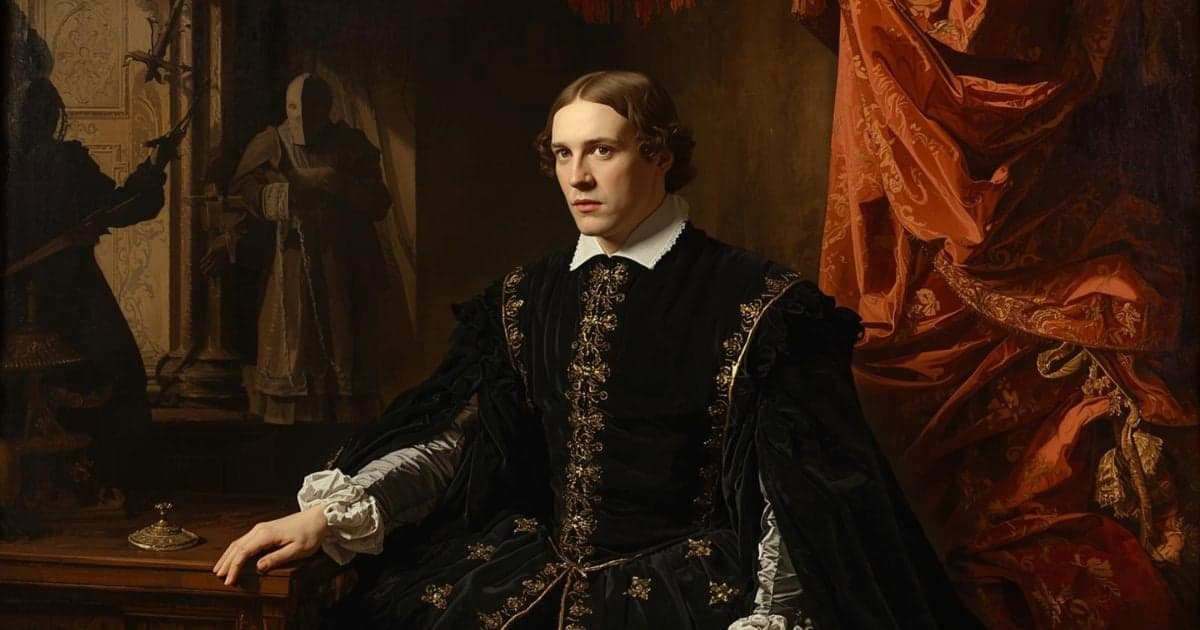
Chapter 03
Act I, Scene 3: The Court Intrigue Begins
Scena Tertia. Enter the Queene Mother, Lord Riuers, and Lord Gray. Riu. Haue patience Madam, ther's no doubt his Maiesty Will soone recouer his accustom'd health Gray. In that you brooke it ill, it makes him worse, Therefore for Gods sake entertaine good comfort, And cheere his Grace with quicke and merry eyes Qu. If he were dead, what would betide on me? If he were dead, what would betide on me? Gray. No other harme, but losse of such a Lord Qu. The losse of such a Lord, includes all harmes Gray. The Heauens haue blest you with a…
Public-domain chapter text, formatted for reading.
Master this chapter. Complete your experience
Purchase the complete book to access all chapters and support classic literature
Available in paperback, hardcover, and e-book formats
Now let's explore the literary elements.
Key Quotes & Analysis
"Cannot a plaine man liue, and thinke no harme,"
Context: Richard playing the plain honest man wronged by court flatterers
Richard opens by claiming persecution for blunt truth. The self-pity disarms the room before he launches attacks on Elizabeth's family.
In Today's Words:
Richard asks why an honest man cannot exist without being abused, which is the same move as a manager who says he is too direct for politics. The grievance buys sympathy before the attack starts. When someone frames themselves as the plain speaker in a room full of performers, watch what they say next.
"Why strew'st thou Sugar on that Bottel'd Spider, Whose deadly Web ensnareth thee about?"
Context: Margaret warning Queen Elizabeth against trusting Richard
Margaret names the danger Elizabeth cannot yet see: Richard is poison packaged as sweetness. The image cuts through Richard's victim act.
In Today's Words:
Margaret tells Elizabeth she is sweetening the trap that will kill her, which is what every ignored warning sounds like inside a company. A colleague says the charming fixer is the one who set the departments fighting. The person being warned usually hears drama until the web is already around them.
"For had I curst now, I had curst my selfe."
Context: Richard's aside after pretending repentance over Margaret's injuries
Richard performs mercy in public because cursing back would expose him. The aside shows calculation, not conscience.
In Today's Words:
Richard chooses performative restraint because open revenge would cost him cover. That is the executive who publicly prays for a rival he has already ordered removed. The line to trust is not the prayer in the room but the calculation whispered once the witnesses are gone.
"And thus I cloath my naked Villanie With odde old ends, stolne forth of holy Writ, And seeme a Saint, when most I play the deuill."
Context: Richard alone after the court departs, explaining how he frames others
Richard states the method plainly: start the harm, blame rivals, quote virtue, send killers. The saint mask is part of the weapon.
In Today's Words:
Richard wraps naked self-interest in borrowed moral language so he can dispatch murderers while looking principled. In a corporate setting, that is the leader who quotes teamwork while commissioning the review that ends a career. When virtue language arrives at the same moment as a purge, ask who started the fire they now claim to put out.
Thematic Threads
Manufactured Conflict
In This Chapter
Richard needles Elizabeth's faction, lets Margaret's curses fill the room, then performs wounded innocence while the court brawls
Development
Introduced here as systematic: Richard starts fights he later blames on rivals
In Your Life:
Notice when one person keeps reopening old grievances in meetings while claiming they want peace.
Performed Repentance
In This Chapter
Richard bows his head, quotes Scripture, and sends murderers for Clarence while telling the room he hates the fighting
Development
Virtue language now covers direct orders; the private warrant follows the public prayer
In Your Life:
When someone publicly prays for harmony right before accelerating a purge, treat the performance as timing data.
You now have the context. Time to form your own thoughts.
Discussion Questions
This is not a test. Five prompts guide you through the chapter, from how it opens to how it closes, so you notice context and rhythm rather than facts to memorize. Sit with each question in your own words. When you see "One way to read it," treat it as a starting point, not the only answer.
- 1
How does Richard use the 'plain man' pose to attack Queen Elizabeth's family while appearing wronged?
analysis • surfaceOne way to read it
Richard claims he cannot flatter like courtiers and therefore must be abused as an enemy. That self-pity disarms the room before he needles Grey, Rivers, and Elizabeth for Clarence's imprisonment and their rise to power.
- 2
What does Margaret's 'bottled spider' warning reveal about Richard that Elizabeth cannot yet see?
analysis • mediumOne way to read it
Margaret names Richard as poison packaged as sweetness whose deadly web will trap Elizabeth. He fawns before he bites, and Elizabeth is sweetening the trap by trusting the performer instead of the pattern.
- 3
Why does Richard pretend repentance after Margaret's curses instead of cursing back?
application • mediumOne way to read it
Open revenge would cost him cover. Performing mercy lets him dodge Margaret's direct curse, look Christian to the room, and leave the hatred circulating among rivals he plans to eliminate.
- 4
How does Richard's closing soliloquy change your reading of the entire court argument that came before it?
application • deepOne way to read it
He admits he started every brawl he blamed on others, pins Clarence on the Queen's faction, quotes Scripture while sending murderers, and hands over the warrant. The argument was a web, not a dispute he tried to settle.
- 5
When have you seen someone manufacture conflict between groups and then offer to mediate?
reflection • deepOne way to read it
Trace who provoked first and who benefits when every side distrusts every other side. The calm center who arrives after the explosion often seeded the blast so only they look necessary.
Critical Thinking Exercise
The Conflict Creator
Richard creates conflicts between others. Think of someone who creates problems between people while positioning themselves as the solution.
Consider:
- •How do you distinguish between someone who solves conflicts and someone who creates them?
- •Why do people fall for manufactured conflicts?
Coming Up Next...
Chapter 4: Act I, Scene 4: Clarence's Murder
Clarence wakes in the Tower from a drowning dream that names Gloucester as his destroyer, then faces two killers with Richard's warrant in their hands.