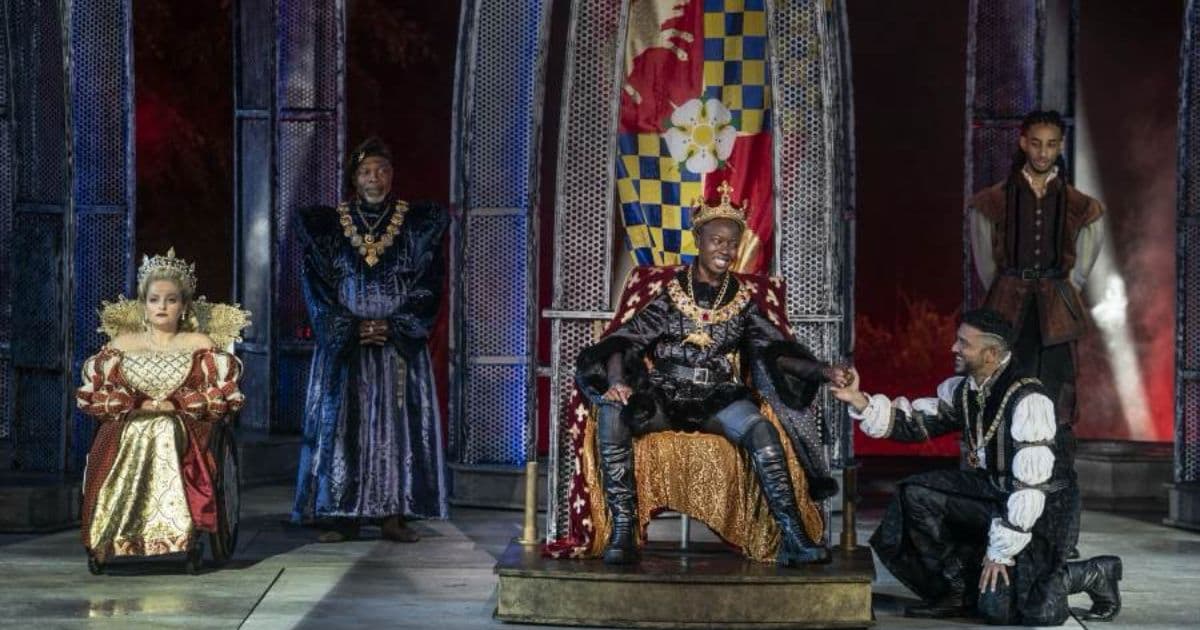
Chapter 20
Act V, Scenes 2-3: Eve of Battle at Bosworth
Scena Secunda. Enter Richmond, Oxford, Blunt, Herbert, and others, with drum and colours. Richm. Fellowes in Armes, and my most louing Frends Bruis'd vnderneath the yoake of Tyranny, Thus farre into the bowels of the Land, Haue we marcht on without impediment; And heere receiue we from our Father Stanley Lines of faire comfort and encouragement: The wretched, bloody, and vsurping Boare, (That spoyl'd your Summer Fields, and fruitfull Vines) Swilles your warm blood like wash, & makes his trough In your embowel'd bosomes: This foule Swine Is now euen in the Centry of this Isle, Ne're to the Towne…
Public-domain chapter text, formatted for reading.
Master this chapter. Complete your experience
Purchase the complete book to access all chapters and support classic literature

Available in paperback, hardcover, and e-book formats
Now let's explore the literary elements.
Key Quotes & Analysis
"He hath no friends, but what are friends for fear, Which in his deerest neede will flye from him"
Context: Blunt assessing Richard's support before the march to Bosworth
Blunt names Richard's coalition: compliance bought by fear, not loyalty. When need peaks, those allies leave.
In Today's Words:
Blunt says Richard has no real friends, only people who stay loyal out of fear and will abandon him when he needs them most. When a leader's circle shrinks to people who nod because punishment is visible, assume the room empties the moment the grip slips.
"True Hope is swift, and flyes with Swallowes wings, Kings it makes Gods, and meaner creatures Kings."
Context: Richmond closing his rally before both camps reach Bosworth
Richmond ends on momentum, not manipulation. Hope becomes speed when conscience and organization align.
In Today's Words:
Richmond says true hope moves fast like swallows and can elevate even ordinary people into kings. He is not buying loyalty; he is naming shared purpose after Oxford and Blunt have defined the enemy. When a challenger closes a rally with hope instead of threats, watch whether the camp organizes while the tyrant stops eating.
"I haue not that Alacrity of Spirit, Nor cheere of Minde that I was wont to haue."
Context: Richard alone with Ratcliffe after refusing supper
Richard's bravado cracks in private. The king who trebbles accounts cannot recover his old cheer.
In Today's Words:
Richard tells Ratcliffe he no longer has the quick spirit or cheerful mind he used to carry. He said tomorrow is a busy day in public, but alone he will not sup. When a predator admits lost alacrity the night before the fight, treat the boast as cover, not proof.
"But on thy side I may not be too forward, Least being seene, thy Brother, tender George Be executed in his Fathers sight."
Context: Derby's secret night visit to Richmond's tent
Derby will aid with best advantage but George's life limits how visible he can be. The hostage reaches into Richmond's tent.
In Today's Words:
Derby tells Richmond he cannot openly join his side because if he is seen, tender George will be executed in his father's sight. He will help with best advantage, but the hostage quarter holds him half a mile south. When an ally blesses you at night while a relative is held, leverage owns the fight.
Thematic Threads
Fear-Friends vs Conscience
In This Chapter
Blunt says Richard's friends are friends for fear; Oxford says conscience is a thousand men
Development
Richmond's camp names moral weight; Richard's camp names numbers and the King's name
In Your Life:
When one side counts consciences and the other counts terrified allies, ask which count still works when fear drops.
Hostage on the Eve
In This Chapter
Stanley quartered south; Derby cannot be too forward lest George be executed
Development
The George lever reaches into Richmond's tent the night before battle
In Your Life:
If a key ally can only bless you in secret because family is held upstairs, the fight is already about leverage, not loyalty speeches.
You now have the context. Time to form your own thoughts.
Discussion Questions
This is not a test. Five prompts guide you through the chapter, from how it opens to how it closes, so you notice context and rhythm rather than facts to memorize. Sit with each question in your own words. When you see "One way to read it," treat it as a starting point, not the only answer.
- 1
Why does Blunt's fear-friends speech matter before Richmond's true-hope closing?
analysis • surfaceOne way to read it
Blunt says Richard hath no friends but what are friends for fear, who will fly in his dearest need. That diagnosis steels Richmond's camp: the tyrant's support is terror, not loyalty.
- 2
What does Richard's refusal to sup and lost alacrity reveal beneath his trebbles account?
analysis • mediumOne way to read it
Richard boasts his battalia trebbles the traitors while admitting he will not eat and lacks cheer of mind he was wont to have. Public confidence hides private fraying on the eve of Bosworth.
- 3
How does Richmond's battle planning contrast with Richard's tomorrow is a busy day?
application • mediumOne way to read it
Richmond reads the sunset as goodly day, draws form and model of battle, and sends Blunt to Stanley with a needful note. Richard jokes about tomorrow while Richmond organizes the field.
- 4
Why can Derby aid Richmond but not be too forward on the eve of battle?
application • deepOne way to read it
George Stanley remains Richard's hostage. Derby can help Richmond quietly but cannot expose himself fully without risking his son's head—the lever reaches into both tents.
- 5
What does Richmond's prayer and sleep add to the chapter's closing contrast?
reflection • deepOne way to read it
Richmond prays and sleeps with true hope; Richard watches without appetite or spirit. One side rests in organized cause; the other frays behind boasts and hostages.
Critical Thinking Exercise
The Eve Contrast Analysis
Richmond and Richard share Bosworth on the same night with opposite spirits. Think of a time when two sides faced the same deadline but one organized while the other frayed behind fear and hostages.
Consider:
- •How do fear-friends differ from conscience as a thousand men?
- •What does lost alacrity tell you that public boasts hide?
- •Why does the George lever reach into Richmond's tent?
- •Who sleeps and who watches, and what does that predict?
Journaling Prompt
Write about an eve-of-battle contrast you witnessed. Which detail was the real tell: food, sleep, or secret blessings?
Coming Up Next...
Chapter 21: Act V, Scene 3 (cont.): The Ghosts & Richard's Conscience
Richmond sleeps while ghosts of Richard's victims curse Richard and bless Richmond; Richard wakes to conscience and fear, crying give me another horse while shadows strike more terror than ten thousand soldiers.