
Free study guide · no paywall
The RepublicStudy Guide
by Plato (-375)
Justice, the Cave, and the slide from freedom to tyranny, mapped across 10 books and six lessons.
Start here
Plot, characters & chapter jump
10 chapter summaries · 6 key figures · discussion questions · quotes · free
Plot summary
Socrates is pressed into a night-long argument after a festival in the Piraeus. Ten books break household answers to justice, give Gyges an invisibility ring, build a city in speech, chain prisoners to a wall of shadows, and let that city decay from honor to wealth to freedom to a tyrant locked inside his own beast. Book 10 ends with Er walking back from the dead to choose a life no god will choose for him.
Key characters
Jump to chapter
What readers search for
Common questions about The Republic
What is The Republic about?
Socrates is stopped on the road home from a festival and pressed into a night-long argument in Cephalus's house. The question looks small: what is justice? Book 1 breaks the household answers. Book 2 gives Gyges an invisibility ring. By Book 7 prisoners face a wall of shadows. By Book 10 a soldier named Er walks back from the dead to choose a life. Plato is not drafting a constitution. He is magnifying a soul after the city that killed his teacher.
Why Be Good When You Could Get Away With ItWhat is Plato's Allegory of the Cave in The Republic?
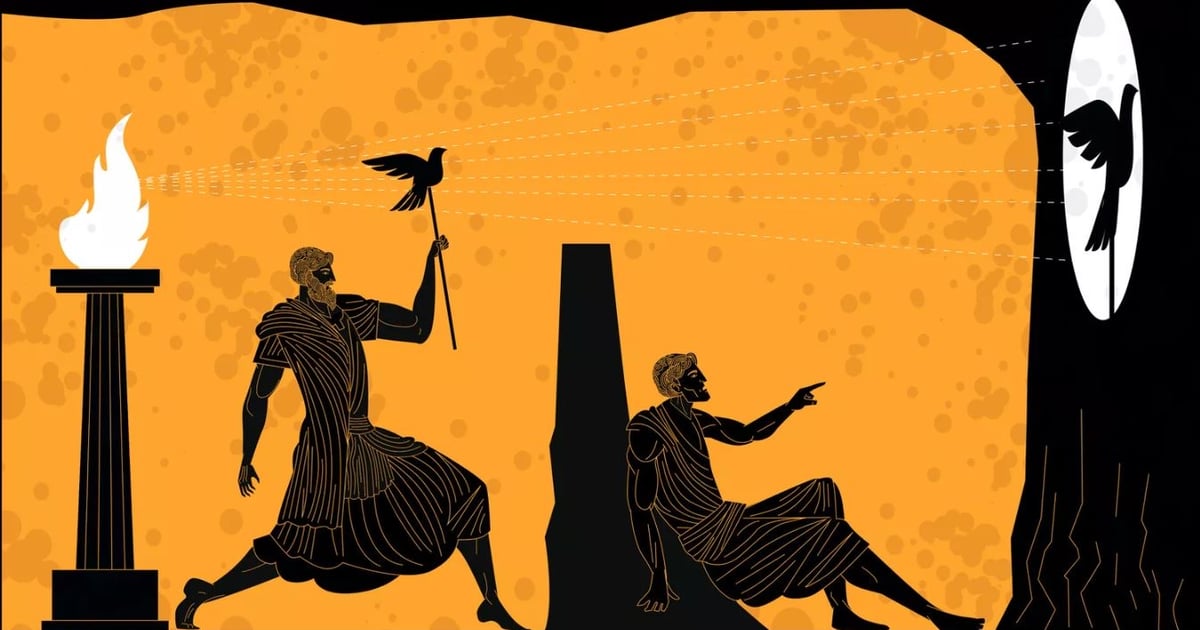
Book 7 chains prisoners who have known only shadows cast by a fire they cannot see. One is dragged up toward the sun, blinded, then mocked when he returns to describe what is real. The wall is not ancient decoration. It is the feed, the consensus, the contest you are ranked in because nobody turned toward the fire. Education, in this image, is not pouring facts into an empty vessel. It is turning the whole person toward a light the room will resist.
The CaveWhat is justice in The Republic?
Cephalus says tell the truth and pay your debts until a borrowed sword in a mad friend's hand ruins the rule. Thrasymachus names the prize most rooms actually chase: justice is the advantage of the stronger. Glaucon will not accept a win on points. He wants the just man stripped of reputation, put on the rack, and still proven happier than the successful fraud. The dialogue refuses a slogan. It builds a city in speech so the virtue can be seen large enough to test.
Why Be Good When You Could Get Away With ItWhat is the Ring of Gyges in The Republic?
Book 2 tells how a shepherd finds a ring that makes him invisible, murders the king, seduces the queen, and takes the throne. Glaucon asks what anyone would do with that power, then demands that justice be shown as good even when nobody is watching and the just man still goes to the rack. The ring is the weekly test: would this still be your rule if reputation, punishment, and reward were all removed from the scale?
Why Be Good When You Could Get Away With ItWhat is the philosopher king in The Republic?
Book 5 sends the third wave: philosophers must rule, or kings must philosophize, because those who love the sight of truth are the ones least likely to treat the helm as a prize. Book 6 sets the ship whose owner is half deaf while sailors fight for the wheel and call the navigator who reads the stars a useless stargazer. Plato is not flattering philosophers. He is asking who can steer when everyone else is bidding for the chair.
What Makes a Leader Worth FollowingFast track
Short on time? Start here
These seven books carry the argument end to end: the question that will not stay polite, the ring that tests motive, the turn toward light, and the meadow where the choice is finally yours.
Full coverage
Everything in this study guide
The same surfaces readers expect from a traditional study guide — plot, characters, themes, quotes, and homework help — plus audio and the source text on every chapter. Free, no paywall.
Plot overview
Summary, context, and why the book still matters
10 chapter summaries
Every chapter with audio narration
6 key figures
Who drives the plot and what each one does
6 lessons
Themes traced to scenes, not generic labels
15+ important quotes
Verified lines with chapter links and analysis
Discussion questions
Five per chapter, with suggested answers for class and essays
Original text
Author's words beside every summary
This is not a plot cheat sheet. Wide Reads walks all ten books of The Republic as Plato's stress test for justice after Athens made Socrates drink hemlock. Follow the six lesson deep dives when a book hits close to home, then open individual books for summaries, quotes, and audio.
For plot and theme questions about The Republic, see Common Questions on the book page.
How to use this guide
How to Read This Book with Wide Reads
Start with the question
Books 1 and 2 break the polite answers: Cephalus's ledger, Polemarchus's friends and enemies, Thrasymachus's stronger party, then Gyges' ring and the just man on the rack. You need Book 2's dare before the city in speech can land.
Follow the city and the turn
Books 3 through 7 build guardians, send the philosopher-king wave, set the ship whose sailors mock the stargazer, and drag prisoners from shadows toward the sun. Books 8 and 9 let the just city decay and lock the tyrant inside a many-headed beast.
Let the six lessons carry you
When a book raises a question you cannot shake, whether the Ring of Gyges, the Cave, the ship, the decay into tyranny, or Er's meadow, jump to the matching lesson page, then return to the book list.
Plot & context
Book Overview
Socrates is walking back from a festival for Bendis in the Piraeus when Polemarchus sends a slave to catch his cloak. They will not let him leave until he has seen the torch race and sat down to talk. In Cephalus's house the first question is small enough to look safe: what is justice? Tell the truth and pay your debts, the old man says, and goes off to a sacrifice. A borrowed sword in a mad friend's hand already ruins that answer. Plato wrote The Republic in the decades after Athens made Socrates drink hemlock. Ten books refuse to let the question stay polite.
Socrates is the guest who will not stop. Cephalus wants a quiet old age and a clean ledger. Polemarchus inherits the argument: help friends, harm enemies. Thrasymachus slams in and names the real prize. Justice is the advantage of the stronger, and the unjust man with power lives better than the honest one. Glaucon will not accept a win on points. He wants the just man stripped of reputation, put on the rack, and still proven happier than the successful fraud. Adeimantus adds that poets and priests praise justice for its pay, not for itself. The prisoners facing a wall, and the navigator mocked on a ship of fools, arrive later as the same pressure in pictures. Most people live by what they are shown. The one who has seen more looks useless.
Book 1 breaks the household answers. Book 2 is the hinge. Gyges finds a ring that makes him invisible and takes a kingdom. Glaucon asks what anyone would do with that ring, then demands that justice be shown as good even when it looks like ruin. Socrates starts a city in speech so the virtue can be seen large: guardians, a noble lie, a soul in three parts. Book 5 sends the third wave. Philosophers must rule, or kings must philosophize. Book 6 is a ship whose owner is half deaf. Sailors fight for the helm and call the man who studies the stars a stargazer. Book 7 chains prisoners facing a wall. Shadows of puppets are their world. One is dragged up to the sun and comes back looking ridiculous to the people still watching the fire. Book 8 lets the just city decay: honor, then wealth, then freedom, then a champion who becomes a tyrant. Book 9 locks that tyrant inside a many-headed beast standing over a lion standing over a man. Book 10 sends Homer out of the city and ends with Er, a soldier who watches souls choose their next lives.
Plato is not drafting a constitution for Athens to adopt. He is writing a night-long argument after the city that killed his teacher. The city in speech is a magnifying glass for a soul. The ending refuses a civic victory. Homer is still loved. The just man may still look ruined. Er comes back from the dead to say the choice of a life is the chooser's, and God is justified.
Read the full summary on the book page →
Why this book now
People still arrive when institutions they trusted stop making sense, when a comfortable belief inherited from the room will not survive one honest question, or when the person who wants the helm most is the last one fit to steer. Plato does not offer a blueprint for utopia. He magnifies a soul. This guide keeps Gyges, the Cave, the ship, and Er's meadow tied to choices you can still name.
About Plato
Plato (428-348 BC) was born into an Athens that had just lost a generation-long war and watched its civic life turn brutal. He came from one of the city's most distinguished families, was groomed for politics, and might have taken his place among the powerful until he saw something that changed the course of Western thought. In 399 BC, his teacher Socrates was tried on charges of impiety and corrupting the youth, convicted by a jury of his fellow citizens, and sentenced to drink hemlock. Plato was about thirty. He left public life, founded the Academy, the Western world's first sustained institution of higher learning, and spent the next fifty years writing. What he produced was unlike anything before it: philosophy cast as conversation, not lecture. In his dialogues, Socrates walks through the streets, argues in private houses, catches his companions in contradictions, and refuses to let comfortable answers stand unexamined. Plato gives you the scene, the personalities, the stakes, and the moment when someone's certainty cracks. You are not reading conclusions handed down from a podium. You are watching a mind think in real time. The Republic is his most ambitious dialogue: a single night-long conversation that begins with a simple question about justice and expands into an entire city, a theory of the soul, the Allegory of the Cave, and a warning about how free societies decay into tyranny. It asks whether you would still choose to be good if you could get away with anything, and whether the people who want power most are the ones who should hold it.
Themes with proof
Lessons from The Republic
Six pressures repeat across the ten books: why be good when you could get away with it; the Cave as education as turning, not pouring; what makes a leader worth following when everyone fights for the helm; how good systems decay when virtues colonize everything else; ruling yourself first through reason, spirit, and appetite; and owning the life you choose when Er's meadow removes every excuse. Each spoke ties named books to the pattern.
Deep dives
Chapter-by-chapter breakdowns
What Makes a Leader Worth Following
Separate the fight for the helm from the craft of reading weather, and follow the person who can steer without milking the chair.
We are not aiming to make one class especially happy, but to make the whole city as happy as possible.
How Good People Become Bad Systems
Catch the moment a real virtue (honor, thrift, freedom) stops governing and starts colonizing everything else.
Decay starts as loyalty to something genuinely good. Honor is not a vice. Honor as the only scoreboard is. When a culture…
Character guide
Key Figures
Who drives the plot, what each one wants, and why they matter to the argument of the book.
Socrates
Guest who will not let justice stay a slogan: he breaks every household answer and builds a city in speech so the virtue can be tested large.
Glaucon
Demands justice be good on the rack and gives Gyges' ring as the weekly test of whether anyone would still be just if invisible.
Adeimantus
Adds that poets and priests praise justice for its pay, not for itself, so the argument cannot win on reputation alone.
Thrasymachus
Names the prize most rooms actually chase: justice is the advantage of the stronger, and the unjust man with power lives better.
Cephalus
Opens with tell the truth and pay your debts, then leaves for a sacrifice before the borrowed sword ruins the rule.
Er
Soldier who walks back from the dead in Book 10 to show souls choosing lives they will not be allowed to blame on anyone else.
Memorable lines
Key Quotes
Verified passages with chapter links — the lines teachers and essays keep returning to.
“might is right, justice the interest of the stronger: now praise me.”
“To tell the truth and pay your debts? No more than this? Or must we admit exceptions? Ought I, for example, to put back into the hands of my friend, who has gone mad, the sword which I borrowed of him when he was in his right mind? 'There must be exceptions.”
“two rings, like that of Gyges in the well-known story, which make them invisible, and then no difference will appear in them, for every one will do evil if he can.”
“Men are taught to be just for the sake of rewards; parents and guardians make reputation the incentive to virtue.”
“rather be a serving-man than rule over all the dead;' and the verses which tell of the squalid mansions, the senseless shadows, the flitting soul mourning over lost strength and youth, the soul with a gibber going beneath the earth like smoke, or the souls of the suitors which flutter about like bats.”
“Neither is death terrible to him; and therefore lamentations over the dead should not be practised by men of note; they should be the concern of inferior persons only, whether women or men.”
“eye must be an eye, and you should look at the statue as a whole.”
“good of the whole and not of any one part.”
“friends have all things in common.”
“dig for gold, or to hear you discourse?' Yes, I said; but the discourse should be of a reasonable length.”
“The sailors want to steer, although they know nothing of the art; and they have a theory that it cannot be learned.”
“corruptio optimi pessima,' cannot be maintained generally or without regard to the kind of excellence which is corrupted.”
“Imagine human beings living in an underground den which is open towards the light; they have been there from childhood, having their necks and legs chained, and can only see into the den.”
“Now the cave or den is the world of sight, the fire is the sun, the way upwards is the way to knowledge, and in the world of knowledge the idea of good is last seen and with difficulty, but when seen is inferred to be the author of good and right—parent of the lord of light in this world, and of truth and understanding in the other.”
“ruin of oligarchy is the ruin of democracy; for there is a law of contraries; the excess of freedom passes into the excess of slavery, and the greater the freedom the greater the slavery.”
Class & essay prep
Discussion Questions
Sample prompts drawn from the chapter guides — each with suggested answers for seminars and written work.
What definition of justice does Cephalus offer when the conversation begins?
From Chapter 1How does Thrasymachus define justice when he takes over the argument?
From Chapter 1What is the Ring of Gyges, and what does Glaucon think would happen if someone found it?
From Chapter 2Why do the brothers argue that even 'good' people might just be too weak or scared to do bad things?
From Chapter 2Why does Socrates want to remove certain stories about gods and heroes from guardian education?
From Chapter 3What is the 'noble lie' Socrates proposes, and what purpose does it serve?
From Chapter 3What are the three parts of the soul that Socrates identifies, and what does each part want?
From Chapter 4What does the story of Leontius looking at corpses show about inner conflict?
From Chapter 4Why do Polemarchus and Adeimantus refuse to let Socrates skip over women and children?
From Chapter 5How does Socrates use the guard dog analogy to argue for women guardians?
From Chapter 5What happens in Socrates's ship allegory, and who represents the philosopher?
From Chapter 6Why does Adeimantus say philosophers often look useless or corrupt in real cities?
From Chapter 6What do the prisoners in the cave see, and what do they take those shadows to be?
From Chapter 7Why do the other prisoners want to kill the one who returns from the light?
From Chapter 7What are the four declining governments Plato describes after the ideal state?
From Chapter 8Chapter by chapter
All Chapters
Chapter-by-chapter summaries, quotes, and audio.
Ch. 1 · The Festival and the First QuestionWhat is justice?
The Republic begins at a festival for Bendis in the Piraeus, where Socrates and Glaucon are persuaded to stay for conversation at the home of the aged...
Ch. 2 · The Challenge of JusticeGyges' ring and the just man on the rack
Thrasymachus is silenced, but Glaucon refuses to let the argument rest. He sorts goods into three kinds: things valued for themselves, things valued f...
Ch. 3 · The Noble Lie and the Education of Guardians
Socrates turns from defending justice in the abstract to designing the education that would produce worthy guardians. Because stories shape character ...
Ch. 4 · The Soul's Three Parts
Adeimantus interrupts with a practical objection: Socrates' guardians live like ascetic soldiers, without private wealth or luxury, so how can they be...
Ch. 5 · The Great Wave of EqualityPhilosophers must rule
Having outlined classes and education, Socrates provokes his friends with a first wave of paradox: women should share guardian training, including gym...
Ch. 6 · The Ship of FoolsThe ship and the stargazer
Socrates must explain what philosophers are and why cities reject them. A philosopher loves learning for its own sake and grasps eternal forms, especi...
Ch. 7 · The Cave and the LightThe Allegory of the Cave
Socrates continues by asking who should learn philosophy and when. The young should not be thrown into dialectic too early, he warns, or cleverness wi...
Ch. 8 · The Decline of States and SoulsHow cities decay
Adeimantus asks how the ideal city could fall, and Socrates answers that even good constitutions decay through time, error in breeding, and miscalcula...
Ch. 9 · The Tyrant's Prison
Socrates argues that the tyrannical soul is the most unjust and therefore the least happy, reversing Glaucon's earlier wager that successful vice pays...
Ch. 10 · The Cave's Exit and Soul's JourneyEr chooses a life
The final book returns to poetry, pleasure, and immortality. Socrates renews his attack on tragic and epic imitation, claiming that poets stir emotion...
Using this guide
Study Guide FAQ
How to use Wide Reads for class, essays, and revision — and how this guide compares to traditional study sites.
Why Wide ReadsWhat makes this different from SparkNotes or CliffsNotes?
Traditional study guides summarise what Plato argues in The Republic. This guide gives you that coverage: all 10 books, six key figures, and discussion questions with suggested answers, book by book. Wide Reads adds The Cave and How Good People Become Bad Systems traced through named scenes like the drag toward the sun and Book 8's slide into tyranny. Summaries include audio; the original text sits beside every book. Free, no paywall.
Is The Republic hard to read?
The Republic is rated advanced difficulty. Our chapter-by-chapter analysis breaks down complex passages, explains historical context, and highlights key themes to make the text more accessible. Each chapter includes summaries, character analysis, and discussion questions to deepen your understanding.
Can I use this study guide for essays and homework?
Yes — use this reading guide alongside The Republic, not instead of it. Wide Reads exists to show you why the book still matters: lessons, chapter summaries with audio, and life skills you can carry into real life. That context can sharpen essays on themes, characters, and quotes. Always read Plato's original text, though. We are the guide at the trailhead; the classic is still the point.
Begin with the borrowed sword
Book 1 opens with tell the truth and pay your debts, then breaks the answer the moment a mad friend needs the weapon. Each book adds summaries, quotes, audio, and the justice thread that turns a night in the Piraeus into a test you can still apply.
Wide Reads is different.
Plot, characters, and themes — plus audio, source text, and patterns you can use after class
Two ways in
Read & listen to the summary
Chapter by chapter, with audio. The meaning arrives because you experienced it — not because someone listed bullet points.
Start with this.
Read the original text
The actual words the author wrote, alongside every summary. Use the guide, then step into the source.
Then step into the source.
Either way, the door opens inward.
— and most of all, Why does this matter?
Continue Exploring
Guides, life skills, and the full library.More ways to read The Republic: guides, life skills, and the wider library.


