Wide Reads
Literature MattersLife IndexEducators
Sign in
Where to Begin
The Republic - The Decline of States and Souls

Plato

The Republic

The Decline of States and Souls

Home›Books›The Republic›Chapter 8
Previous
8 of 10
Next

Summary

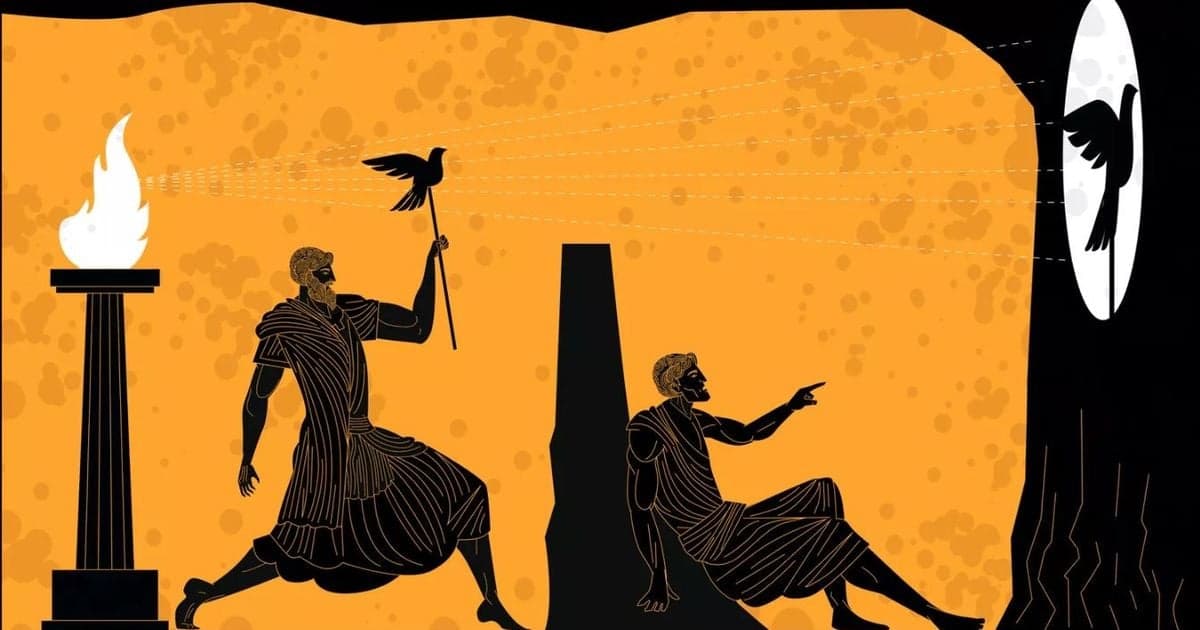
The Decline of States and Souls

The Republic by Plato

0:000:00
Listen to Next Chapter

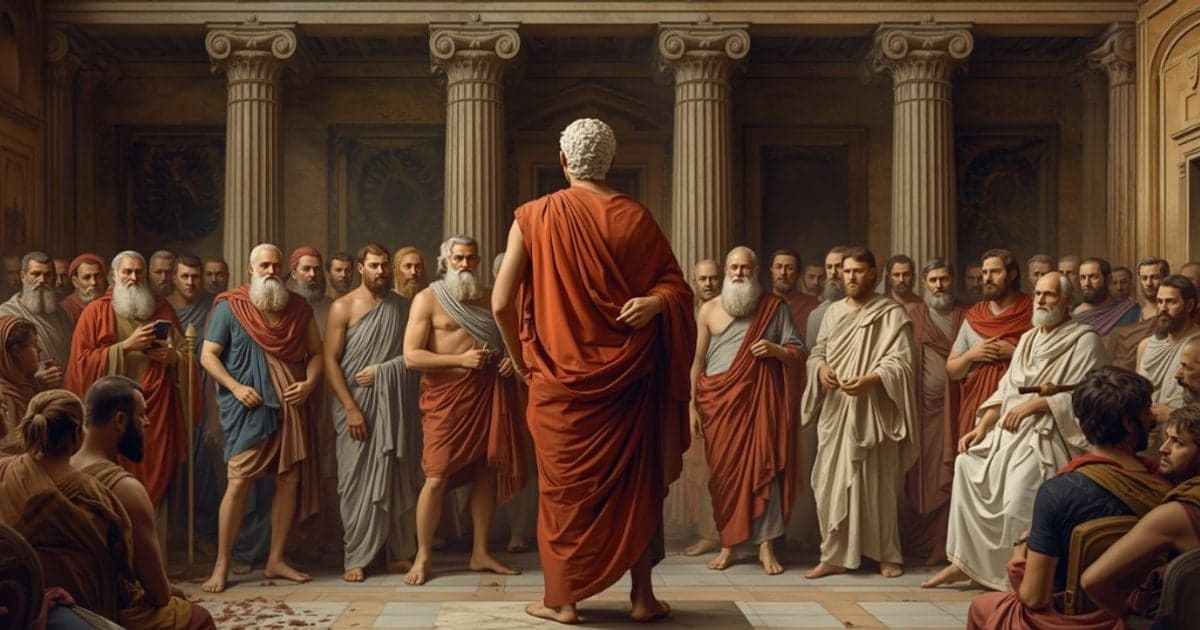
Plato traces the decline of governments through five stages, each worse than the last. Starting from the ideal state, societies decay into timocracy (rule by warriors), then oligarchy (rule by the wealthy), democracy (rule by everyone), and finally tyranny (rule by one). Each form contains the seeds of its own destruction. In timocracy, love of honor replaces wisdom. The timocratic person grows up torn between a philosophical father who minds his own business and a ambitious mother who pushes for worldly success. Oligarchy emerges when wealth becomes more important than honor. The oligarchic person is a miser who suppresses all desires except making money, creating a divided soul at war with itself. Democracy springs from oligarchy when the poor overthrow the rich. While it offers freedom and variety, Plato sees democracy as chaos where every lifestyle is equal and no one respects authority. The democratic person indulges every pleasure equally, living without discipline. Finally, tyranny emerges from democracy's excess of freedom. The tyrant starts as a protector of the people but becomes a monster who must purge the best citizens to stay in power. Each decline shows how imbalance – whether too much honor, wealth, or freedom – corrupts both states and souls. The pattern reveals why societies fail: they lose sight of justice and wisdom, chasing lesser goods until they destroy themselves.

Coming Up in Chapter 9

Having traced the tyrant's rise to power, Plato now examines the tyrant's inner life. What dark appetites rule the tyrannical soul, and why is the tyrant the most miserable of all people despite having absolute power?

Share it with friends

Previous ChapterNext Chapter
GO ADS FREE — JOIN US
Original text
complete·8,363 words
B

OOK VIII. And so we have arrived at the conclusion, that in the perfect State wives and children are to be in common; and the education and pursuits of men and women, both in war and peace, are to be common, and kings are to be philosophers and warriors, and the soldiers of the State are to live together, having all things in common; and they are to be warrior athletes, receiving no pay but only their food, from the other citizens. Now let us return to the point at which we digressed. ‘That is easily done,’ he replied: ‘You were speaking of the State which you had constructed, and of the individual who answered to this, both of whom you affirmed to be good; and you said that of inferior States there were four forms and four individuals corresponding to them, which although deficient in various degrees, were all of them worth inspecting with a view to determining the relative happiness or misery of the best or worst man. Then Polemarchus and Adeimantus interrupted you, and this led to another argument,—and so here we are.’ Suppose that we put ourselves again in the same position, and do you repeat your question. ‘I should like to know of what constitutions you were speaking?’ Besides the perfect State there are only four of any note in Hellas:—first, the famous Lacedaemonian or Cretan commonwealth; secondly, oligarchy, a State full of evils; thirdly, democracy, which follows next in order; fourthly, tyranny, which is the disease or death of all government. Now, States are not made of ‘oak and rock,’ but of flesh and blood; and therefore as there are five States there must be five human natures in individuals, which correspond to them. And first, there is the ambitious nature, which answers to the Lacedaemonian State; secondly, the oligarchical nature; thirdly, the democratical; and fourthly, the tyrannical. This last will have to be compared with the perfectly just, which is the fifth, that we may know which is the happier, and then we shall be able to determine whether the argument of Thrasymachus or our own is the more convincing. And as before we began with the State and went on to the individual, so now, beginning with timocracy, let us go on to the timocratical man, and then proceed to the other forms of government, and the individuals who answer to them.

1 / 32

Master this chapter. Complete your experience

Purchase the complete book to access all chapters and support classic literature

Read Free on GutenbergBuy at Powell'sBuy on Amazon

As an Amazon Associate, we earn a small commission from qualifying purchases at no additional cost to you.

Available in paperback, hardcover, and e-book formats

GO ADS FREE — JOIN US

Why This Matters

Connect literature to life

Skill: Spotting Institutional Decay

This chapter teaches you to recognize the predictable stages of organizational decline—from wisdom to honor to wealth to chaos to tyranny.

Practice This Today

This week, notice when your workplace or community group starts valuing something new above its original purpose—that's your early warning signal.

GO ADS FREE — JOIN US

Now let's explore the literary elements.

Key Quotes & Analysis

"The ruin of oligarchy is the ruin of democracy; the same disease magnified and intensified by liberty overmasters democracy"

— Socrates

Context: Explaining how each government form creates the next through its own excess

Shows how the very thing a society values most becomes its downfall. Oligarchy's greed creates revolution; democracy's freedom creates chaos. The cure becomes the poison.

In Today's Words:

When you take anything too far - even good things like freedom - it flips around and destroys you

"The tyrant is always stirring up some war or other, in order that the people may require a leader"

— Socrates

Context: Describing how tyrants maintain power through manufactured crises

Reveals how leaders create external threats to justify their power. Fear becomes a tool of control, making people trade freedom for security.

In Today's Words:

Keep people scared and they'll let you do anything - that's the dictator's playbook

"Democracy, which is a charming form of government, full of variety and disorder, and dispensing a sort of equality to equals and unequals alike"

— Socrates

Context: Giving his ironic description of democratic society

Plato sees democracy's equality as chaos - when all opinions and lifestyles are equally valid, nothing has real value. Freedom without wisdom leads to mob rule.

In Today's Words:

When everyone's opinion counts the same regardless of knowledge or wisdom, you get a hot mess

"The son is on a level with his father, he having no respect or reverence for either of his parents"

— Socrates

Context: Describing the breakdown of authority in democratic society

Shows how democracy's equality erodes all hierarchies, even natural ones like parent-child. When nothing is sacred, chaos follows.

In Today's Words:

Kids talking back to parents like they're equals - that's where it starts going wrong

Thematic Threads

Power

In This Chapter

Power shifts from wisdom to honor to wealth to mob rule to absolute control

Development

Evolved from earlier discussions of justice—now showing how power corrupts when separated from wisdom

In Your Life:

Notice how your workplace's power structure has shifted over the years—what used to matter versus what matters now

Class

In This Chapter

Each government type creates different class structures—from philosopher-kings to warrior class to rich vs poor to tyrant vs everyone

Development

Deepens Book 3's discussion of classes by showing how class systems evolve and decay

In Your Life:

Watch how economic changes in your community create new class divisions and conflicts

Identity

In This Chapter

People's identities shift with their government—from wisdom-seekers to honor-seekers to money-makers to pleasure-seekers to fear-driven subjects

Development

Extends earlier ideas about how society shapes souls—now showing how corrupted societies create corrupted identities

In Your Life:

Consider how your workplace culture has changed what employees value and how they see themselves

Balance

In This Chapter

Each decline happens because one value dominates all others—honor, wealth, freedom—destroying the balance justice requires

Development

Introduced here as the key to preventing decay

In Your Life:

Look for imbalances in your own life—where one priority has crowded out everything else

GO ADS FREE — JOIN US

You now have the context. Time to form your own thoughts.

Discussion Questions

  1. 1

    What are the five types of government Plato describes, and what causes each one to fail?

    analysis • surface
  2. 2

    Why does Plato think the children of successful people often rebel against their parents' values? How does this drive political change?

    analysis • medium
  3. 3

    Think of an organization you know well—your workplace, school, or community group. Which stage of decline does it match, and what warning signs do you see?

    application • medium
  4. 4

    If you were trying to prevent your workplace from sliding from 'caring about quality' to 'only caring about metrics,' what specific actions would you take?

    application • deep
  5. 5

    What does this pattern of decline teach us about why humans keep making the same mistakes across generations?

    reflection • deep

Critical Thinking Exercise

15 minutes

Diagnose Your Organization's Health

Pick an organization you know well—your workplace, your kid's school, your church, or even your family. Map it against Plato's five stages. What values does it claim to prioritize? What actually drives decisions? What's being neglected that could cause future problems?

Consider:

  • •Look for gaps between stated values and actual behavior
  • •Notice what gets rewarded versus what gets punished
  • •Think about what the next generation in this organization seems to want that's different from current leadership

Journaling Prompt

Write about a time when you watched an organization or group change its core values. What drove the change? Could the decline have been prevented, and if so, how?

GO ADS FREE — JOIN US

Coming Up Next...

Chapter 9: The Tyrant's Prison

Having traced the tyrant's rise to power, Plato now examines the tyrant's inner life. What dark appetites rule the tyrannical soul, and why is the tyrant the most miserable of all people despite having absolute power?

Continue to Chapter 9
Previous
The Cave and the Light
Contents
Next
The Tyrant's Prison

Continue Exploring

The Republic Study GuideTeaching ResourcesEssential Life IndexBrowse by ThemeAll Books
Moral Dilemmas & EthicsPower & CorruptionIdentity & Self-Discovery

You Might Also Like

On Liberty cover

On Liberty

John Stuart Mill

Explores justice & fairness

The Analects cover

The Analects

Confucius

Explores society & class

The Idiot cover

The Idiot

Fyodor Dostoevsky

Explores society & class

Nicomachean Ethics cover

Nicomachean Ethics

Aristotle

Explores morality & ethics

Browse all 47+ books
GO ADS FREE — JOIN US

Share This Chapter

Know someone who'd enjoy this? Spread the wisdom!

TwitterFacebookLinkedInEmail

Read ad-free with Prestige

Get rid of ads, unlock study guides and downloads, and support free access for everyone.

Subscribe to PrestigeCreate free account
Intelligence Amplifier
Intelligence Amplifier™Powering Wide Reads

Exploring human-AI collaboration through books, essays, and philosophical dialogues. Classic literature transformed into navigational maps for modern life.

2025 Books

→ The Amplified Human Spirit→ The Alarming Rise of Stupidity Amplified→ San Francisco: The AI Capital of the World
Visit intelligenceamplifier.org
hello@widereads.com

WideReads Originals

→ You Are Not Lost→ The Last Chapter First→ The Lit of Love→ Wealth and Poverty→ 10 Paradoxes in the Classics · coming soon
Arvintech
arvintechAmplify your Mind
Visit at arvintech.com

Navigate

  • Home
  • Library
  • Essential Life Index
  • How It Works
  • Subscribe
  • Account
  • About
  • Contact
  • Authors
  • Suggest a Book
  • Landings

Made For You

  • Students
  • Educators
  • Families
  • Readers
  • Literary Analysis
  • Finding Purpose
  • Letting Go
  • Recovering from a Breakup
  • Corruption
  • Gaslighting in the Classics

Newsletter

Weekly insights from the classics. Amplify Your Mind.

Legal

  • Privacy Policy
  • Terms of Service
  • Cookie Policy
  • Accessibility

Why Public Domain?

We focus on public domain classics because these timeless works belong to everyone. No paywalls, no restrictions—just wisdom that has stood the test of centuries, freely accessible to all readers.

Public domain books have shaped humanity's understanding of love, justice, ambition, and the human condition. By amplifying these works, we help preserve and share literature that truly belongs to the world.

A Pilgrimage

Powell's City of Books

Portland, Oregon

If you ever find yourself in Portland, walk to the corner of Burnside and 10th. The building takes up an entire city block. Inside is over a million books, new and used on the same shelf, organized by color-coded rooms with names like the Rose Room and the Pearl Room. You can lose an afternoon. You can lose a weekend. You will find a book you have been looking for your whole life, and three you did not know existed.

It is a pilgrimage. We cannot find a bookstore like it anywhere on earth. If you read the classics, and you ever get the chance, go. It belongs on every reader's bucket list.

Visit powells.com

We are not in any way affiliated with Powell's. We are just a very big fan.

© 2026 Wide Reads™. All Rights Reserved.

Intelligence Amplifier™ and Wide Reads™ are proprietary trademarks of Arvin Lioanag.

Copyright Protection: All original content, analyses, discussion questions, pedagogical frameworks, and methodology are protected by U.S. and international copyright law. Unauthorized reproduction, distribution, web scraping, or use for AI training is strictly prohibited. See our Copyright Notice for details.

Disclaimer: The information provided on this website is for general informational and educational purposes only and does not constitute professional, legal, financial, or technical advice. While we strive to ensure accuracy and relevance, we make no warranties regarding completeness, reliability, or suitability. Any reliance on such information is at your own risk. We are not liable for any losses or damages arising from use of this site. By using this site, you agree to these terms.