
On Liberty
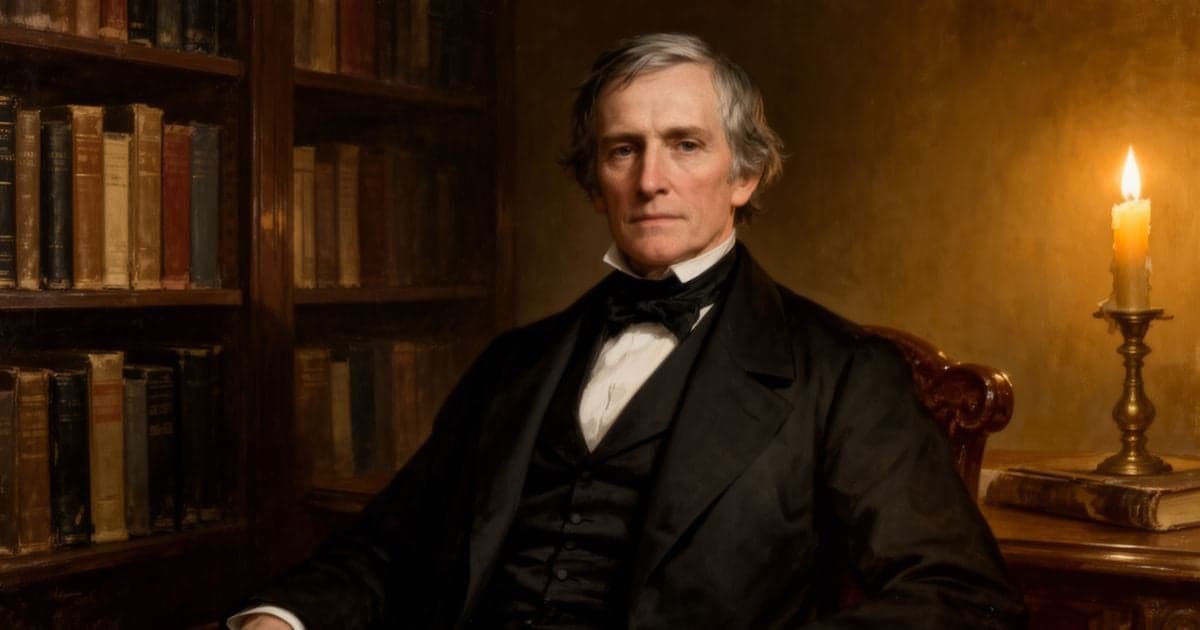
John Stuart Mill
0:00 / 0:00
Subjects used to know the enemy: a government you could point at, a king whose name went on the warrant. Mill opens by saying that fight is no longer the dangerous one. The people who exercise the power are not always the same people over whom it is exercised. He writes in 1859, after the vote has begun to spread and England is congratulating itself on progress. The crowd that replaced the king can follow you into private life, and call the visit morality.
The figures who decide the argument are not characters so much as cases. The majority that calls its preference morality. The dissenter whose opinion may be true, partly true, or the only thing keeping a true opinion alive. Socrates, Jesus, and Marcus Aurelius, all punished in the name of virtue. The eccentric who tests a custom by living differently. Harriet Taylor, to whose memory the book is dedicated. The test cases are labeled poisons, liquor laws, compulsory education, gambling houses, and a bureaucracy that does so much for citizens that they forget how to govern themselves. The only opponent who never leaves the page is respectable opinion.
Chapter I names the tyranny of the majority and states the harm principle: society may coerce only to prevent harm to others, not because a choice is foolish or immoral. Chapter II is the masterpiece on discussion. Silencing an opinion assumes infallibility. Even a false view may hold a fragment of truth. Even a true view decays into dead dogma when no one must defend it. Chapter III treats individuality as a public good and says that so few now dare to be eccentric marks the chief danger of the time. Chapter IV draws the line between self-regarding and other-regarding conduct, and warns against moral crusades that dress disgust as injury. Chapter V tests the theory on labeled poisons, an unsafe bridge, the Maine Law, marriage, children, and a state that dwarfs its people to make smoother machinery.
Mill never treats free speech as courtesy, or eccentricity as a cute personality, or the harm principle as a slogan you can apply without judgment. He is no anarchist. He supports targeted regulation where genuine injury is at stake. He refuses both a nanny state and the comforting claim that because power belongs to the people, the people cannot oppress themselves. What remains is not a hymn to doing whatever you want. It is a picture of the only freedom that deserves the name: pursuing your own good in your own way, so long as you do not rob others of theirs.
The first pressure is already in Chapter I: the majority that replaced the king now reaches private life. Resisting Social Tyranny is shame, ostracism, and the quiet demand to live as others approve, a reach no statute needs. Defending Free Expression is Chapter II answering that pressure: silencing assumes infallibility, Socrates and Marcus Aurelius both punished dissent in the name of virtue, and even a true belief decays into dead dogma when no one must defend it. Cultivating Individuality is Chapter III treating the eccentric as an experiment in living, and warning that so few now dare to stand out marks the chief danger of the time. Applying the Harm Principle draws the only line the rest of the book will spend: coerce to prevent injury to others, not because a choice looks foolish, and tell self-regarding conduct from the crusade that dresses disgust as harm. Spotting Paternalism Disguised as Care hears for your own good in liquor laws, the Maine Law, and the moral crusade that wants adults to live as children. Keeping the Capacity for Self-Government is the last cost: a bureaucracy that does everything for you leaves you unable to do anything without asking how, and a state that dwarfs its people for smoother machinery will have no great thing left to accomplish.
If all mankind minus one were of one opinion, Mill says, that one person still may not be silenced. A labeled bottle stays on the shelf. An unsafe bridge does not. Wide Reads keeps summaries, quotes, and audio on all five chapters, from the old fight against kings to a state that would rather have smoother machinery than grown people.
Lessons from On Liberty
Theme-by-theme chapter breakdowns of the essential skills in this classic work.
Lessons from On Liberty
Theme-by-theme chapter breakdowns of the essential skills in this classic work.Deep dives
Chapter-by-chapter breakdowns
Cultivating Individuality
Treat eccentricity as research: experiments in living that keep a culture from freezing into one custom.
Over himself, over his own body and mind, the individual is sovereign.
Applying the Harm Principle
Use Mill's test: society may coerce only to prevent harm to others, not because a choice looks foolish.
the only purpose for which power can be rightfully exercised over any member of a civilised community, against his will, is to…
Spotting Paternalism Disguised as Care
Hear for your own good in liquor laws, moral crusades, and rules that treat adults as children.
His own good, either physical or moral, is not a sufficient warrant.
Keeping the Capacity for Self-Government
See why a state that does everything for citizens eventually leaves them unable to govern themselves.
Keeping the capacity starts with refusing a comforting name. If self-government only means the majority may do as it likes, the faculty…
Table of Contents
The Struggle Between Liberty and Authority
Mill's subject is not free will but civil liberty: the nature and limits of legitimate social power ...
The Liberty of Thought and Discussion
Mill opens the second chapter by narrowing his argument to its most volatile edge. Having defined li...
The Power of Being Different
If free opinion matters, Mill argues, the same reasons require freedom to act upon opinions and to c...
Drawing the Line: Where Society's Power Ends
Mill asks where individual sovereignty ends and social authority begins. Each sphere should handle w...
When Rules Meet Reality
Mill closes with specimens of application, not a code. Two maxims govern the essay: individuals are ...
Common Questions About On Liberty
Trending search questions mapped to the lessons in this treatise—what readers actually ask Google about the harm principle, free speech, the tyranny of the majority, individuality, paternalism, and self-government.
What is On Liberty about?
John Stuart Mill's 1859 treatise on when society may rightly compel the individual. Chapter I names the tyranny of the majority and states the harm principle: coerce only to prevent injury to others, not because a choice looks foolish. Chapter II defends free discussion. Chapter III treats individuality as a public good. Chapters IV and V draw the line between self-regarding conduct and moral crusades, then test labeled poisons, liquor laws, marriage, and a state that dwarfs its people.
Explore Applying the Harm PrincipleWhat is the harm principle in On Liberty?
The only purpose for which power can be rightfully exercised over any member of a civilised community, against his will, is to prevent harm to others. His own good, physical or moral, is not a sufficient warrant. Mill is not an anarchist. An unsafe bridge may be closed. A labeled poison may stay on the shelf. The test is injury to others, not disgust, foolishness, or a majority that prefers you live as they do.
Explore Applying the Harm PrincipleWhat does Mill mean by the tyranny of the majority in On Liberty?
The crowd that replaced the king can follow you into private life and call the visit morality. When society is itself the tyrant, its tyranny is not felt on the throne but in the pressure to live as others approve: shame, ostracism, custom, and respectable opinion punishing dissent without a statute. Mill writes in 1859 because the dangerous power is no longer only government you can point at. It is the majority exercising social authority over thought, speech, and conduct.
Explore Resisting Social TyrannyWhat does Mill say about free speech in On Liberty?
Chapter II refuses to silence even one dissenter if all mankind were of one opinion. Silencing assumes infallibility. Even a false view may hold a fragment of truth. Even a true view decays into dead dogma when no one must defend it. Socrates, Jesus, and Marcus Aurelius were all punished in the name of virtue. Mill's case is not courtesy. It is that discussion, not suppression, is how living truth survives.
Explore Defending Free ExpressionWhy is individuality important according to Mill?
Chapter III treats eccentricity as an experiment in living that keeps a culture from freezing into one custom. Human nature is not a machine to be built after a model, but a tree that needs air on every side. Mill warns that so few now dare to be eccentric marks the chief danger of the time. Individuality is not a cute personality trait. It is how societies learn what they have been mistaking for nature.
Explore Cultivating IndividualityWhat life lessons does On Liberty teach?
Six lessons run through the treatise: resist social tyranny when shame replaces statute; defend free expression because silencing assumes infallibility; cultivate individuality as public research, not private decoration; apply the harm principle before coercion; spot paternalism disguised as care in liquor laws and moral crusades; and keep the capacity for self-government when a state does everything for you. Those skills, not slogans about freedom, are why the book still answers modern searches.
About John Stuart Mill
Published 1859
John Stuart Mill (1806-1873) was an English philosopher, political economist, and civil servant whose education was among the most rigorous and isolating of the nineteenth century. His father, James Mill, raised him to be a utilitarian prodigy; by adolescence he had read Greek, Latin, logic, and political economy at a level most university students never reach. The cost was real. Mill suffered a breakdown in his early twenties and had to rebuild a life that included feeling, poetry, and love, not only argument.
That personal recovery shaped On Liberty (1859). Mill had seen how custom, public opinion, and even benevolent reformers could crush individuality in the name of improvement. He had also watched his wife Harriet Taylor, a formidable thinker in her own right, live under the social penalties that fall on women who speak plainly. The book is dedicated to her memory.
Mill served for decades in the East India Company, wrote foundational works on logic and political economy, and served briefly in Parliament, where he became one of the first MPs to call for women's suffrage. On Liberty distills a lifetime of argument into one question: when may society rightly compel the person who only harms himself? His harm principle, his warning about the tyranny of the majority, and his defense of eccentricity still frame debates about speech, privacy, public health, and the limits of democratic power.
Why John Stuart Mill Matters Today
Mill speaks to the moment when the pressure is not a king's warrant but respectable opinion: the post you cannot make without career risk, the policy sold as care that treats adults as children, the consensus that calls its preference morality and punishes the one dissenter as dangerous. His answer is not anarchy. It is a line. Society may coerce only to prevent harm to others, not because a choice looks foolish or immoral to the majority.
What makes him indispensable is that he had already lived inside the system he critiques. Raised as a utilitarian prodigy, broken down in his twenties, rebuilt through poetry, love, and Harriet Taylor's example of what social penalty costs a thinker who speaks plainly. He watched England congratulate itself on progress while shame and custom reached where statute could not. Chapter II is still the clearest case for free discussion ever written: silencing assumes infallibility, and even a true belief decays into dead dogma when no one must defend it.
On Liberty remains the foundation for debates about speech, privacy, public health, and democratic power because it refuses both the nanny state and the comforting claim that because power belongs to the people, the people cannot oppress themselves. If you have ever wondered where your own good ends and someone else's coercion begins, Mill is the teacher who draws the line and makes you test it on labeled poisons, unsafe bridges, and bureaucracies that leave citizens unable to govern themselves.
Wide Reads is different.
Plot, characters, and themes — plus audio, source text, and patterns you can use after class
Two ways in
Read & listen to the summary
Chapter by chapter, with audio. The meaning arrives because you experienced it — not because someone listed bullet points.
Start with this.
Read the original text
The actual words the author wrote, alongside every summary. Use the guide, then step into the source.
Then step into the source.
Either way, the door opens inward.
— and most of all, Why does this matter?
Get the Full Book
Purchase the complete book to access all chapters and support classic literature

Available in paperback, hardcover, and e-book formats
You Might Also Like

Free to read • No account required