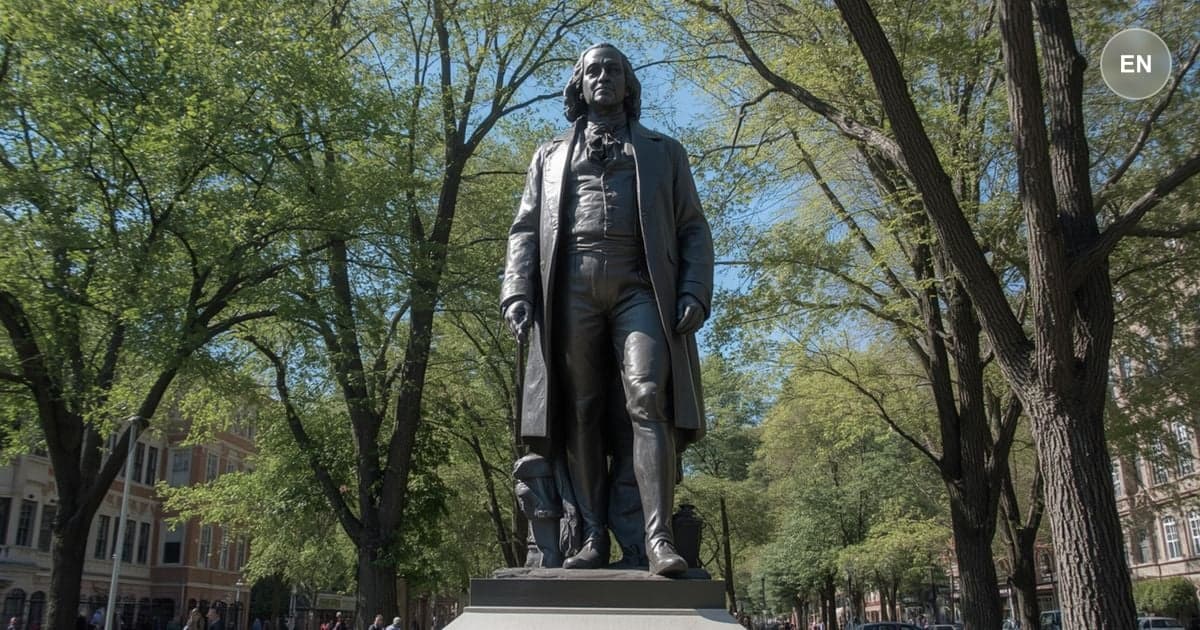
Nicomachean Ethics

Aristotle
0:000:00
0:00 / 0:00

Prestige · $2.99/month
Chapter audio, theme analysis, and downloads
Aristotle
0:00 / 0:00
Every art, every inquiry, every action aims at some good. Aristotle says that first, at the Lyceum around 350 BCE, and the notes take the name of his son Nicomachus. The question is not whether you want a good life but whether you can name the good you are already aiming at. Happiness is not a mood that arrives when circumstances improve. It is an activity you can fail at while still believing you are succeeding.
The figures in the argument are not a novel's cast, but they behave like one. There is the flourishing person, whose life is a practiced excellence rather than a lucky feeling. There is the man of practical wisdom, who can see what this particular situation requires and is not rescued by a rulebook. There is the akratic, who deliberates, names the better act, and still follows appetite. There is the just person, who will not take too much in a bargain just because no one is watching. He sorts three kinds of friends: the useful contact, the pleasant companion, and the rare person who wishes you well because of who you are. Aristotle had already spent twenty years at Plato's Academy and had tutored Alexander. He is writing for people who will have power, money, and the chance to waste both.
Book I refuses pleasure, wealth, and honour as the highest good and locates eudaimonia in the function of a human life: activity of the soul in accordance with virtue, over a complete life, because one swallow does not make a summer. Book II says you become just by doing just acts, the way you learn the lyre by playing it. Book III makes you own the character those acts have already built, even when the later stages of a habit are as hard to see as the progress of an illness. Book IV tests the mean in money, honour, anger, and truth-telling. Book V treats justice as a state that makes you do and wish what is just, not a slogan you apply to other people. Book VI names practical wisdom as the faculty that issues commands about what ought to be done here, now. Book VII watches the incontinent person know the act is bad and do it from passion anyway. Books VIII and IX refuse to call every useful alliance a friendship, then insist that no one would choose to live without friends even with every other good. Book X returns to pleasure as a rudder for the young and still will not let pleasure be the destination.
Aristotle never treats virtue as a list of commandments, or happiness as a prize for holding the right opinions. He refuses the easy handbook where a formula tells you what courage looks like on Tuesday. The mean is relative to us. The same danger asks different things of a timid person and a reckless one. Weakness of will is not a mystery once you see it as a habit built in the wrong direction. Friendship of utility dissolves when the use runs out, and he is not sentimental about that. The ending is not a conversion scene. It is a claim that the best human life includes both the shared work of justice and friendship and the quieter activity of reason, and that neither one lets you skip the years of practice.
The first pressure is the function argument: if every action aims at some good, then You Become What You Repeatedly Do is how that aim gets into the body, Book II's lyre and Book III's illness you do not see progressing. The Mean Between Extremes is Book IV testing money, honour, anger, and truth-telling: two real vices, and the work is calibration. Why We Do What We Know Is Wrong is Book VII watching general knowledge fail on this plate when appetite handles the particulars. What Friendship Actually Is is Books VIII and IX sorting the useful contact and the pleasant companion from the rare person who wishes you well as yourself. Building Practical Wisdom is Book VI issuing commands about what ought to be done here, now, because a young geometer can still lack judgment in a messy room. Practicing Justice is Book V: do and wish what is just in a bargain, a correction, and a friendship, even when no one is watching.
One swallow does not make a summer, and one right opinion does not make a life. Wide Reads weighs summaries, quotes, and audio across all ten books, from the opening dare to the last claim that reason is most what we are.
Aristotle opens Book 1 with a claim that still organizes every serious life: every art, inquiry, act...
Aristotle opens Book 2 with a distinction that still shapes how we talk about growth: intellectual v...
Book 3 begins with a courtroom question: who earns praise, blame, pardon, or pity? Aristotle answers...
Book 4 turns from the general theory of virtue to particular excellences: wealth, honor, anger, soci...
Book 5 is Aristotle's full treatment of justice. He begins by distinguishing justice as a whole virt...
Book 6 opens where moral virtue left off: Aristotle has said the mean is fixed by right reason, but ...
Book 7 begins with a new map of moral failure. Aristotle lists three states to avoid: vice, incontin...
Book 8 opens Aristotle's long treatment of friendship by insisting that no one would choose to live ...
Book 9 continues Aristotle's inquiry into friendship by testing it where relationships are unequal, ...
Book 10 closes the Ethics by returning to pleasure and asking what life most fully realizes happines...
Published -350
Aristotle (384-322 BCE) was born in Stagira in northern Greece, the son of a court physician, and sent to Athens at seventeen. He studied at Plato's Academy for twenty years, long enough to absorb the Forms and then refuse them as the last word on how a human life actually works. After Plato's death he left, tutored the young Alexander of Macedon, and came back to found the Lyceum, a school that walked while it talked.
The Nicomachean Ethics is lecture notes, not a polished novel, and that is part of why it still works. He is thinking in front of students who will have money, office, and the chance to waste both. He writes on logic, biology, politics, and poetics with the same habit: name the function, then ask what excellence looks like in that function. The Ethics is that habit applied to a whole life.
He died in exile in Chalcis after Athens turned on Macedon. The book that kept his name was probably assembled or titled for Nicomachus, his son. It remains the foundation of virtue ethics because it will not let you treat goodness as a feeling, a rule, or a reputation. It keeps asking what you have been practicing, and whether that practice is aimed at the right good.
Aristotle speaks to the moment when a rulebook stops fitting the case in front of you: the policy that ignores this employee, the boundary that punishes the wrong friend, the moral formula that cannot survive contact with a real Tuesday. His answer is not more rules. It is practice. Character, he says, is not a feeling you wait for. It is what you have been practising when no one was grading you.
Plot, characters, and themes — plus audio, source text, and patterns you can use after class
Two ways in
Chapter by chapter, with audio. The meaning arrives because you experienced it — not because someone listed bullet points.
Start with this.
The actual words the author wrote, alongside every summary. Use the guide, then step into the source.
Then step into the source.
Either way, the door opens inward.
— and most of all, Why does this matter?
Purchase the complete book to access all chapters and support classic literature
Available in paperback, hardcover, and e-book formats
Free to read • No account required

Weekly insights from the classics. Amplify Your Mind.
We focus on public domain classics because these timeless works belong to everyone. No paywalls, no restrictions—just wisdom that has stood the test of centuries, freely accessible to all readers.
Public domain books have shaped humanity's understanding of love, justice, ambition, and the human condition. By amplifying these works, we help preserve and share literature that truly belongs to the world.
© 2026 Wide Reads™. All Rights Reserved.
Intelligence Amplifier™ and Wide Reads™ are proprietary trademarks of Arvin Lioanag.
Copyright Protection: All original content, analyses, discussion questions, pedagogical frameworks, and methodology are protected by U.S. and international copyright law. Unauthorized reproduction, distribution, web scraping, or use for AI training is strictly prohibited. See our Copyright Notice for details.
Disclaimer: The information provided on this website is for general informational and educational purposes only and does not constitute professional, legal, financial, or technical advice. While we strive to ensure accuracy and relevance, we make no warranties regarding completeness, reliability, or suitability. Any reliance on such information is at your own risk. We are not liable for any losses or damages arising from use of this site. By using this site, you agree to these terms.
Deep dives
Watch general knowledge fail on this plate, this night, when appetite handles the particulars.
While moral virtue comes about as a result of habit, whence also its name (ethike) is one that is formed by a…
Tell the useful contact and the pleasant companion from the rare person who wishes you well as yourself.
For without friends no one would choose to live, though he had all other goods.
Trending search questions mapped to the lessons in this treatise—what readers actually ask Google about virtue, happiness, habit, weakness of will, friendship, and practical wisdom.
Aristotle's lecture notes on how a human life aims at happiness, not a mood, but eudaimonia: activity of the soul in accordance with virtue over a complete life. Book I refuses pleasure, wealth, and honour as the highest good. Book II says you become just by doing just acts. Books VIII–IX sort three kinds of friendship. Book X returns to pleasure without letting it be the destination.
Explore You Become What You Repeatedly DoNot a feeling that arrives when circumstances improve, but the function of a human life done well: rational activity in accordance with virtue, sustained across a whole life. One swallow does not make a summer, and one lucky week does not make flourishing. Aristotle refuses to let happiness be pleasure, honour, or wealth wearing a better name.
Explore You Become What You Repeatedly DoVirtue as the mean between two real vices, too much and too little, relative to us and this situation. Courage is not recklessness or cowardice; generosity is not wastefulness or stinginess. Book IV tests money, honour, anger, and truth-telling. The mean is not a formula; it is calibration you learn by practice.
Explore The Mean Between ExtremesBy doing virtuous acts until the state follows the action, the way you learn the lyre by playing it. We become just by doing just acts, temperate by doing temperate acts, brave by doing brave acts. Character is not an opinion you hold. It is what you have been practising when no one was grading you.
Explore You Become What You Repeatedly DoKnowing the better act and still following appetite: general knowledge failing on this plate, this night. Book VII watches the incontinent person deliberate, name the right course, and choose the wrong one anyway. Aristotle treats it as a habit built in the wrong direction, not a mystery that excuses the act.
Explore Why We Do What We Know Is WrongSix lessons run through the treatise: you become what you repeatedly do; find the mean between real extremes; face why we do what we know is wrong; tell friendship of utility and pleasure from friendship of character; build practical wisdom for messy particulars; and practise justice when no one is watching. Those skills, not a tidy rulebook, are why the book still answers modern searches.
What makes him indispensable is his refusal to let goodness be a slogan. He had already spent twenty years at Plato's Academy and tutored the young Alexander before he wrote for people who would have power, money, and every reason to waste both. He names the mean between real vices, not an average anyone can photocopy, and treats friendship as essential to a good life rather than a networking bonus. Weakness of will is not a mystery to him. It is a habit built in the wrong direction, which means it can be built back.
The Nicomachean Ethics remains the foundation of virtue ethics because it keeps asking what you have actually been practising, not what you meant to become. Business schools still teach practical wisdom under other names. Therapists still borrow his account of habit. If you have ever known the right act and done the wrong one anyway, Aristotle is the teacher who explains why, and hands you the only fix that has ever worked: repetition, aimed at the right good.