
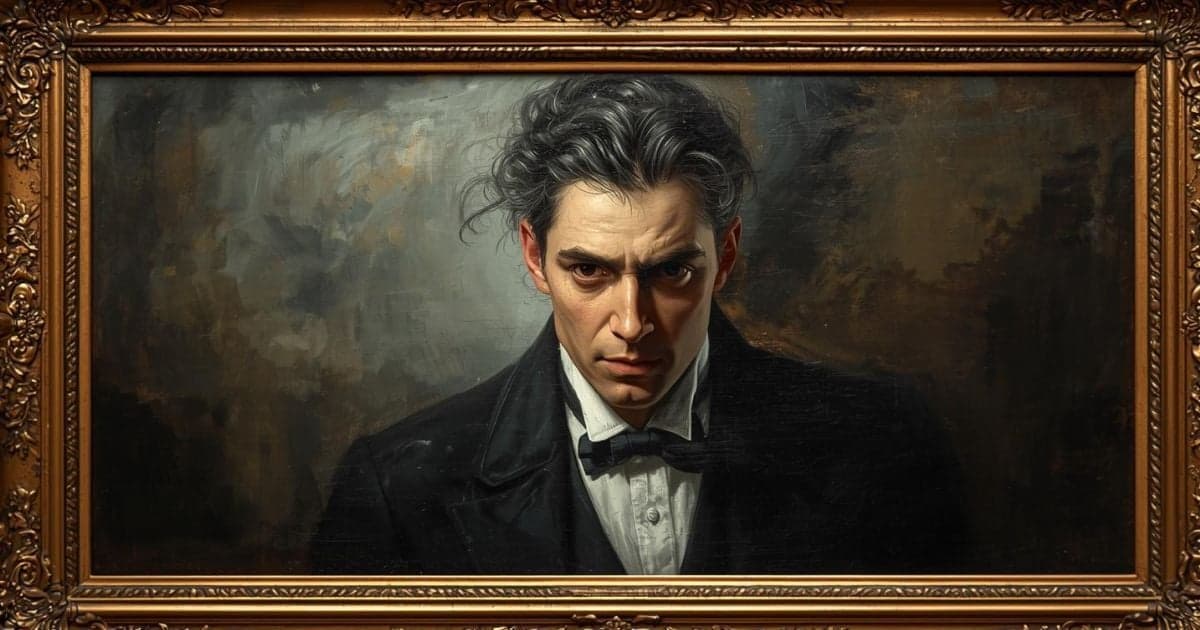
Dorian's portrait is a Gothic device and a plain habit: put the feeling you cannot bear in a locked place, then live as if the lock were a cure. Lord Henry supplies the language. The schoolroom supplies the furniture. The wish in the studio is not only a bargain for youth. It is a request that conscience happen somewhere else, on someone else's canvas, in a room you do not have to enter before dinner. Wilde lets the request succeed long enough for you to see what success costs.
Hear the sequence. A wish. A first wrinkle after Sibyl, which is information. A philosophy that makes the information sound provincial. A key, not a repair. A murdered witness, because another human voice had become unbearable. A late attempt at goodness that wants a receipt. A knife, because the receipt would not print. The canvas never stops writing. Dorian only stops visiting. Ignoring guilt does not shrink it. It grows in the room you refuse to enter, and it grows more accurate while you grow more photogenic.
The modern attic is not always a schoolroom. It is the conversation you will not have, the folder you will not open, the friend whose honesty you have recoded as drama. Wilde's last image is not a sermon about sin. It is a picture of what happens when a man outsources his conscience to a canvas, then attacks the canvas for still telling the truth. The honest document survives. The face that refused to listen does not. Listening to your conscience is the skill of visiting the room on purpose, before the only visit left is a knife.
The Central Lesson
Ignoring guilt does not shrink it. It grows in the room you refuse to enter. Wilde's last image is not a sermon about sin. It is a picture of what happens when a man outsources his conscience to a canvas, then attacks the canvas for still telling the truth. The honest document survives. The face that refused to listen does not. Treat the first flinch as data. Do not hire a philosophy to make it smaller. Visit the locked room on purpose. The record was never the enemy. It was the last honest conversation left.
Prestige deep dive
A Psychological Reading of The Picture of Dorian Gray
The Picture of Dorian Gray shows a man who keeps the face other people love by storing age, cruelty, and shame on a locked canvas, until the hidden record still judges and destroying the witness only gives the ideal image back to the paint.
Read the full psychological readingApplying This to Your Life
Treat the First Flinch as Data
The wrinkle after Sibyl is information. Henry's aesthetic story is how Dorian stops using it. Notice who in your life is paid, socially, to make the feeling smaller. A friend who always has a prettier frame than the flinch is not freeing you. They are helping you miss the only signal that still works.
A Locked Room Is Still a Room
Moving the canvas upstairs is not repentance. It is scheduling. If you only look at the record when you have to, it will still be there, worse. Hiding evidence from yourself is still a conversation with it. You have only chosen how rarely you will listen, not whether the writing continues.
Do Not Stab the Reminder
Dorian wants the portrait to improve after Hetty, then tries to kill it when it will not. The reminder was never the crime. The life was. A late good deed that you check for cosmetic results is still vanity. Visit the record to change the life, not to edit the picture.
Other lessons in this book
More life-skill deep dives from the same classic.
Recognizing Toxic Influence
Sit with Lord Henry's studio paradoxes, the yellow book, and the dinner where Sibyl's death becomes an aesthetic anecdote.
8 chapters·Explore AnalysisFacing Consequences
Follow Basil's body, Campbell's blackmail, James Vane at the window, and the knife that finally reaches the painter.
8 chapters·Explore AnalysisDistinguishing Beauty from Goodness
See the face that never ages while the canvas records every cruelty, until the servants cannot recognize the body.
8 chapters·Explore AnalysisThe Cost of Living a Double Life
Stay in the locked schoolroom, then at Lady Narborough's the night after murder: a perfect face is not a clean life.
8 chapters·Explore AnalysisWhen Vanity Becomes Destructive
Watch the wish in front of the canvas, the first change after Sibyl, and the years of unchanged skin.
6 chapters·Explore Analysis
Continue exploring
Explore this theme
The same lessons in other books
See how other books teach the same life skills.

The Essays of Montaigne
Choosing Real FriendshipHear essay 27 answer La Boétie: because it was he, because it was I.
The Idiot
Maintaining Goodness Without NaivetySit with Myshkin on the train in chapter 1: honesty with no angle, and a city that can only call it idiocy.
Jude the Obscure
When Desire Becomes a TrapTrack the pig, the dimple, the false pregnancy, and the second marriage arranged over gin.
Where the lesson lives in the book
The Wish That Outsources the Soul
Dorian hears Lord Henry, looks at the finished portrait, and wishes the paint would take the years. He is not asking only to stay young. He is asking for a life in which conscience happens somewhere else. I would give my soul for that, he says, as if the sentence were still a flourish. It is the hiring of a stand-in.
Key Insight:
The first refusal of conscience is often framed as a gift. You are not becoming free. You are hiring a stand-in so the feeling will happen in another object, another room, another life.
“I would give my soul for that!”
Guilt, Then a Philosophy
The portrait shows cruelty after Sibyl's death. Dorian feels it. The feeling is information. Then Lord Henry arrives with a prettier story: the girl never really lived, and so she has never really died. The philosophy is how Dorian stops hearing the information. A conscience often speaks once, clearly. The danger is the friend who gives you a better sentence than the flinch.
Key Insight:
A conscience often speaks once, clearly. The danger is the companion who can reframe the flinch as small-mindedness. Notice who in your life is socially paid to make the feeling smaller.
“The girl never really lived, and so she has never really died.”
Master of His Emotions
Basil begs Dorian to feel Sibyl's death. Dorian answers that shallow people need years to shed an emotion, but a man who is master of himself can end a sorrow as easily as he invents a pleasure. He reframes the suicide as a romantic tragedy, then blocks Basil from the screened portrait and threatens to end their friendship if the canvas is seen. Conscience, here, is treated as a mood to dominate, not a signal to obey.
Key Insight:
Calling numbness mastery is how you stop visiting the room where guilt still speaks. If your sophistication requires you to end sorrow on command, you have not transcended feeling. You have fired the witness.
“A man who is master of himself can end a sorrow as easily as he can invent a pleasure.”
Locking the Schoolroom
Dorian moves the canvas to the unused schoolroom and hides the key. He does not want the thing put straight. He only wants the key. He is not destroying the record. He is putting it where he does not have to live with it daily, which is how most people treat a guilty thought. Hiding the evidence from yourself is still a conversation with it. You have only chosen how rarely you will listen.
Key Insight:
Hiding the evidence from yourself is still a conversation with it. You have only chosen the schedule. A locked room is still a room. The writing continues whether you visit or not.
“I don't want it put straight, Leaf. I only want the key.”
Killing the Witness
Basil sees the portrait and names it as a soul. Dorian stabs him. The painter was the last person who loved him enough to say the canvas was not a curiosity. Conscience, when it arrives as another human voice, can be murdered too. We often punish the person who makes us feel the thing we locked away. That is not strength. It is panic with a weapon.
Key Insight:
We often punish the person who makes us feel the thing we locked away. The witness is not the crime. The crime is the life that cannot bear to be described.
“It is the face of my soul.”
Trying to Be Good for Hetty
Dorian tells Lord Henry he will be good. He has spared Hetty Merton, a village girl who reminded him of Sibyl. He wants credit for a restraint that costs him little, and he wants the portrait to improve as a receipt. Lord Henry is not interested. There is no use telling him that you are going to be good. Conscience is not a brand refresh. One spared girl does not rewrite a ledger you have been filling for eighteen years.
Key Insight:
Conscience is not a brand refresh. A late good deed that you immediately check for cosmetic results is still vanity, wearing a better coat. The record knows the difference.
“I spared somebody.”
The Record Will Not Improve
Dorian looks at the canvas, sees no cleansing, and drives a knife into the painted chest. He wanted to destroy the reminder, not the life that produced it. He thought killing the past would make him free. The reminder kills him instead. The portrait returns to its first beauty. You cannot murder the conscience and keep the person it was describing. The record was never the enemy. It was the last honest room.
Key Insight:
You cannot murder the conscience and keep the person it was describing. The record was never the enemy. It was the last honest room, and attacking it is how the stored years arrive all at once.
“It would kill the past, and when that was dead, he would be free.”