
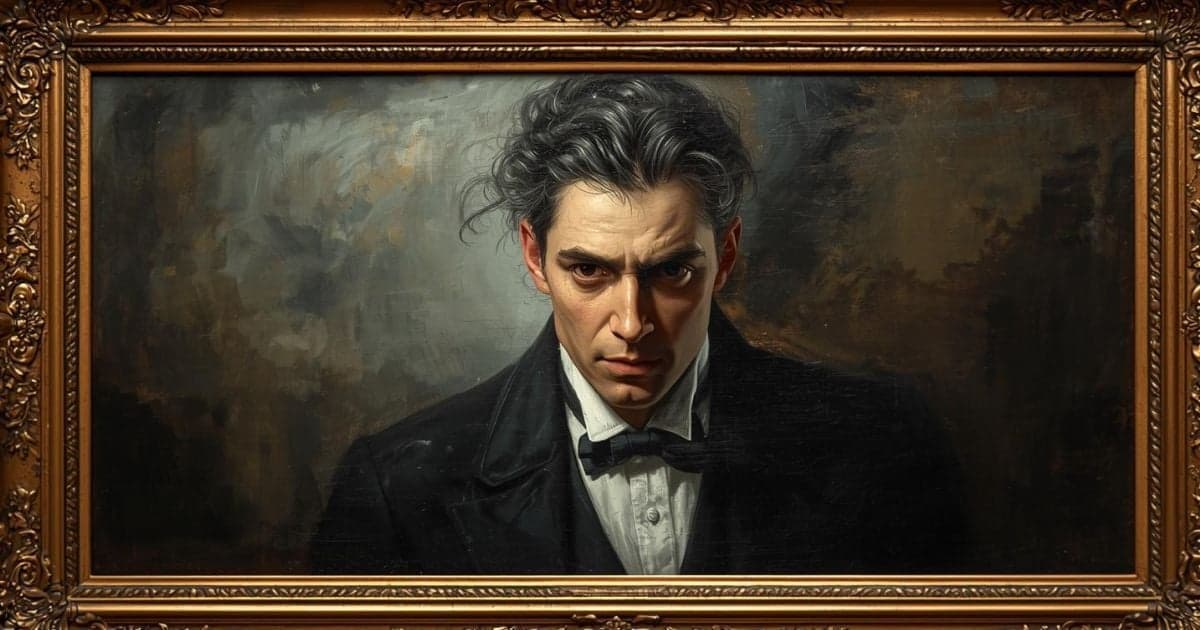
London keeps certifying Dorian because he still looks like the portrait Basil painted. Goodness is inferred from bone structure, from unlined skin, from the ease with which a young man enters a room. Wilde's cruelty is that this is not a private mistake. It is a social habit. A culture that worships surfaces will keep promoting the wrong document, and it will call the promotion taste. Basil is the first to make the error, and he makes it with love. Lord Henry makes it with theory. Dinner guests make it with appetite. The canvas in the schoolroom is the only paper that refuses the habit.
The novel keeps splitting the files in front of you. A performance is not a person: Sibyl is sacred as Juliet and disposable as herself. A dinner invitation is not a character reference: the same face is welcome the night after a murder. An unlined face is not innocence: eighteen years of cruelty can sit in an attic while the cheeks stay twenty. Wilde is not asking you to despise beauty. He is asking you to stop using it as a moral instrument. The instrument is too crude. It cannot tell the difference between a soul and a costume, and it will keep mistaking the costume for the soul until the costume is the only thing left to bury.
The modern application is not Gothic. It is the profile, the photograph, the charm that arrives before the record. We still treat symmetry as evidence. We still let a voice, a jawline, a public manner do the audit that character should do. Wilde's last image is the correction the living man would not make. The servants cannot recognize the body because they had been reading a face. Distinguishing beauty from goodness is the skill of asking, before you trust, which document you are actually holding.
The Central Lesson
Beauty is not goodness, and a culture that treats them as the same will keep promoting the wrong document. Wilde puts the true record in an attic and the false one at every dinner table. The servants' last look is the correction: they cannot recognize the man they served, because they had been reading a costume. Split the files while you can. A face, a performance, and a reputation are not a soul. Ask what remains when the look fails. That remainder is the only evidence worth trusting.
Prestige deep dive
A Psychological Reading of The Picture of Dorian Gray
The Picture of Dorian Gray shows a man who keeps the face other people love by storing age, cruelty, and shame on a locked canvas, until the hidden record still judges and destroying the witness only gives the ideal image back to the paint.
Read the full psychological readingApplying This to Your Life
Separate the Look from the Ledger
Ask what you would still believe about this person if the surface went ordinary overnight. Dorian's love for Sibyl fails that test in one evening. If your regard depends on the performance remaining beautiful, you are not seeing a person. You are curating one.
Do Not Let Applause Be Your Audit
Society keeps inviting Dorian because nothing on his face contradicts the story it wants. Applause is not evidence. A room that rewards the look will keep certifying you, or someone else, long after the hidden record has turned. Find a document the room is not paid to like.
Watch What Happens When the Role Stops
Sibyl becomes herself and loses him. Basil sees the canvas and dies. The surface was doing work that character should have done. In your life, notice who is still kind, still honest, still present when they are no longer impressive. That is the record. The rest is costume.
Other lessons in this book
More life-skill deep dives from the same classic.
Recognizing Toxic Influence
Sit with Lord Henry's studio paradoxes, the yellow book, and the dinner where Sibyl's death becomes an aesthetic anecdote.
8 chapters·Explore AnalysisFacing Consequences
Follow Basil's body, Campbell's blackmail, James Vane at the window, and the knife that finally reaches the painter.
8 chapters·Explore AnalysisListening to Your Conscience
Sit with Hetty, the portrait that will not improve, and the stab that kills the man instead of the record.
7 chapters·Explore AnalysisThe Cost of Living a Double Life
Stay in the locked schoolroom, then at Lady Narborough's the night after murder: a perfect face is not a clean life.
8 chapters·Explore AnalysisWhen Vanity Becomes Destructive
Watch the wish in front of the canvas, the first change after Sibyl, and the years of unchanged skin.
6 chapters·Explore Analysis
Continue exploring
Explore this theme
The same lessons in other books
See how other books teach the same life skills.

The Essays of Montaigne
Choosing Real FriendshipHear essay 27 answer La Boétie: because it was he, because it was I.
The Idiot
Maintaining Goodness Without NaivetySit with Myshkin on the train in chapter 1: honesty with no angle, and a city that can only call it idiocy.
Jude the Obscure
When Desire Becomes a TrapTrack the pig, the dimple, the false pregnancy, and the second marriage arranged over gin.
Where the lesson lives in the book
Basil Worships a Canvas
Basil has painted Dorian so beautifully that he will not exhibit the work. He treats the young man's face as if it were already a soul, and he is frightened of what that worship has done to him. Lord Henry hears the confusion and walks straight into it. The studio is not only a place of art. It is the first room where a surface is asked to do the work of character.
Key Insight:
Admiring a surface is not the same as knowing a person. The first error is treating beauty as evidence of inward worth.
“Every portrait that is painted with feeling is a portrait of the artist, not of the sitter.”
Youth as the Only Currency
Lord Henry tells Dorian that youth is the one thing worth having. Dorian looks at the finished portrait and wishes the paint would take the years. The wish sounds like a compliment to his face. It is a verdict on every other kind of worth. He even names the price he thinks is theoretical: he would give his soul for that arrangement.
Key Insight:
When a culture prices only what can be seen, people start spending what cannot. Charm becomes a substitute for character, and the substitution feels like sophistication.
“If it were only the other way! If it were I who was to be always young, and the picture that was to grow old!”
In Love with a Performance
Dorian announces his engagement to Sibyl Vane because her Juliet, Imogen, and Rosalind have made him feel alive. He has not loved a woman. He has loved a set of roles that flattered his taste. He calls her sacred, which is how people talk when they have mistaken a highlight reel for a person.
Key Insight:
Beauty in performance is easy to confuse with goodness in a person. Ask what remains when the role stops. If the answer is disgust, you were never looking at character.
“She is all the great heroines of the world in one.”
Prince Charming in the Park
Sibyl announces her engagement in fairy-tale language while Mrs. Vane counts debts and imagines a brilliant marriage because the stranger has the appearance of an aristocrat. James distrusts the unnamed gentleman and swears before strangers that he will kill Prince Charming if Sibyl is harmed. Sibyl laughs the threat away because love, for her, is already a play with a guaranteed ending.
Key Insight:
When a family reads rank and appearance instead of a person, they certify the costume before the character arrives. The people who love you honestly often see the gap first, and sound jealous because they cannot afford the illusion.
“He has all the appearance of it, I must say.”
Juliet Fails, and Love Ends
Sibyl acts badly because she is happy. Reality has crowded out the performance. Dorian is disgusted. The girl who was genius last week is ordinary tonight, and that is enough for him to walk out. He tells her she has killed his love. What died was the artwork he had been using. She takes poison. His face does not change.
Key Insight:
If love depends on someone remaining an artwork, it was never love. It was curation. Curation discards the living person the moment she becomes herself.
“You have killed my love.”
Years of Unchanged Skin
Dorian lives inside the yellow book while his face stays twenty. Society keeps inviting him because nothing on the surface contradicts the story it wants. He grows more enamoured of his own beauty and more interested in the corruption of his own soul, as if those were two hobbies that could run in parallel. The portrait in the schoolroom does the aging his dinner companions never have to see.
Key Insight:
A culture that rewards the look will keep certifying you long after the hidden record has turned. Do not outsource your verdict to applause. Applause is reading the costume.
“He grew more and more enamoured of his own beauty, more and more interested in the corruption of his own soul.”
The Painter Meets the Painting
Basil finally sees what his worship made possible. The canvas is monstrous. The man beside it is still beautiful. Basil names it as a soul's record. Dorian kills the one person who can no longer confuse the two documents. The witness who loved the surface and then saw the ledger is the hardest witness there is.
Key Insight:
The hardest witness is the one who loved the surface and then saw the ledger. Beauty cannot argue with that kind of evidence. It can only try to silence it.
“It is the face of my soul.”
The Servants Cannot Name Him
Dorian stabs the portrait because he wants the record gone and the face kept. The servants find a withered old man they barely recognize, and the painting restored to its first beauty. The face the world trusted was never the truth. It was the costume the truth wore. The two documents finally trade places, and everyone else has to admit they had been reading the wrong one.
Key Insight:
When the surface and the record finally trade places, the room has to admit it had been certifying a costume. The correction arrives too late for the man who needed it.
“It was his beauty that had ruined him, his beauty and the youth that he had prayed for.”